









I can no longer remember when I first came across this book, but it was the work of Takamura Chieko, Kotaro's wife, a Western-style painter and paper artist, that initially drew me to it.
"Of course I knew about Chieko's poetry collection. But I remember that what made me want to read all of her poems was when I happened to come across Chieko's paper cutting drawings and thought they were beautiful."
I picked up the paperback 15 or 16 years ago, and after rereading it several times, I found the hardback edition at a used bookstore. I also liked the boxed binding, and now I open this book whenever I feel like reading.
"What attracts me most is that we are able to experience the innocent emotions of Chieko and Kotaro. What is written is pure, and it is not selfish, but has the strength of being the only thing they can think. It is not often that we come across such innocent emotions. These are innocent words that come from everyday life. That is what I find so fascinating."
I don't read this poem over and over again, but I start wherever I want, sometimes from the beginning to the end, sometimes I pick a random spot.
"The relationship between the two is truly wonderful. What appears here is not something they are trying to put into words; it is simply a record of the words that arise from their relationship. It feels like an exchange of letters. I think that kind of book is rare.
Moreover, I feel that the sensitivities between these two are tender yet also sensitive. They don't suppress their emotions, so things happen between them that would be unpleasant in a normal relationship, but they tolerate each other. Perhaps it's because they both sense that Chieko, who is bedridden, has only a short time left to live.
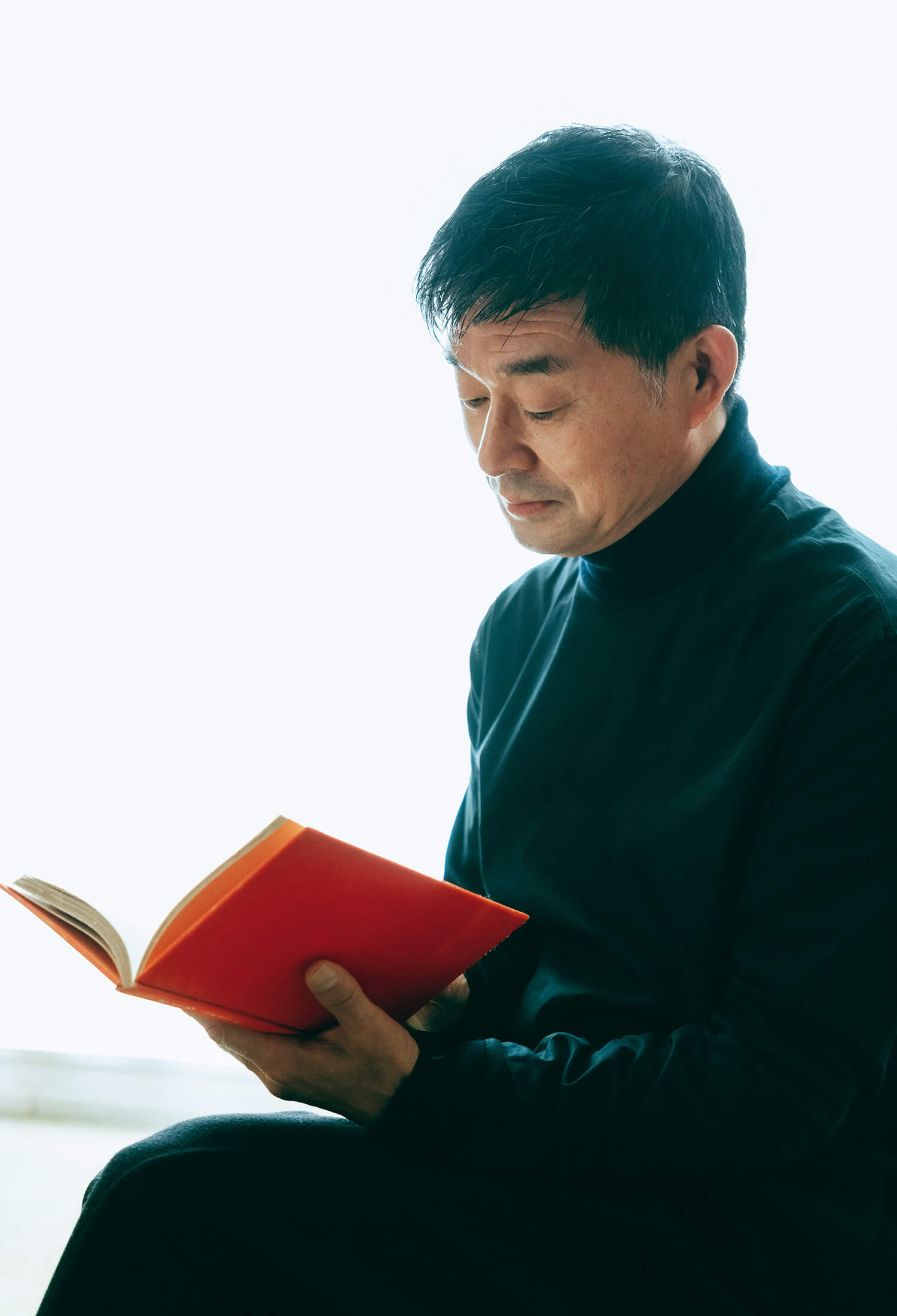
Bring it with you on business trips abroad. Escape the routine.
When I travel to Paris to present my collection, I put it in my suitcase.
"My business trips to Paris mostly consist of going back and forth between the hotel and the exhibition venue, which is surprisingly monotonous. But it feels different from home, and I'm constantly communicating with someone. I read it when I return to my hotel room at night after work, or briefly in the morning, or take it with me when I go out on my days off.
It may sound simple to say that I feel relaxed when I sit in a cafe and read this, but inside my head is a world I love, and outside is a different culture. That's actually quite comfortable."
The slightly larger letters are written in the old kana style with a little space between them, and the empty space on the page makes it easy to read.
"I can't really find a good reason to read it over and over again, but I feel like it helps me to return to my own time. Especially for an introvert like me. It seems to have a meaning: it helps me to block out the outside world a little and enter my own world."

This is a collection of poems published by the sculptor and poet after the death of his wife, Chieko. It is a record of his love for his wife, who was bedridden with schizophrenia, and also of his witnessing her death. It includes the famous "Lemon Elegy" and "Innocent Story." It is currently available in Shincho Bunko (473 yen).