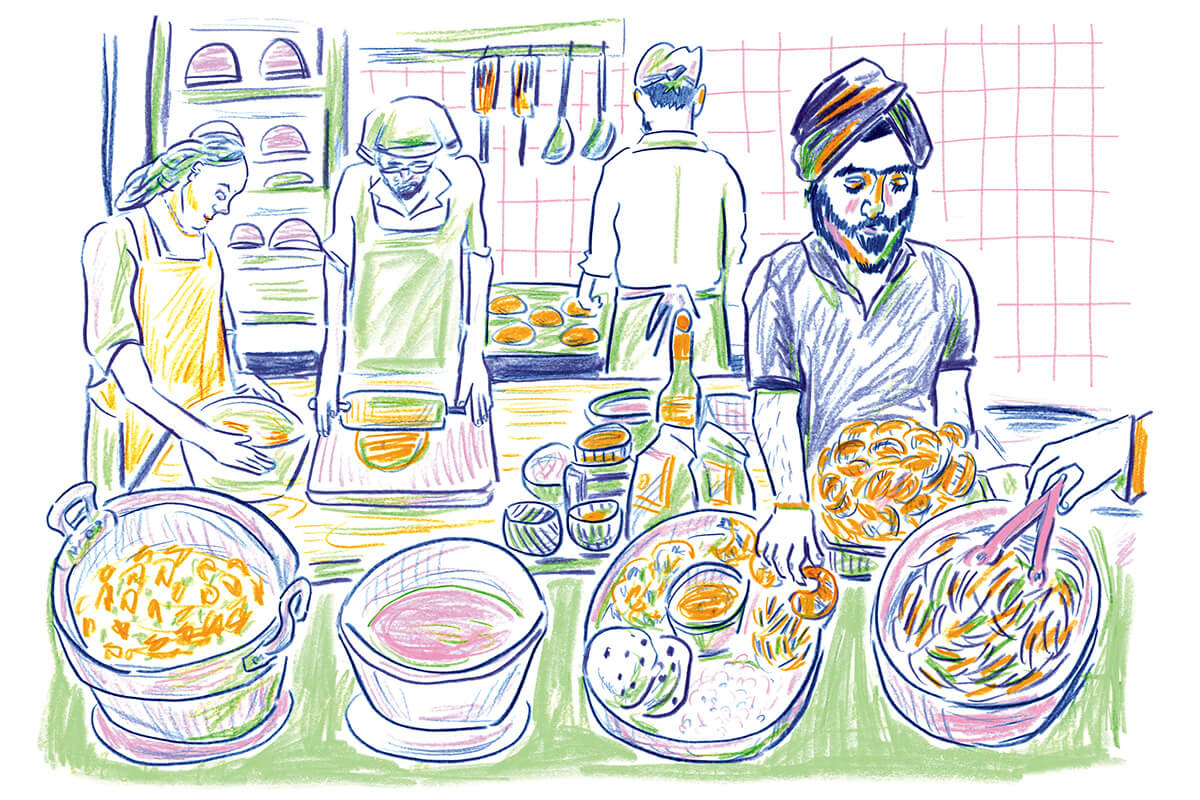











In search of authentic Indian curry in Kobe, you can learn about the modern history of Japan and India
After the Great Kanto Earthquake of 1923, Indian traders, whose main occupations were pearls, gemstones, and textiles, fled from devastated Yokohama and moved to Kobe. Despite the long history of Indians living in Kobe, to the point that they are said to have supported the Kobe economy at one time, there are not many Indian restaurants in the city.
There were two main reasons for this: first, the trading business that was the main focus of the Indians was thriving, so they had no interest in going into the restaurant business, and second, these wealthy Indians almost always employed housekeepers.
"Among the Indians living in Kobe, the Jains of Gujarat state in the northwest are very strict vegetarians. They don't even eat root vegetables, which are used as side dishes. Incidentally, many of these people live in Okachimachi, Tokyo, and to adhere to such a strict diet, they can't eat food when dining out that they don't know who prepared it. So they only eat food prepared by their own household's housekeeper. I think that's a big reason why there are so few Indian restaurants in Kobe, despite the large Indian community there."

A scene of prayer at a Sikh temple in a residential area of Kobe. It can also be viewed from outside. 
The Sikh residents in the surrounding area volunteered to serve as waiters, etc. The youngest generation is a fifth-generation resident of Kobe. 
Authentic Punjabi food served at temples. Outsiders are welcome to eat, but it is considered good manners to make an offering.
Kobayashi says that when he searches for delicious food from the Indian subcontinent within Japan, the "modern history" of the relationship between Japan and the Indian subcontinent emerges. As the business of Indian traders is no longer as big as it once was and the number of Indians working in new industries such as IT is increasing, restaurants that reflect Indian eating habits are beginning to take root.
Kobayashi has become so entrenched in the community that he has been invited to dinner at Indian homes in Kobe, and he says that the food of strict vegetarian Jains and Sikhs, who are also vegetarian but follow different rules, is "different from the meaty Islamic cuisine and very delicious." You can enjoy authentic cuisine in Kobe without having to go to India or Pakistan. Or rather, a dish that you won't find in India or Pakistan awaits you in the Indian subcontinent, right in Japan.