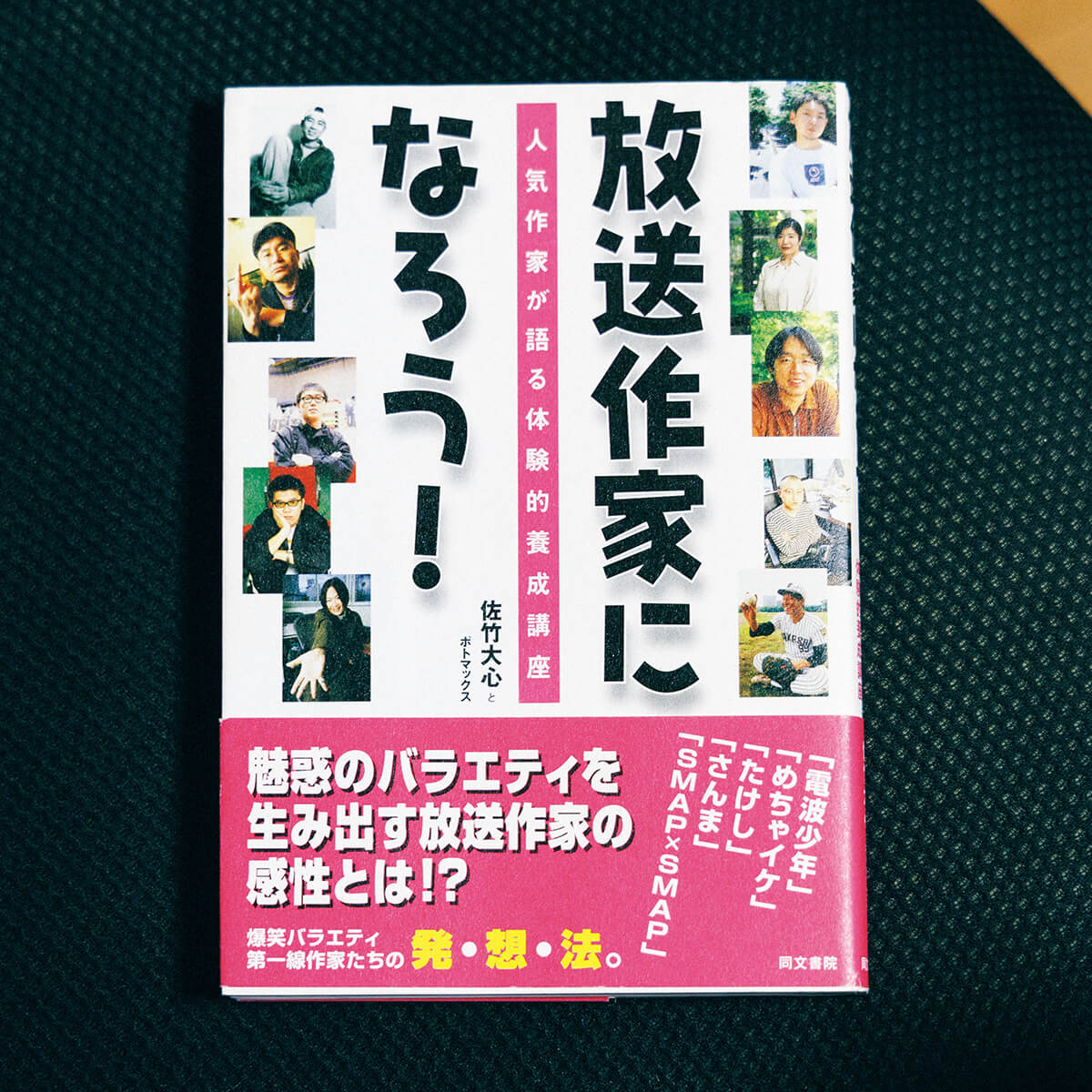







Broadcast writer Ryohei Yano's ever-changing bookshelf and the books he has used to perfect his quiz

Ryohei Yano is a TV writer and quiz writer. He became obsessed with quizzes at the age of eight, and eventually went from being a contestant to a creator. Looking at his bookshelf, which tells the story of his 40-year obsession, one can't help but admire the passion that has remained since his boyhood.

photo: Masanori Kaneshita / text: Kazuaki Asato

A bookshelf that connects childhood and the present

"Eighty percent of my mind is about quizzes, and the remaining 20% is about food," laughs Yano Ryohei. Yano has hosted numerous quiz shows and can be said to be one of the people who started the current "mystery-solving boom," so I can't help but imagine that his study must be quite unique. After climbing the narrow staircase that continues from the corridor of his room, a door appears before me. I excitedly open the door and am greeted by a cozy space of about six tatami mats and a wall lined with books.

"When the COVID-19 pandemic forced us to start working remotely, we found this property with a small, independent room like a loft. It's a strange design, isn't it? It's my first room of my own since getting married, but it's a work room, so there's no playroom element to it (laughs)."

There is a built-in L-shaped bookshelf and a row of desks in the foreground. The simplicity of the room may seem a bit disappointing, but when you take a closer look at the bookshelf, it's like a recreation of Yano's mental map, and you can't take your eyes off it.

As he says, "80% of my mind is filled with quizzes," quiz books take up the majority of his space. And there are cookbooks scattered here and there. It's a room that could be described as having only one job - quizzes - and one hobby - cooking. "I carefully selected my books when I moved two jobs ago," he says, and the lineup is quite stoic. First, he shows us the books related to his work. They are filled with quiz question books, guidebooks, and books related to the TV program. Looking at these bookshelves, it seems like you could get a bird's-eye view of the history of quizzes in Japan.

"I have been carefully preserving the quiz books I have been collecting since I was in elementary school. The first one I ever bought was "American Super Quiz 2." I was in the second grade of elementary school. "Brain Exercises" and "Quizzes are Creativity" are my bibles. I have files filed away copies of books related to TV shows that were broadcast in the 1950s and 1960s, such as "Up Down Quiz" and "Quiz Grand Prix." These were rare books that no one had when I was a university student, so my friends and I split up the work and went to the National Diet Library to copy them and put them together.

I still have the actual thing in my hands, but I can't throw away this file because it's a memory. I also have a hard drive that archives quiz shows. Quiz shows are often not made into video software, so I've collected and saved recordings of acquaintances who appeared as regular contestants."

"Brain Exercises Volume 1" by Akira Tako
This puzzle book was published by a psychologist in 1966. The total number of copies of the 23 volumes in the series is approximately 12 million. "When my middle school geography teacher rearranged the puzzles from this book and gave them to me in class, I was able to get the answers right. I got hooked and started collecting them in high school. I now have all the volumes." The current edition is published by Kobunsha Chie no Mori Bunko and costs 545 yen.

These are quiz materials that he has literally spent his life collecting. They are so consistent that he says, "If my friends who knew the room I lived in as a university student saw these bookshelves, they would probably laugh and say, 'Yano's still the same.'" But even though this is a valuable collection, is it useful for his current work?

"I do reread them from time to time. I check the facts while I'm creating the questions. As you all probably know, trivia books can sometimes be a little exaggerated (laughs). On the other hand, the questions in the quiz book for the show have already been fact-checked before they are shown on TV. So, to a certain extent, I can refer to them with peace of mind."

And what really caught my eye were the books about food. Here and there on the bookshelf, the spines of recipe books and food-related essays peek out.

"My father is a chef, so I've been cooking a lot since I was in junior high school. When I was in high school, Iron Chef started airing, and I got totally hooked. The recipe book I bought in my first year of junior high school was packed with information about ingredients, and I still use it occasionally, so it's pretty worn out."

"Greedy Gourmet" by Masayuki Kusumi
A collection of essays written by the author of the original novel "Solitary Gourmet" about 26 meals that are close to him and that he loves. "Sometimes I feel like reading a book at my own pace, and this book is on heavy rotation. I often read it in the bath. The story about how a senior boiled somen noodles for me one morning after drinking heavily in college, even though it's a simple thing, whets my appetite." Shincho Bunko / 506 yen.

My interest in food essays started with a class library.

"Mr. Arai, my homeroom teacher in my second year of junior high school, had a book by Sadao Tokairin, "Shoji-kun's 'I Love Cooking!'" on the bookshelf at the back of the classroom, and when I read it, I found it incredibly interesting. Then, Mr. Arai gave it to me. He was an interesting guy who would write things in the class newsletter like, 'The tempura soba at the standing soba restaurant near Omiya Station is delicious.'"

"Shoji-kun's 'I Love Cooking!'" by Sadao Tokairin
A collection of cooking essays by manga artist and essayist Sadao Tokairin, introducing "men's cooking" with illustrations using the "four no's" based on "no fuss," "no hassle," "no need for special skills," and "no commitment to style." "When I was in junior high school, I read this and started making fried rice." The current edition is available at Bunshun Bunko for 737 yen.

Yano has a good memory and keeps things well. His old quiz book still has notes from his elementary school days, and an old picture book has traces of being reinforced with duct tape. He also treasures the paperbacks his teacher gave him. This bookshelf connects the boy Yano, who was fascinated by quizzes and food, with his current broadcast writer, Yano Ryohei.

SHARE ON

FEATURED MOVIES
Featured Videos

BRUTUS
OFFICIAL SNS
Brutus Official SNS

FEATURED MOVIES
Featured Videos