









装丁家の背中を守る、古くて新しい本
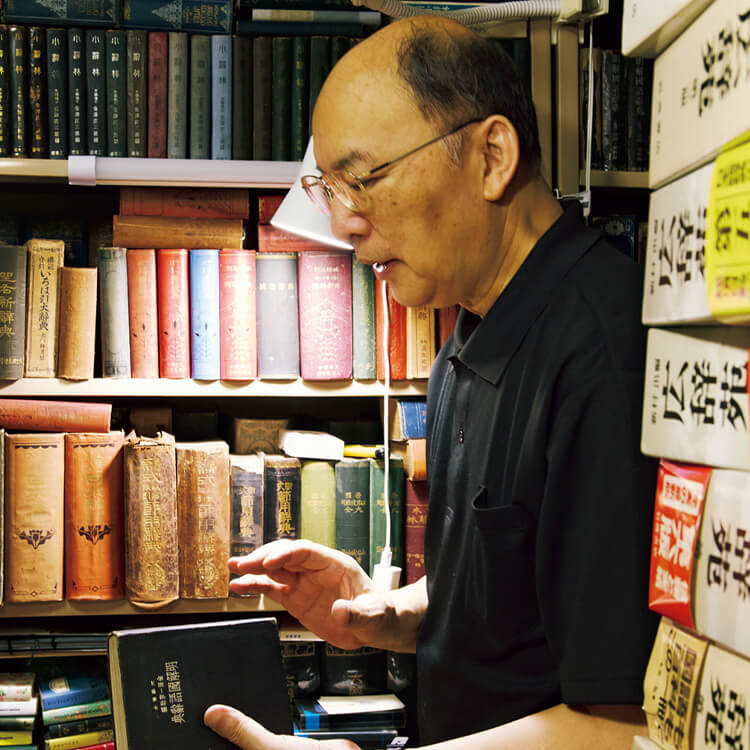
〈川名潤装丁事務所〉の扉を開けると、2畳ほどのスペースの四方を本棚が囲う。棚をくりぬいたような入口を進むと、窓を除く3方にまた本棚。作業スペースを二分する腰高の本棚も置かれ、その奥にデスクが鎮座する。
「入口側の棚には、デザインのための資料や趣味で集めた本、著者や版元からいただいた本を並べています」
なるほど古色がかった茶色いゾーンがあると思えば、デザイン書や絵本もあり、ジャンルも判型もさまざまだ。

「文字組みは昔の本をリソースにすることも。文字の大きさ、字間や行間を参照するだけでなくフォントも活用しています。例えば今日マチ子『COCOON』では、戦時中に刊行された児童書や教科書を手に入れて文字をスキャンして取り込み、ソフトでフォント化したものを使いました」
くぐり戸の奥の本棚は打って変わってカラフルだ。四六判の単行本がピシリと背を揃え、函(はこ)入り、漫画、文庫や雑誌などがずらりと並んでいる。
「こちら側には装丁を手がけた本を。複数冊送られてくるので2〜3冊ずつ棚に差しています。僕は使う紙の種類をかなり限定しているので、あの紙なんだっけ、と確認のため装丁した本を開くことも多く、実用しています」

海外の本から児童書、古い文学全集まで。ジャンルを横断する、デザインの種となる本。 
装丁やデザインの専門書に、各種辞典も。本棚のなかでもひときわ茶色みを帯びた一角。
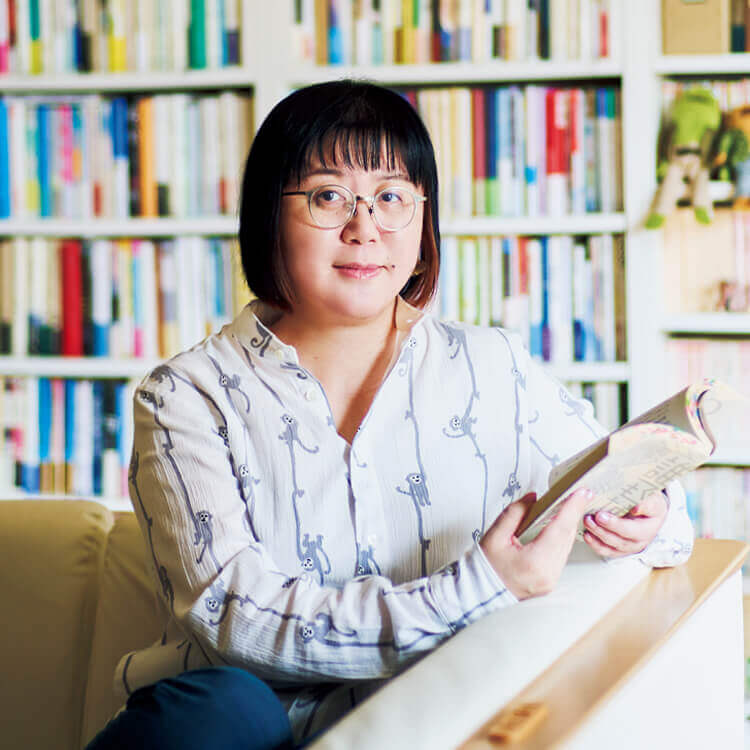
川名潤さんといえば、年数回発表される文学賞の受賞作や候補作で、必ずその名前を目にするデザイナーだ。
「小説の装丁が増えたタイミングはいくつかあるんですが、最近大きかったのは佐藤究さんの『テスカトリポカ』でしょうか。手がけた本が当たると新しい仕事につながっていくんですね」
2021年に直木賞と山本周五郎賞を受賞したヒット作は、やはり川名さんによる装丁で先頃文庫化された。そんな川名さんのデザイン仕事の始まりは雑誌のエディトリアル。そこから書籍や漫画も手がけるようになり17年に独立。20年からは文芸誌『群像』のアートディレクターも務めている。
「『群像』のデザインをするようになってからは、雑誌掲載前の創作原稿をすべて読んでいるということもあって、掲載作を単行本にする際に装丁を担当することが増えてきました。純文学つながりで『文藝』や『すばる』から出る小説をデザインすることもあります」

ADを務める『群像』では、表紙だけでなく本文のデザインも。500ページ前後の月刊誌を知人のデザイナーと2人で担当する。 
版画、水彩、立体など、装画として登場することもある作家たちの作品が壁面を飾っている。
装丁を担当する本や雑誌の数は年3桁。超多忙な川名さんには、「装丁家としての自分の背中を守ってくれている」3冊の本があるという。
「『絵草紙 うろつき夜太』は、『週刊プレイボーイ』で連載された小説なんですが、書き渋る柴田錬三郎に筆を執らせるため横尾忠則を呼んで合作として展開するんです。それでも切迫して、俳優を撮ったグラビアと合わせたり、文字を大きくして誌面を埋めたり、とにかくライブ感がすごい!これを出版してしまってもいいんだな、と勇気をもらえるし、前例があることの安心感は大きいです」
黄金色に光を放つ『櫻画報大全』も雑誌連載から生まれた一冊。
「元は『朝日ジャーナル』のイラスト連載ですが、赤瀬川原平がこれは俺の本!ほかの記事はただの包み紙だ!とアジり、回収騒ぎもあって打ち切りに。雑誌作りのスピード感、ある種のいい加減さまでがまとめられた本です。このぐらいのわがままが許されていた、それゆえの面白さに夢中になります」
写真ではスケール感が伝わりづらい『FRONT』はオリジナルと同じ特大のA3サイズ。函入りの3巻組みだ。
「第二次世界大戦中の日本軍が外国向けのPRのために作らせたビジュアル誌です。戦争で満足に本を作れずにいたグラフィックデザイナーや写真家、編集者の一流どころを集めて、高額なカメラも印刷機も好きなように使える環境でのびのび作らせた。
ただし中身は軍のプロパガンダ。すごいクオリティと軍国主義礼賛というアンビバレンツは、僕にとっては反面教師というニュアンスもあります。自分が読みたい、誰かに読んでほしいと素直に思える本だけを作っていく。贅沢と言われてもそこに固執しなければと思わせてくれる反面教師的な存在です」

『絵草紙 うろつき夜太』柴田錬三郎、横尾忠則/著
1973〜74年に『週刊プレイボーイ』で連載された時代小説。柴田錬三郎の言葉を、気鋭のイラストレーター、デザイナーであった横尾忠則がオールカラーで見せる。長く入手困難だった稀代の「現代絵巻物」だが、2013年に国書刊行会から部数限定で復刊された。川名さんの私物は1975年刊行のオリジナル版。集英社/品切れ。
『櫻画報大全』赤瀬川原平/著
1970年からの『朝日ジャーナル』での連載に始まり、『月刊漫画ガロ』『日本読書新聞』『小説新潮』『現代詩手帖』などの雑誌や大学新聞などに寄稿された「櫻画報」。前衛芸術家の言葉と絵をアーカイブして、黄金色の表紙に包んだ函入りの特装版。後に新潮文庫にも収録された。青林堂/品切れ。![『FRONT』(Ⅰ 海軍号・満州国建設号・空軍[航空戦力]号)多川精一/監修](https://media.brutus.jp/wp-content/uploads/2025/02/bec3d3203af4fc611e2afcaa916f0017.jpg)
『FRONT』(Ⅰ 海軍号・満州国建設号・空軍[航空戦力]号)多川精一/監修
日本政府&陸海空軍全面協力!陸軍号、鉄(生産力)号など全10号が最大15ヵ国語に翻訳された。デザイン、写真、印刷に人材と資金を注ぎ、軍事力や思想を海外に喧伝した。オリジナルは東方社刊。写真の復刻版のほか復刻保存版も刊行されている。平凡社/品切れ。