









It's a shining singularity in David Lynch's career.
The Straight Story, the 1999 film directed by David Lynch, who sadly passed away just after the New Year of 2025, is returning in a 4K remastered version.
The film is based on a small newspaper article from that time about 73-year-old Alvin Strait (Richard Farnsworth), who lives in the remote town of Lawrence, Iowa, and foolishly attempts to visit his 76-year-old brother Lyle (Harry Dean Stanton), with whom he had a long-standing estranged relationship, who lives 560 km away in Mount Zion, Wisconsin, by riding a tractor at a speed of just 8 km/h.
Based on a true story from The New York Times, this 1999 film was directed by David Lynch and written by Mary Sweeney and John Rauch. It was the final film for star Richard Farnsworth. It is currently in theaters nationwide (as of January 2026).
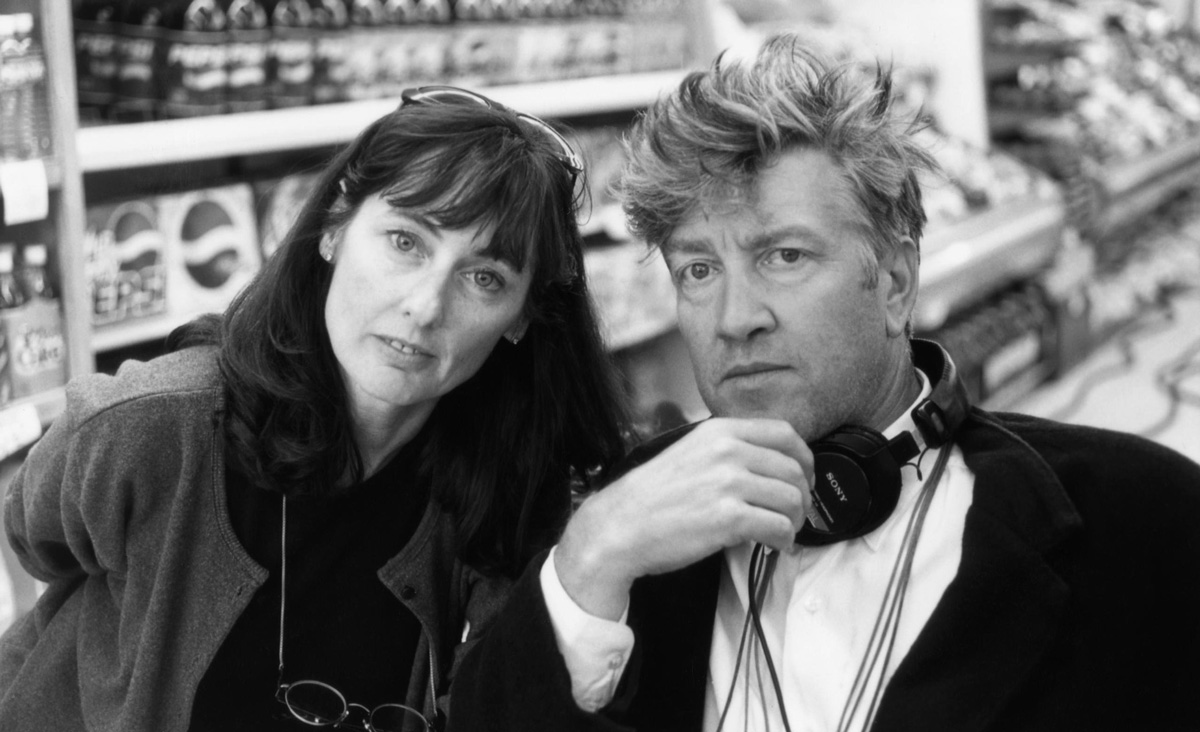
Many people probably got the impression that this film is somehow different from Lynch's usual "not straightforward" films, so I asked Mary Sweeney, who wrote the screenplay and was Lynch's partner both publicly and privately at the time, what it was about this true story that attracted her.
"Actually, I'm from Wisconsin, and both my parents and grandparents were farmers. I grew up in Madison, a sophisticated town, but the countryside was nearby, and there were many small farms like this, so I could really understand what kind of person Alvin was. He was a man of great pride, and as is the case with this journey, he wanted to do things his own way, no matter how crazy people might think he was. I was drawn to his character. After I acquired the film rights, I met his family and even retraced Alvin's travels myself. I felt that I absolutely didn't want anyone else to write this story."
Lynch was initially reluctant to direct.
"He was always supporting me while I was writing the script. He said it was a great story, but he also said he wasn't interested in directing it. However, when he read the finished script, he seemed to have changed his mind. I was very happy because I didn't think he would direct it either."
Even so, this film seems to have a very different atmosphere from Lynch's previous films, such as Eraserhead and Lost Highway.
"It's true that his films can be dark, violent, and sometimes confusing, but he's actually a very cheerful person. So I don't think this film is uncharacteristic of him. He's someone who is always true to his own creative interests, so I think he trusted his instincts and intuition that this was something he was destined to make."
When this film was made, there were still many small farms like this in this part of the American Midwest, but since then, I hear that the rural landscape has changed as farming has become more concentrated and corporatized.
"In fact, small-scale farms were disappearing when we were making this film. Large-scale farming had already begun. I still think it's a lovely area, but even though Alvin's tractor journey was reckless at the time, I think he was lucky to be able to travel through such beautiful areas and beautiful nature. In that sense, I think it was also a tribute to the area and its people of that era."
Indeed, the rural landscapes shot by cinematographer Freddie Francis, who was over 80 years old at the time and with whom Lynch teamed up for the first time since "Dune," are truly beautiful. Finally, I asked him where he thought this film would stand in his career.
"I definitely think it holds a special place in my heart. This film is very David-esque, and of course very much my own. In fact, there are some similarities between 'The Elephant Man' and 'Twin Peaks.' He even said he was happy to be making the first G-rated film that anyone could enjoy (laughs). I think this film is a beautiful, shining jewel in his filmography."