











多くの盆栽が並ぶ庭で仕事をしているのは、英国からやって来た青年。太い指先で小さなピンセットをつまみ、立派な枝ぶりの松から枯れた黄色い葉を外していく。他の葉を傷めないように左手で枝の角度を変えて、右手で一本だけ松葉を引き抜く。修業を始めてそれほど時間が経っていないからか、その作業ぶりは慎重だが、サミュエル(サム)さんの表情には「本物」に触れられる喜びが満ちている。
「盆栽が好き。ただ、その前に好きになったのは日本の器です」。イギリスの美術館で常滑焼(とこなめやき)の美しさに魅せられて、オンラインでいくつも器を購入して部屋に飾っていた。そして、「この器に盆栽があればいいのに」と想像し始める。
コロナ禍で外に出かけることが叶わず、インターネットを通じて日本から盆栽を購入した。「とても高価で、扱いも難しかった」。それでも、器の中で小さな世界を完結させている盆栽を見ていると、「自然と物理、そして芸術が交わっている」と感じられた。自然の豊かな英国に生まれ、物理を学び、絵を描くサムさんが、盆栽を好きになるのは必然だったのかもしれない。
来日して職人の見習いとして働いているのは、日本盆栽協会の理事長を長く勤めた竹山浩さんが園主の〈芙蓉園〉。竹山浩さんは世界盆栽友好連盟の日本理事も務め、BBCなどの海外メディアから取材されることもある重鎮だ。サムさんが弟子入りしてから、まだそれほど経ってはいない。盆栽に「水やり3年」という言葉がある。葉の色、土の乾き具合、天候や風の強さ。あらゆる条件を鑑みて、適切に水をやれるようになるまでに3年はかかる。そして、「水やりまでに半年」とも言われ、サムさんはまだ水をやる作業を任されていない。いまやっているのは、掃除に草取りだ。
「私は背が高いので、使うほうきも大きい」と笑いながら、並んでいる棚の間を、黙々と掃いていく。その作業は単調に見えるが、その間も、棚の盆栽の枝ぶりにしっかりと目をやり、観察眼を養っている。
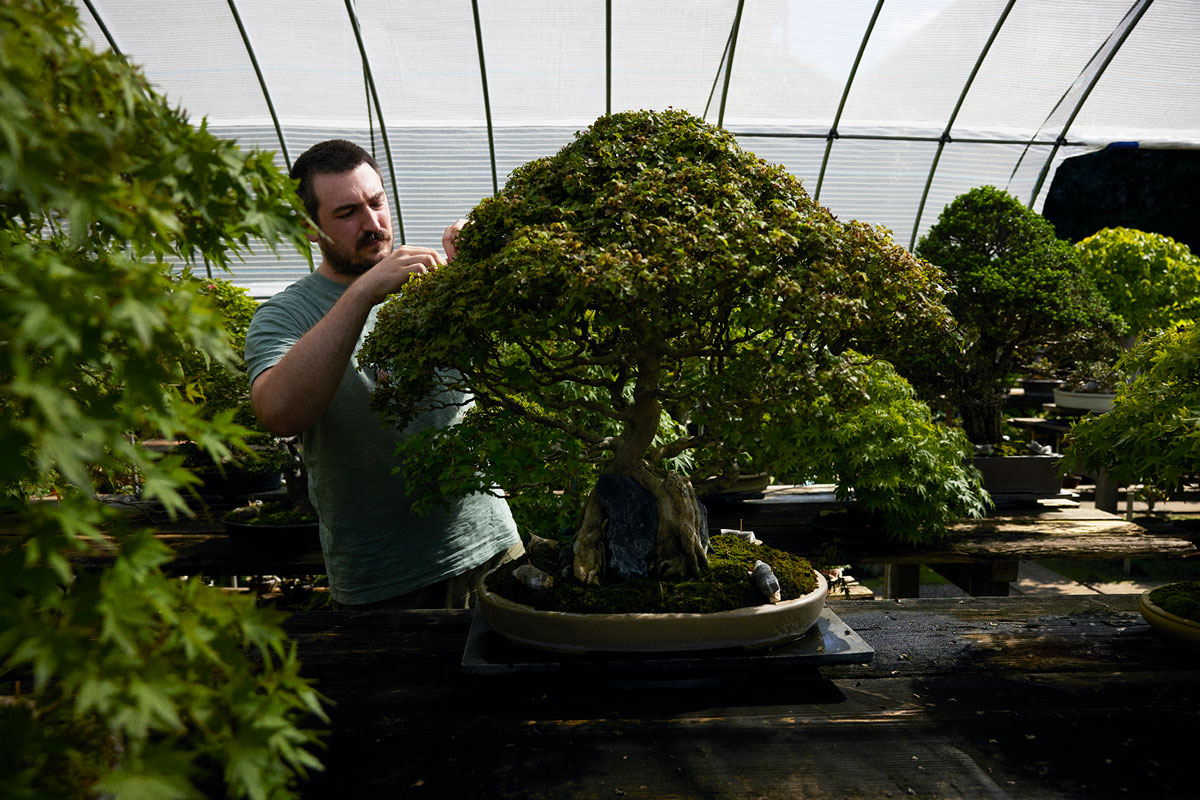
大きな盆栽であれば、手入れする手が目線のすぐ前なので、作業が比較的しやすい。「小さい盆栽になると、大きな身体を屈めなければならないから、たいへん」。 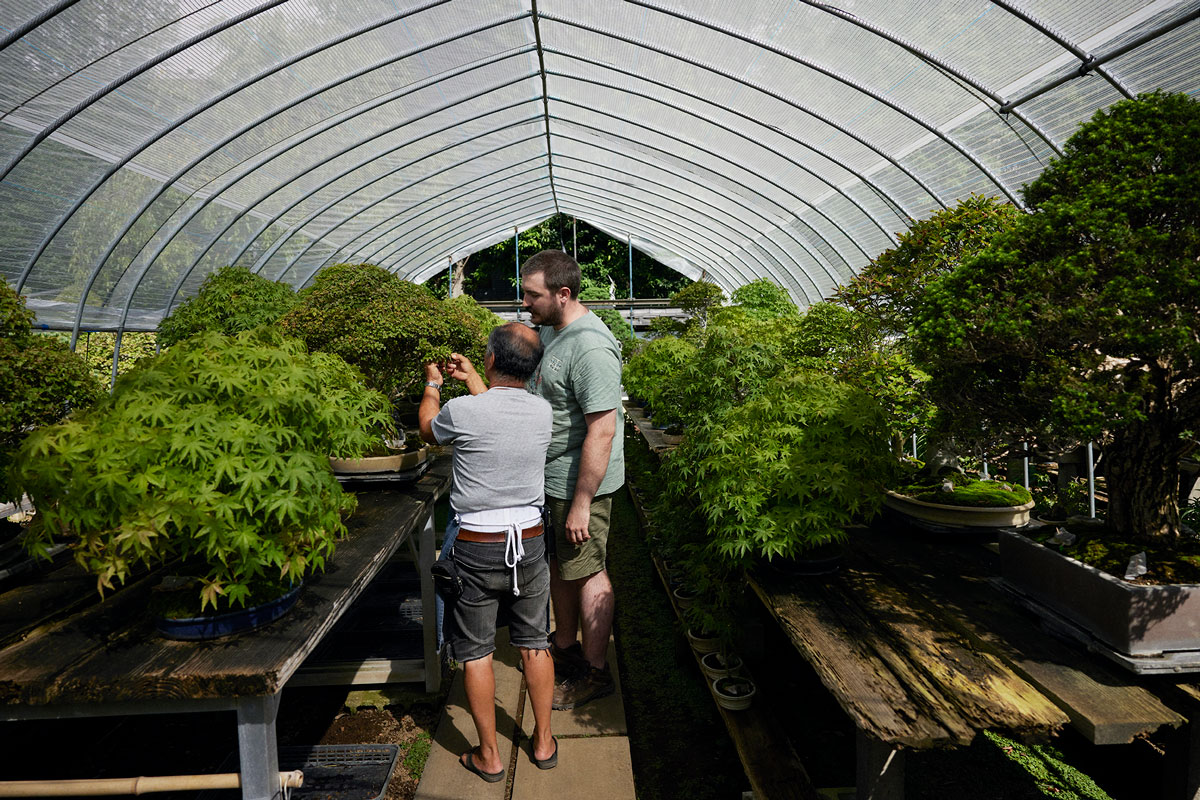
どの枝をつまみ、どの葉を取っていくのか。兄弟子が教えてくれるそういった細かな作業をひとつひとつ覚えていくのが、いまのサムさんの日課だ。 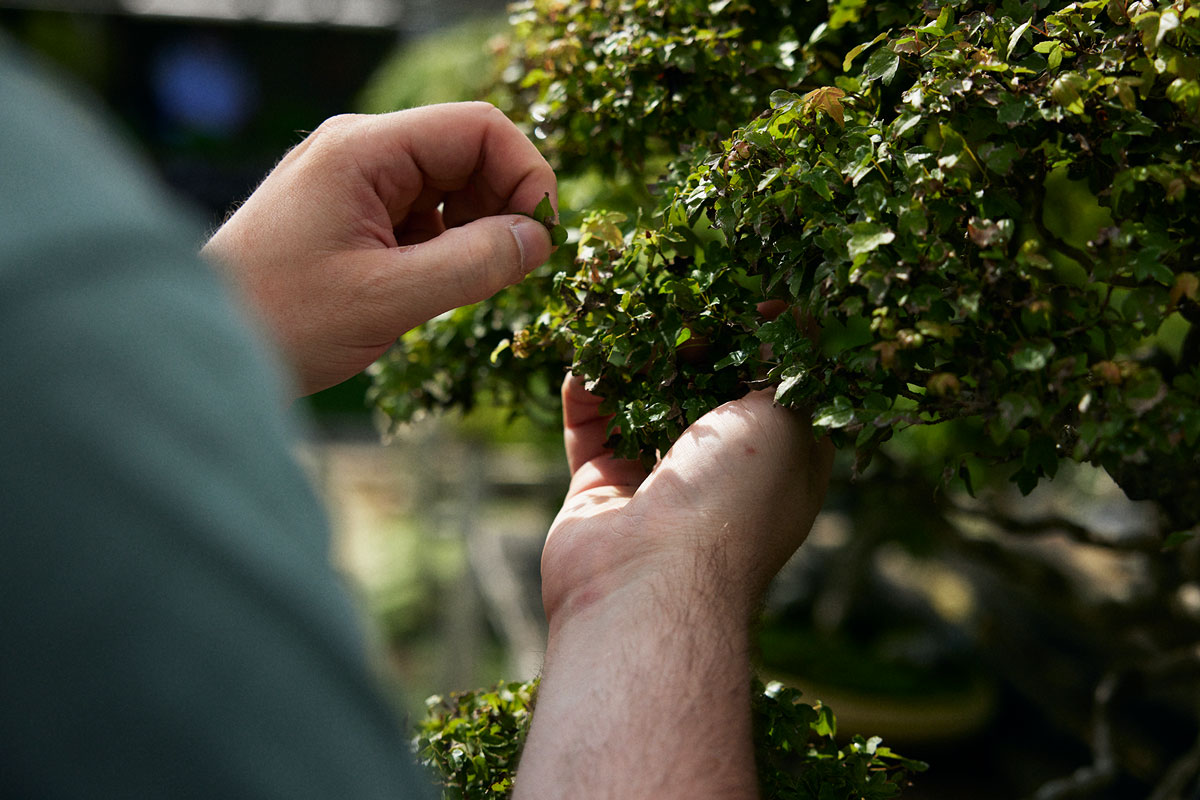
黄色くなった葉を見つけて、ひとつひとつ摘まんで採り去る。そうすることによって、生き生きとした葉に、光と水が行き渡る。 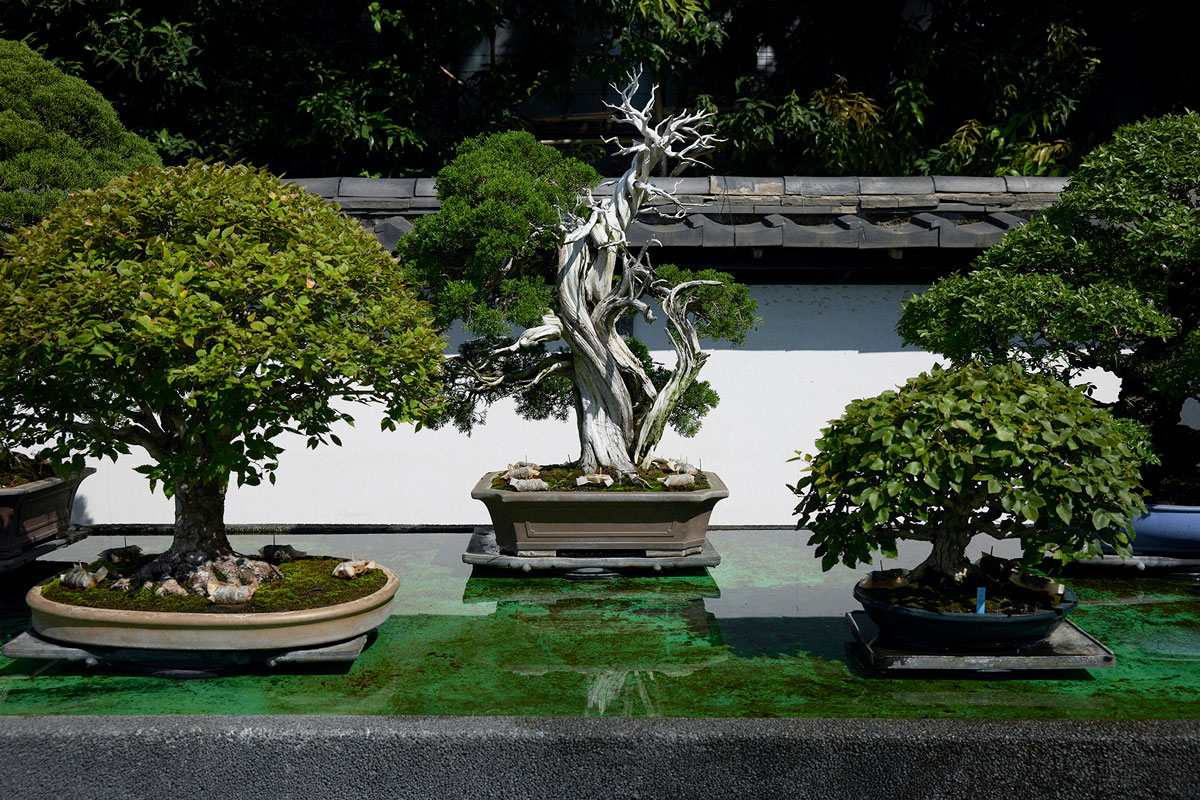
棚に並べられた盆栽は、ひと鉢、ひと鉢がすべて違っていて、すべてが生きている。工場で何かをつくるのとは、わけが違うのだ。 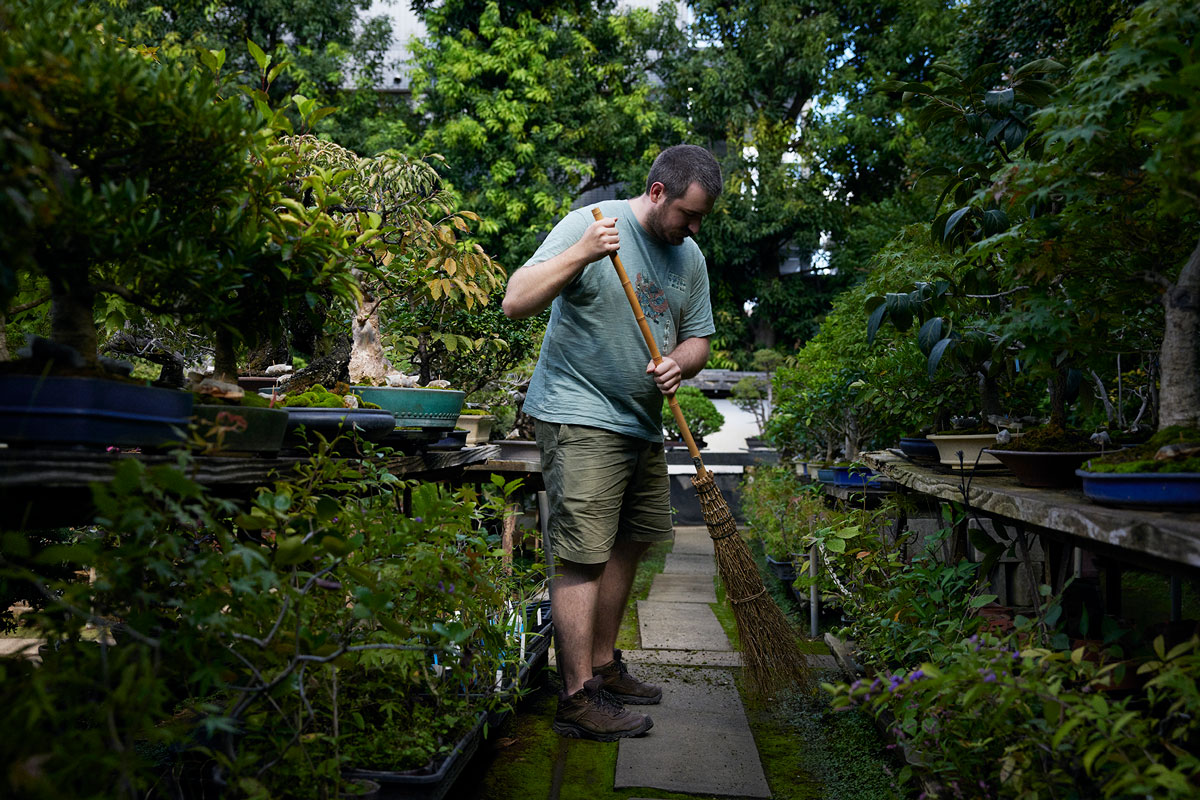
盆栽職人の修業を始めて、まずやらせてもらえるのは庭の掃除。数えきれないくらいの盆栽から落ちる枯れ葉を掃くのも、苦にならないという。 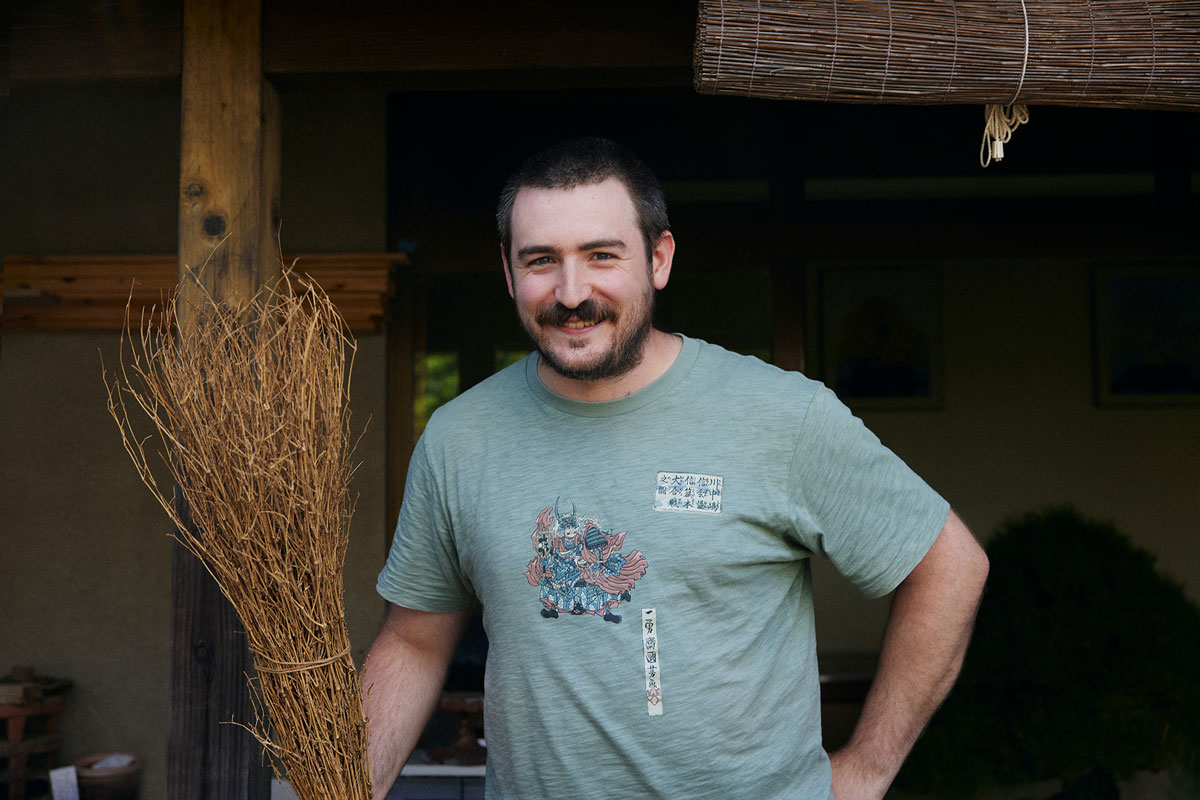
「私は背が高いので、使っているほうきもいちばん大きい」。厳しい修業の途にあっても、サムさんは明るいユーモアを失っていない。 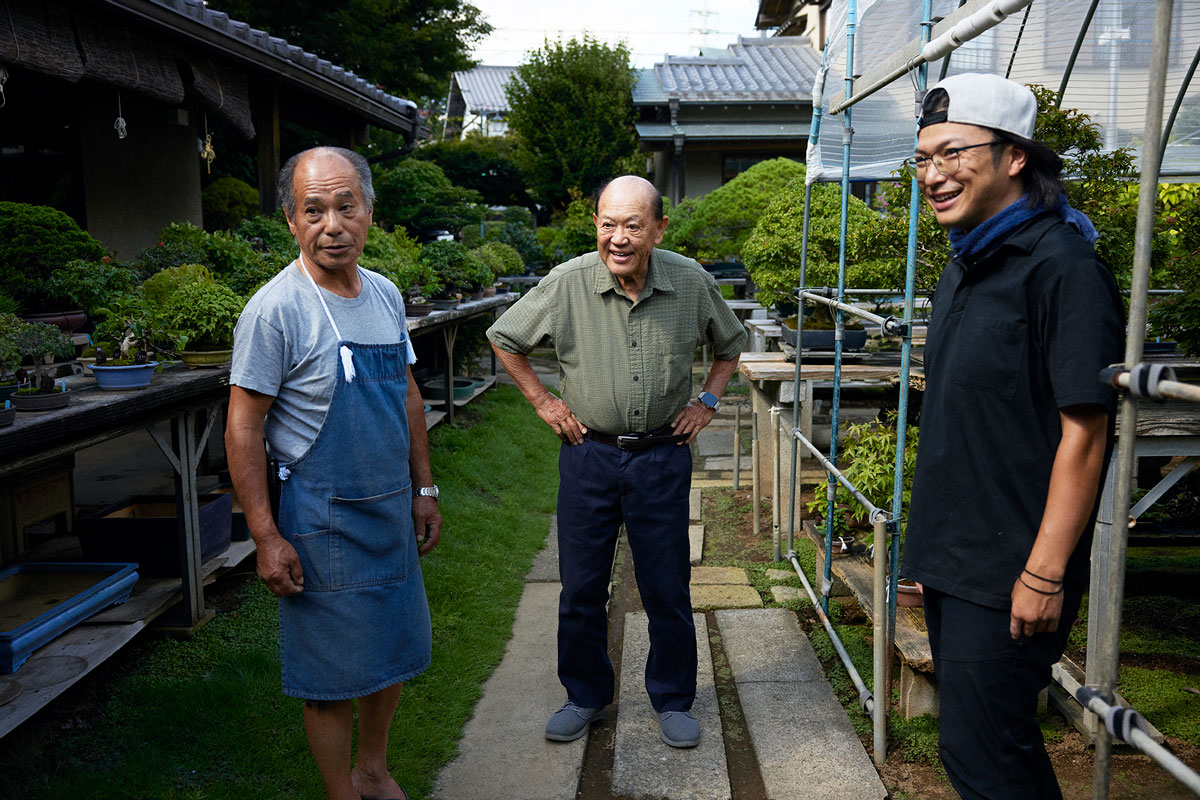
師匠や兄弟子が、サムさんの作業を温かく見守っている。「英国から弟子入りしてくるんですから、気合が入っていますよ」。
台に盆栽を置いて、枝や幹に針金をかける針金掛という高度な作業にも挑んでいかなければいけない。指で枝を支え、針金を使って盆栽の形を整える。まさに、自然に物理的な力を加えて芸術を作っていく、盆栽の大切な作業。「身体が大きい私にとっては、台も椅子も盆栽そのものも小さくて苦労します。作業をしていると背中が痛くなってくる」。それでも、屋内だけで働いていた英国のころに比べると格段に楽しい。
「葉っぱや苔を触っていると、鳥の声も聞こえてきます」。仕事は、朝8時から夕方5時半まで。自然を愛するサムさんにとって、四季の変化とともに表情を変えていく盆栽に埋もれて修業をしていくことは、こちらが思うほどの苦労ではないのかもしれない。
生まれ育った英国には、休日に花を植えて庭を作るガーデニングの文化がある。「そう、英国のガーデンはとても自由で美しい。ただ、それほど技巧的ではありません。それに対して、日本の盆栽には伝統的で確立された技術があります」。サムさんの目標は、この2つを融合して、ヨーロッパ的な美意識を持つ盆栽を作ることだ。献身の積み重ねによって師から弟子へと伝えられてきた盆栽の技術を学ぶのは、たやすくはない。それでも、文化の橋渡しになろうとする強い意志が、彼にはある。
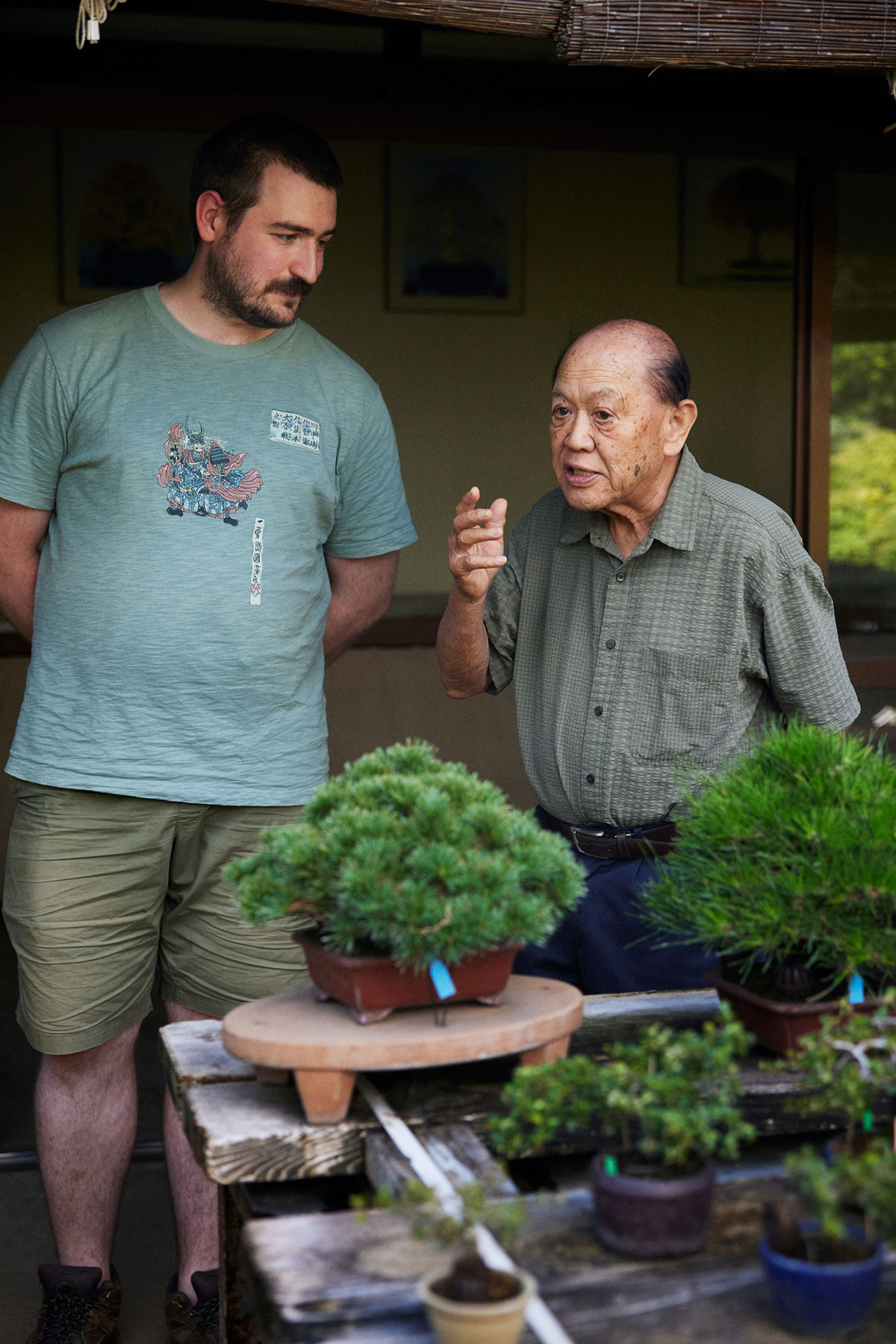
芙蓉園の園主である師匠の竹山浩さんから教えをうける。ひと言ひと言、聞き逃さないようにするサムさんの表情が印象的だ。 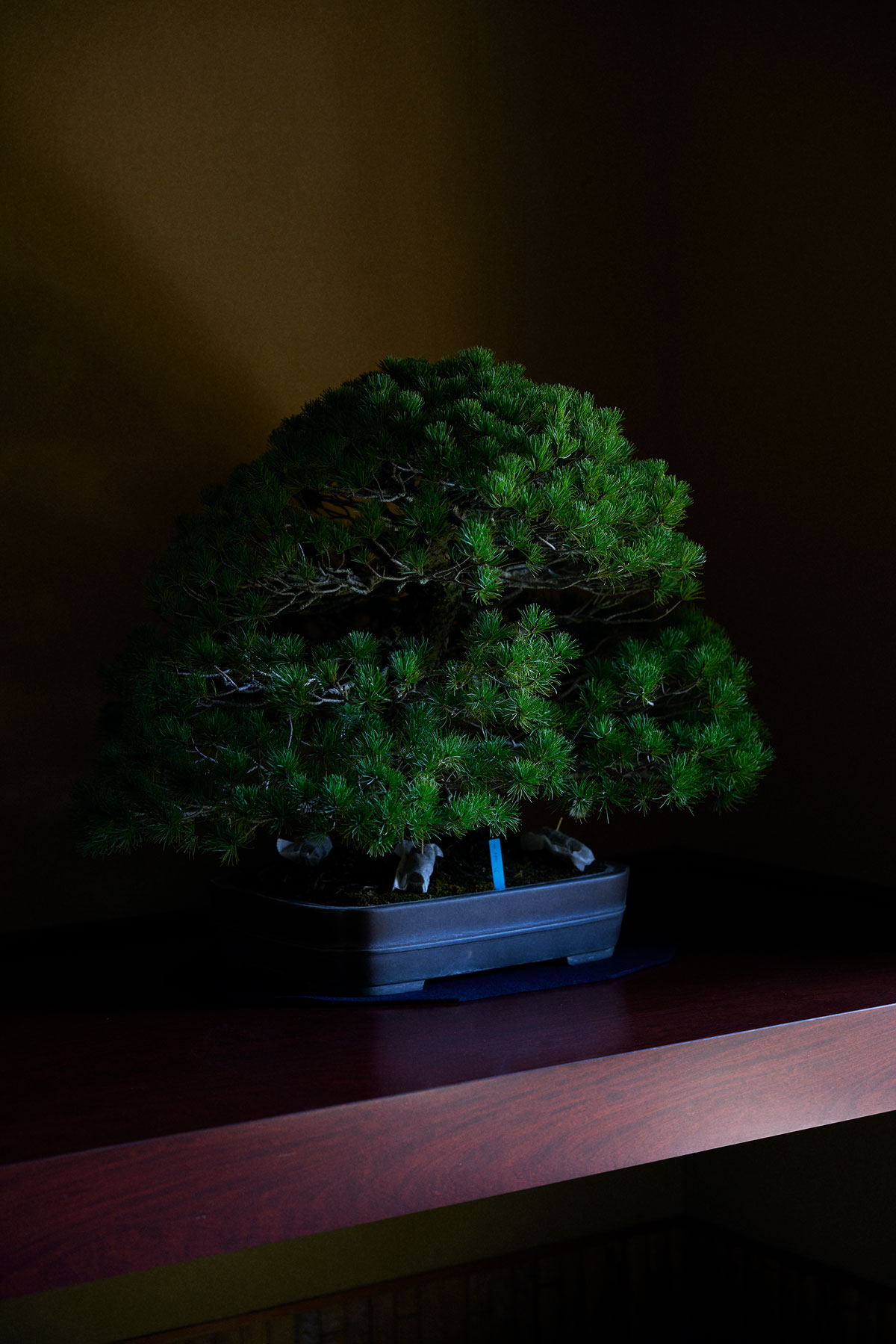
盆栽は、芸術品のように、どれもが唯一無二。芙蓉園は、松はもちろん雑木盆栽や寄せ植えにも定評がある。 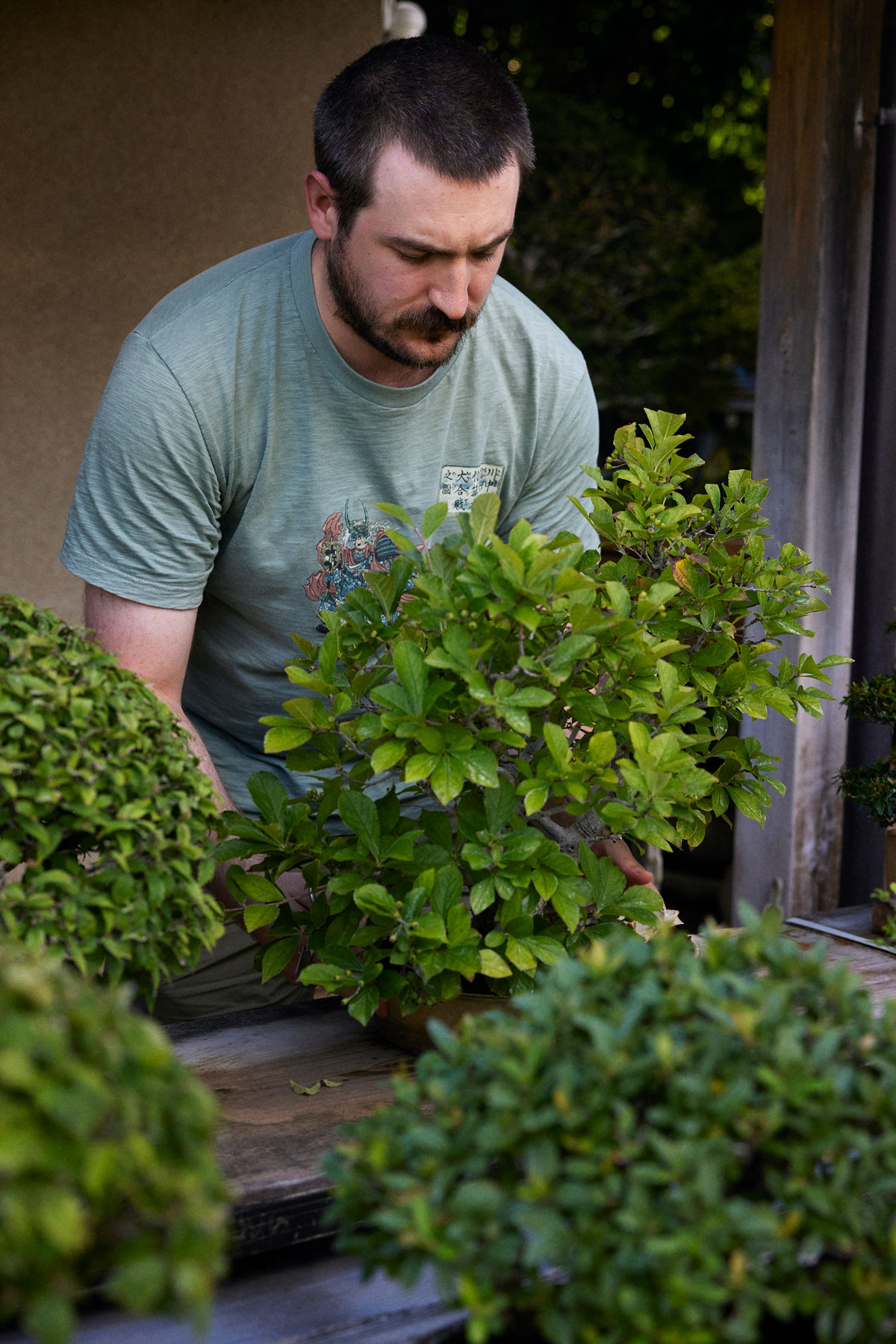
枝や葉を傷めないように、身体から離して鉢を持つ。「腰を痛めたりしますが、自分の腰よりも盆栽が大事ですから(笑)」。 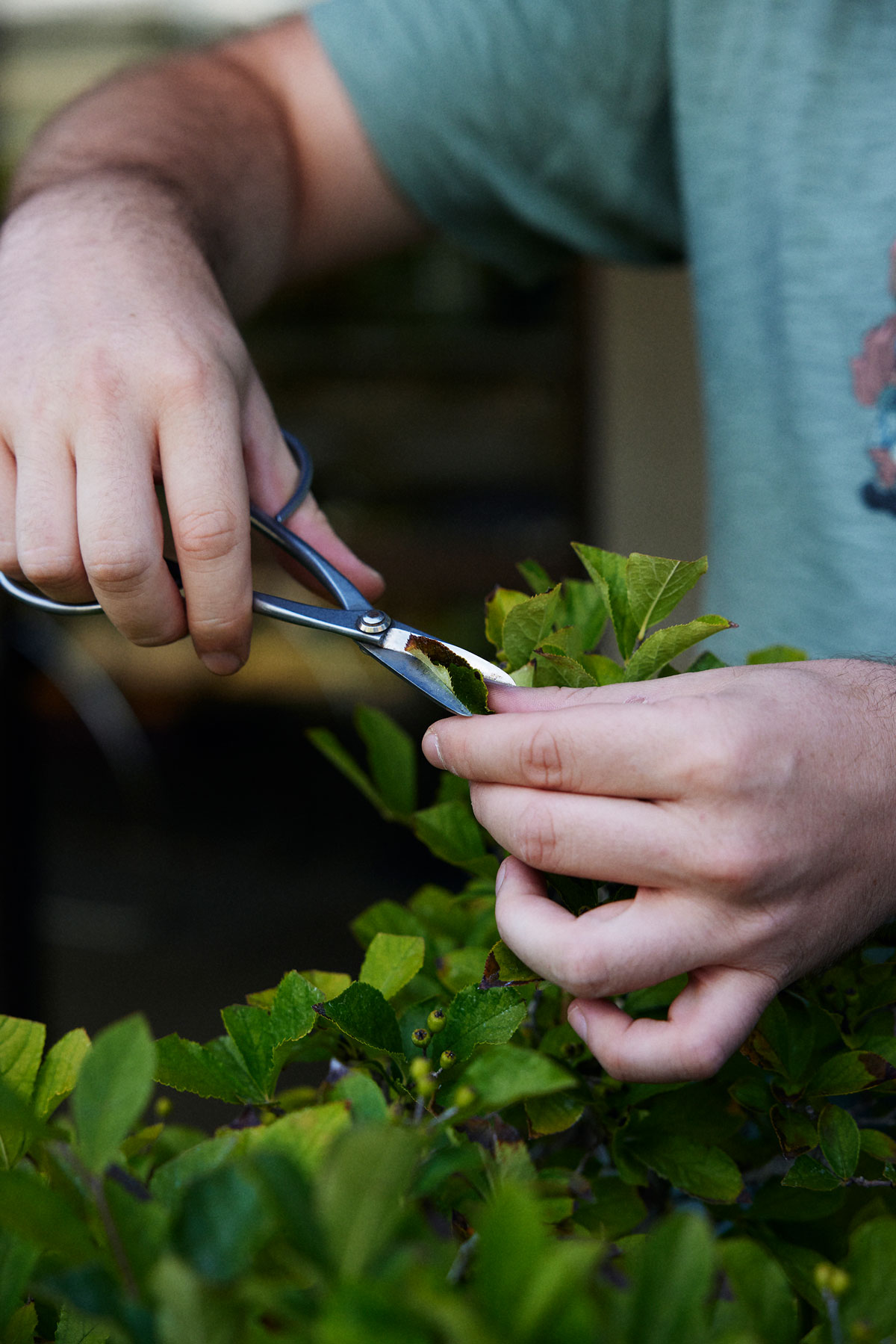
黄色くなった葉をていねいに見極めて、取っていく。サムさんの大きな手に、剪定ばさみが小さく見える。 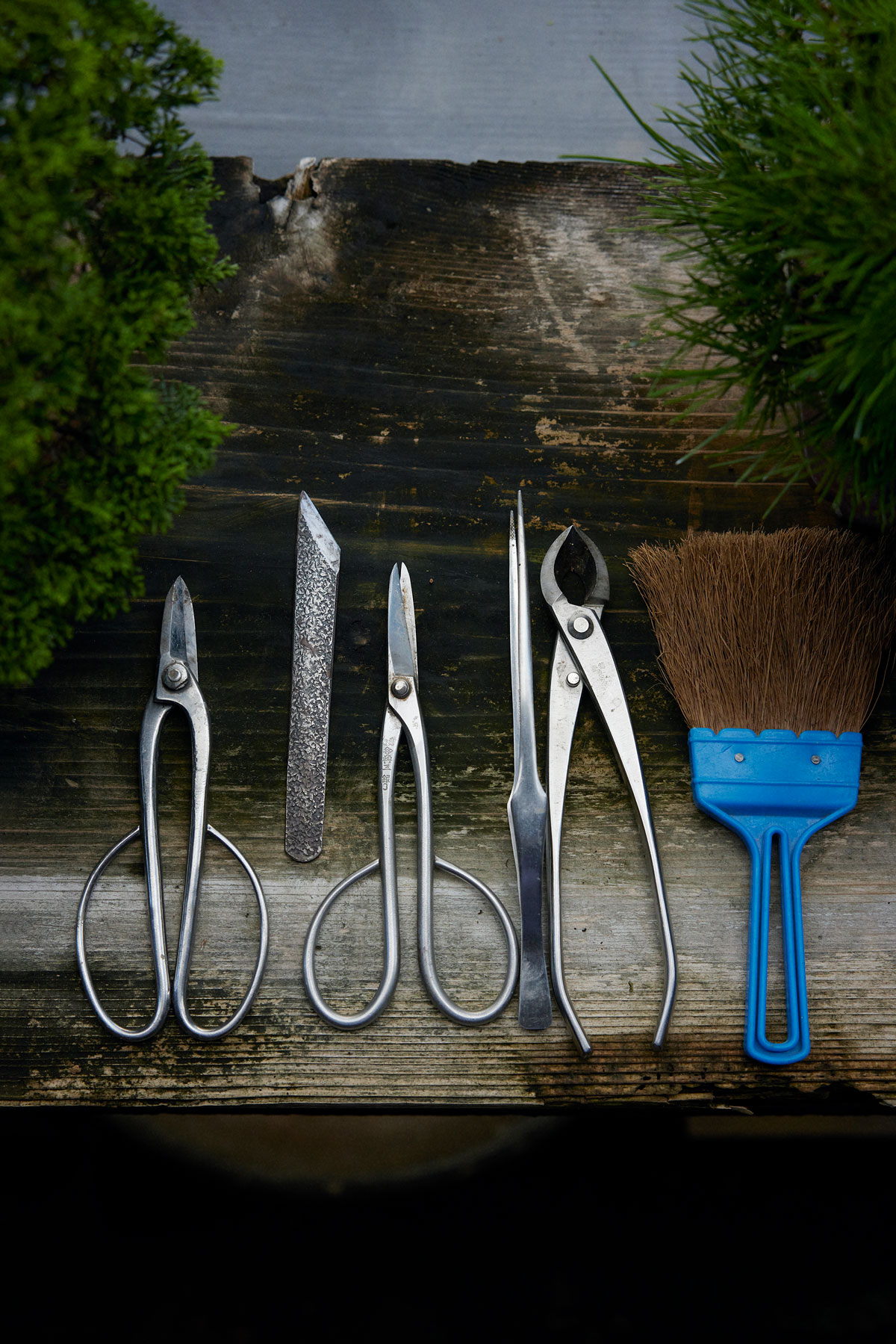
道具を大切にするのは、盆栽修業の基本のキ。切れ味が落ちてきた道具を手入れするのも、もちろん自分たちで行う。
盆栽が最初に海外に渡ったのは英国だったが、いま人気が高いのは、イタリア、ドイツ、スペイン、フランス。山から木を採取する「山採り」は日本では禁止されているが、それらの国の一部ではまだ可能なのだという。「英国は日本と同様に山採りは禁止されているので、盆栽の価格が高い」。それでも、サムさんは盆栽に惹かれた。
「英国にも盆栽はあるけれど、多くの人は曖昧に知っている程度で、観葉植物と同じだと誤解しているように思えます」。彼は、ヨーロッパにおけるそういった盆栽のイメージを変えたいと思っている。「いつか、ロンドンの美術館で盆栽の展覧会を開きたい」。枝を支える手。水を与える手。剪定ばさみを握る手。盆栽職人の修業の道は、まだ始まったばかり。それでも、彼が思い描く物語は芽吹き始めている。