






The Osaka-Kansai Expo, held from April 13 to October 13, 2025, brought many visitors inspiration and new discoveries, but has now come to a sad close. As each country drew its vision for the future, the Italian Pavilion attracted particular attention. Its popularity was overwhelming, and the lottery was fierce every day.
Even those who dismissed it as "just for the pizza and pasta" would be surprised to learn the real reason. Not only was it a showcase of authentic food culture, but it also showcased genuine art that embodies the spirit of the Renaissance, something that is rarely seen in everyday life.
The exhibition theme was "Art Regenerates Life (L'Arte Rigenera la Vita)." With this philosophy as its backdrop, the Italian Pavilion brought together national treasure-class art from across Italy by artists such as Michelangelo, Caravaggio, and Leonardo da Vinci. The exhibition featured masterpieces that would make the Uffizi Gallery jealous, as well as works on special loan from the Vatican. While in Osaka, visitors had the chance to enjoy a rich experience, as if touring art museums in Florence or Rome.
This exhibition will surely be remembered as a memorable art experience, not only for those who actually visited, but also for those who were unable to attend. Perhaps the true journey of appreciation lies in what begins "beyond" that exhibition. This time, we will introduce five carefully selected masterpieces that were on view at the Italian Pavilion. We hope to explore these works to find hints for imagining the future.
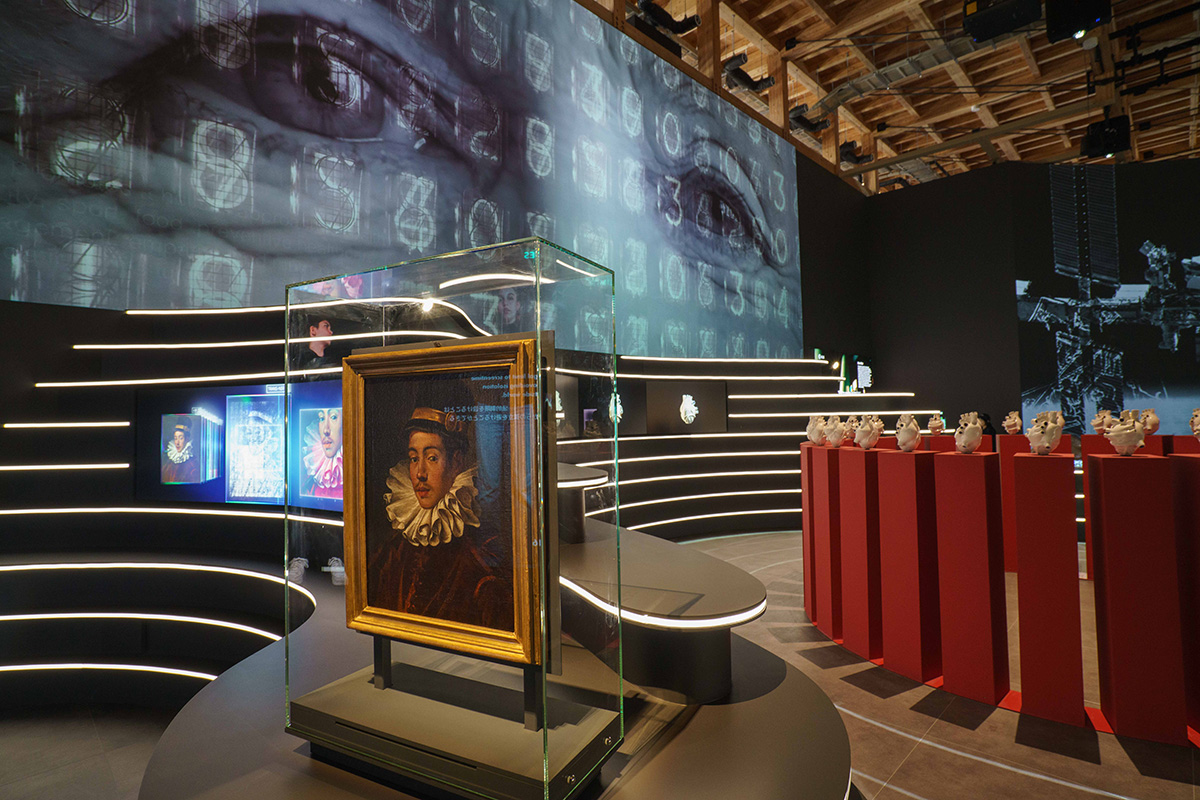
Domenico Tintoretto's portrait of Ito Mancio looks towards the future

Ito Mancio. Just hearing his name might make him seem like a young entertainer. However, he set out from 16th-century Japan to explore the world, standing at the origin of globalization. His image was immortalized in a portrait in the studio of the Venetian painter Tintoretto.
Mancio left Nagasaki as a member of the Tensho Embassy to Europe, a young delegation selected by Christian feudal lords in Kyushu. He met with the Pope in Rome and received a warm welcome throughout Europe. During his journey, he visited the workshop of Jacopo Tintoretto, who left behind many magnificent paintings for chapels and public buildings, at the invitation of Doge Niccolo da Ponte in Venice, and had his portrait painted by his son Domenico.
Mancio faced the world not simply as a "Japanese person to be seen" in a foreign land, but as a "Japanese person who speaks," speaking about his culture and faith in his own language and attempting dialogue. In an era without the Internet or telephones, these young people crossed the ocean with no guarantee of survival, and, with faith in their hearts, learned Latin so they could communicate in the same language. Rather than being passive about the unfamiliar world, they sought to confront it with words. Their gaze is filled with a determination to stand at the crossroads of different cultures and look to the future.
The image of young people 500 years ago trying to communicate with the world poses a question for us living today: "How do you face the world?"
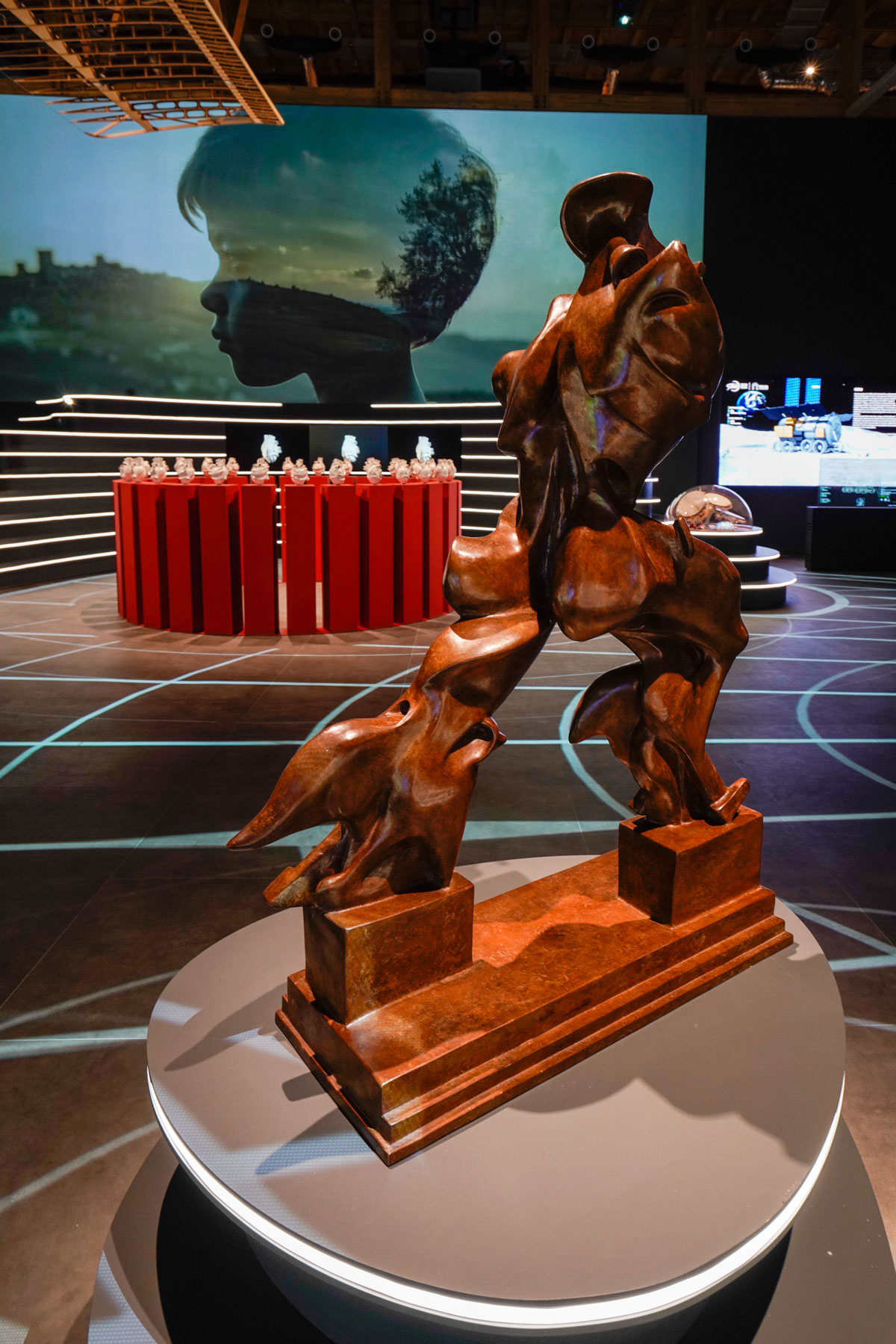
Boccioni's "Unique Forms of Continuity in Space" opens the door to a new world

"Forme uniche della continuità nello spazio" (Unique Form of Continuity in Space) was created by Italian artist Umberto Boccioni in 1913. The flexing muscles and the form that cuts through the wind seem to capture a whole series of movements. Even though it is still, movement can be seen. That is the appeal of this work.
Sculpture is an art form that has existed since ancient times, but Boccioni linked it with the ideas of Futurism, pushing it into a completely new realm of expression. He sought to give form to modern themes such as speed, machines, and urban energy through sculpture rather than painting. By capturing the relationship between time, movement, and space in three dimensions, he aimed to visualize a sense of the future. This work has even been featured on Italy's 20-cent coin and is widely known as a symbol of the future.
The sense of the future he sought to capture was not simply technological innovation or rationality, but an intuitive perception that has yet to be fully put into words, such as the dynamism that permeates the city, the rhythm of the human body, and our relationship with space, as well as the power to foresee the future through our senses.
This sensory perspective is also relevant to modern AI, robotics, and urban design. For example, AI technology that can read the nuances of human facial expressions and voices is tapping into a world of sensations that cannot be captured by numbers or logic alone. In urban design, too, spaces and flow patterns that people find "comfortable" are rooted not only in efficiency, but also in physical experience and sensation.
Boccioni's sculptures are a visual gateway to experiencing this sensory vision of the future. "It looks cool," "It looks like it's moving," "It's intriguing." These kinds of sensations may be the first step into the future.
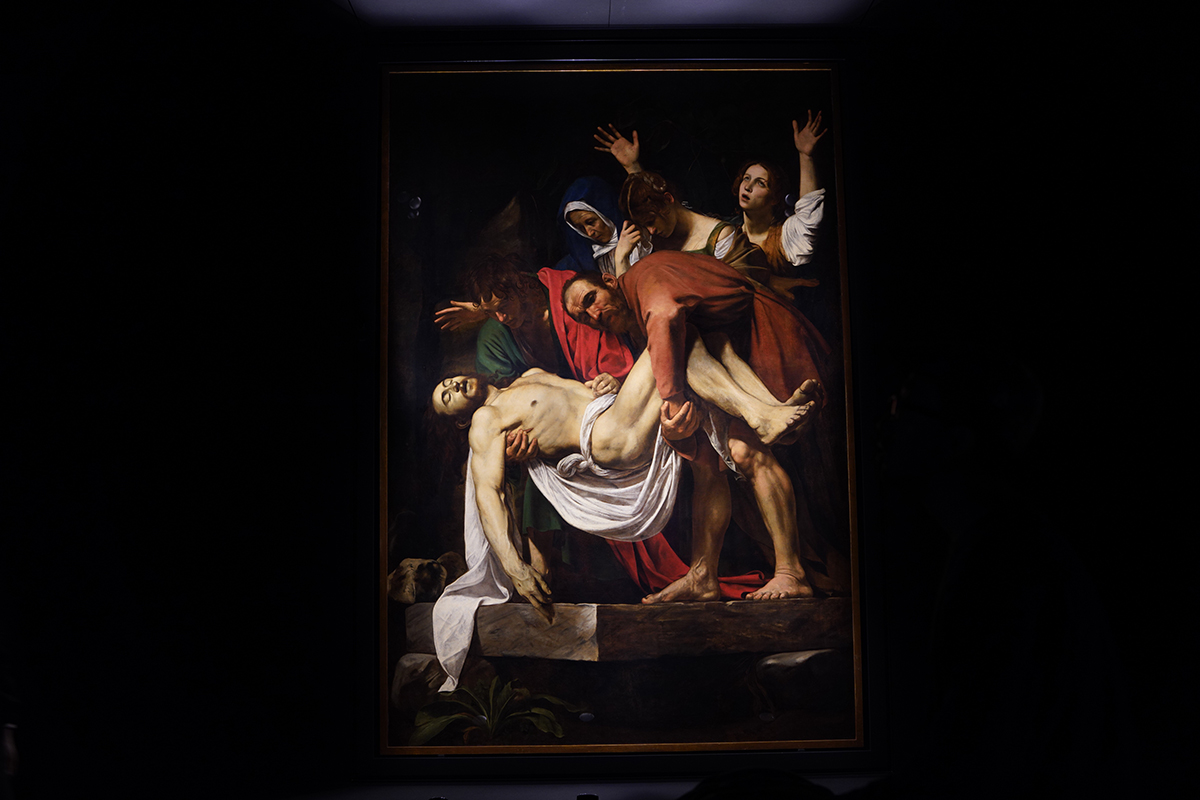
What does Caravaggio's "The Entombment of Christ" teach us about humanity?

The Italian painter Caravaggio painted "The Burial of Christ" (Deposizione) between 1602 and 1604. Considered a pioneer of Baroque art, he did not paint idealized saints, but rather portrayed real people living in reality. His models were townspeople and the poor. With dirty feet and tired expressions, the painting emphasizes a sense of everyday life rather than holiness.
In this work, Christ's body is depicted close to the ground, conveying the weight and coldness of death. The play of light and shadow accentuates emotions like a stage spotlight, and influenced later artists such as Velázquez and Rembrandt.
Caravaggio himself also lived a turbulent life. Fights, escapes, murders... amidst his violent life, he produced one masterpiece after another. His Baroque masterpiece "The Entombment" attracted the attention of Napoleon, who regarded art as a symbol of authority, due to its dramatic composition and realistic expression. The work is now housed in the Vatican Museums.
修復作業中には、キャンバスの裏側からラテン語による謎めいた一文が発見された。「Ne Iacobus videat neque de hoc loquetur(ヤコポがこの作品を見ず、語らぬように)」と記されており、その横には血痕を思わせる長い線が添えられていた。この言葉の意味はいまだ明らかになっておらず、カラヴァッジョにとって極めて重要な意図が込められていた可能性があるとして、研究者たちの間で大きな関心を集めている。
This work reminds us of the "essence of humanity" that is often lost in the age of social media. By coming into contact with raw emotions such as suffering, sadness, and prayer, rather than processed emotions, we can return to our true humanity. Caravaggio's painting poses such a question.
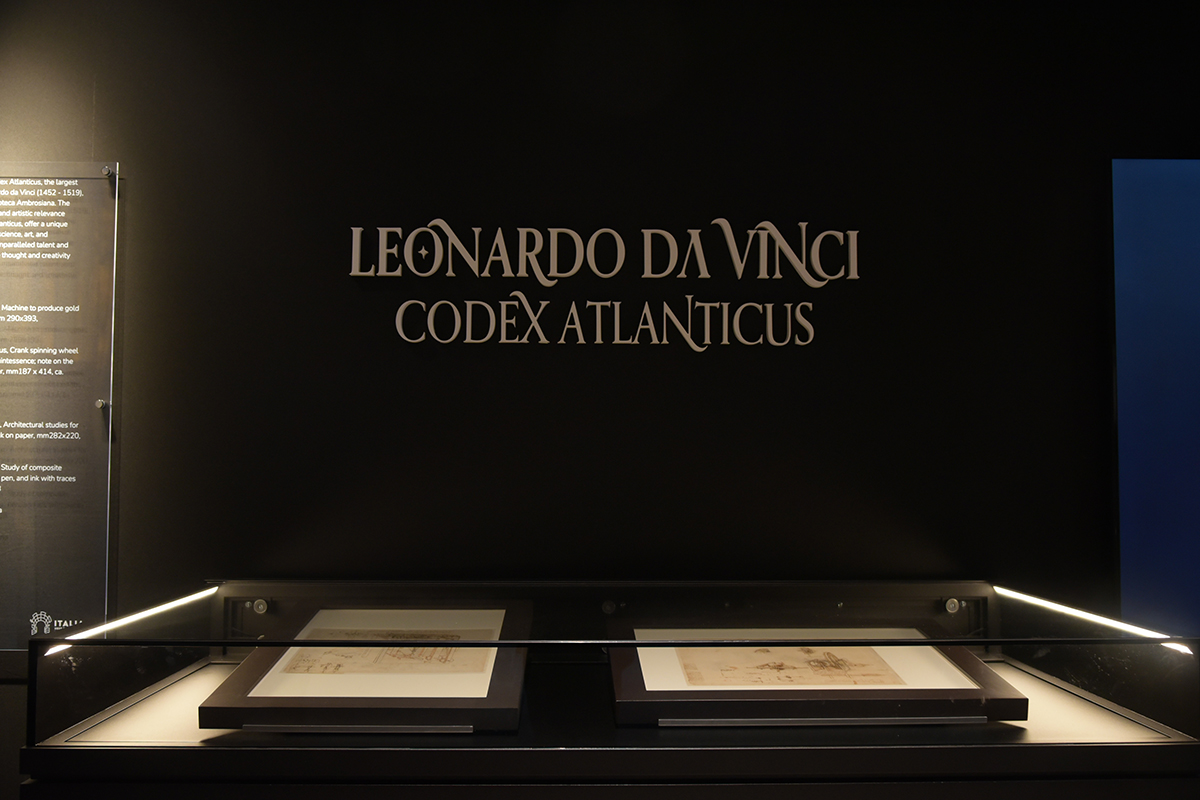
Leonardo da Vinci's "Codices Atlanticus" reveal the continuity of creativity

Leonardo da Vinci is a Renaissance master best known for the Mona Lisa, but that's only one side of him. In addition to being an artist, he was also a scientist, engineer, and philosopher. He dissected the human body and even drew blueprints for airplanes and robots. The Atlantic Codex (Codice Atlantico) is a collection of his ideas from the last 40 years.
The manuscript is filled with visions of a future that was simply impossible to realize with the technology of the time. Da Vinci constantly pondered "how to create something that doesn't yet exist." This approach overlaps with how we face modern challenges such as AI, robotics, and sustainable technology.
The appeal of the Codex Atlanticus lies in its transversal thinking, where art, science, philosophy, and technology intersect. And above all, the deep significance of this manuscript is that it is not a finished work, but rather a work in progress. For Da Vinci, creation was not just about finding answers, but also about continuing to ask questions.
未来は、技術だけでなく、人間の感性と創造力、そして過去からの学びによって形づくられる。だからこそ、500年前のこの手稿が今、万博で展示されたことには大きな意味がある。それは、「未来はすでに誰かが考え始めていた」という証しであり、「今の私たちも、その続きを描いている」という気づきを与えてくれる。
Michelangelo's phantom work "The Risen Christ" and unfinished beauty

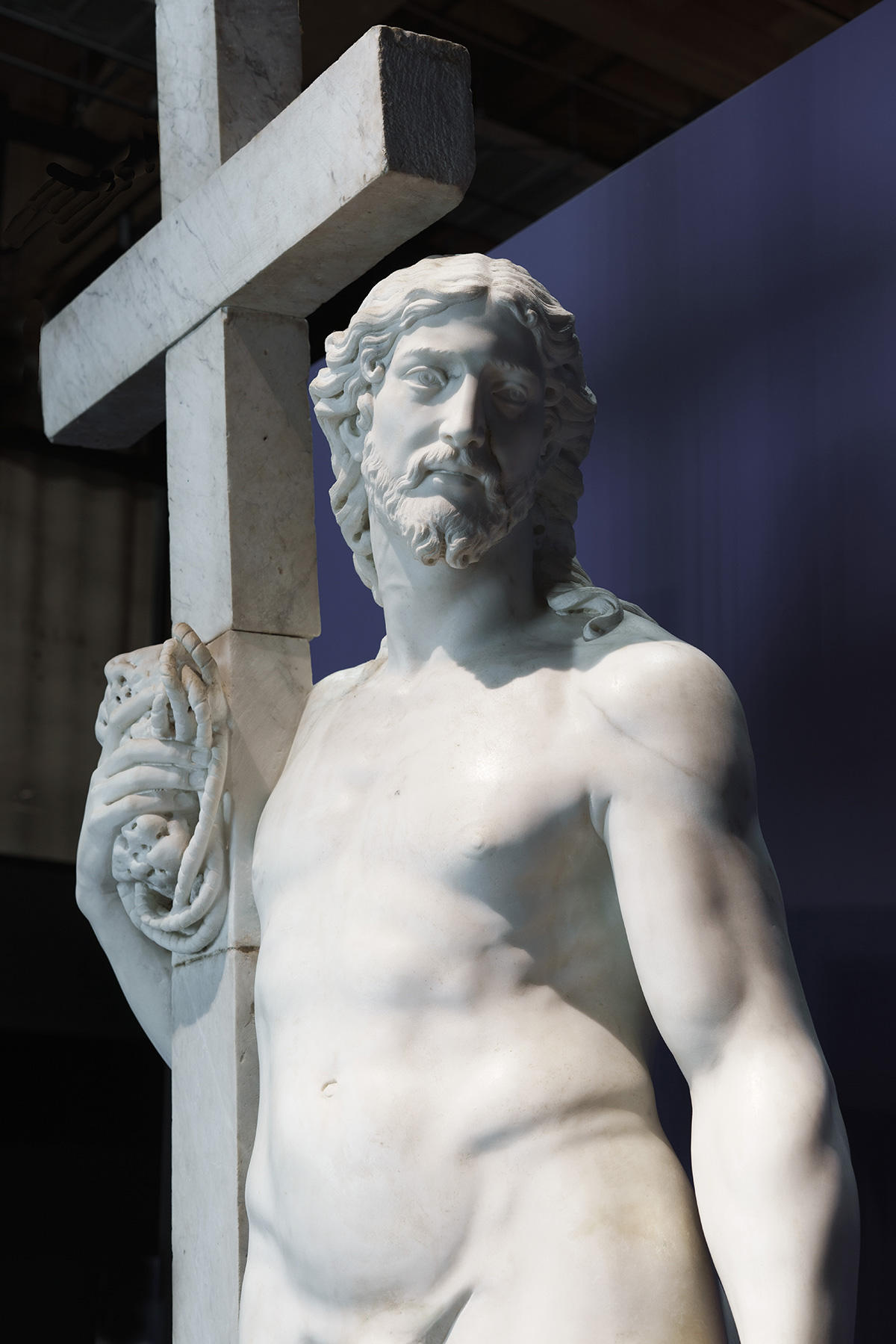
Of particular note in the Italian Pavilion is Michelangelo's sculpture "The Risen Christ" (Il Cristo Risorto), a precious work that is usually kept quietly in a church near Rome and is little known to the public.
Work on this statue began in 1514, but Michelangelo, in his pursuit of perfection, stopped work after he noticed a black line on Christ's face. Gian Lorenzo Bernini is said to have subsequently made changes to the statue, and it is said to be an "indirect collaboration" between the two masters.
"The Risen Christ" is a work that symbolizes suffering and salvation, and at the same time, the state of "incompleteness" itself exists as part of the creation. Its appearance, stopped in the process of achieving completion, has the power to raise questions.
In an age where AI can mass-produce precise shapes, Michelangelo's works pose questions to us: "What is beauty?" "What is creativity?" If there is meaning in being unfinished, then perhaps it shows the value of continuing to think.
When we stand before this statue, we are not simply appreciating it, but are coming face to face with the essence of creation.
To those who continue to ask questions

The Italian Pavilion at the Osaka Kansai Expo attracted attention because it was not simply a place for art appreciation. Fundamental questions such as "What is completion?" and "What is creation?" were embedded throughout the exhibition.
The exhibition did not only feature completed works of beauty. It also featured sculptures that were left unfinished, portraits at the crossroads of different cultures, manuscripts that foresee the future, and paintings that explore the essence of humanity. Each work shook our thoughts and appealed to our sensibilities.
These arts and inventions were created by great men who were once nameless young people. They painted the world with their own hands and shaped the future. Their trajectories reach us today as a message that "you can do it too."
The power to create the future does not belong to anyone special. It is a potential and question that lies dormant within everyone. This realization may be another theme embedded in the margins of the exhibition. Art is a gateway to thinking about the future. And what kind of landscape will we paint beyond that? It is up to each and every one of us to choose.