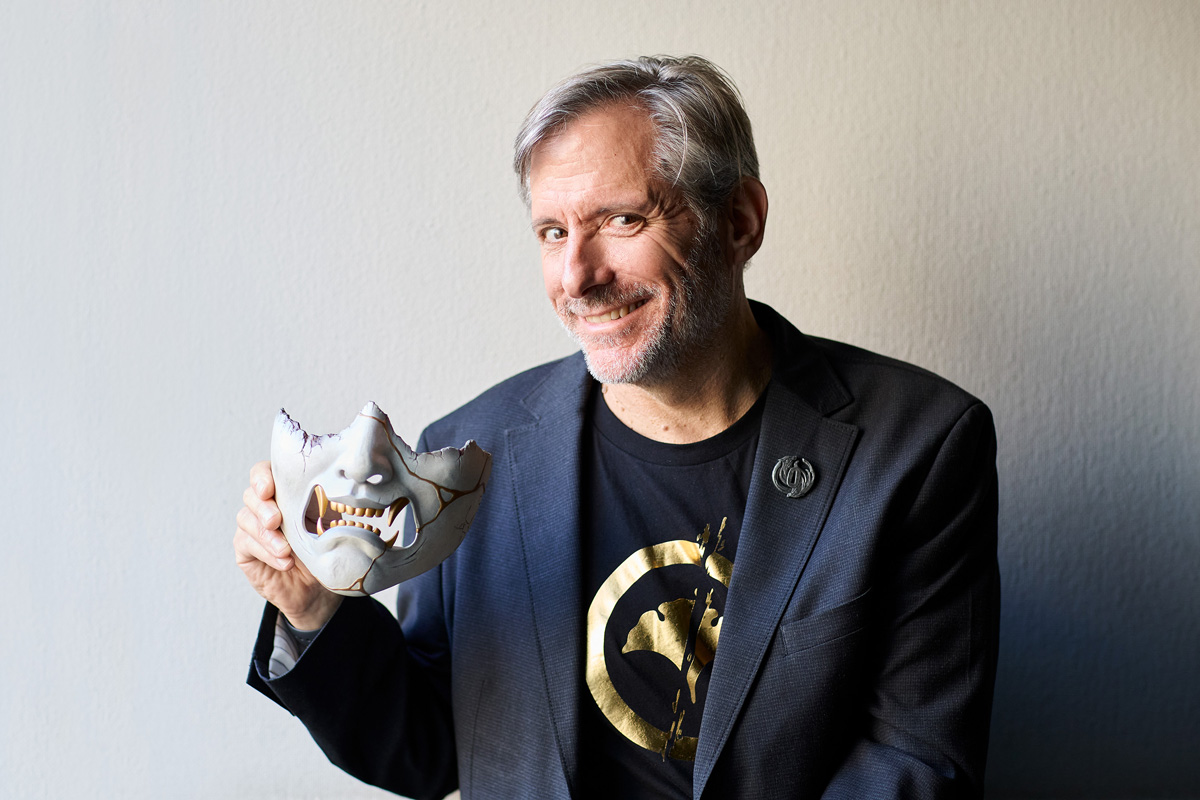











Games and the Origin #01: First time playing at an arcade in the 80s. The producer of "Ghost of Yōtei" talks about his formative gaming experiences

Since their birth around 1950, games have continued to evolve at a dizzying pace. As they have developed by incorporating a variety of cultures, they have also influenced other cultures. In this series, we talk to people who have been captivated by the appeal of games, both those who create them and those who play them, about "games and their origins." In our first interview, we talk to Brian Fleming, co-founder of Sucker Punch Productions.

photo: Hiromichi Uchida / text: Neo Iida

To the list of serials

From arcades to open worlds, we've witnessed the evolution of gaming.

Sucker Punch Productions, the company that brought us Ghost of Tsushima and Ghost of Yōtei, is co-founded by Brian Fleming, who is the producer behind both films.

"My first exposure to video games was through arcade games like Donkey Kong and Space Invaders at game centers. After that, I started playing games on the Apple II (a personal computer released by Apple Computer in 1977), and played Wizardry and Atari's Breakout."

Brian Fleming
Brian Fleming | Co-founder of the American game studio Sucker Punch Productions. After working at Microsoft, he founded the studio in 1997 and has produced titles such as Sly Cooper and the Infamous series. In 2020, the action-adventure blockbuster Ghost of Tsushima became a worldwide hit. The latest installment in the Ghost series, Ghost of Yōtei, is currently on sale.

Brian's first gaming experience as a child was in the 1980s, a time before Nintendo released the Family Computer, when games were played in arcades rather than on consumer game consoles.

As Brian grew, the quality of games evolved, and he witnessed the power of expression improve with each new high-performance consumer console.

"I've always loved RPGs. From the time when it was a turn-based system where you input commands and waited for your opponent's turn, battles and communication gradually became more realistic, 3D was introduced, and games evolved into the open-world format we know today, and I've experienced it over the years."

He was influenced not only by Japanese films, but also by Westerns and "Kill Bill."

Brian also had a strong interest in film. While studying special effects at university, he was introduced to computer programming and became an engineer. While at Microsoft, he worked as a technical assistant in Bill Gates' office, where he even got to play the PlayStation before it was launched in the US.

In 1997, he founded Sucker Punch Productions and worked on action games such as Sly Cooper and Infamous, and in 2020, Ghost of Tsushima became a global hit. Through careful historical research, the game beautifully portrays 13th century Japan, powerfully portraying the struggles of the samurai. The sword-wielding battles were clearly influenced by period dramas.

Ghost of Yotei
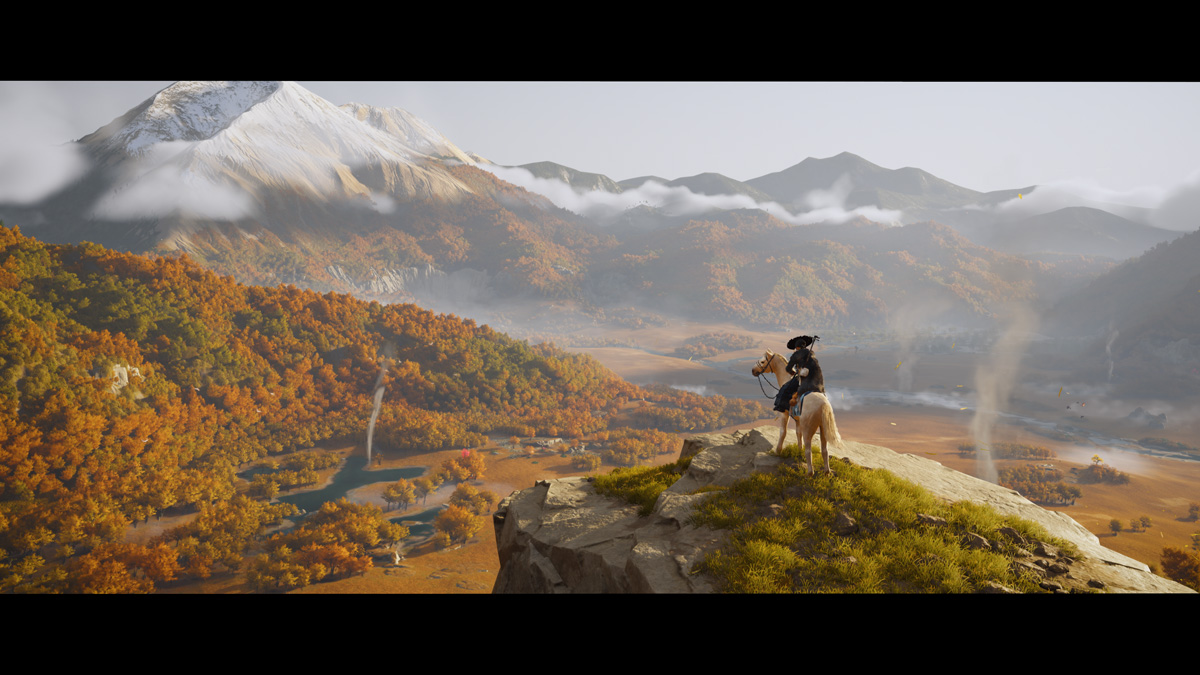
Ghost of Yotei was released in October 2025 as the latest installment in the Ghost series, which also includes Tsushima. Set in Ezo (Hokkaido) in 1603, the story of revenge unfolds at the foot of Mount Yotei, famously known as "Ezo Fuji." It's an open-world action game that combines swordplay, stealth, and exploration.

"You can see the influence of films like 'Tsushima' or 'Yotei,' but I've always loved movies. Japanese films like Akira Kurosawa's 'Seven Samurai' and Takashi Miike's '13 Assassins.' They have a stillness that you don't find in Western films, and many scenes are deliberately still. They also feature a lot of characters with strong personalities. There are old people and unconventional young people, and each individual character blends together. That, too, really attracted me."

In the previous game, "Tsushima," Kurosawa (Akira) mode was used, which allowed the screen's color tone to be changed to monochrome. This option was carried over to "Yotei," and a new Miike (Takashi) mode was also added, which zooms in on the camera to create a sense of tension. What cultural influences in particular influenced the creation of "Yotei"?

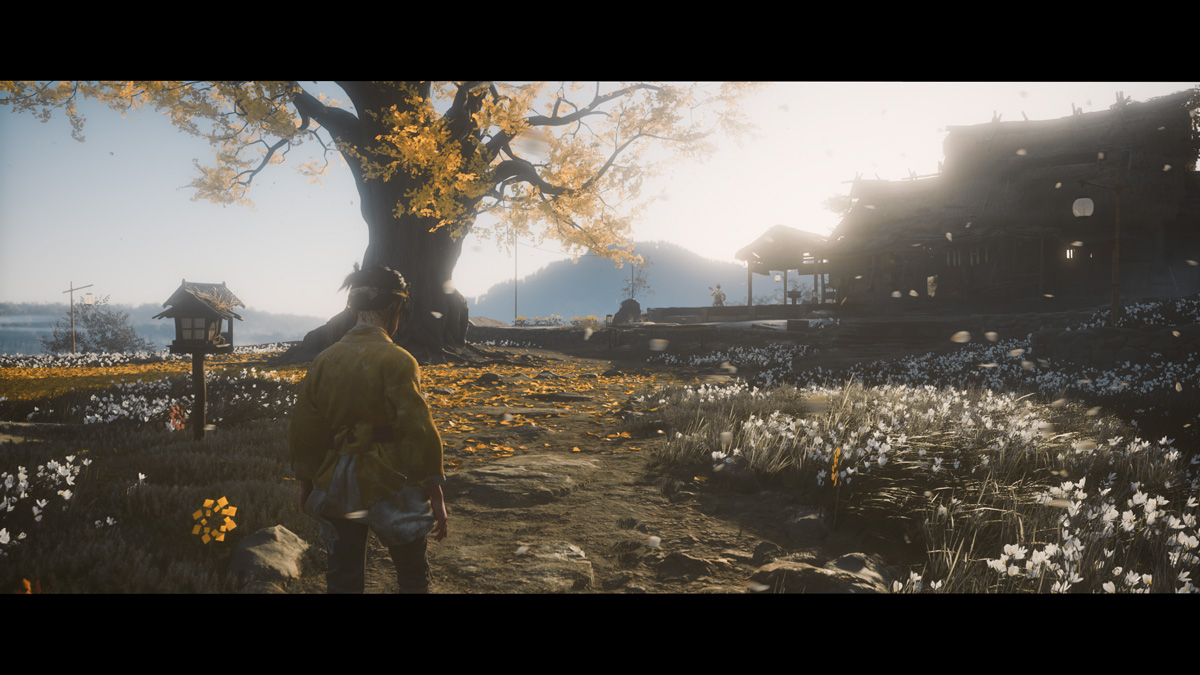
"We were influenced by Kurosawa and Miike's works, of course, but also by westerns and Kill Bill. You'll hear some of those elements when you listen to the background music. We were also heavily influenced by Hokkaido, the setting of this film. The unique nature of the land, the plants and animals that can only be found there, as well as its history and culture. Our team traveled to Hokkaido many times, meeting the people who live there and speaking with experts who know about the area's ancient history. We also visited museums and read documents, coming into contact with the many things that Hokkaido has nurtured."

First, I wanted to portray the character Atsushi. And then I wanted to portray the land of Hokkaido.

Tsushima is set in Nagasaki in the late 13th century. Rather than focusing on iconic historical events such as the Sengoku period, when Oda Nobunaga and Toyotomi Hideyoshi appeared, or the end of the Edo period, when momentum for opening up the country was building, Sucker Punch Productions's sense of choosing to focus on the Mongol invasions of Japan, which took place in Kyushu, was highly praised.

This time, "Yotei" is set in 17th century Hokkaido, a time when the Ainu people, who had lived in the area for a long time, as well as the Matsumae clan, were expanding their influence and strengthening their control. What was the reason for deciding to depict Hokkaido?

"17th century Hokkaido sounded very interesting to us. It's a vast world, a frontier, dangerous yet beautiful. And it's not densely populated. These elements are common to Westerns, and we felt it would be the perfect place to tell an epic story. That said, we didn't go out of our way to look for this location because we were planning to make a sequel to Tsushima. At Sucker Punch Productions, a major theme in game development is telling the origin stories of the characters within our works, so we wanted to first portray Atsushi as a character. When we thought about how to present the scene, we wanted it to have an atmosphere like a frontier in a Western, and when we combined that idea with the location of Hokkaido, we arrived at this location."

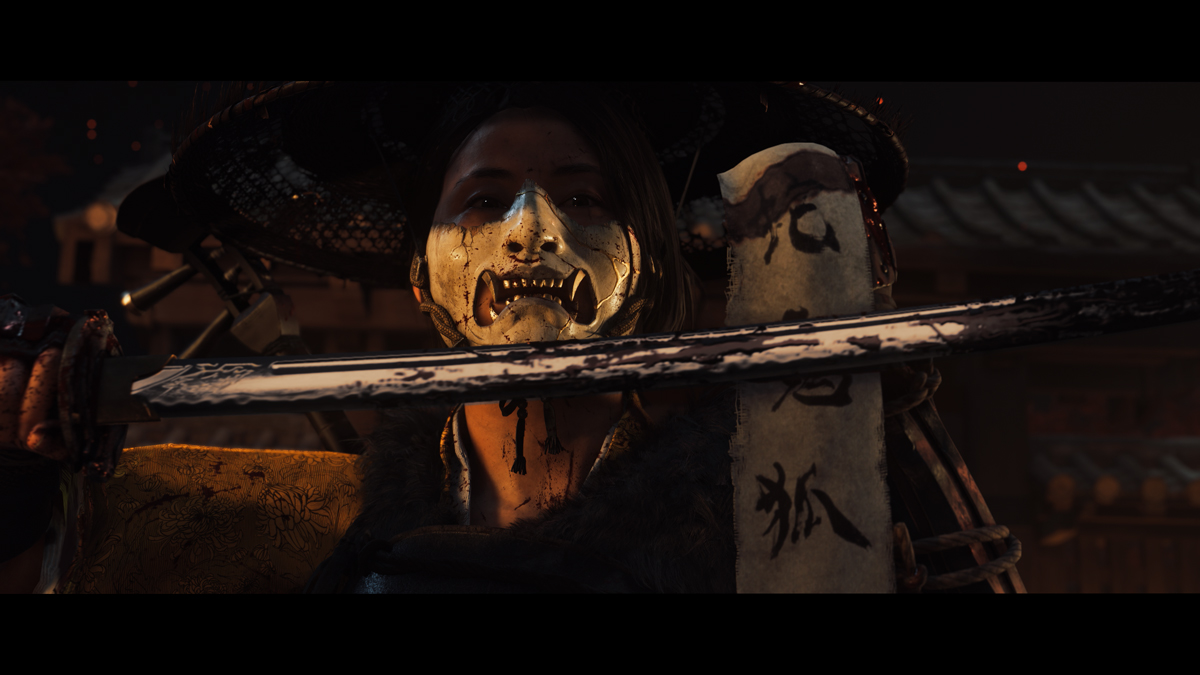
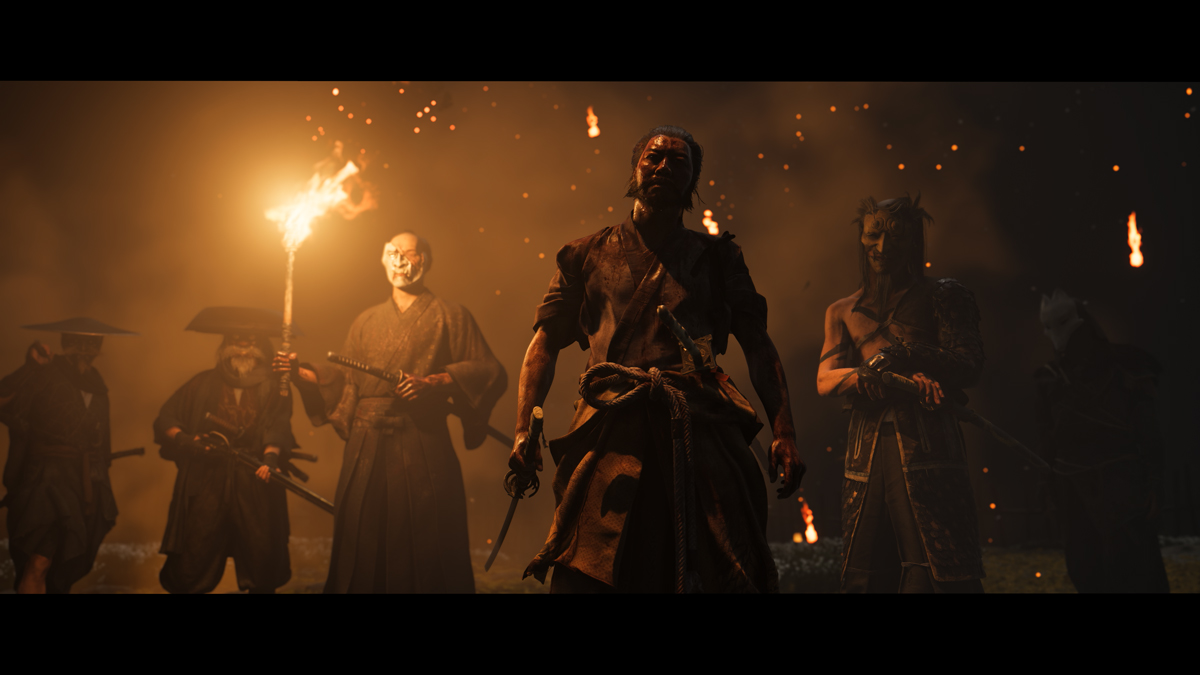
The protagonist, Atsushi, searches for the Yotei Rokunin in order to avenge his parents. The sound of electric guitars that ring out when confronting enemies and the acrobatic battles are not only reminiscent of typical Japanese period dramas, but also, as Brian said, the influence of westerns and action movies like "Kill Bill" can be felt.

Additionally, while the screen presentation options include Kurosawa Mode and Miike Mode, the sound options include Watanabe (Shinichiro) Mode, named after the director known for the anime series Cowboy Bebop and Samurai Champloo.

Selecting this mode switches the background music to a lo-fi sound, allowing you to explore Ezo with modern yet comfortable music by Sweet William, mabanua, and Ezaki Fumitake. Brian explains, "There are a lot of fans of Samurai Champloo on the team." The influence of this classic, which has been called a new type of samurai anime and has received acclaim for its music, with Nujabes and Fat Jon participating, lives on in Yotei.

The silence and space of Japanese culture expressed in "Yotei"

By the way, Brian's hobby is fishing. When it comes to fishing, of course there's the catch, but the real joy is also the quiet time spent lost in thought while casting a line into the river or sea.

Brian felt there was a connection with "Yotei," but he says, "Fishing didn't actually have a direct influence on 'Yotei.'" Because the game is ultimately a comprehensive work created by a team, Brian's personal tastes and preferences aren't a major reflection of it. However, he says the team is united in their interpretation of Japanese culture.

"While entertainment created in Western culture tends to be packed with stimulation, I feel that Japanese culture has quietness, moments of nothingness, and space. I wanted to express the charm of that as much as possible, and I incorporated it into 'Yotei.' So I'm happy if people can pick up on that feeling. ...Speaking of fishing, let me share a quote I like. It's by John Buchan, and it says, 'The allure of fishing lies in chasing something that is not impossible to obtain, but is difficult to obtain. The allure lies in always having hope, and holding on to that hope.' This is one of the quotes that I hold very dear."

The last line seemed to be what Brian was saying both as a game creator and as a player who loves games and continues to adventure.

Brian Fleming
"Look at the scenery and go to any place that catches your eye. Someone's story will give you a hint. In 'Yotei,' your encounters with characters will move the story forward. Experience your own story," said Brian, holding the "Vengeful Spirit's Mask" that comes with the bonus version.

To the list of serials

SHARE ON

FEATURED MOVIES
Featured Videos

BRUTUS
OFFICIAL SNS
Brutus Official SNS

FEATURED MOVIES
Featured Videos