








Relax in a handed-down public bathhouse, like you're at your grandmother's house
Local public baths are on the decline nationwide, and Kyoto City is no exception. Meanwhile, Sanjiro Minato took over Sauna no Umeyu in Kiyomizu-Gojo in 2015, and has since grown it into a popular public bath. Yutonamisha, led by Minato, is based in Kyoto and focuses on maintaining public baths both within and outside the prefecture, currently operating three public baths in the city.
In 2019, he took over the business of Genyu, which was founded in 1928. Stepping through the noren (shop curtain) reveals a stylish wooden shoebox and a reception desk. The spacious tatami relaxation space, which was once the family's residence, is described by Minato as "a space that feels like grandma's house."
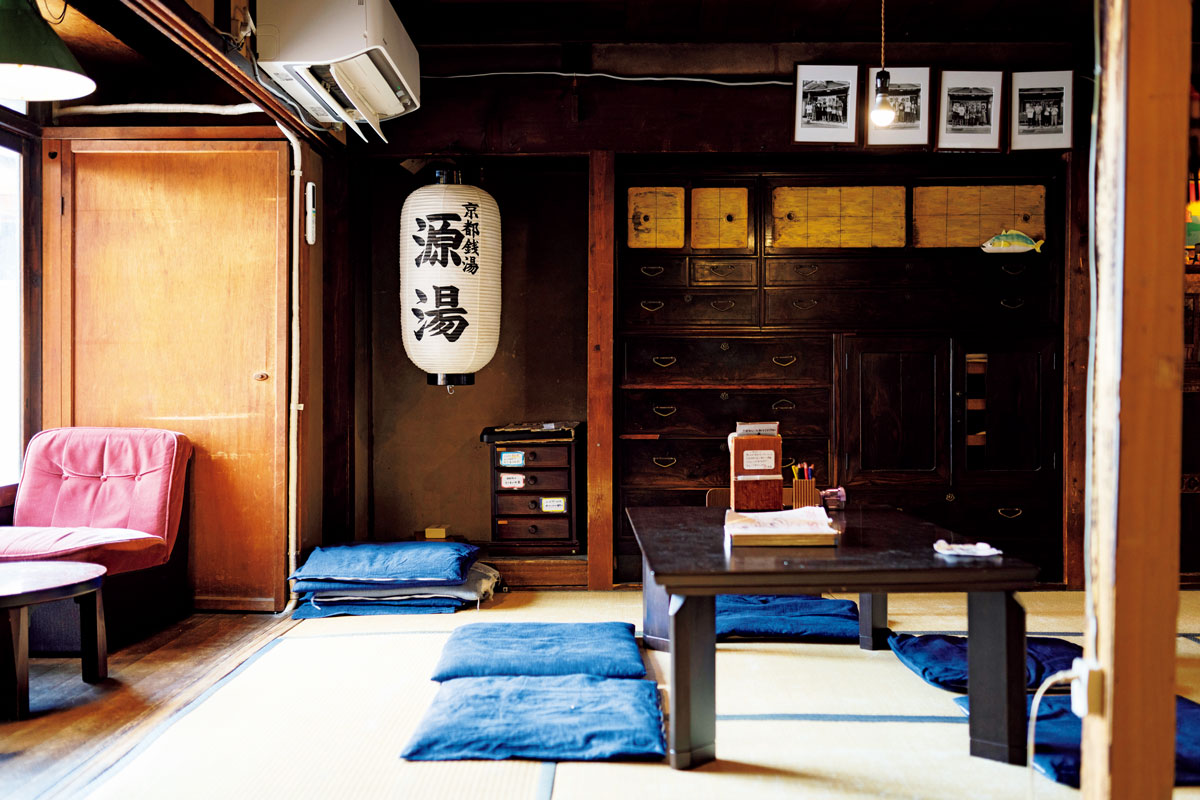
The spacious relaxation space is equipped with free Wi-Fi, and is also used for hosting live music and rakugo performances. 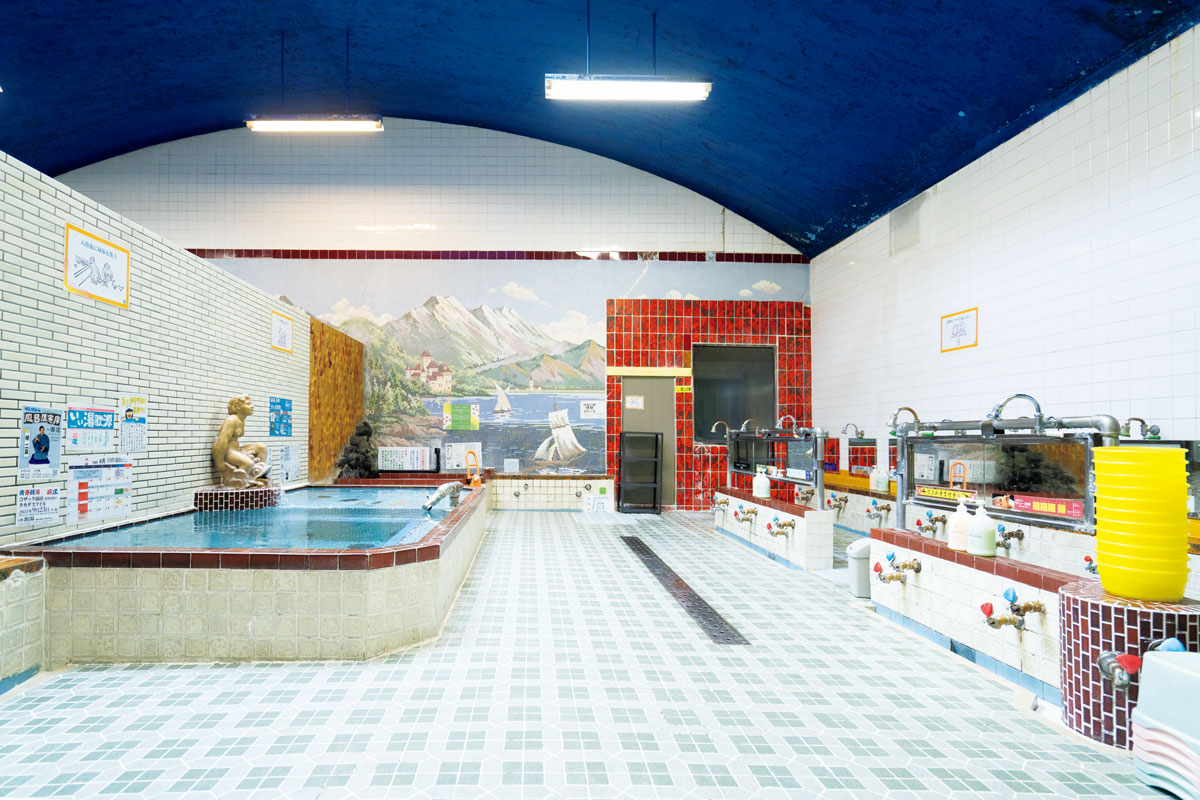
There is a wall newspaper handwritten by the staff on the wall of the bathtub. 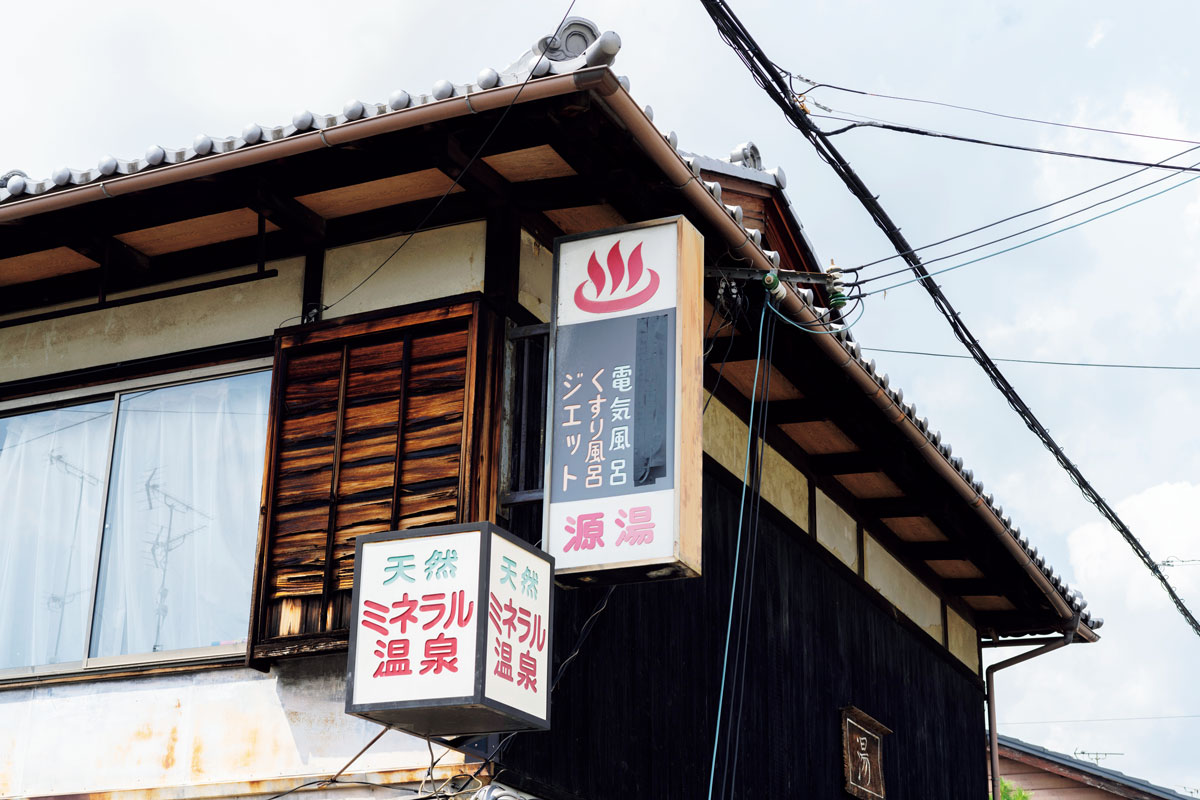
An old-style public bathhouse that was also the model for an anime.
When he took over, he didn't completely renovate the restaurant due to financial reasons, but also because "we wanted to carefully preserve the atmosphere that can't be created now, so as not to cause any discomfort to the regular customers," says Minato.
When asked, Minato said that some ideas had been put forward for the relaxation space, such as a one-drink or two-hour limit. However, "Even though it's commonplace to charge for space and time, I don't want to do that at a public bath. I want to increase the number of everyday spaces in Kyoto that all kinds of people can come to casually," said Minato.
Compared to the city center, time flows more slowly in Genyu, a town where you can relax in a public bathhouse that uses natural water pumped up from underground, just like at grandma's house.
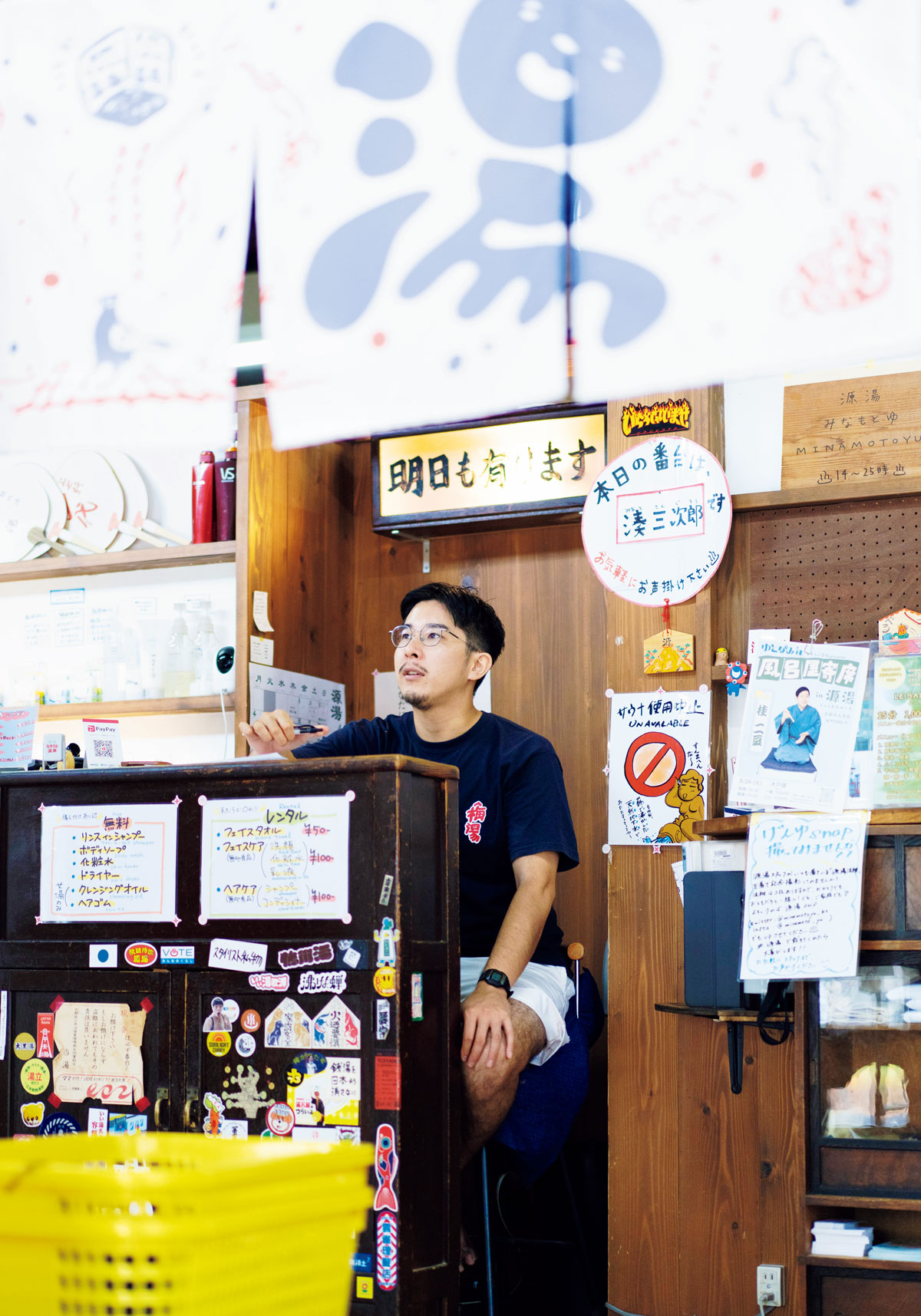
The owner of the famous restaurant Genyu talks about the space in Kyoto
Kyoto is a unique place that welcomes unidentified stores.
I want to operate the public bath in a way that allows each staff member's individuality to come out naturally. Akiyoshido is a unique store run by a quirky owner selling his personal belongings. It's a bit messy, but up until about 15 years ago when I was a student, there were a lot of stores like this. But Kyoto still has the fertile ground to accept mysterious stores.
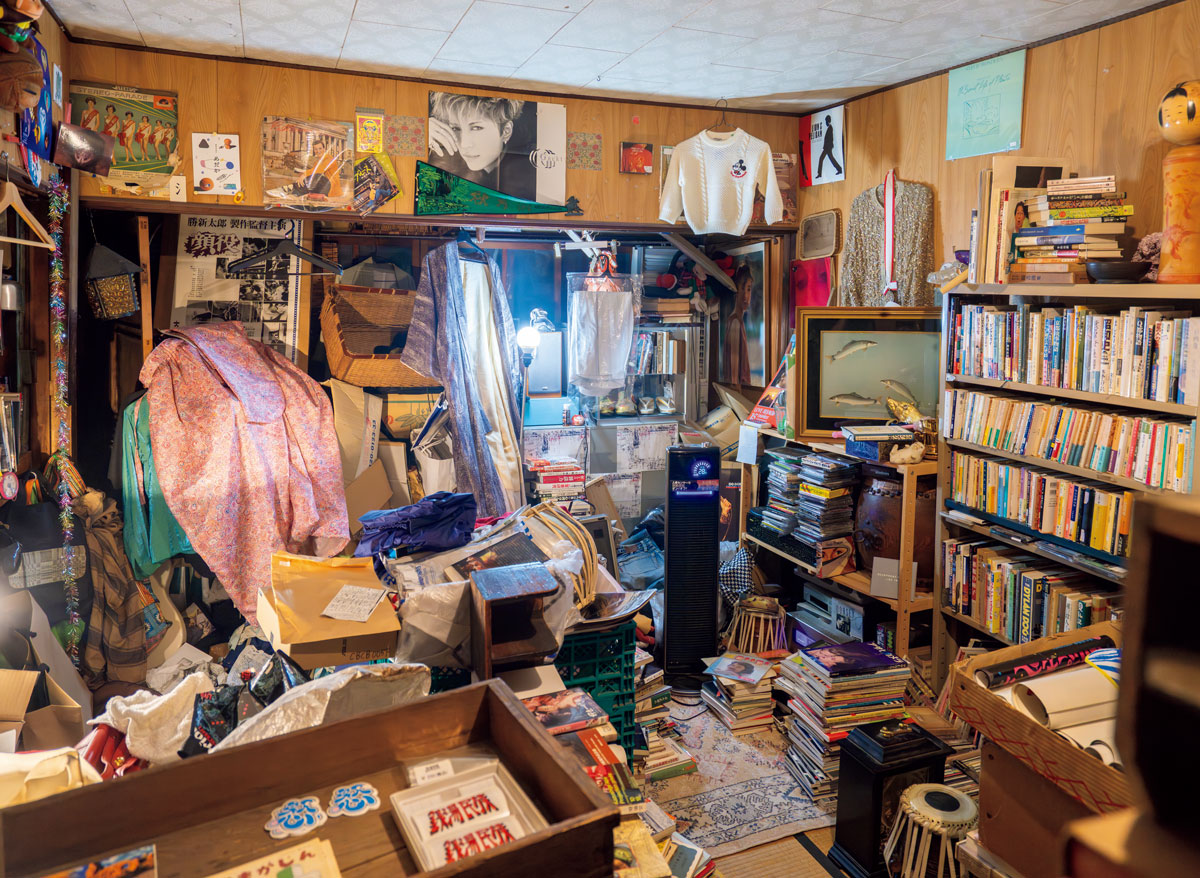
It's a small room on the second floor of Genyu, a public bathhouse in Kamigyo Ward. It's a flea market-like space where the owner, Nakamura A, sells personal belongings, used books, CDs, miscellaneous goods, and second-hand clothing recommended by the owner. The room is surrounded by a huge amount of stuff, leaving almost no room to walk. It's like a Showa-era university student's boarding house, like the kind of place you'd see in a movie. But once inside, the soft-spoken nature of Nakamura makes for an unusually calming atmosphere.
Also, when I want to relax, I go to Yamashina. I can relax along the canal, and there is a real "Philosopher's Path." The actual Philosopher's Path near Ginkakuji is crowded with tourists, so I can think here.
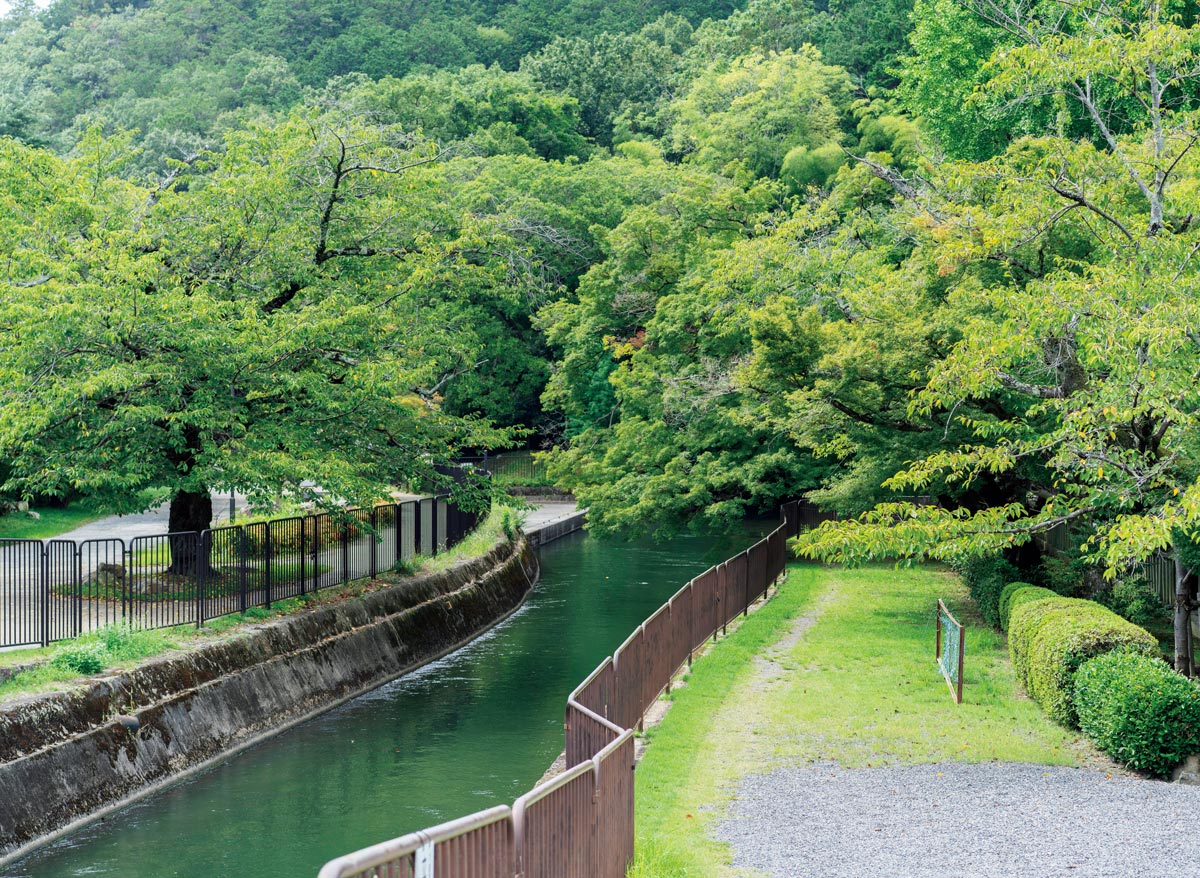
The Lake Biwa Canal is an artificial canal built in 1890 that connects Kyoto and Lake Biwa in Otsu City, Shiga Prefecture. It is about 7.4 km from Keage in Kyoto to Lake Biwa. It is also known as a walking course. The photo shows the First Canal, near Shinomiya Station on the Keihan Keishin Line, and the Yamashina Canal Boat Boarding and Disembarking Terminal. At the Keage Incline near Kyoto City Zoo, there is the Lake Biwa Canal Memorial Museum, which displays models and documents. In 2020, it was designated a Japan Heritage Site by the Agency for Cultural Affairs. Canal boats operate on routes from Keage to Otsu Port and other locations.