











Creating a soundscape of memory
--You started out as a musician and released six albums. Please tell us about your musical career.
Kwon Byung-jun
My mother was a piano teacher, so I learned classical music from a young age. As I grew older, I started to like more popular music, especially British pop and rock.
When I was in high school, alternative rock started to become popular. This was around the time that the underground scene in Hongdae started to become very active. I was in a punk rock band at the time and had released albums.
In the 2000s, I became interested in electronic music, and at the same time, I also became interested in the film, theater, and art scenes, and I wanted to get out into a wider world.
--So that's why you went to study in the Netherlands in 2005?
Kwon Byung-jun
Yes, I studied sonology for the first year, then went on to graduate school at the School of Arts and Sciences, and after graduating I stayed in Amsterdam and worked as an acoustic engineer at STEIM, an experimental music research institute, studying mechanical design.
There I also worked with the Japanese DJ sniff. Up until then I had been exposed to a wide variety of music, but rather than a specific genre, I was interested in developing a device that would allow people to experience sound and music through a deep understanding of it.
--After that, you returned to Korea in 2011 and began your career as an artist in earnest. I heard that you plan to present a piece titled "Speak Slowly and It Will Become a Song" at the Aichi 2025 International Art Festival this fall. What kind of piece will it be?
Kwon Byung-jun
Before the work for "Aichi" was decided, I had the opportunity to hear a lecture by Kim Hye-jeong, a Korean folk song researcher, and I became interested in women's folk songs. Apparently, women's folk songs differ from men's in that they tell stories from their own lives. I thought it was wonderful how the narration became melody and music, and it got me thinking about what meaning these folk songs have in the modern world.
This time, I stayed and produced the work in Seto City, Aichi Prefecture, which has a ceramics industry and is home to a variety of folk songs. These have been passed down and continued to be passed down among a select few who are interested. However, they are not music that is familiar to the general public. Through this project, I researched Korean and Japanese folk songs. I believe that these are music that still have meaning today, and the spirit and meaning of folk songs are wonderful, so I would like to introduce them to young people.
--The venue will be the lawn plaza of the Aichi Prefectural Ceramic Museum in Seto City. What kind of experience will the audience have?
Kwon Byung-jun
In Seto City, women in their 60s and 70s were asked to improvise and sing songs about their lives. We are also recording original folk songs and lullabies from Korea and other Asian countries.
Inside the venue, visitors can walk around the vast space wearing original headphones with a high-definition GPS antenna, experiencing over 360 different soundscapes. They can hear folk songs and narration, while the surrounding area is filled with background sounds of folk songs interpreted by AI. For example, the Tanko-bushi song, a popular Bon Odori dance song, includes the sounds of a coal mining pickaxe and a steam engine.
The audio also comes in day and night versions, and the time of day changes when you tilt your head while wearing the headphones. At night, it's a slightly poetic, dreamlike, timeless dream world unfolds. I think it's a piece that can be enjoyed by concentrating on the sound in a natural space.
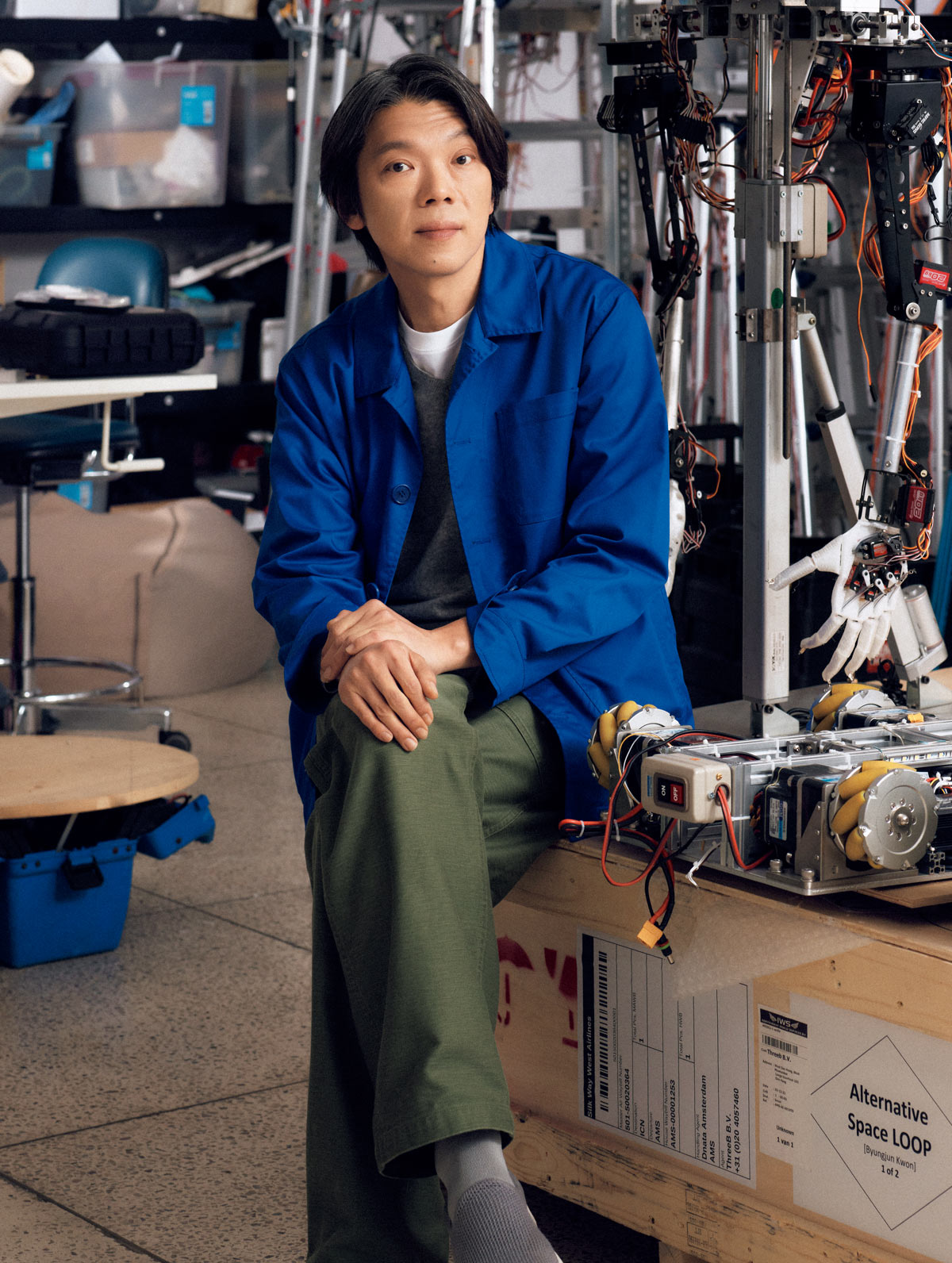
Artists and spaces for constant observation of contemporary Korea
Artist
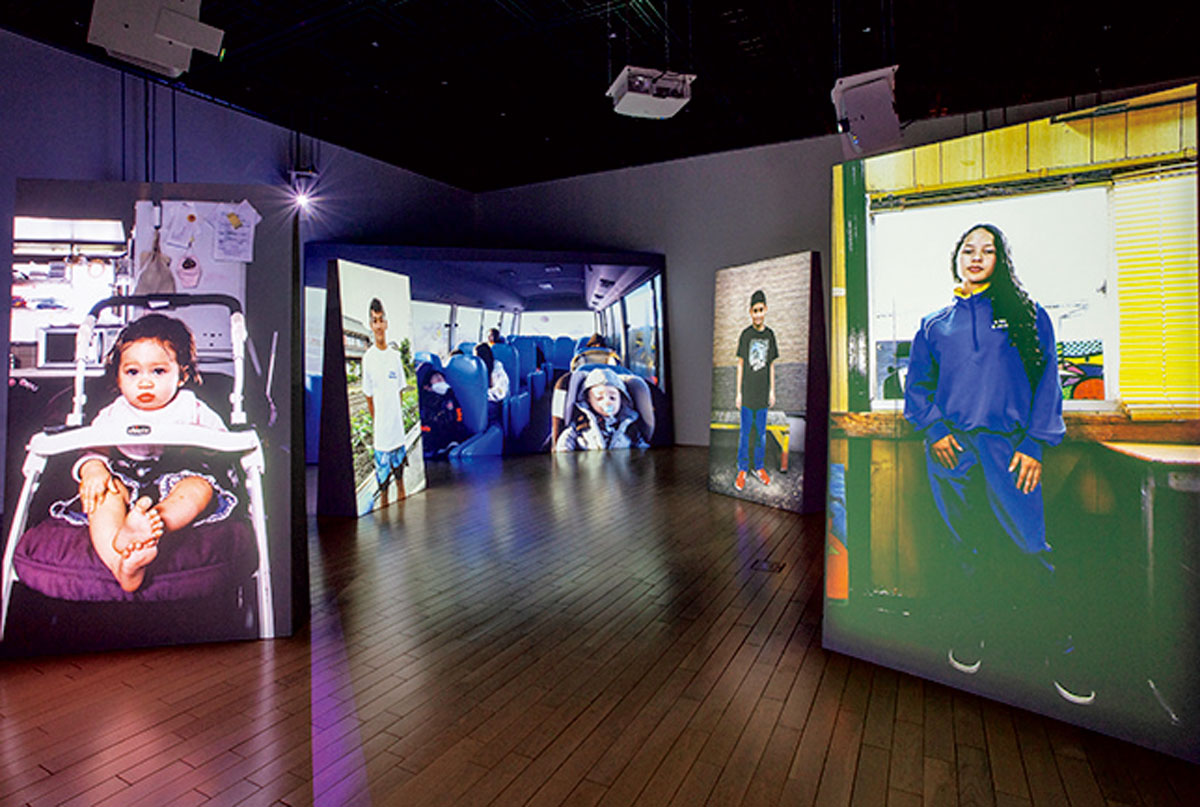
Based in Tokyo and Seoul, he is currently working on projects on the themes of immigration and community. From December to March of next year, he will be participating in the Mori Art Museum's "Roppongi Crossing" exhibition and the Yokohama Museum of Art's exhibition commemorating the 60th anniversary of diplomatic relations between Japan and Korea. "He's a long-time friend. I want many people to see his work."
Eye to Eye, Tokyo Photographic Art Museum Ver., 2023 (Courtesy of Tokyo Photographic Art Museum, Photo by Inoue Sayuki)
Artist
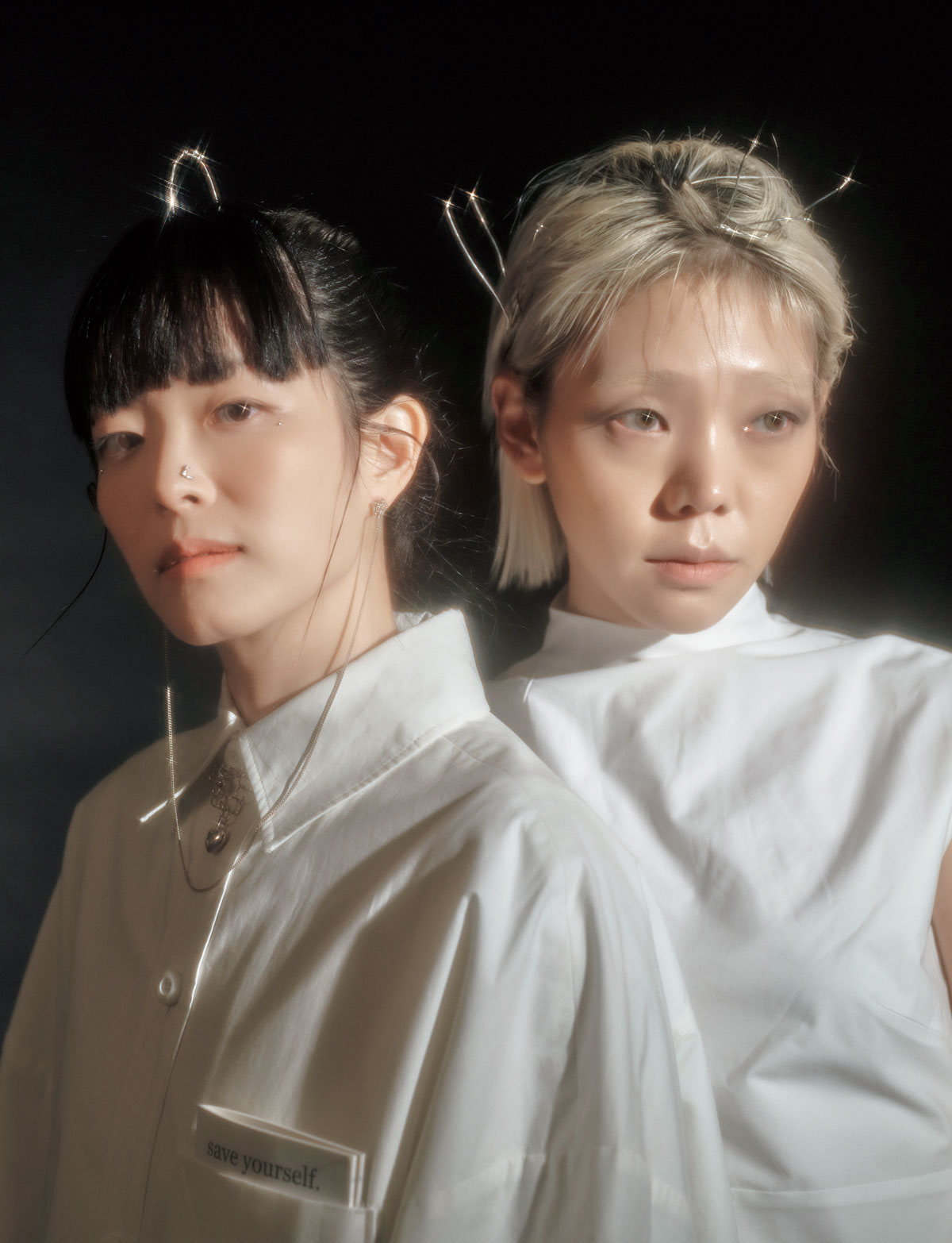
A duo consisting of Choi Hyewon and Park Minhee. They embody a new worldview by fusing ambient music with Korean folk music. "I also focus on folk music in my work, and folk music as a genre has been gaining attention recently and is very popular." Instagram: @haepaary
Space
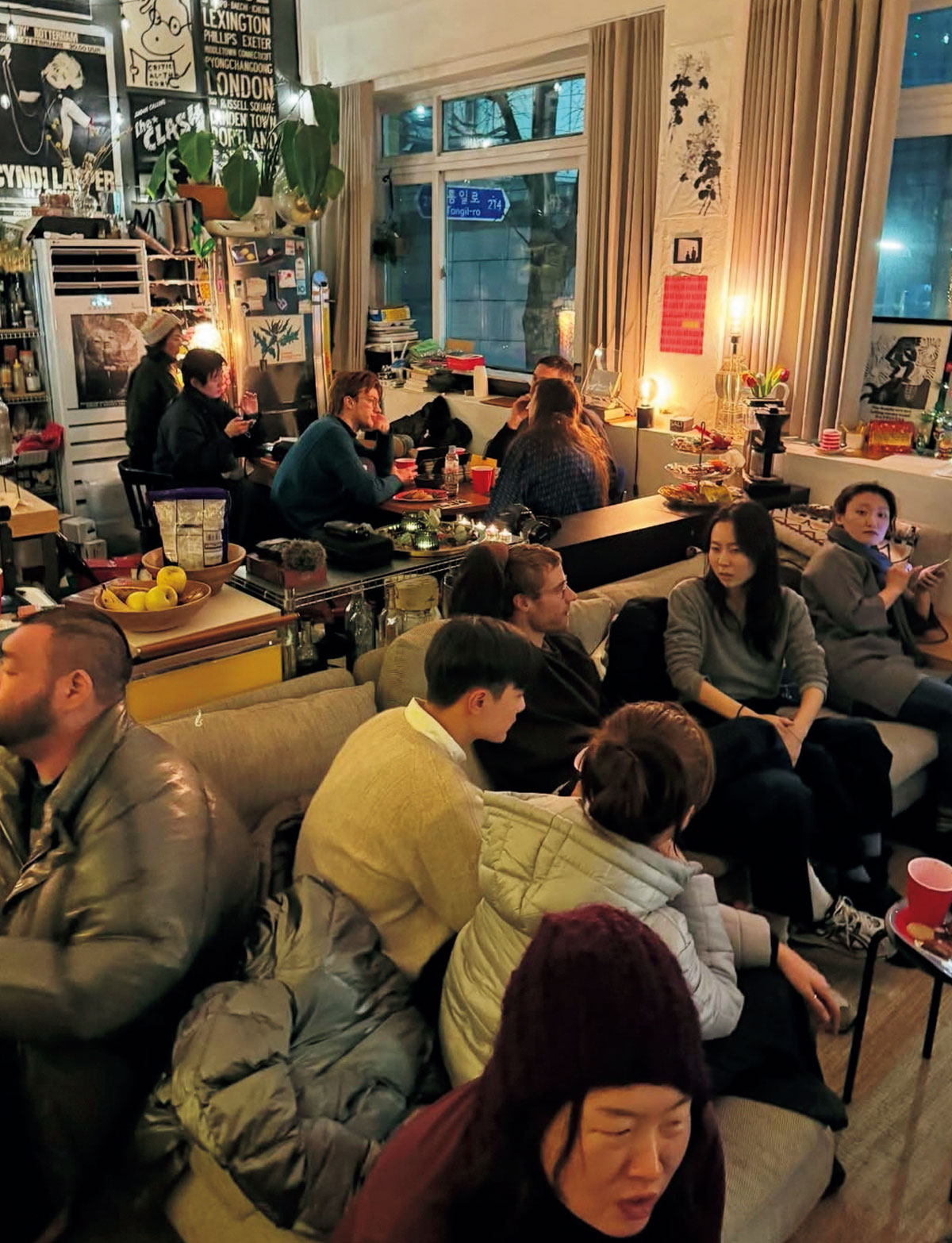
An experimental space. "There are many events and artists come together to interact. I think the best of Korean culture is coming out of here right now. If you want to experience new culture, this is the place to go."
Address: No. 204, 11 Sajik-ro, Jongno-gu, Seoul|Map
Instagram: @salt_sajik11