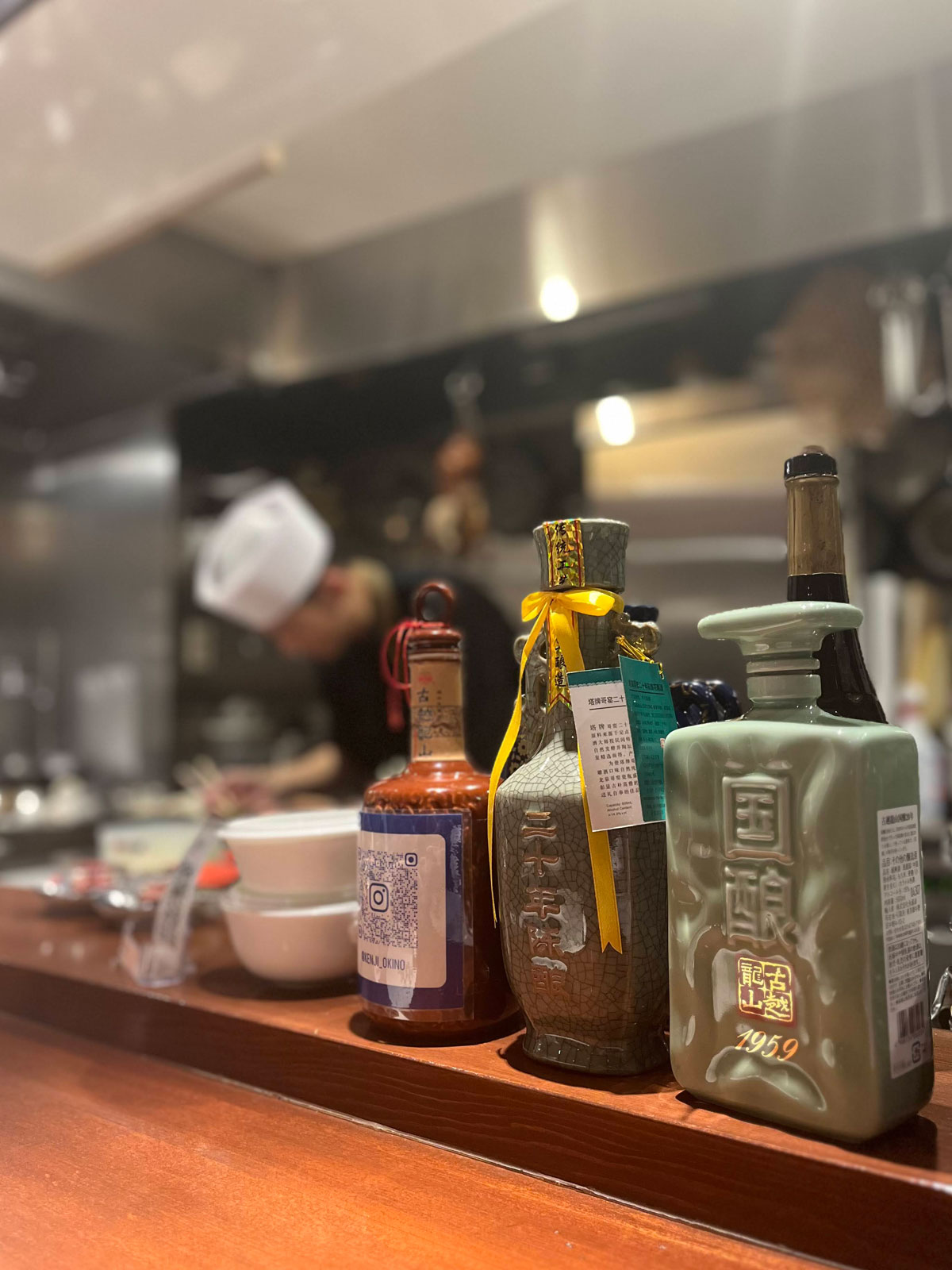







For some reason, the former wine bar was always quiet.
Sometimes I go to another store with someone from the store.
That doesn't mean we'll become friends.
The relationship between shop staff and customers is, in principle, one that exists within the store, and there is a kind of conflict of interest mediated by money. People often say things like, "Don't lend money to your friends, and if you do, think of it as a gift and forget about it," but what this basically means is that when larger conflicts of interest or borrowing and lending arise, it becomes difficult to maintain a "fair" relationship.
Relationships between people can never be fair all the time. Relationships require a little bit of dependence on the other, a little bit of lending and giving back, and a good overall balance. If one person thinks they're the only one feeling the burden and starts to hold it in, the relationship won't last long.
In that sense, meeting the owner or staff of a bar outside the establishment for drinks requires a delicate and careful sense of balance. The establishment will inevitably be concerned about the customers. If the customers want to be treated fairly as individuals, they must understand and act with a deep understanding of how much they are making the owners considerate of them, and that the relationship (at least from the start) is not fair at all.
So I don't think about casually becoming friends with people at shops. But even so, on those rare occasions when we get along well or there's a shop I want to go to together (or want them to introduce me to), I do sometimes become friends with them, taking the time and determination to do so.
One of the people I became close with in this way was a chef and sommelier who at one point ran his favorite restaurant all by himself, but when the coronavirus pandemic hit, he decided to take the next step and quickly closed the restaurant after ten years of operation.
It was a wine bar in Uehommachi, Osaka, with about ten seats, that served delicious Italian food and was the kind of place that felt most comfortable to go to alone. I always sat alone at the counter, ordered the wine selection, an appetizer platter that changed slightly each time I went, and sometimes pasta.
The shop was always quiet and had a mature atmosphere. The customers I met at the counter were all attractive and mature. I was in my early 30s at the time, and I think I was probably one of the youngest regular customers.
I've never been a fan of lively restaurants with a lot of people my age or younger, and I've always preferred to eat and drink alone, but even for someone like me, this was a place that seemed a little out of my league, and one that I would have to stretch myself to visit.
A good restaurant has that kind of premonition.
When we met, the restaurant had been open for seven years, and the atmosphere was lively. The lighting was always dim, with soft music playing at a low volume, customers whispering, and the owner, who handled everything from cooking to serving, always moved gracefully and leisurely. He was neither rushed nor brisk, yet the food always seemed to flow smoothly. Perhaps it was the rhythm of the conversation that made this possible.
I was nervous the first time, and naturally the conversation with the owner, who was trying to gauge my distance and my affinity with the shop, was a little awkward.I think I left the shop without having much to talk about that day, mentioning the person who introduced me and shops that we probably had something in common.
Still, I thought this place must be the one, so I went back without any delay. Reservations weren't required, as many people sat at the counter by themselves, but I'm sure I called in advance. The only people who would be welcomed into a sole proprietor's shop would be regulars who knew the owner well and who could come at any time.
It's been a little over two years since then until the COVID-19 pandemic hit. It's undoubtedly the place I frequented the most during that time. We tried various things during the pandemic, such as offering takeout and selling alcohol, and perhaps our relationship has developed into something different from the one we had across the counter from during the same uncertain pandemic. We've also started going cherry blossom viewing together and going out for drinks.
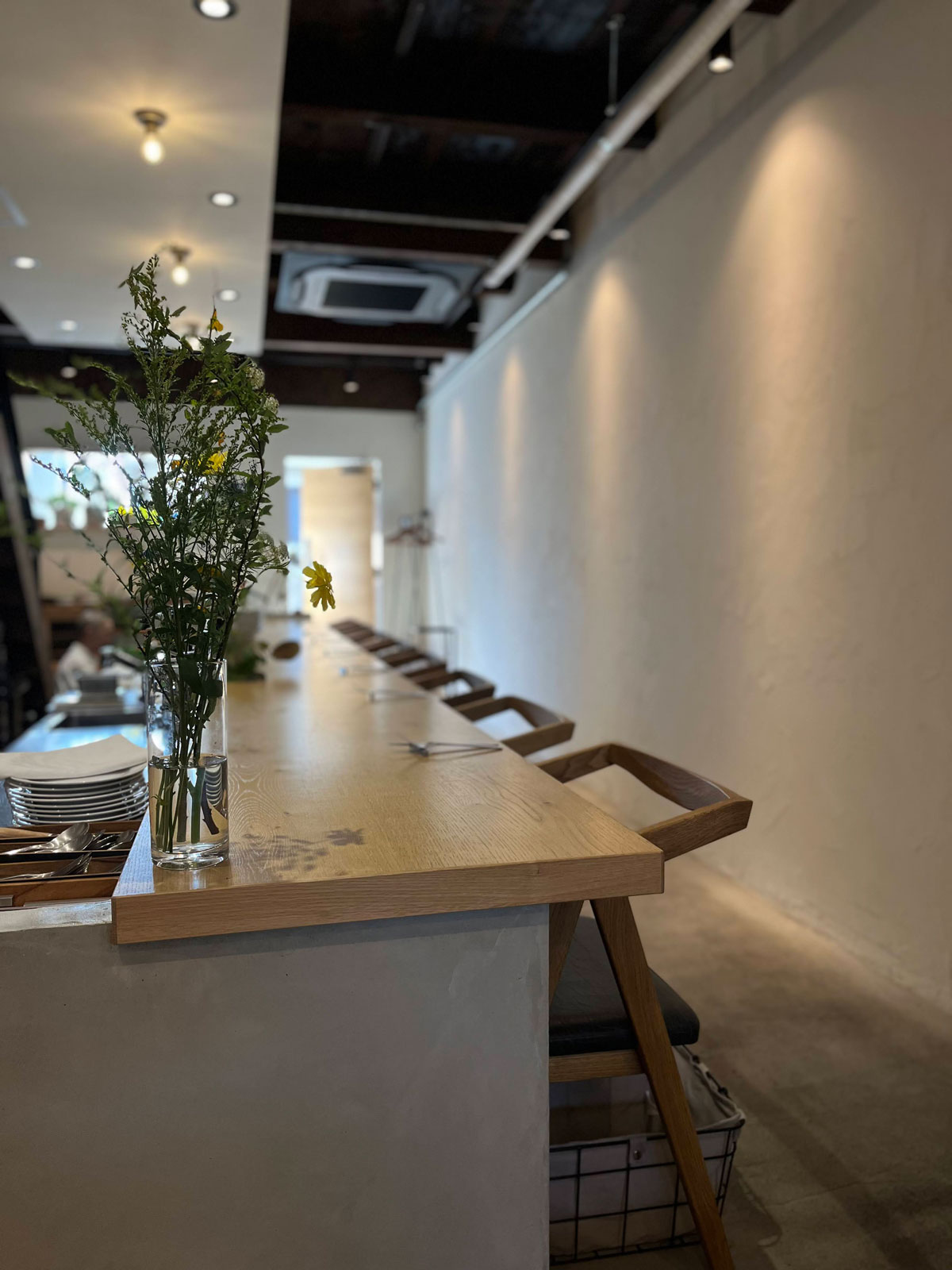
Music, behavior, conversation... Each space in a store has its own BPM.
In the end, the restaurant decided to quietly close just as it celebrated its 10th anniversary, and the owner went overseas to work as a chef at an official residence. I met him again after returning to Japan for the first time in several years, and we went to a restaurant run by a chef we both knew, ate some delicious food, and had some drinks. It was a fun, beautiful evening.
As we left the bar and walked down the street, slightly tipsy, he suddenly said something.
"Did you know, Zhu? Each store has its own BPM."
It was a casual revelation of the magic that had been hidden for several years.
I felt as if I was hearing directly from the wizard who had fascinated me back then the secret to the magic that had been working at this famous restaurant that had been in business for ten years and was, to me, one of the best restaurants I had ever been to up until then.
BPM stands for Beats Per Minute, which means the number of beats that occur in one minute. 60 BPM is one beat per second, and 120 BPM is two beats per second, which is twice the speed. In musical terms, it's called "tempo," and it's the speed of the beats being played in a space. For example, club DJs manipulate the BPM to liven up or cool down the atmosphere. Generally, a higher number of beats (faster tempo) creates excitement, while a lower number of beats (slower, more relaxed) creates a sense of calm and groove.
Stores usually play music. Large chains, such as electronics retailers and retailers known for their compact displays, often play original music. The music is usually fast-paced, building excitement and encouraging purchases, with an exciting tempo and repetitive simple melody that numbs the sense of time spent in the store.
This is not the case in bookstores or clothing stores. They may not have music, or if they do have music, it may be at a slower tempo, with the aim of making customers feel relaxed while they are in the store.
There are many strategies that can be used in restaurants, especially those that serve alcohol. A crowded standing bar will likely have a fast tempo, while a French restaurant offering a course meal will have a relaxed, slow tempo. The owner will use all of his experience and sense to decide what kind of music to play, and that is one of the attractions of independent establishments.
But that's not what the wizard told me that night.
Each store has its own BPM. The tempo and volume of the music they play are just one way to control it. The store's BPM changes depending on everything: the actions of the staff, when they call out to you, when they respond, the timing of when they serve food and drinks, whether they make eye contact with you or not.
The tempo of the customers' conversations is the biggest factor that determines the BPM of a bar, although it is difficult for the bar to control. Leaving aside cases where a single customer sits at the counter and only speaks to the bar owner, or two customers chatting hushedly at a table, in bars where customers come in groups of two or three, each group's conversations get lively, and they mix together to set the beat and accelerate the BPM of the bar.
Of course, it's fun to spend the night drinking one drink after another in a bar designed for this purpose, riding the rhythm of the fast-paced, mingling conversation. Especially if you're also getting caught up in the conversation. But sometimes, after leaving a club you've had a great time, you suddenly realize you're tired. It's not been that long, but it reminds me of that unique feeling of fatigue I had in my twenties, when I emerged in the early hours of the morning after staying at a club all night and the sky was just beginning to lighten.
Just like I don't go to clubs anymore, I don't often go to places with fast BPMs. It's fine every once in a while, but I want to really savor each drink and dish, one by one, and enjoy them seriously.
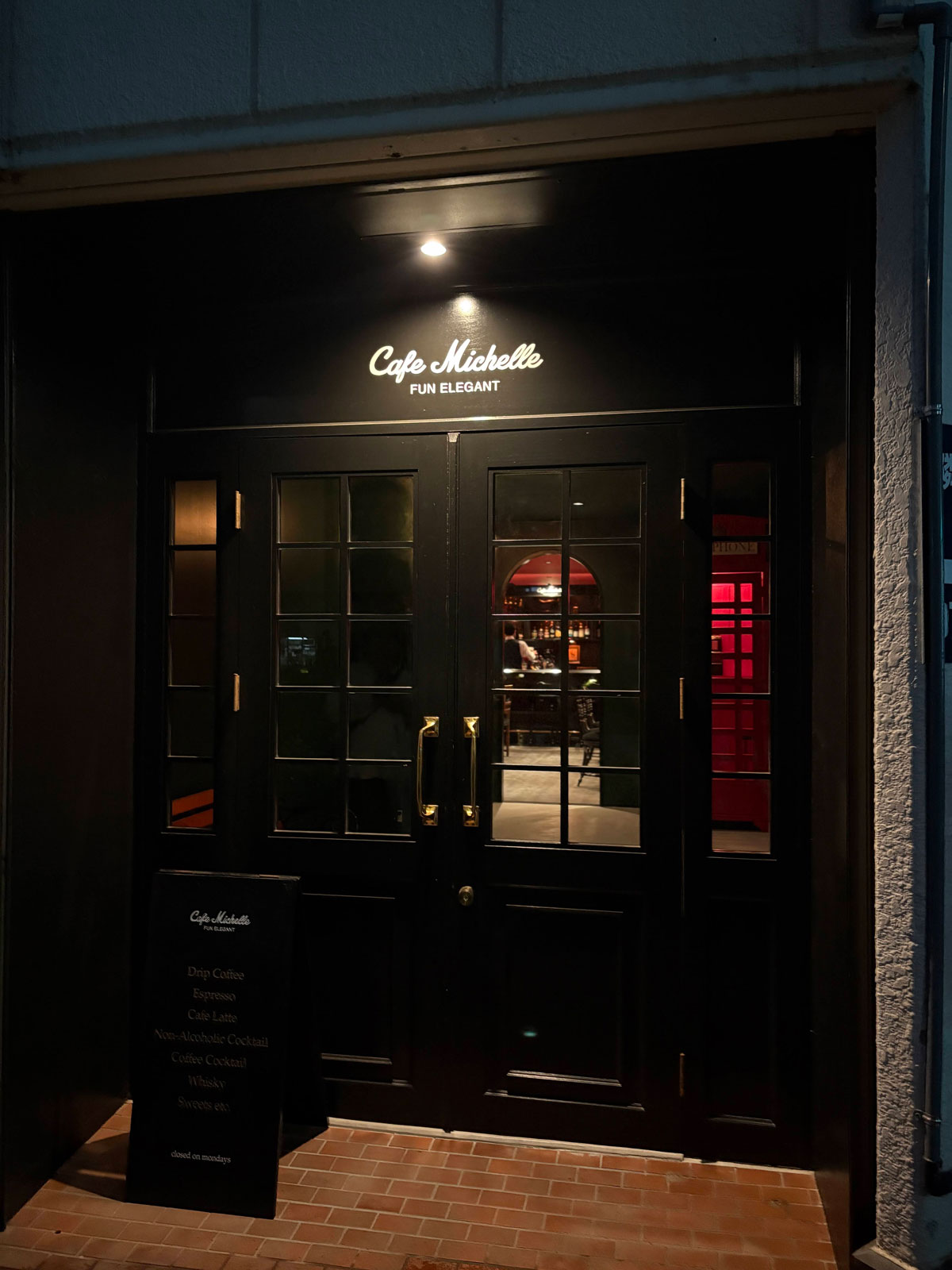
The value of keeping a gentle BPM in today's fast-paced world
There was more to what the wizard told me that night.
It's not that difficult to raise the BPM of a restaurant, but it's not so easy to lower it. That's where his magic lies. How can you lower the BPM of a restaurant, which will inevitably rise if left unchecked, and maintain the ideal tempo? There are techniques that go into the tiniest details, from the lifting and lowering of dishes, the movements made during cooking, and even the conversations with the owner.
Thinking back, when I spoke to him across the counter at my previous shop, there was always a momentary lag before he replied. I wondered if he could hear me, and perhaps I'd said something inappropriate, and I'd feel a twinge of anxiety. He'd wait just that brief moment to breathe before replying in a calm voice. It was just one small part of the countless seeds of magic, but in this way he controlled the time and BPM of the shop.
This is not a metaphor; in fact, in music, a slow tempo is more difficult than a fast tempo. If the performer has the technique, it is actually easier to play fast. It is not easy to perform at a slow tempo. The slower the tempo, the more the audience can listen intently. Dissonances and mistakes are also more noticeable. To play slowly, the sound must be beautiful enough to withstand the pauses.
There are many ways to maintain a slow tempo. For example, imagine a ceremony or religious ritual. In such a setting, everyone moves slowly. Fast-paced hymns do not exist in original Christian culture. Ritual formality, solemnity, and religiousness reside in a slow tempo. In religious rituals, it is possible to elevate attendees and believers with a fast tempo, putting them into a kind of trance-like state, but caution is needed in such cases.
The same goes for clothing stores. I don't really like stores that try to increase BPM by encouraging purchases with statements like, "This is the last one left," or "The sale ends today." Especially since the COVID-19 pandemic, I feel like more and more stores are now selling clothes over several years, as part of their own style, rather than holding clearance sales at the end of the season. Brands are also starting to stand out, building a worldview over several years and developing pieces that can be worn across seasons, rather than holding collections every year and making last season's clothes a thing of the past.
Nowadays, we are constantly connected via smartphones, and we live in a world where countless voices are constantly resonating and overlapping, creating a high-tempo BPM, even without entering an individual store. So perhaps we subconsciously seek out "stores" that allow us to slow down. Stores with good taste may be able to meet this need.
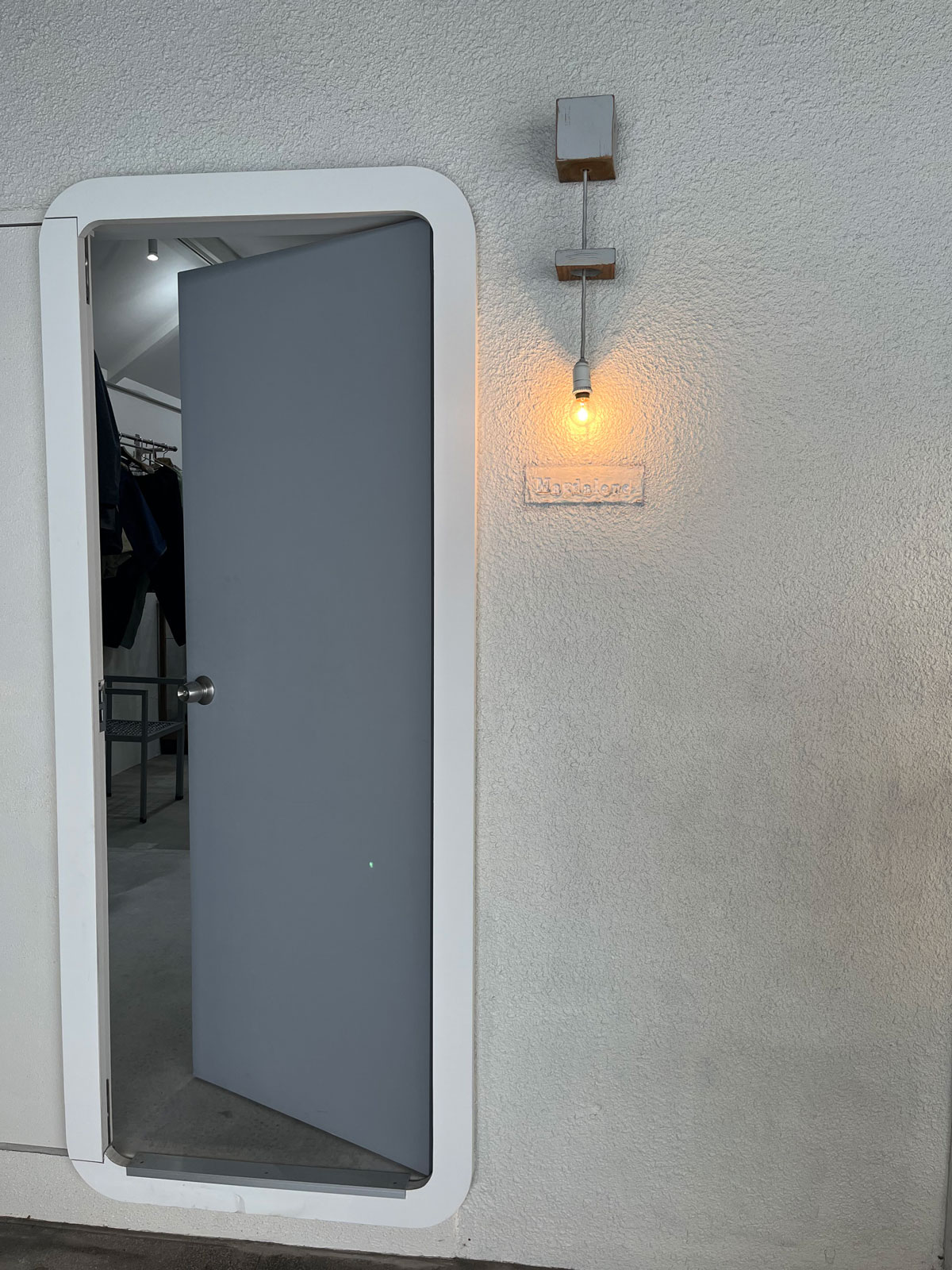
When we feel like "I want to come back," we are in tune with the store's pitch.
Since I started consciously measuring the BPM of the bar, I've come to realize that there's actually another musical element to the bar. I was planning to save this story for the next time I drink with the wizard, but since you're going to read it anyway, I'll write it down first. It's "pitch," which, along with tempo, is a major element that defines music.
Pitch means "tone height," which basically refers to the frequency of a sound. For example, the note "A" is now tuned to 440 Hz. Before an orchestra performs, they align their notes to match the note played by the concertmaster. This is called "adjusting the pitch." Tuning is also a similar process. Each instrument has its own pitch, which varies slightly from instrument to instrument, and will drift out of tune if left unchecked. This is why tuning, or adjusting the pitch, is necessary.
Among the many philosophers, perhaps one of the most knowledgeable about music is the 20th century American philosopher Stanley Cavell. Cavell studied composition at the Juilliard School, so it can be said that he is exceptionally knowledgeable about music among contemporary philosophers.
Cavell says that philosophers, and indeed all people, have their own unique "pitch." What he means is that each person's life is different, and so when they talk about themselves, they are forced to speak in their own unique "voice." In his book, translated as "The Voice of Philosophy," the original word for "voice" is the musical term "pitch."
Each of us lives a different life, just as we all have voices with slightly different pitches, or how individual musical instruments can have completely different pitches depending on how they are made and stored.
Each shop has its own BPM, its own tempo. And likewise, each shop has its own pitch, that is, the life of the shop owner. So whether or not you want to enter a shop and become familiar with it depends not only on whether the tempo is comfortable for you at the time, but also on whether or not you resonate with the person's life, that is, the pitch and "voice," embodied in the shop, or present in the words and actions of the shop owner.
Of course, the owners of the bar may try to tune the tempo and even the pitch to suit the customers to some extent, but that's life, a way of life. You can't keep making the sound completely different from the one you have.
Going to a club means gauging the tempo of the club and enjoying it, but it also means getting a feel for the owner's way of life, his pitch, and making your own sound resonate with that. If the sound is harmonious, or there is beauty in its discord, and you feel like you want to make that kind of sound, then the club is sure to be the one for you.
Everyone's slightly different pitch is adjusted just like an orchestra is about to start a performance. It's like tuning your instrument, and you think, "Oh, so that's the pitch they use in this bar. That's great, I'll adjust mine too." It's like the premonition you get before beautiful music begins to play.
I remember the magic of that shop in Uehommachi, its unique slow tempo and darkness. And, as I felt him across the counter, his way of life and his attitude towards life.
Yes, it wasn't just the tempo. I went to that store because I found your life interesting and wanted to resonate with your voice. The special thing that was there in that store wasn't just the magic of the tempo you used. It was also in the pitch that I felt from you and that resonated with you.
Next time we meet, when you're drunk and no longer embarrassed, let's talk about it, Ando-san.