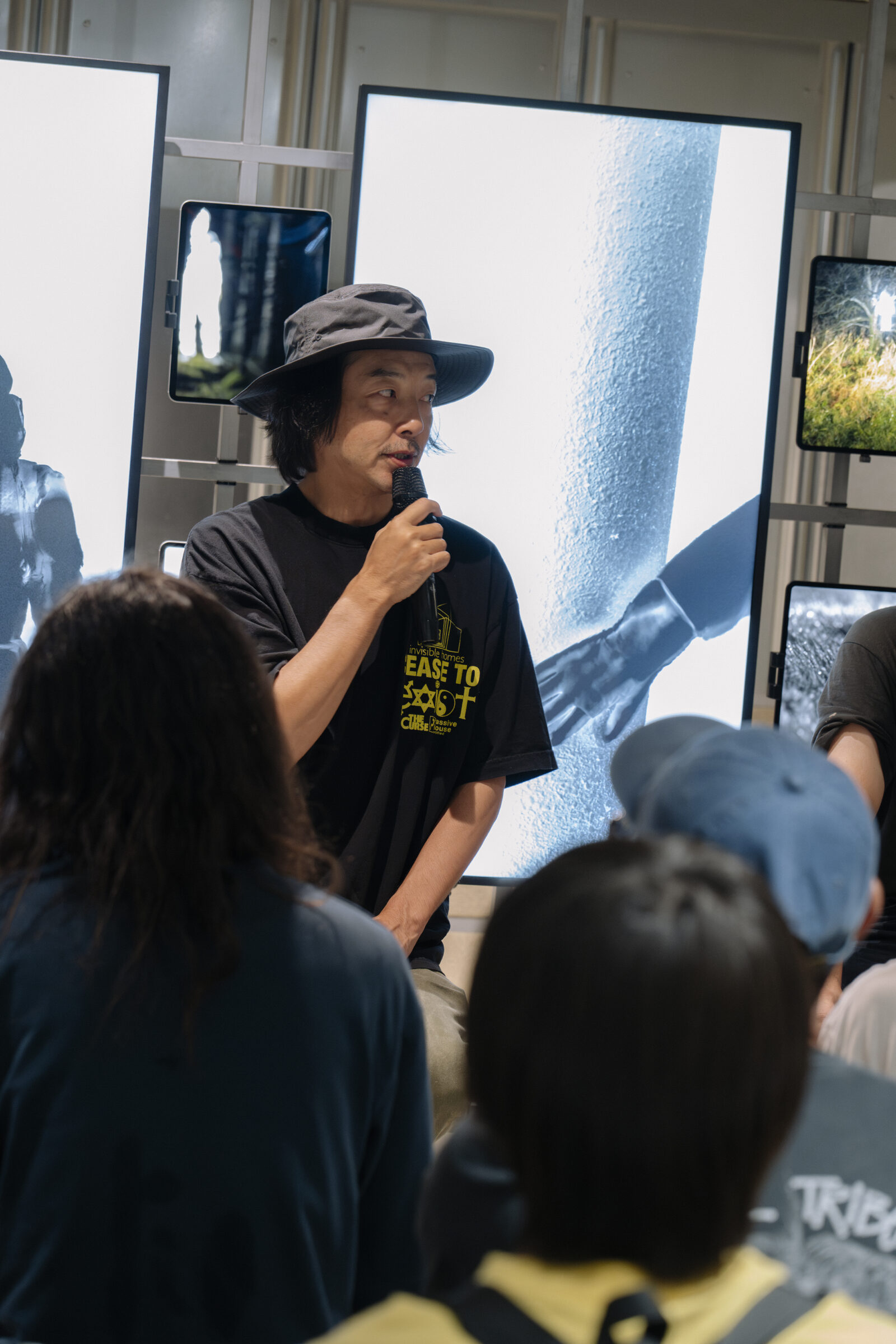









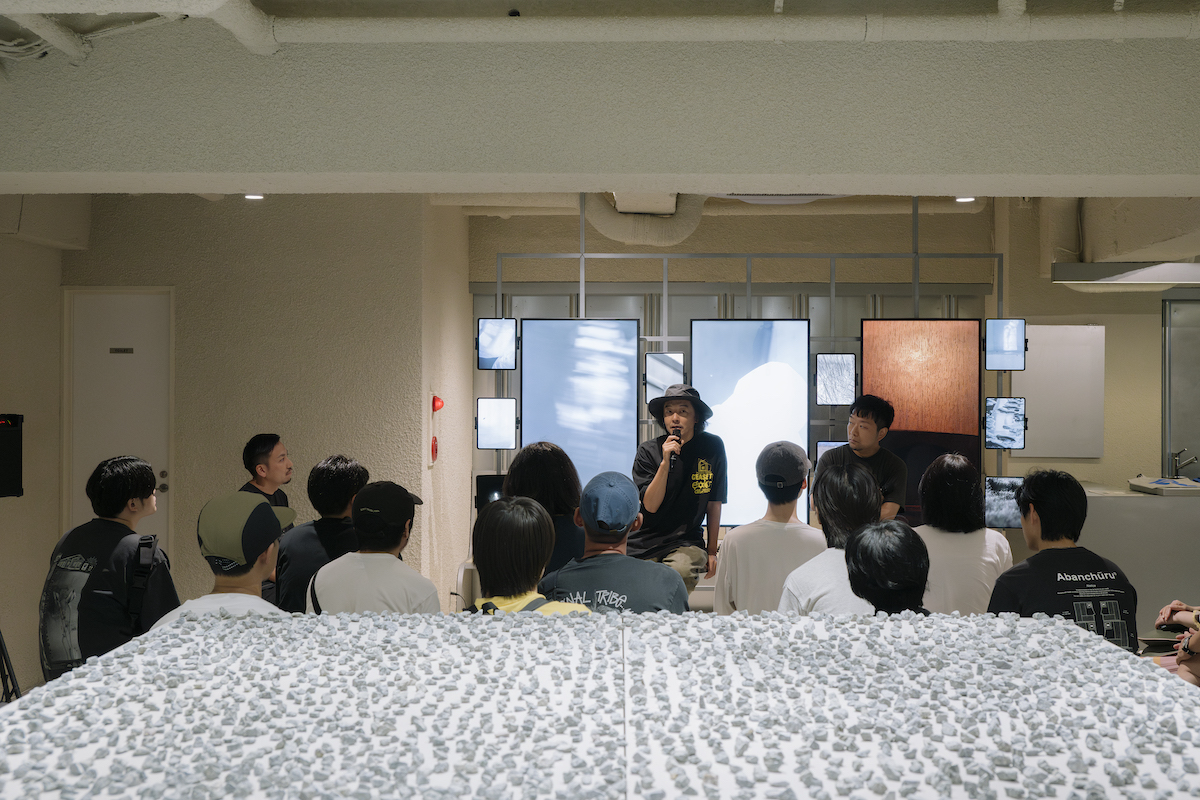
Wada
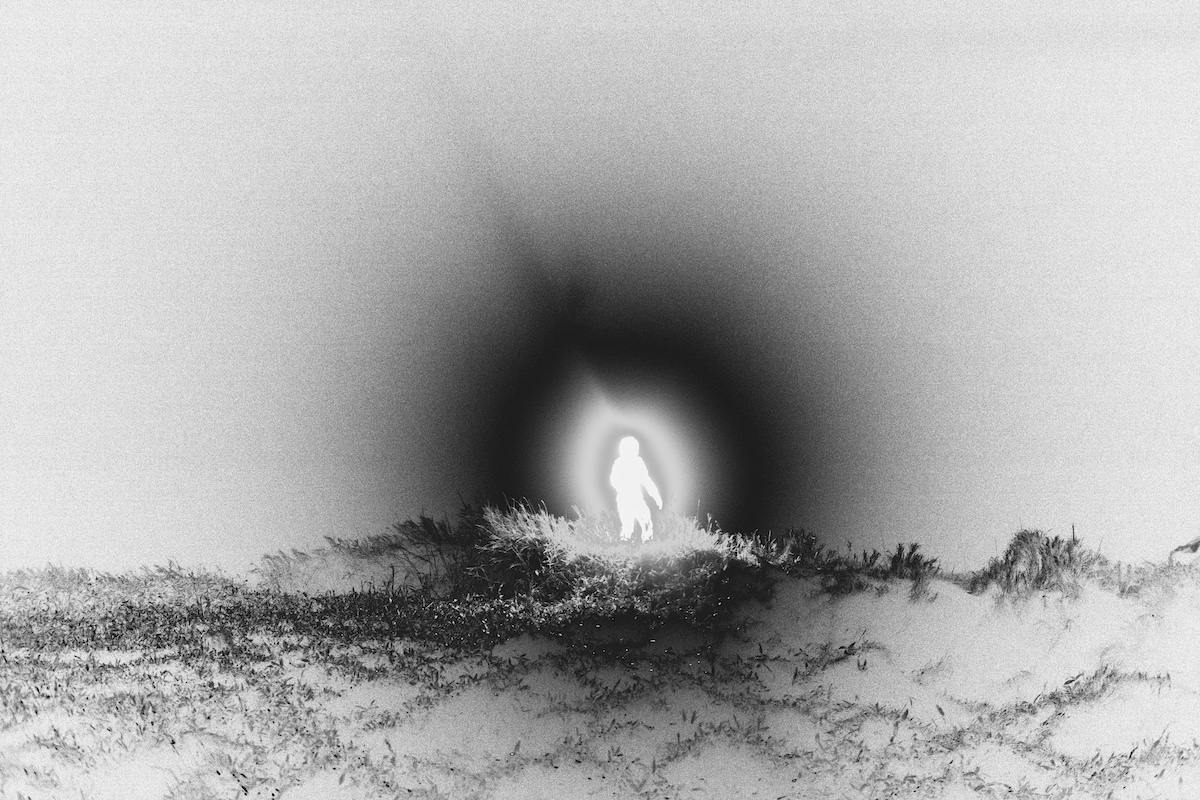
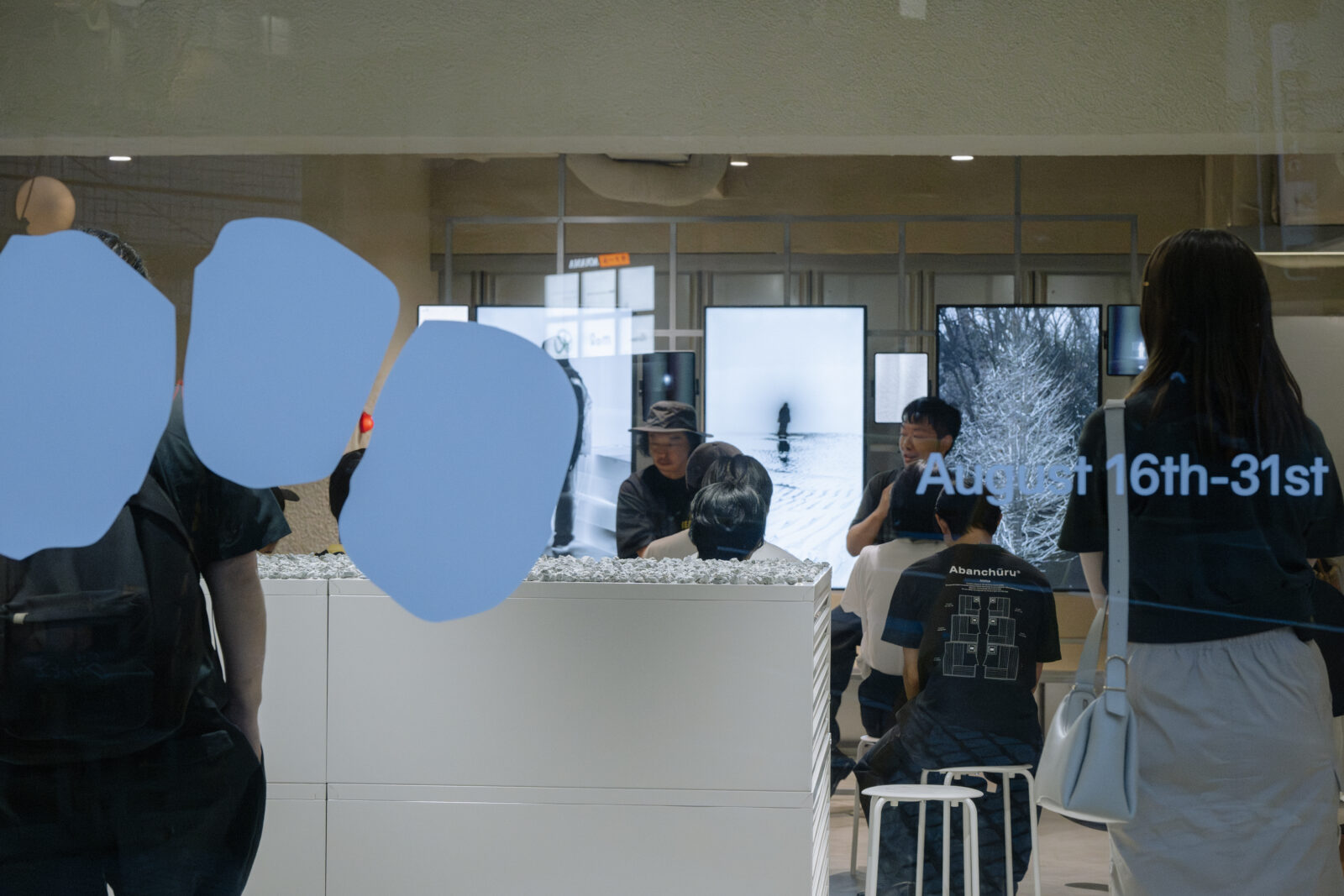
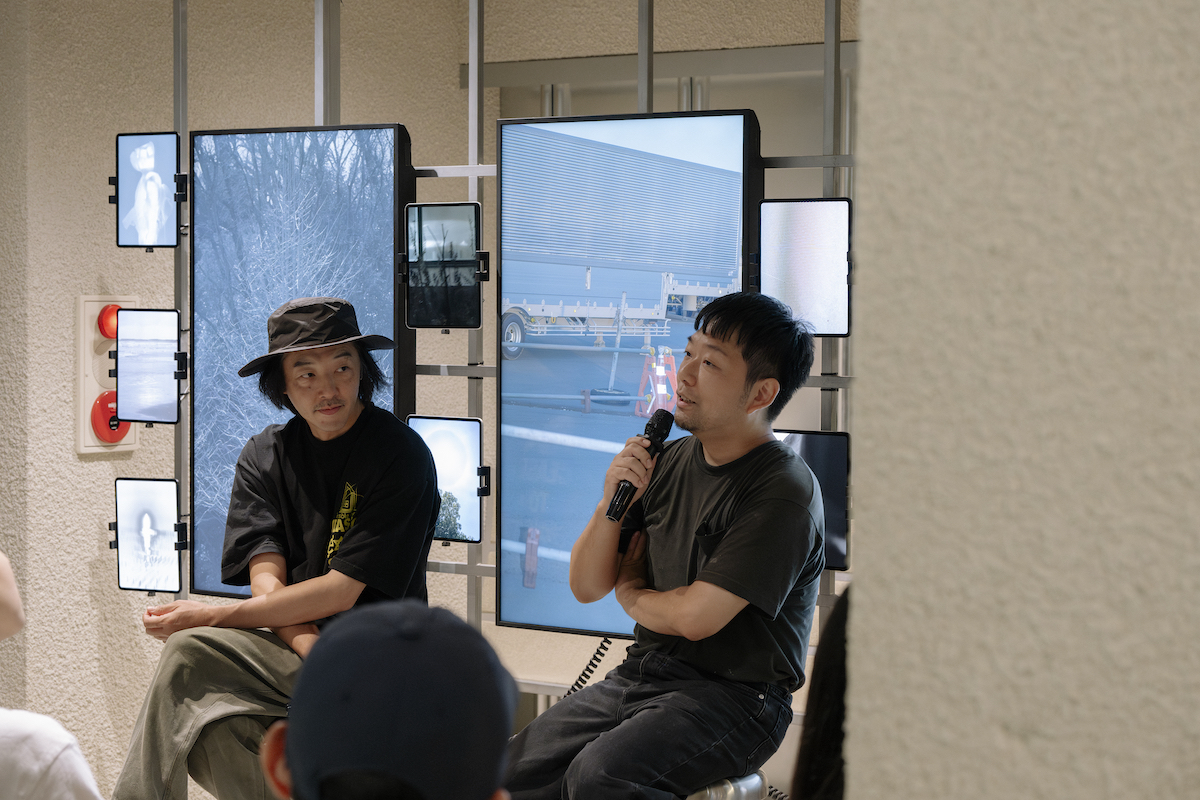
This exhibition at (Tentative) is a project that was launched based on the original work "12000." How did this work capturing shining people come about?
Mizutani
In 2019, I released a work called "Mirrors and Windows," in which I photographed people covered from head to toe in mirrors. The costumes, created by stylist Ishii Dai, were "mirrors reflecting the times," and were an impulsive expression of how we are seen by others, and how we want to be seen. At the heart of my work is the idea of capturing universal emotions of the times through fashion photography, and this current series, "12000," was born as a sequel to that idea.

Mizutani
The theme for this exhibition was "light." What we see on a daily basis these days is the light from our cell phones and the light from information. Rather than presenting an answer, I wanted to ask questions about how to interpret that light. That was my intention. For me, there is no boundary between professional and private photography; I feel that I am one with society itself. This is why the act of taking photographs is a direct connection to society.

Mizutani
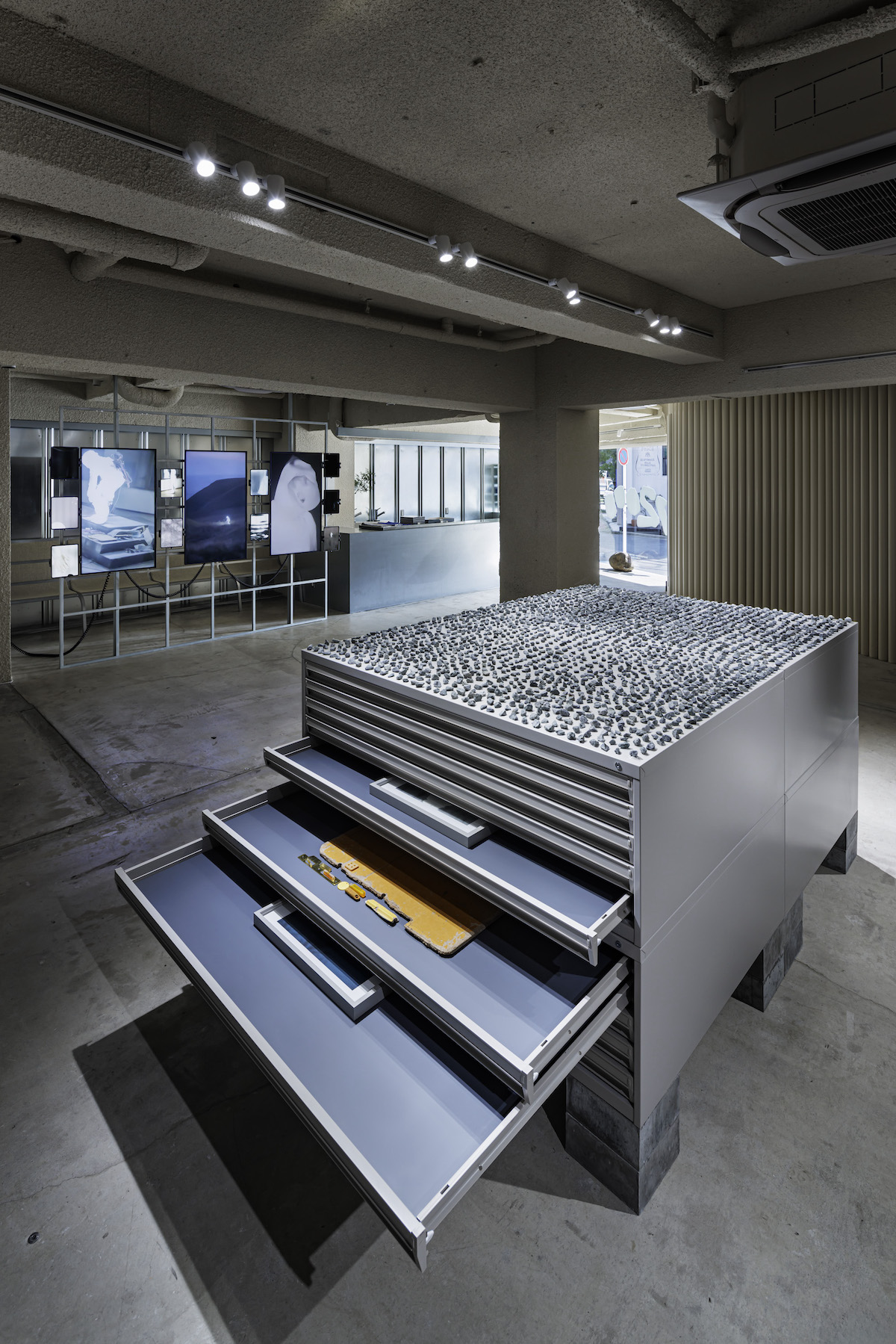
"12000" began with creating "shining figures" together with stylist Dai Ishii and artist Chihiro Matsumoto. This time, we are also exhibiting items that Dai Ishii has collected. I felt that the way he collects and picks up things he finds on the side of the road is very similar to the physicality of walking down the street and taking a picture at the moment when he thinks "this is it."
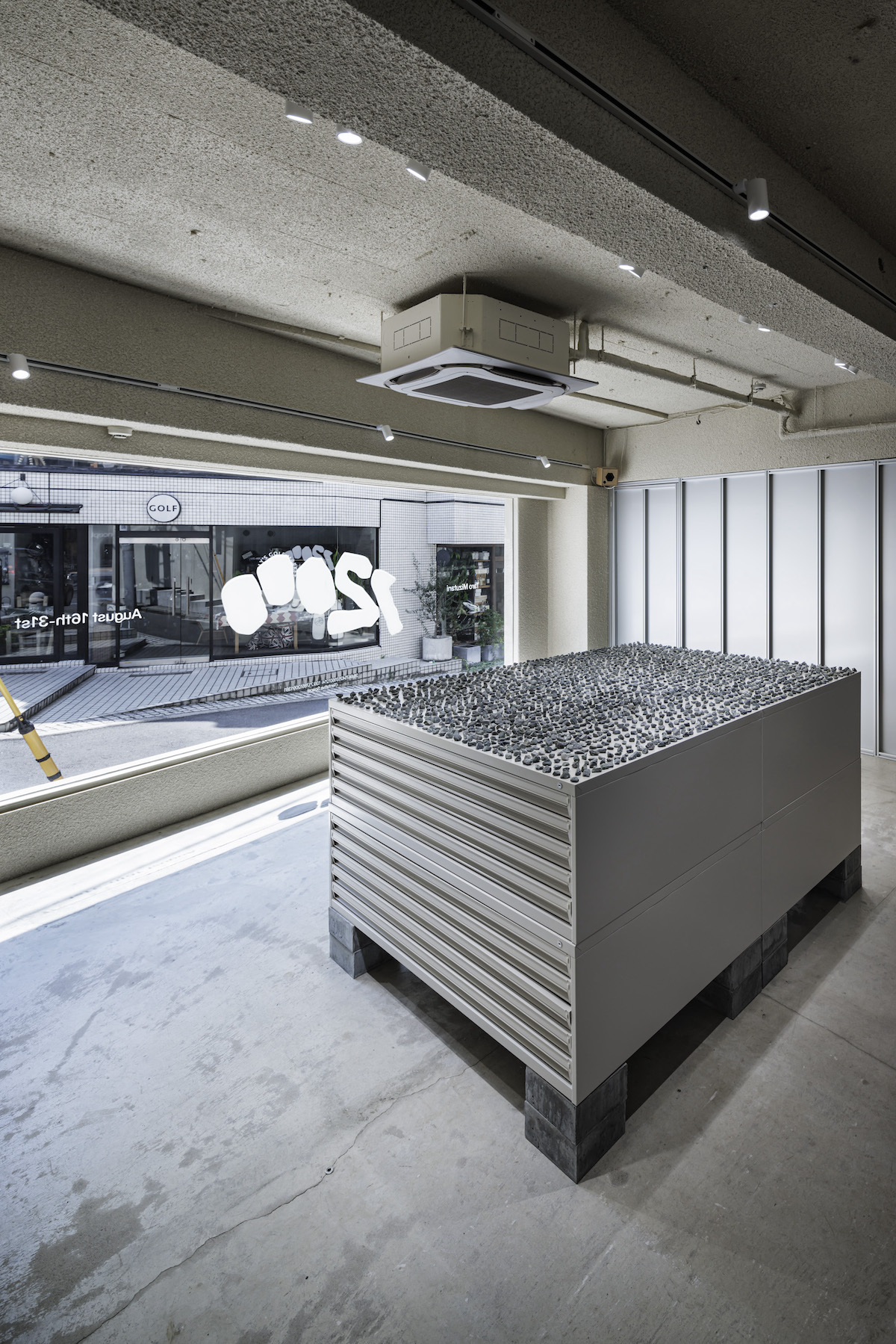
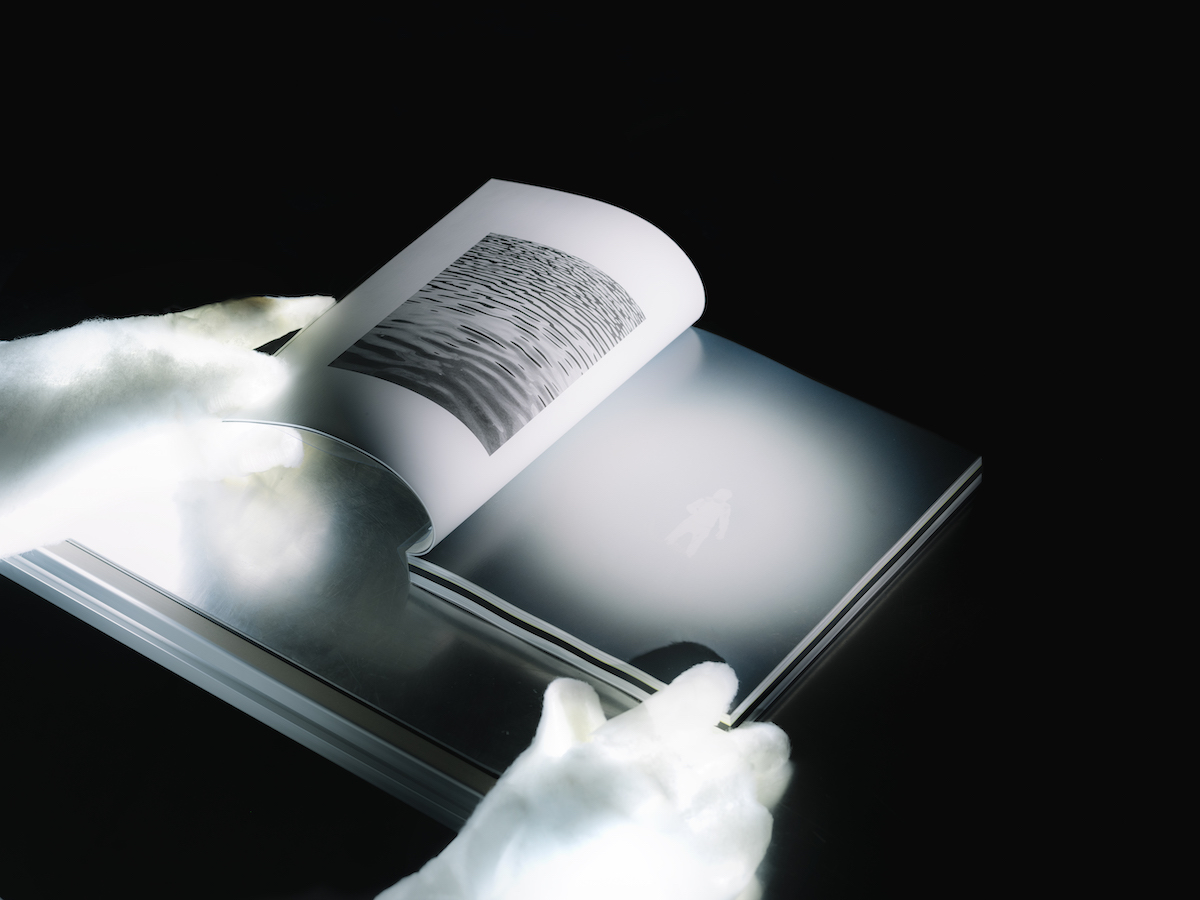
When I create a photo book, I open one of the drawers in my map case and try out different combinations. The existing photos take on a completely different story depending on how they're combined. I believe in that kind of coincidence.
Sakawaki
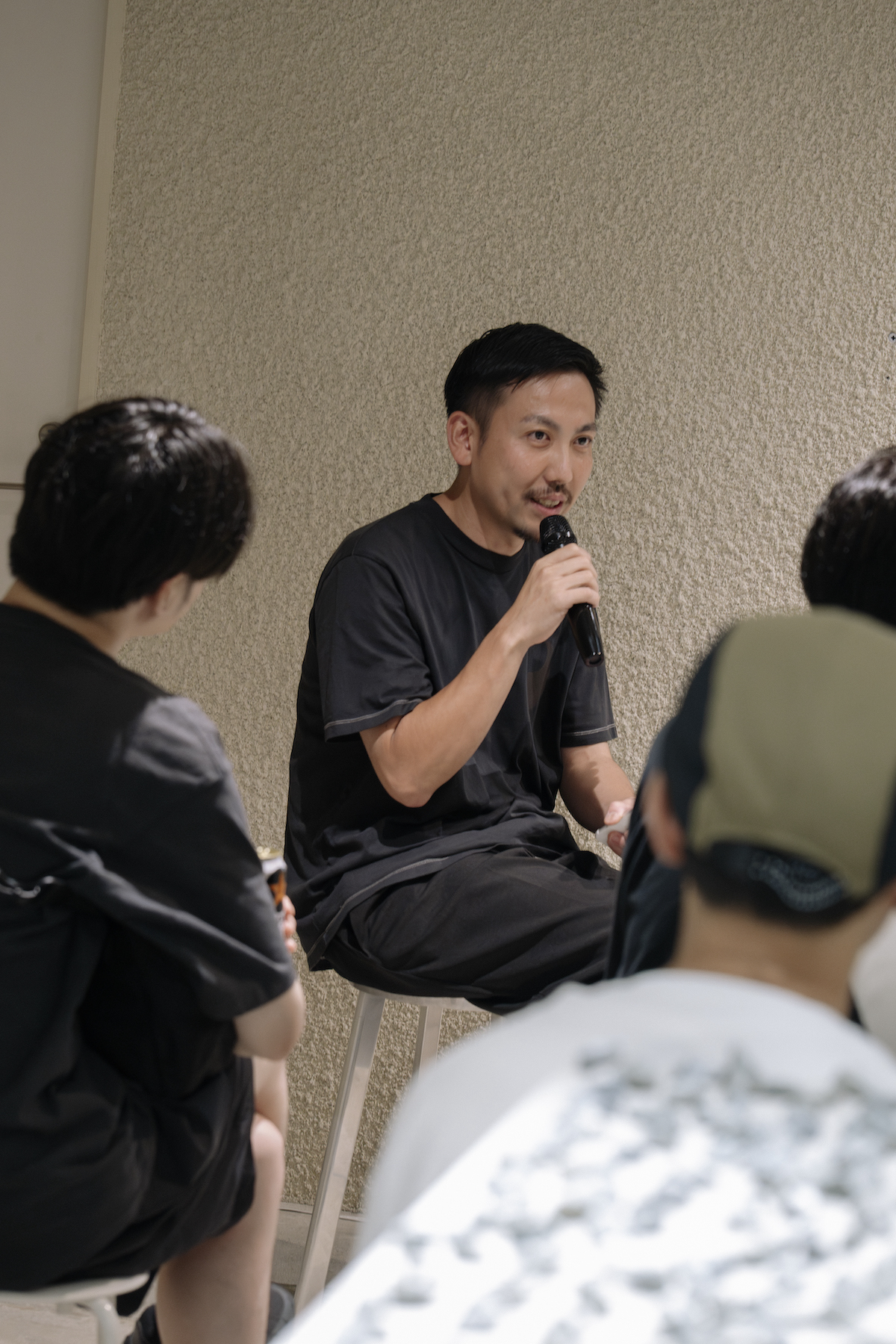
There is a strong sense of improvisation in your work. When you take a photograph, you don't perfectly recreate the image, but rather capture the atmosphere, sense of distance, and conversation that exists in the moment. This improvisation creates the essence of your work.
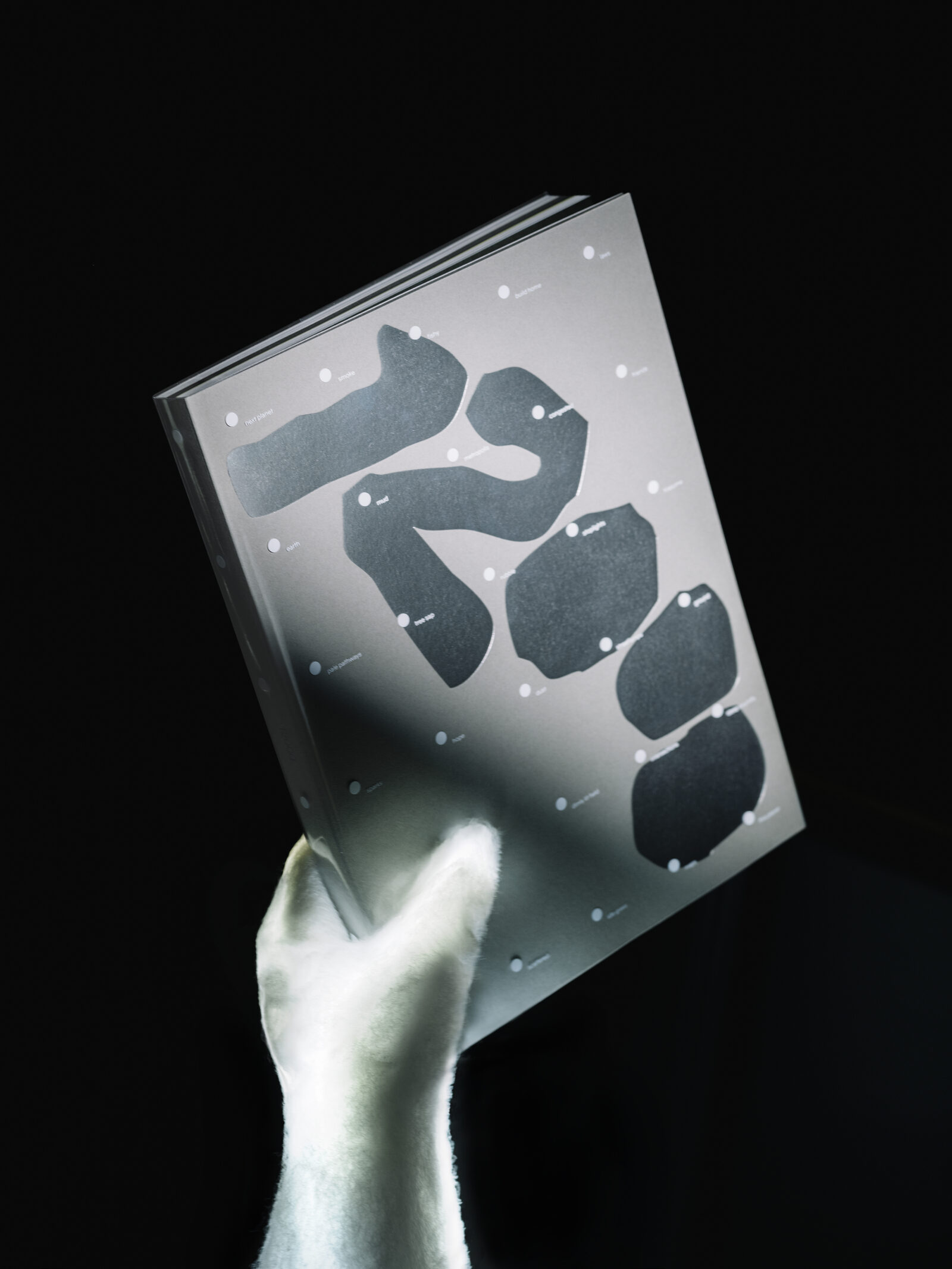
When considering the composition of the collection, I also placed importance on how to utilize this element of chance. For example, among the photographs arranged in chronological order, I sandwiched fragmentary photographs taken in other locations, incorporated black and fluorescent pages, and devised printing textures so that the works could be perceived as an "experience" rather than an "event." I also drew inspiration from musical compositions such as choruses and intros, creating an unpredictable flow with the aim of enriching the viewer's experience.
On the coincidence of photography

Wada
It seems like a big theme for you is how to incorporate things that happen by chance into your work.
Mizutani
That's right. Photography isn't about "reproducing an image." Rather, it's about how to incorporate the unexpected things that happen on location. For example, a test shot taken by an assistant, or a shot taken to match the lighting and shutter speed. These are photos that wouldn't normally be used, but in reality they can be very powerful.
It's a feeling similar to musical improvisation. There's no point in proceeding in a predetermined harmony, so I trust in what emerges in the moment. I think that's the power that supports photography.
On the other hand, I've been getting more and more orders for work where I provide references like, "I want to take a photo like this" or "Please make the photo like this." But it's never going to turn out exactly as I want it to, and even if I do get close, it's so meaningless. To prove that, I value a kind of improvisation, aiming for a musical state, an improvisation that comes from practicing a lot. I think it's important to create that kind of environment.

Wada
How do you feel about the current state of photography?
Mizutani
When you look at a photo on a phone, it's a small representation the size of your palm, but I think the experience of seeing a print in person is powerful. I've been taking photos for nearly 30 years, and I have a set standard for what I think people will like about the composition and angle. I tend to take photos out of habit. That's why the question is how to break away from that. I think it's important to go beyond that realm and change the way people imagine their field of vision.
Sakawaki
Among the large number of photos Mizutani-san gave me, there were some that I had no idea what they were. When I asked him, "What is this?", he told me, "It's a test shot by an assistant (a photo taken to check if the camera was working)."
Mizutani
Those kinds of photos where you think, "No one meant it that way," are actually the best photos, and I like them.
Connection with society through artwork

Wada
This exhibition and photo book seem to have a strong character of asking questions rather than presenting answers to the viewer.
Mizutani
Yes. I personally don't want to make any definitive statements about "this is how it is" through my work. Rather, I want it to be a "starting point" for the viewer. I think it's important that when people see my work, they can imagine, "Maybe it's like this."
This exhibition does not provide any answers, but rather poses some questions. I hope that by looking at it, people will be able to expand their imagination even just a little, and think, "Maybe this is what it means?"

Sakawaki
In that sense, this book is not a "finished product." Rather, it was about how to leave questions unanswered, and how to design the margins to allow for that. That was the process, I think.
Mizutani
What I value is instability. Rather than avoiding chance and uncertainty, I embrace them as they are. That's where the fun lies.
The purpose of creating this photobook is not to express my work as something I'm completely satisfied with, but to allow for multiple interpretations as a characteristic of photography. I think it would be really interesting if, when I present these works for the first time as my own, many different people were to like them however they liked.

Sakawaki
Yes. And how can we translate that instability into the medium of "paper"? That's why we used the black printed pages and different paper qualities.
Wada
In other words, neither the exhibition nor the photo book is "complete," but is premised on "dialogue with the audience."
Mizutani
That's right. Photography is always left to the viewer. I would be happy if my work could give rise to new questions.