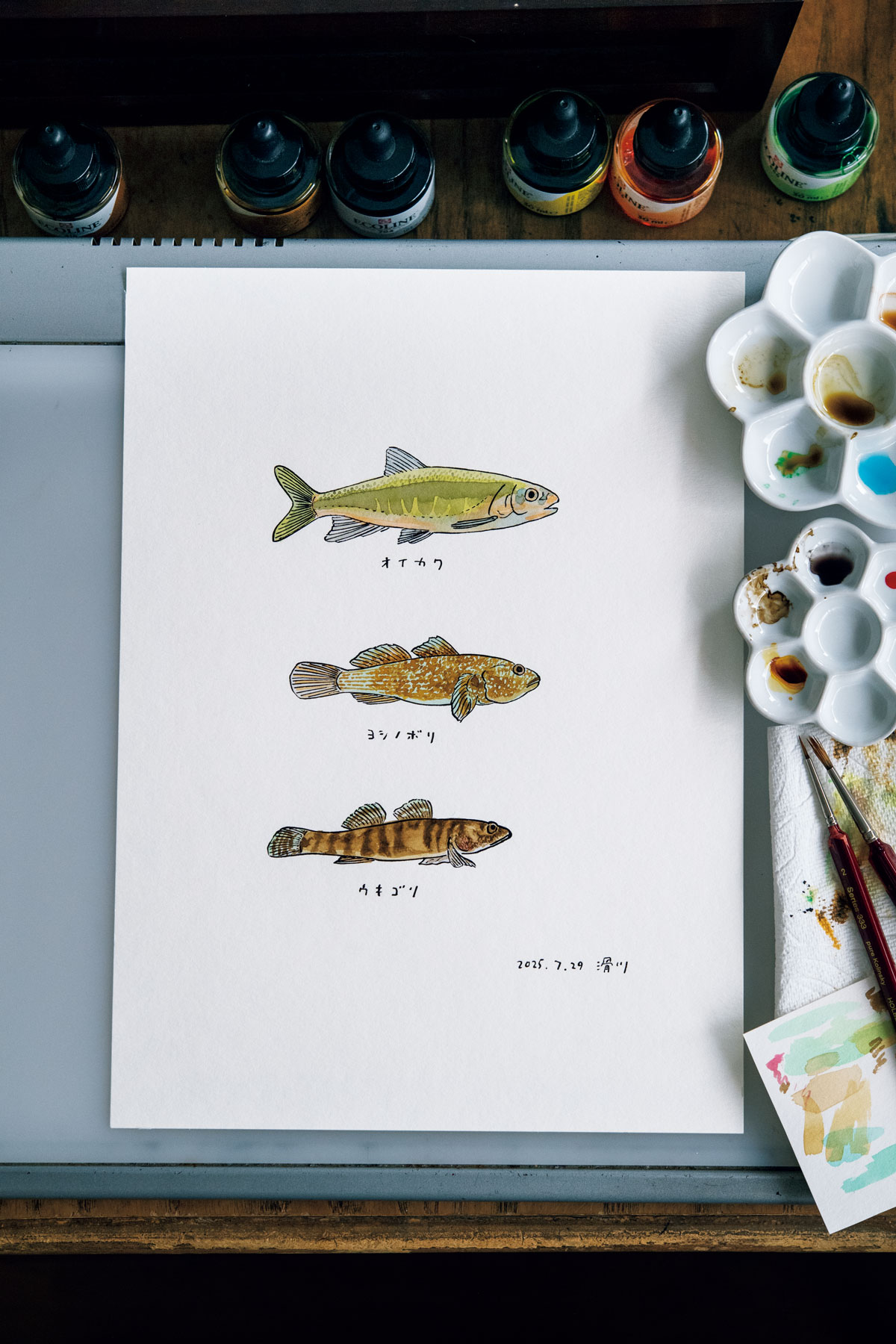








The delicate colors of fish that I learned about during my time as a ronin are something that I treasure.
Illustrator Yokoyama Kanta started fishing in the second-class river that flows through his hometown of Kamakura because he desperately wanted to see the fish swimming there up close. Catching them with a net is difficult, so the only way to observe them properly is to fish. Every summer, he dons waders, steps into the river, and uses a minimalist tenkara fishing rod with line tied to it to target small river fish such as minnows.

Yokoyama appeared on his bicycle wearing waders. He travels almost exclusively on foot or by bicycle, and is on a journey to discover the unknown within his range of activities. 
Namerikawa River flows through the city of Kamakura and into Yuigahama Beach. Right beside the main road crowded with tourists is a waterside brimming with greenery. It's Yokoyama's go-to summer spot.
"I also love catching insects, and from spring to summer I walk in the mountains almost every day, so I have a general idea of what kinds of insects live where in Kamakura. I also wanted to look for fish. I rarely bring either of them home with me, but by drawing them, I feel like they become a part of me, just a little bit. Drawing is a bit like stealing. I think there's a part of me that draws because I want something."
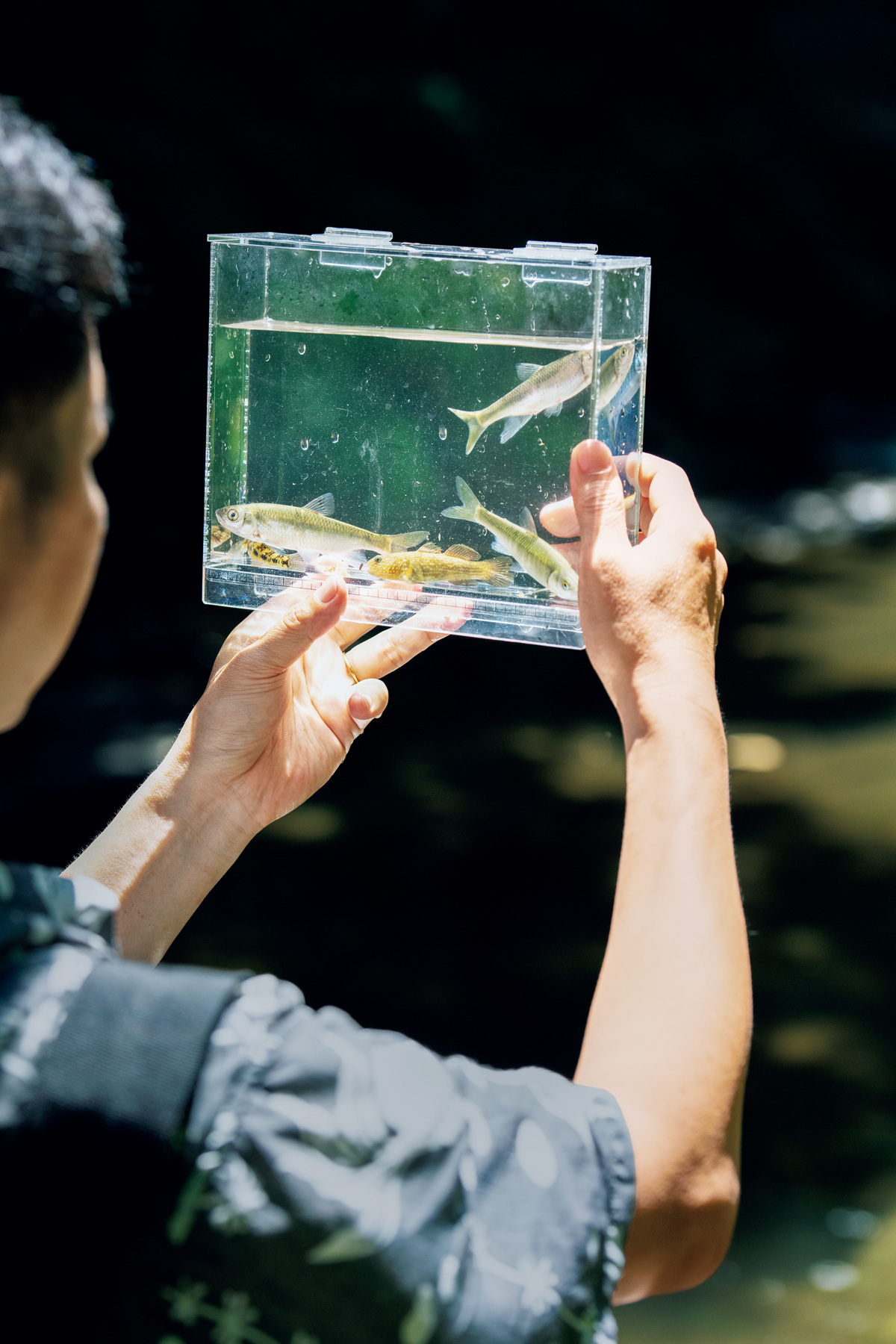
Yokoyama takes photos of the minnows and goby he caught that day, but they quickly escape. Knowing that the fish live there, he is captivated by their shapes, admires the beautiful colors, and feels relieved when they swim away. He observes them, feeling grateful that they have indulged his desire to "see" them, and a little guilty. That is what fishing is to Yokoyama.
"I still continue to do nude croquis, and because the lines of a woman's body are so beautiful, I feel like if I just draw them exactly as they are, I'm sure I'll be able to draw good lines. It feels like I'm being carried away by the motif while I'm drawing. Fish are very similar to that. If I draw from a good model, my drawings are bound to improve. I like both insects and fish, but if I were to draw a picture, it would definitely be fish."
This is because when drawing insects, "legs grow" in the middle of the beautiful lines, and "there is inevitably something that gets in the way." Rather than insects, which make you want to pursue endless details, it is easier to draw fish, which you can maintain a proper distance from. This is also the difference between insects that you can hold in your hand and touch, and fish that swim underwater.
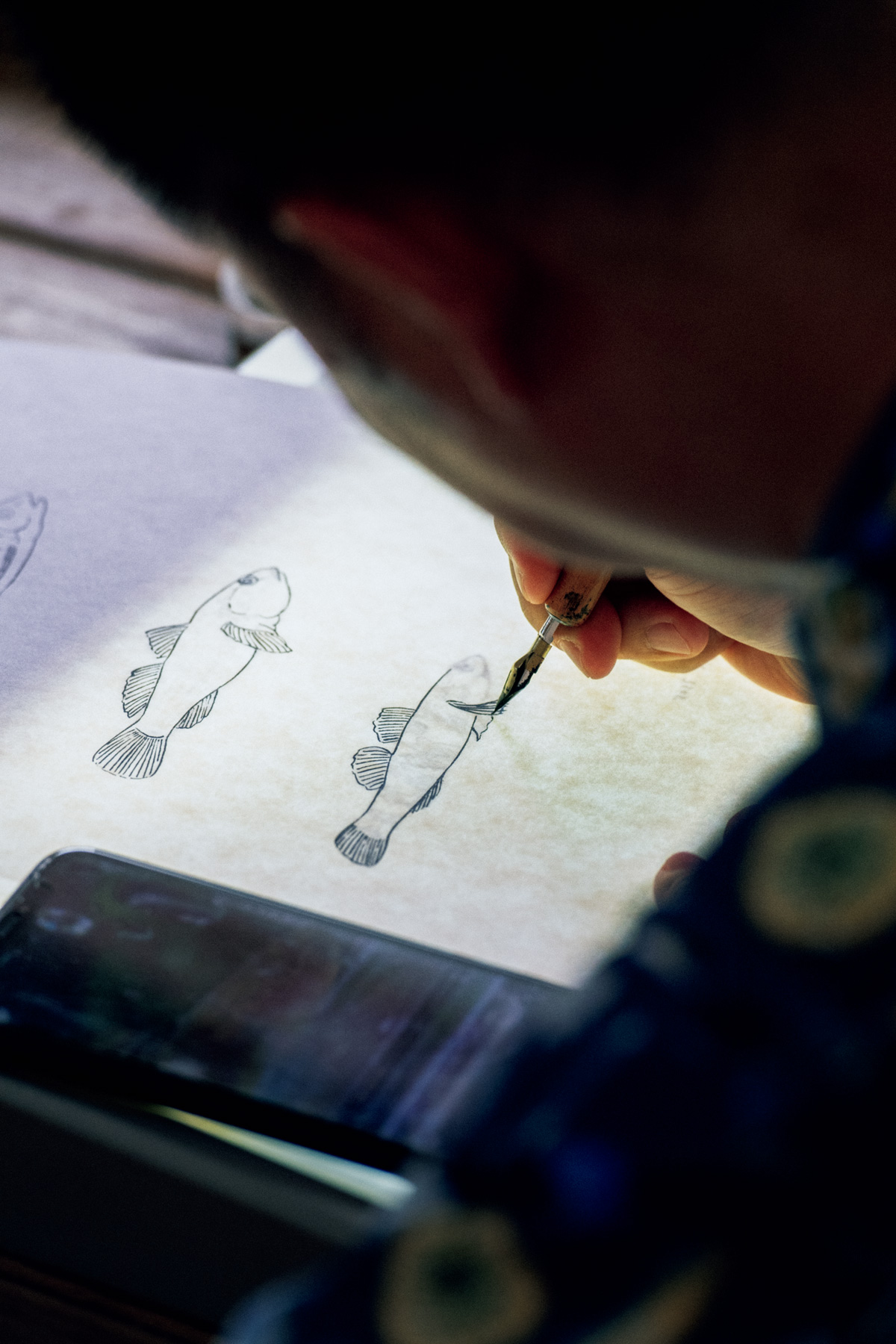
He sketches while looking at a photo taken with his cell phone, and then inks it in. When drawing, he says, "As with anything, proportions are important." 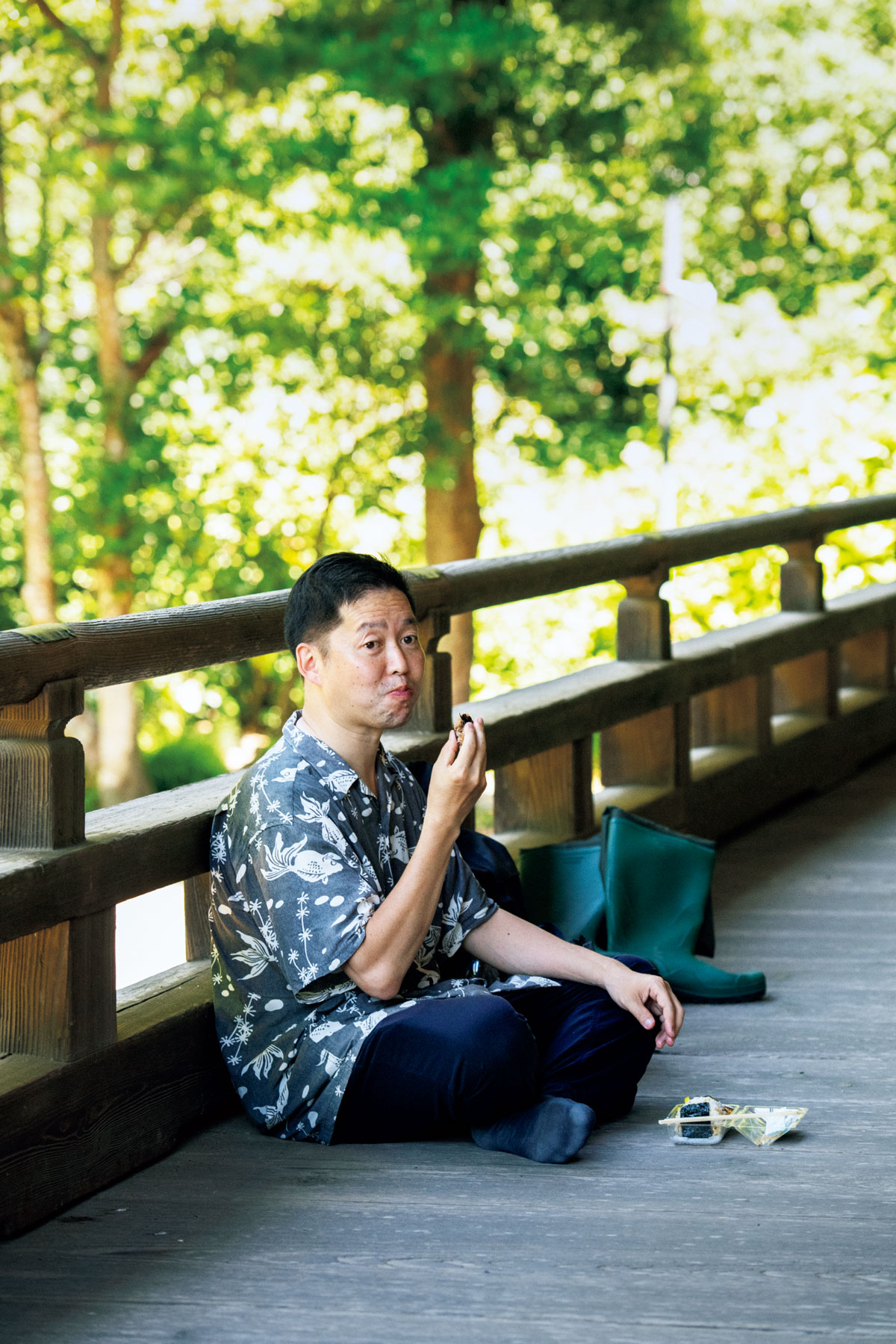
The artist eats rice balls in the temple grounds after fishing in the river. Kamakura's temples were another important escape for Yokoyama.
*
When he was a student preparing for entrance exams, fishing was his escape route. He attended art school prep school almost every day, and while he had to paint constantly, there were days when he didn't feel like painting. He didn't have the money to kill time playing pachinko, and he couldn't stay at home. He always headed to the deserted seaside embankment.
"When I went to the sea, it didn't really matter whether I caught anything or not, but if I did, I would tell myself that the fish were beautiful and that I was studying their colors."
Sketching the rockfish I caught felt like atonement for the day's sins. Or perhaps I needed the fishing trip to bring me back to the fundamental question: "Why do I paint?"
"The colors of the fish you buy and the fish you catch are different. I think that incredible color combination remains with me to this day. It was more than 20 years ago, but I feel that fishing during those days was very important."
The more connected fishing is to the subtleties of life, the more deeply it is engraved in our memories. This has nothing to do with the size or rarity of the fish, but if you have the experience of being "saved by that one fish" even once, you will surely be able to continue fishing for the rest of your life.
I've been thinking about fishing and painting for a long time.
Yokoyama started fishing when he was in the first grade of elementary school. Nowadays, he mostly fishes in the upper reaches of the Namegawa River, but at the mouth of the river, there were plenty of clams, and he would smash them against the wall to break them up and use them as bait, which he says was a joy to catch. Clams are the blue scallops that are a popular sushi ingredient. Just 40 years ago, there were many more creatures living in the sea off Kamakura.
Since that first fishing trip, although there have been some changes, I have continued to enjoy small fish fishing around Kamakura. Although it is easy to pursue and get too involved in the activity, I have continued to stay at the "entrance" level.
"I also admire people who dig deep and explore. But the fact that I admire them means I'm probably wrong (laughs). People also say things like, 'You're an adult, so you should fish properly.' I certainly understand why people would say that. 'You're an adult, after all.' But maybe you don't have to be so careful (laughs). Everyone gives up on the things they loved in elementary school, like fishing or catching bugs. It's the same with drawing, where you're still working on the basics. But there are still plenty of opportunities to think."
The reason I rarely travel far from Kamakura to fish is because I know there are fish, insects, and creatures I have yet to see, and that I will never be able to see them all. In fact, the older I get, the stronger my feeling becomes that "I'm having fun right now!"
"When I was little, I assumed that such creatures didn't exist in Kamakura. But when I became an adult and looked for them diligently, I found that they did exist. I could go into the mountains at night to catch rhinoceros beetles as much as I wanted, and I could even drink beer in the middle of the day after coming back from fishing in the river (laughs). It's definitely better to grow up."
The most interesting thing about catching insects and fishing is that you never know what's going to happen. Even in the hometown where you've lived since you were born, there are so many things you don't know. And just as the environment changes, you yourself change little by little.
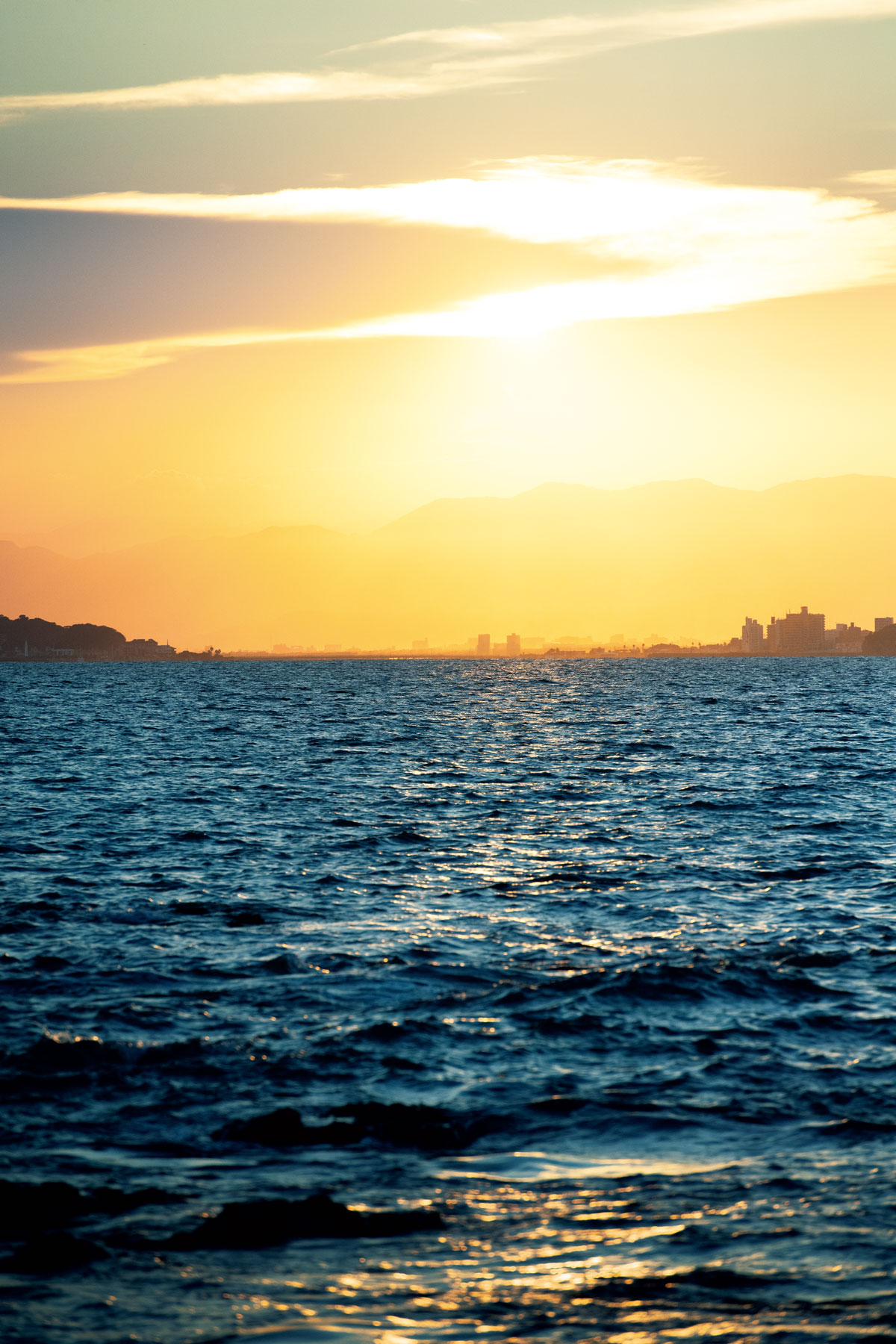
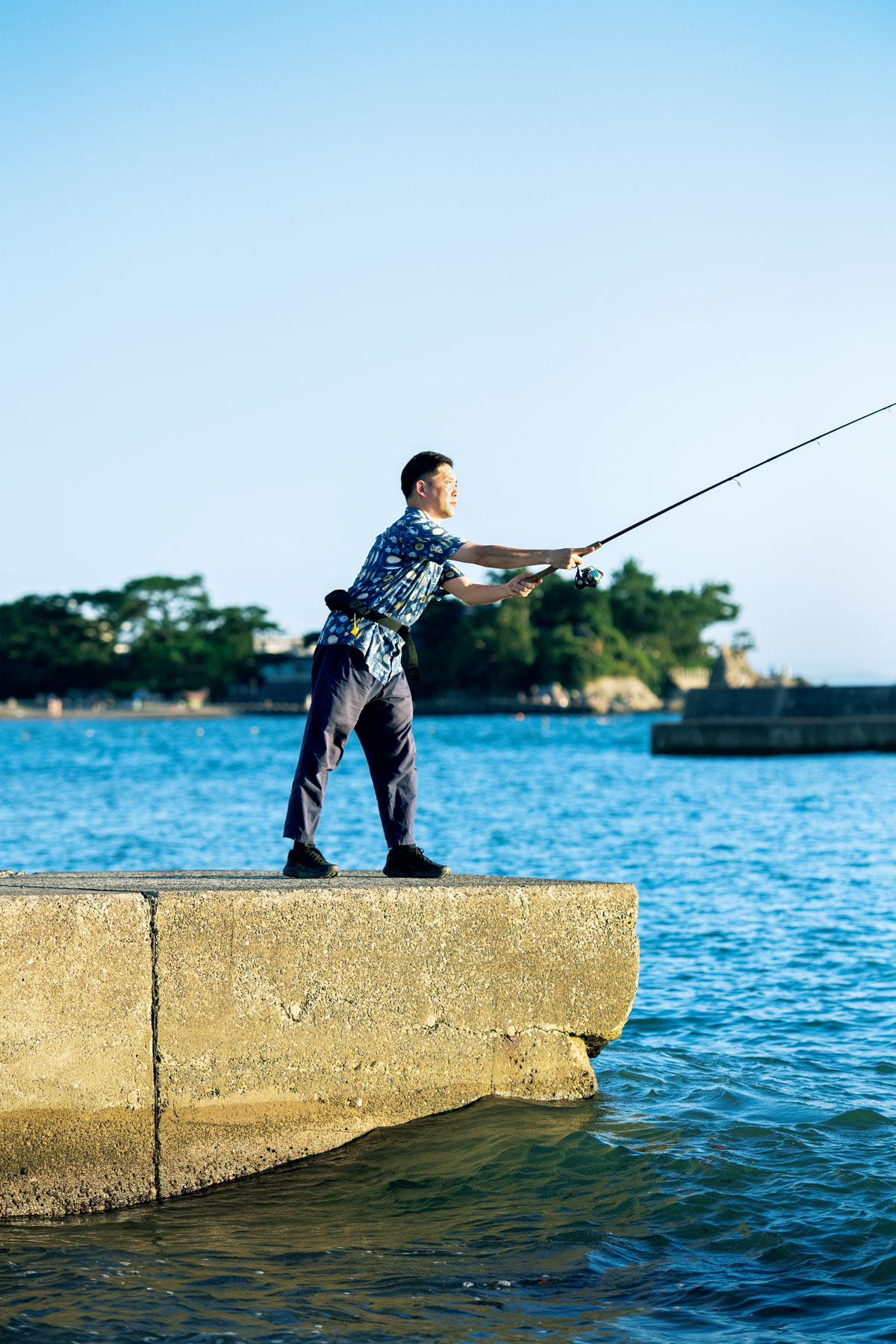
I went sea fishing in the evening with Yokoyama, who rarely ventures into the crowded seas in summer. We tried casting, dragging the bait along the sandy seabed, but there were no bites of the flounder I was aiming for. As the sun set, the sky turned orange. "It was a day like summer vacation," Yokoyama said with a laugh. I wish it would never end. Fishing lets out the child within me.