









和菓子を愛するあの人へ
日本とシルクロード文化が織りなす新たな“日々のお菓子”
〈御菓子所 胡禾〉の「風々」
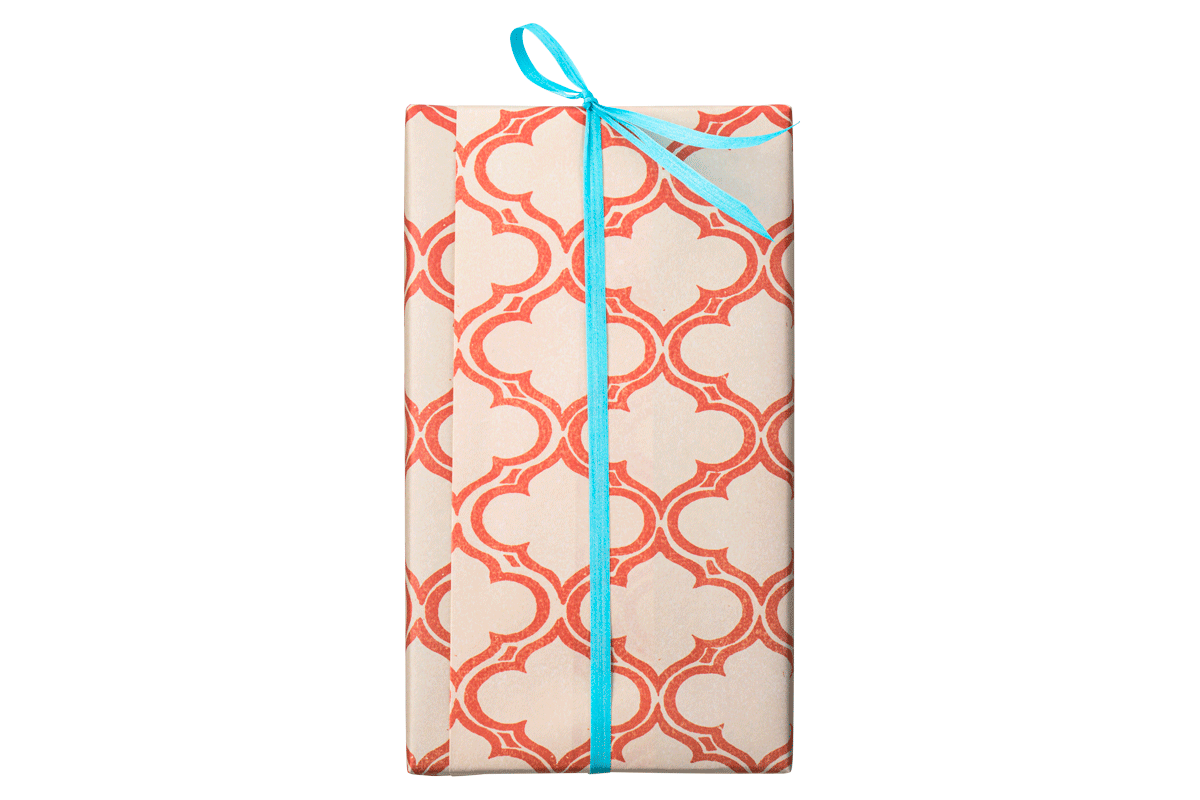
店名に用いた「胡」の文字は、古代中国で異国(主に西域の中央アジア)を意味したもの。贈答用の包装は、中東地域の花の文様をあしらった包装紙に水色のシデ紐を結んで。こんなところにも日本とシルクロード文化の融合が。 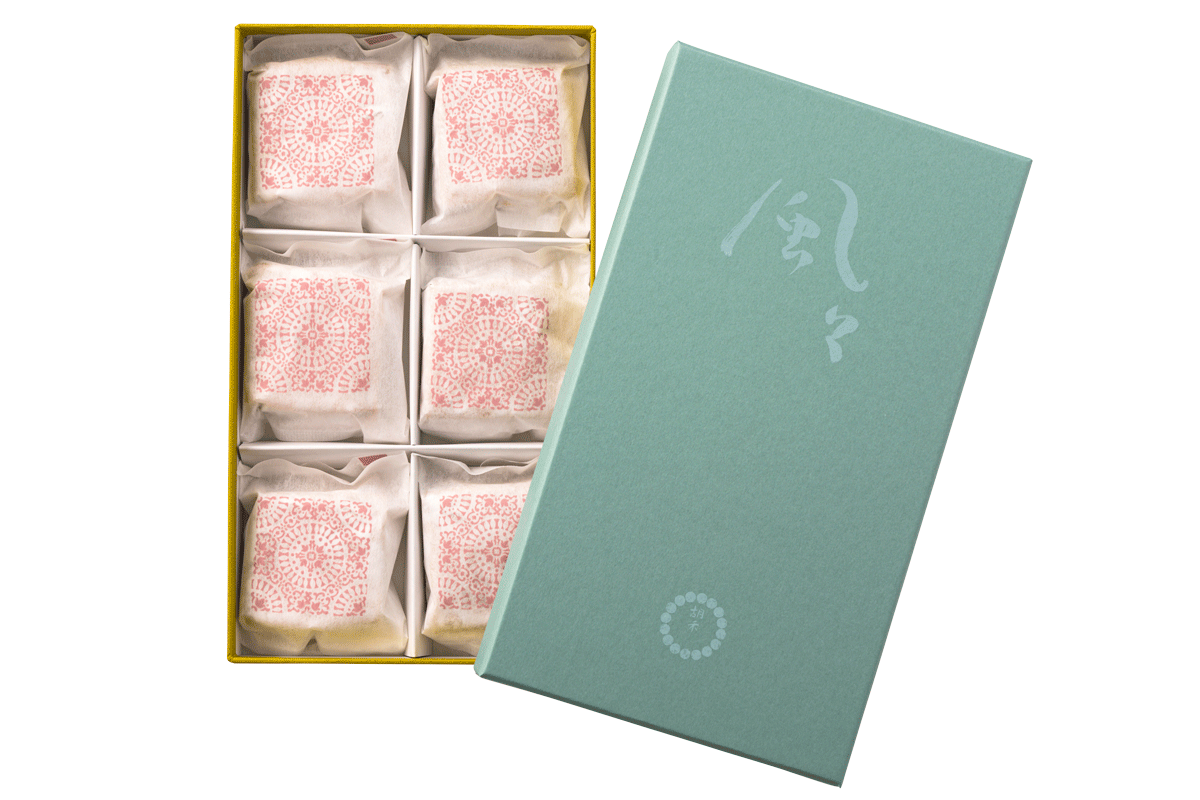
看板商品の一つ、柔らかな求肥にクルミと経皮末(ニッキ)を合わせた「風々(ふうふう)」。名前は生地のふわふわ感と“香りが風に乗ってたどり着く”イメージから。ボックスの書はなんと妻の千納さんの文字!1個290円、ギフトボックス入り6個2,360円。賞味期限:製造から4~5日。 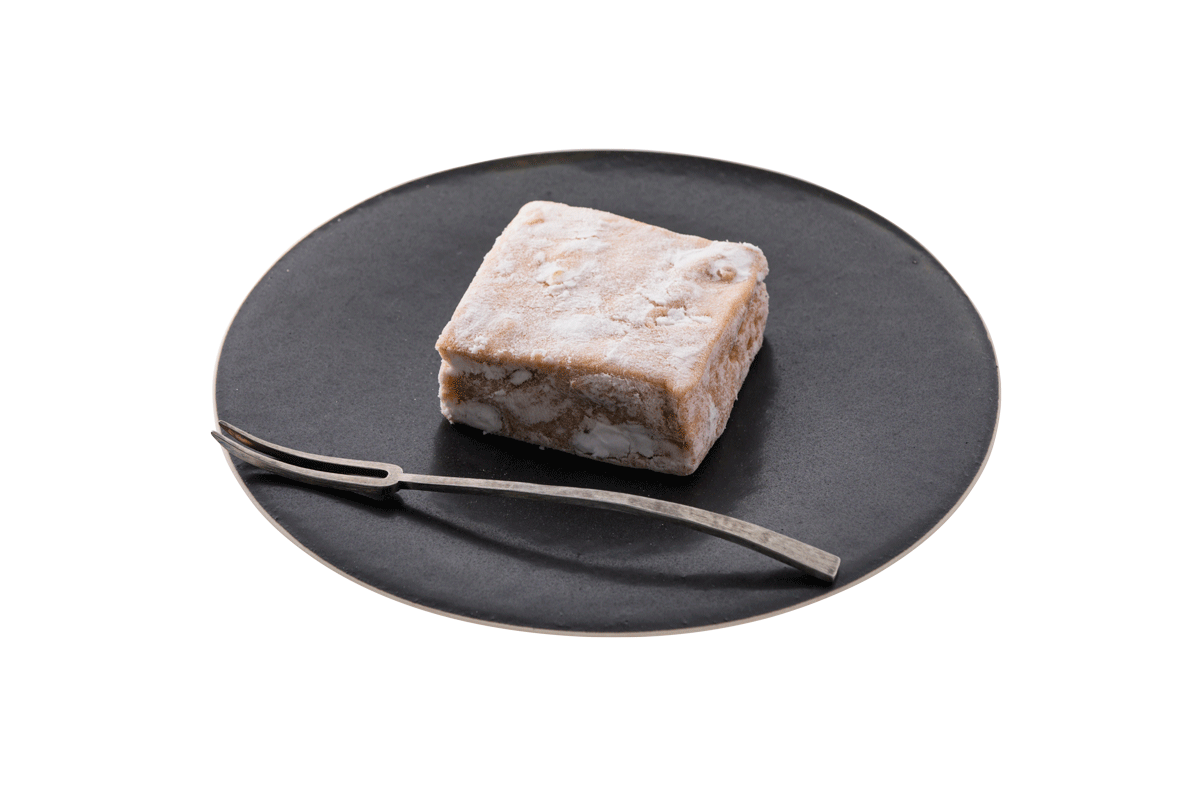
雪平(せっペい)生地の驚くほどのデリケートさと、クルミのザクザク感&ニッキの香りのコントラスト!和菓子でありながら口の中でエキゾチックな風が吹く。 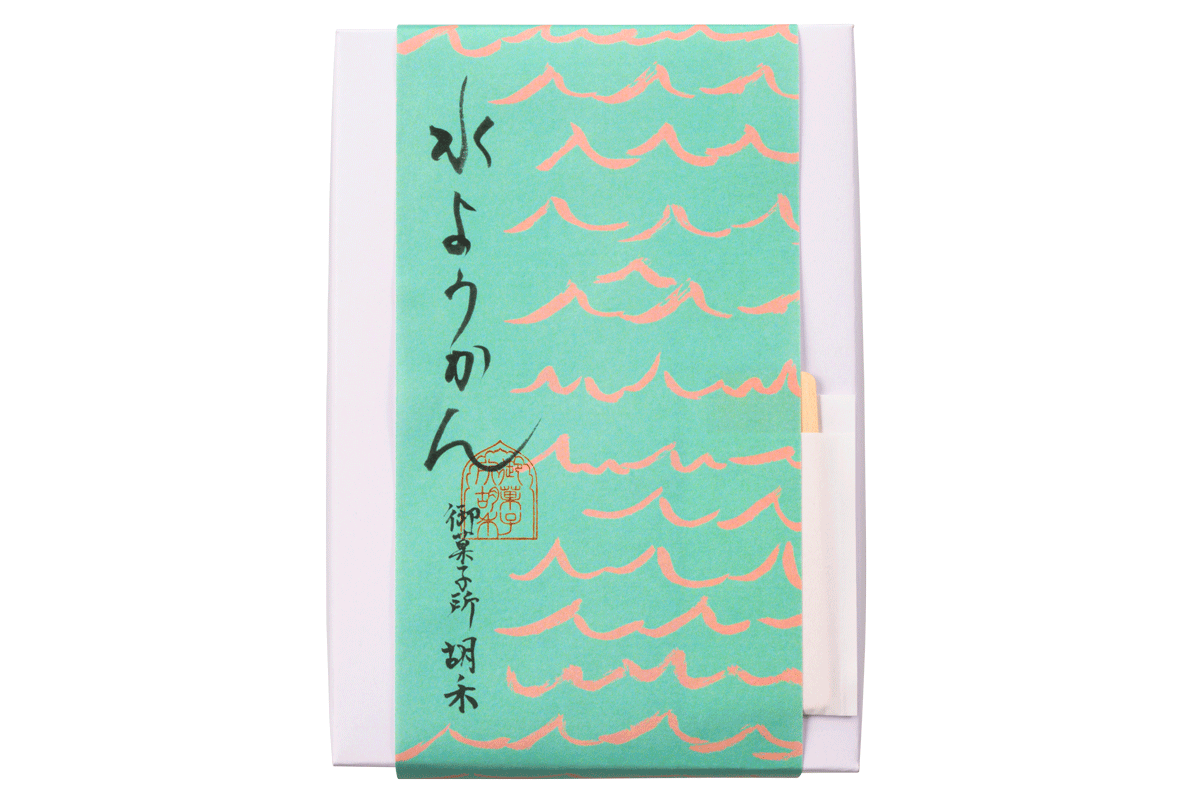
8月に初登場した「水ようかん」(木べら付き)。水面の揺れを描いた涼しげな掛け紙と伸びやかな文字も、やはり妻の千納さんの書。 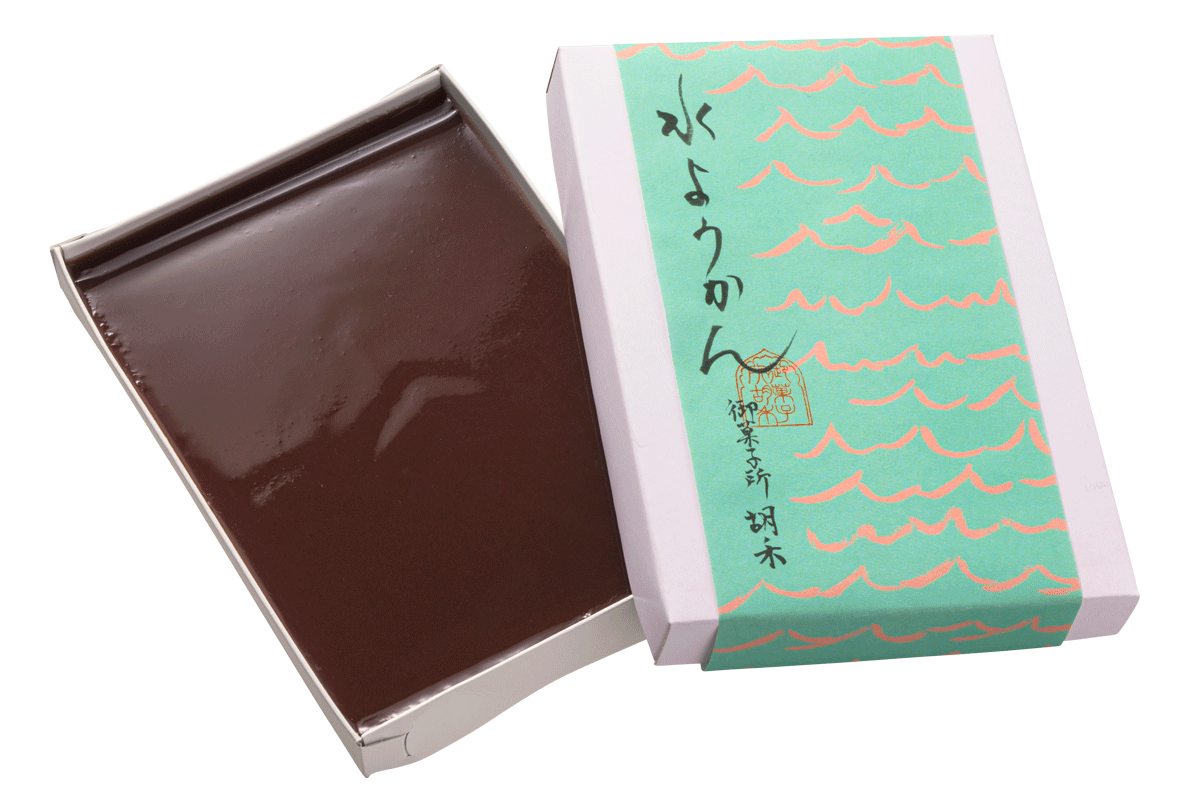
蓋を開けると、深い藤色にきらめく水ようかんが。思わず木べらで掬うのをためらう美しさ!「水ようかん」1箱780円。販売期間:9月末まで。賞味期限:製造から4日。 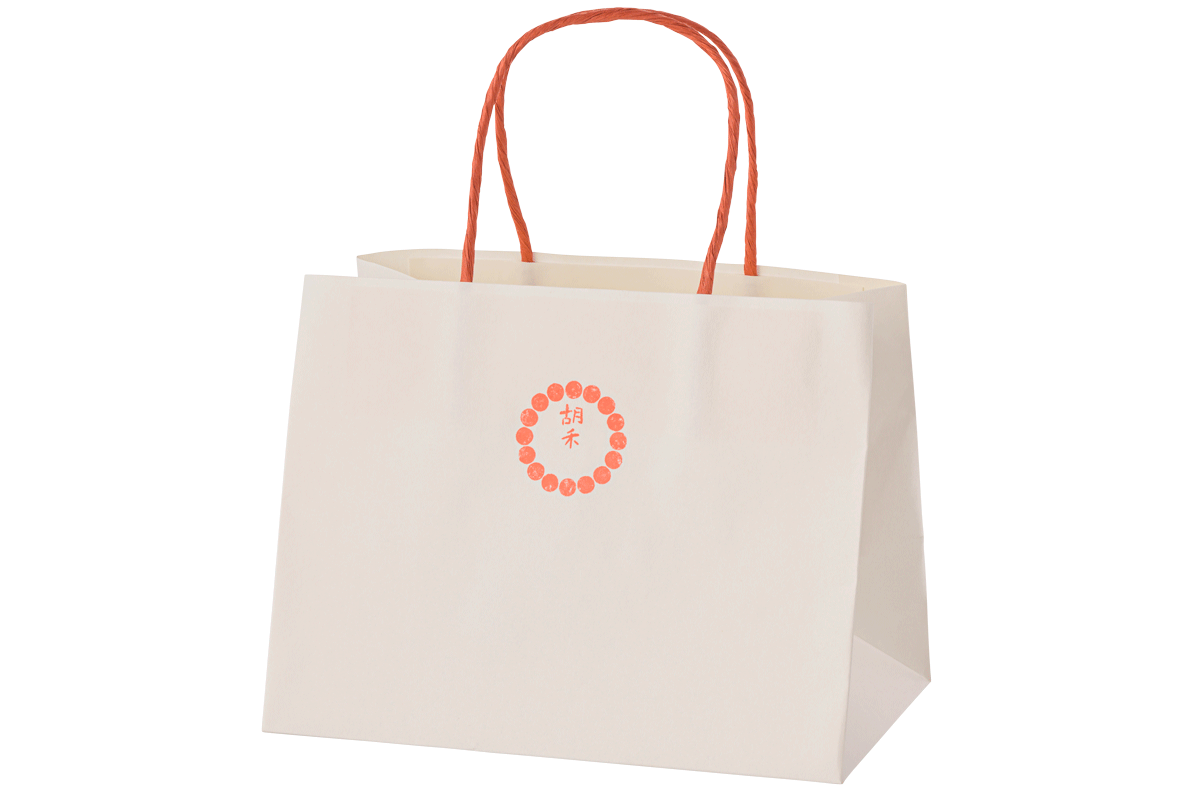
お手提げ袋には、奈良時代に日本に伝わったという、小さな玉が連なる文様「連珠紋」をあしらったロゴマークが。
東京は渋谷区西原に今春オープンした和菓子店〈御菓子所 胡禾(こか)〉。大阪と東京の名店で腕を磨いた店主・岩田大二郎さんと、同じく名店で和菓子職人の経験を積んだ妻の岩田千納(ちのう)さんが開いた店だ。
旅を愛する2人が特に惹かれているのが中央アジア。確固とした技術を礎に、和菓子に中央アジアのエッセンスを融合させ、そっと落とし込んでいくのがこの店の持ち味だ。
たとえば定番の豆大福と並ぶ、店の看板商品が「風々」。北陸産のもち米で作る求肥にメレンゲを加え、夢のようにエアリーに練り上げた雪平(せっぺい)の生地に、ローストしたクルミと桂皮末(ニッキ)を合わせた一品。
まるで水面に綿毛が揺蕩(たゆた)うような、驚くほどふわふわとはかなげな生地に、クルミのザクザク感が軽快なアクセントを加え、鮮やかなニッキの香りが異国情緒へと誘う。確かに凛とした佇まいの和菓子でありながら、どこかエキゾチック。ああ、このミックスカルチャーの塩梅が新鮮!
もう一つ、8月から登場した新作「水ようかん」もおすすめ。小豆の風味を存分に引き出した流し込み羊羹で、北海道産えりも小豆を使い丹念に仕上げた自家製こし餡を糸寒天でゆるやかに固めた品のいいおいしさ。澄んだ味わいの餡から豊かな小豆の香りが広がって、糸寒天ならではの、ホロリとした舌触りとするすると消えていく口どけが心地よい。キリリと冷やしていただきたい、夏だけのお楽しみだ。
店頭には豆大福と胡麻餅の定番生菓子2種のほか、月替わりのお菓子を合わせ日々9種ほど並び、スパイスやハーブなどを取り入れた新作も随時登場予定。
仏教の伝来が日本にあんこが普及したきっかけの一つであるならば、シルクロードの食文化や食材を融合させる〈胡禾〉のお菓子は、言うなれば和菓子のルーツを探る旅でもあるのかも。
食べれば不思議と旅に出たくなる和菓子なのだ。