






To the top of that mountain all alone
In the spring of 2022, news spread throughout Japan's mountaineering world: a young man had completed a complete traverse of the mountainous region that forms the watershed of Hokkaido, from Cape Soya in Wakkanai to Cape Erimo.
Although Hokkaido's mountains are around 2,000 meters high, due to their high latitude, the harshness of their natural environment is comparable to that of the 3,000-meter mountains of Honshu. Furthermore, if you were to walk along the mountain ridges from Cape Soya to Cape Erimo, the actual walking distance would be nearly 700 km.
What's most surprising is that it was all done alone in winter. Strong winds, avalanches, freezing temperatures... It's a place where anything could lead to immediate disaster, and in terms of natural harshness, it rivals the Himalayan mountains. A crossing of the Hokkaido watershed in such a harsh, mid-winter climate. The trigger was a book.
"I had read a book by someone who had done something similar in the past. The person had completed the climb in stages, and not in one go, but he had written something along the lines of, 'It would be the ultimate feat if you could complete this all in one go alone. I have high hopes for the young mountaineers of the future.' So I thought, 'OK, I'll give it a try...'"
So says Ryota Nomura. He currently works as a mountain guide based in Hokkaido, but at the time he was just a trainee guide who had just graduated from university. Unfortunately, the COVID-19 pandemic meant he had almost no work, so he decided to take advantage of the situation and do something that would take time.
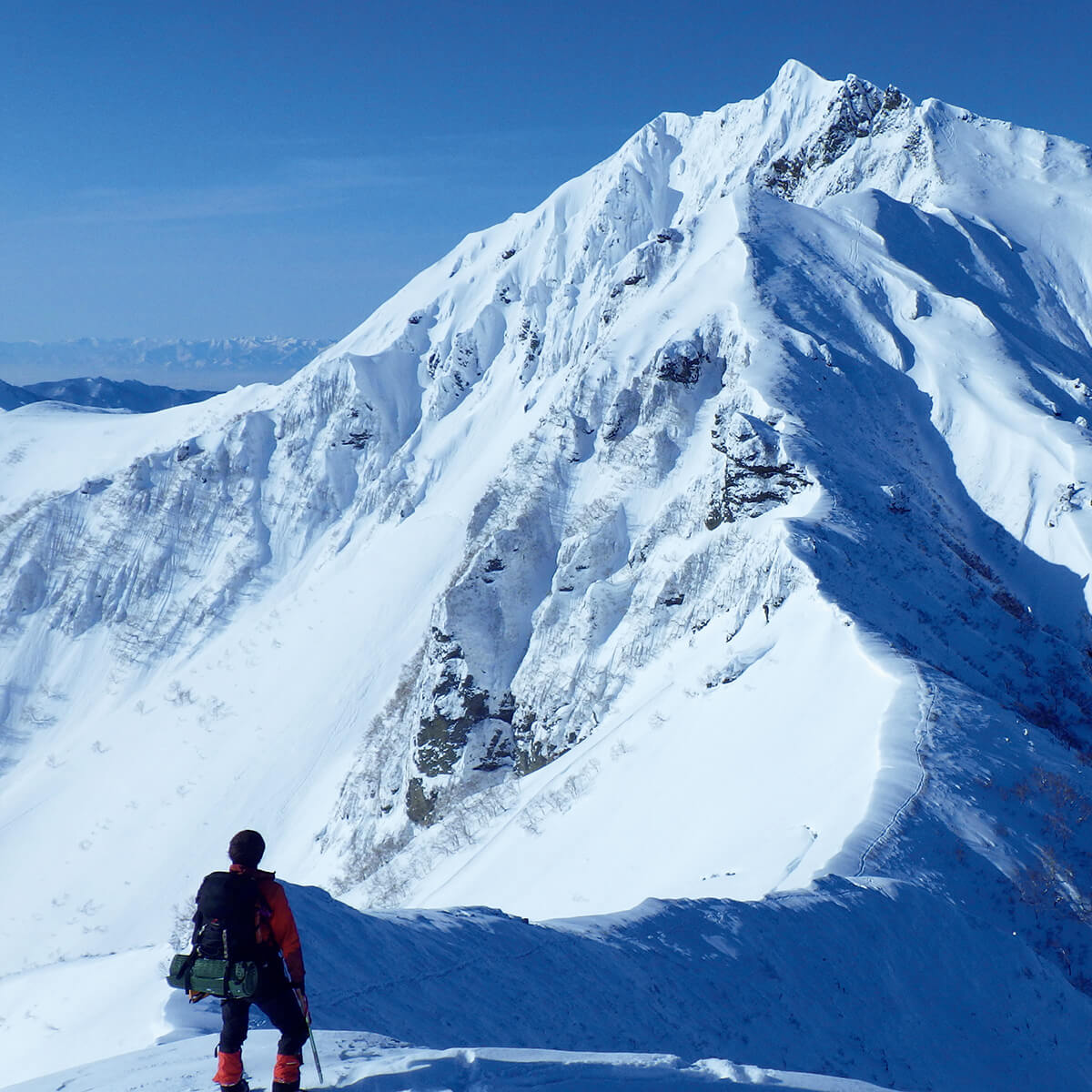
In March 2021, he set out on his first challenge. This time, he planned to head north from Cape Erimo. However, once he entered the mountains, deep snow blocked his path, and the downward slopes were frozen solid. If he let his guard down even a little, he would slip and fall, and he couldn't proceed as he had hoped. To top it off, his tent was destroyed in a strong wind, and on the 12th day, less than 100km from Cape Erimo, he was already discouraged.
I can no longer move a single step. My body has reached its limits.
Nomura revised his plan and, a year later, on February 26th, he set out again to traverse the watershed, this time heading south from Cape Soya.
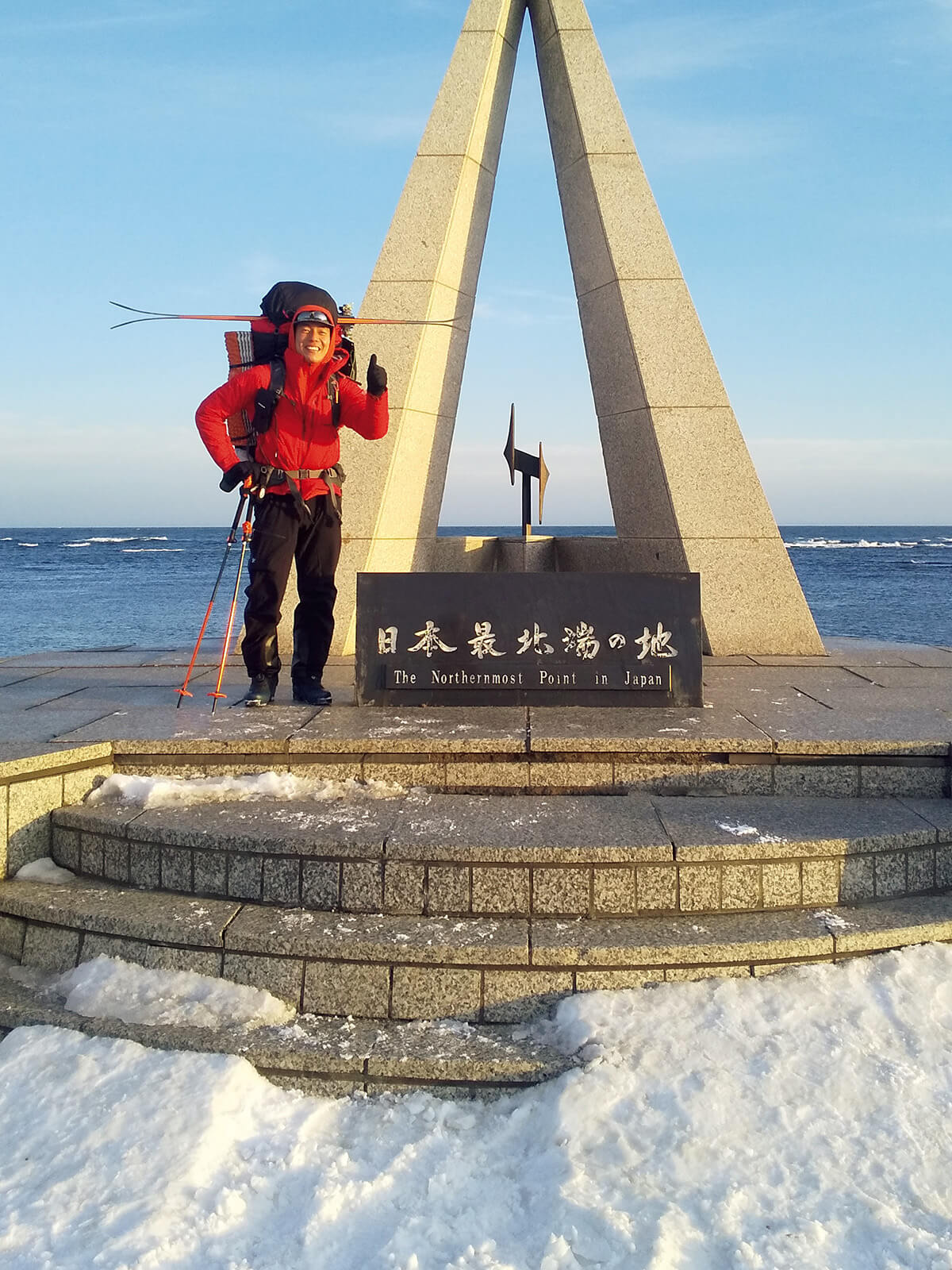
Having experienced failure once before, things go smoothly this time, but after about 10 days, I start to feel something is wrong.
"I was being pushed to the limit mentally. Up until then, the longest I had ever climbed was about two weeks, so I could imagine what it would be like, but this time it was over 60 days. I didn't know what would happen next, or whether I would be able to keep walking for that long, and thinking about the future only filled me with anxiety."
Nomura stopped thinking. He suppressed his own thoughts, "not imagining the future." He tried to maintain mental stability by consciously focusing only on the immediate future.
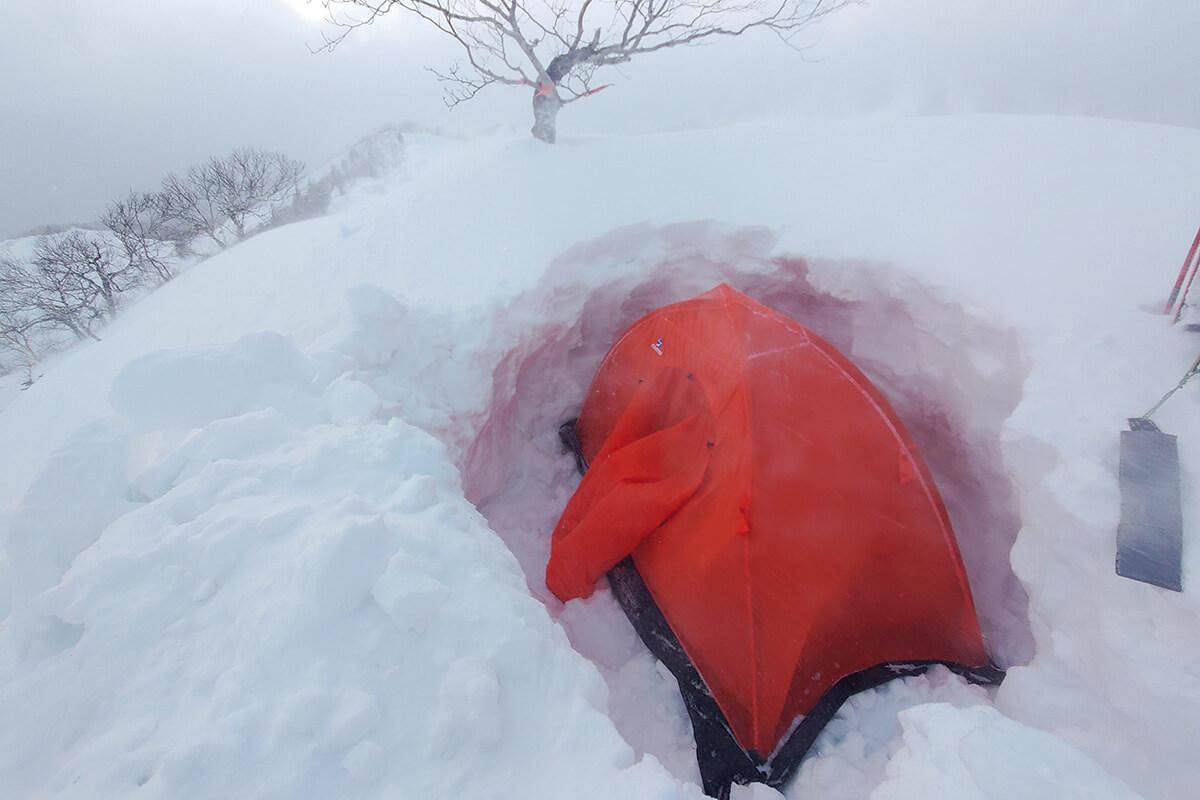
On March 28th, about a month after setting out, we pitched our tents at the Hokkaido Odisha Watershed near Mikuni Pass, which is exactly the midpoint of the traverse course. We had to carve a place to pitch our tents into the snow, which was also hard work. 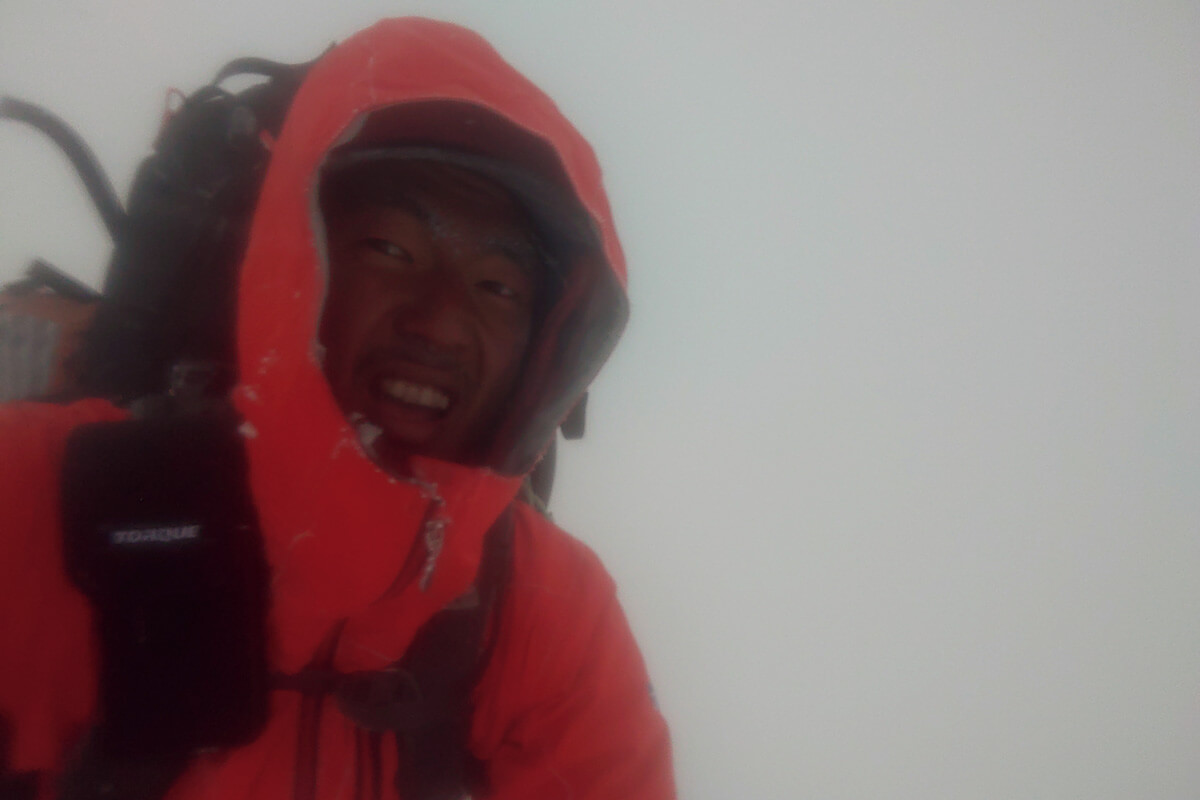
At the summit of Mount Chitokaniusi (1,445m above sea level), a blizzard was blowing so hard it was impossible to open your eyes.
However, after about a month, I began to reach my physical limits.
"I think I used up all the fat and other energy stored in my body at this point. From that point on, I began to live a life where I could only move as much as I had eaten. Immediately after setting out after breakfast, I could move normally. But at a certain point, I would suddenly lose all strength in my body. If I ate a little trail food, I would be able to move again, but about an hour later, my energy would run out and I would be unable to move again. This cycle would repeat, and I would end up dragging myself along every afternoon."
Despite being "tormented by hunger," he continued walking, and finally reached Cape Erimo on April 29, 63 days after he set out. After reaching the finish line, Nomura went to a hot spring and saw his body for the first time in two months. He said that he was as thin as a chicken bone.
"You might be wondering what's so interesting about all this hard work, but when I look back after a long mountain hike, I sometimes can see the ridgeline I've walked all the way to the distance. It's like my path has been visually manifested, and I can't get enough of that moment. Maybe that's what I go to the mountains for."
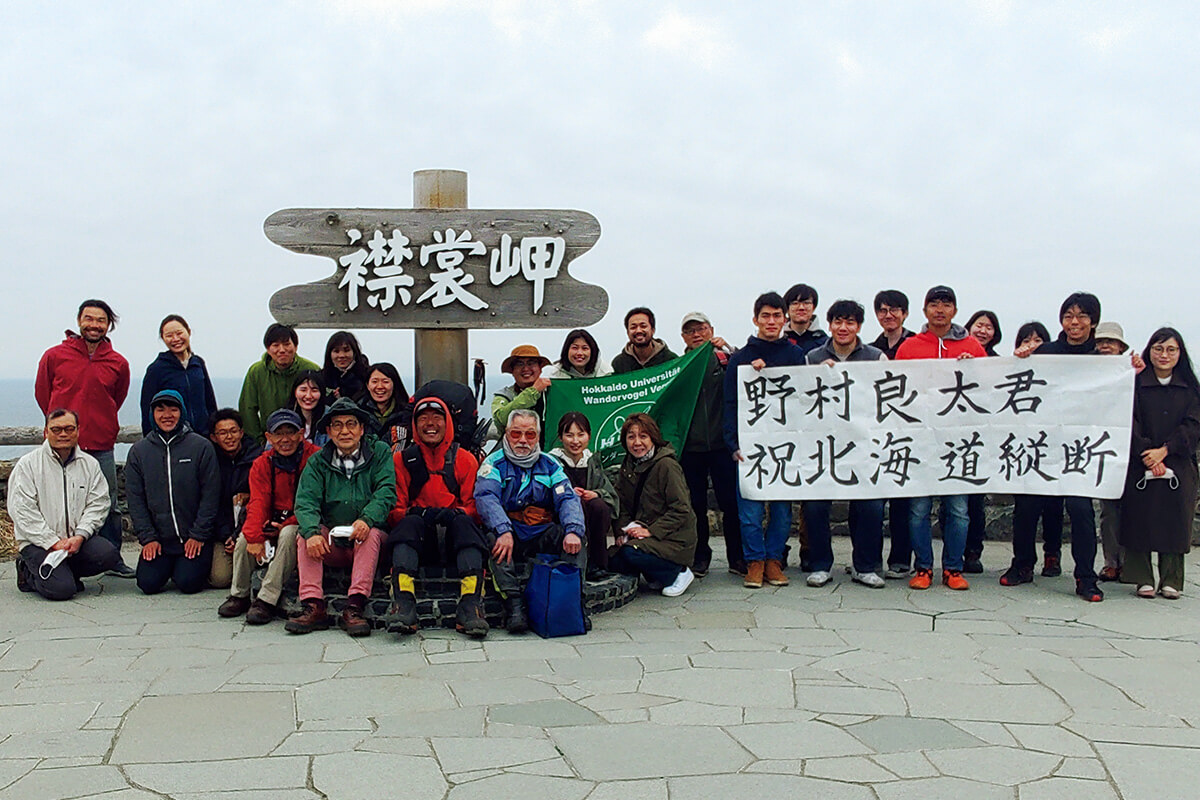
Travel to a destination where you can experience Nomura's adventures
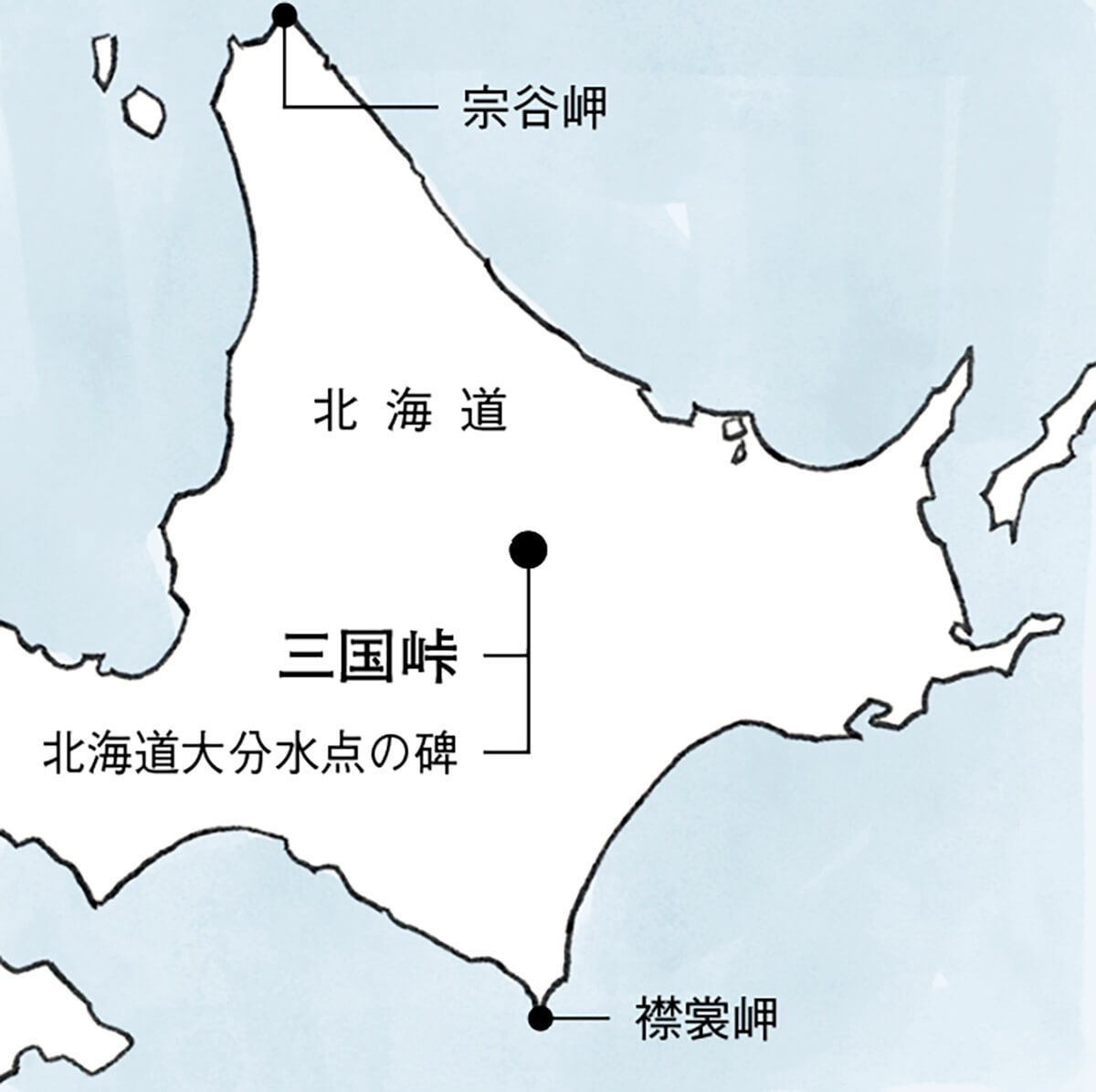
This pass is located on National Route 273. There is an observation deck and cafe right next to the tunnel that runs through the pass, and anyone can enjoy the magnificent mountain scenery of Hokkaido. "If you're a mountain climber, you can go up the mountain path for about two hours and see the stone monument marking the Ootsuka Water Divide Point in Hokkaido. I think you'll get the feeling that this is the center of Hokkaido," says Nomura.