






At midnight at the mouth of the Hayatsuki River in Toyama Bay, 30 runners stand on the water's edge, with the sea at their backs, and begin their silent walk toward the mountains before them. Family and friends line the road, cheering on the runners as they embark on their long journey—this is the start of the Trans Japan Alps Race, commonly known as TJAR.
The fun of putting a detailed plan into practice along the way
Starting from Toyama Bay on the Sea of Japan, participants will run across the three major mountain ranges that form the backbone of the Japanese archipelago - the Northern Alps, Central Alps, and Southern Alps - and head out to Shizuoka's Suruga Bay on the Pacific Ocean.
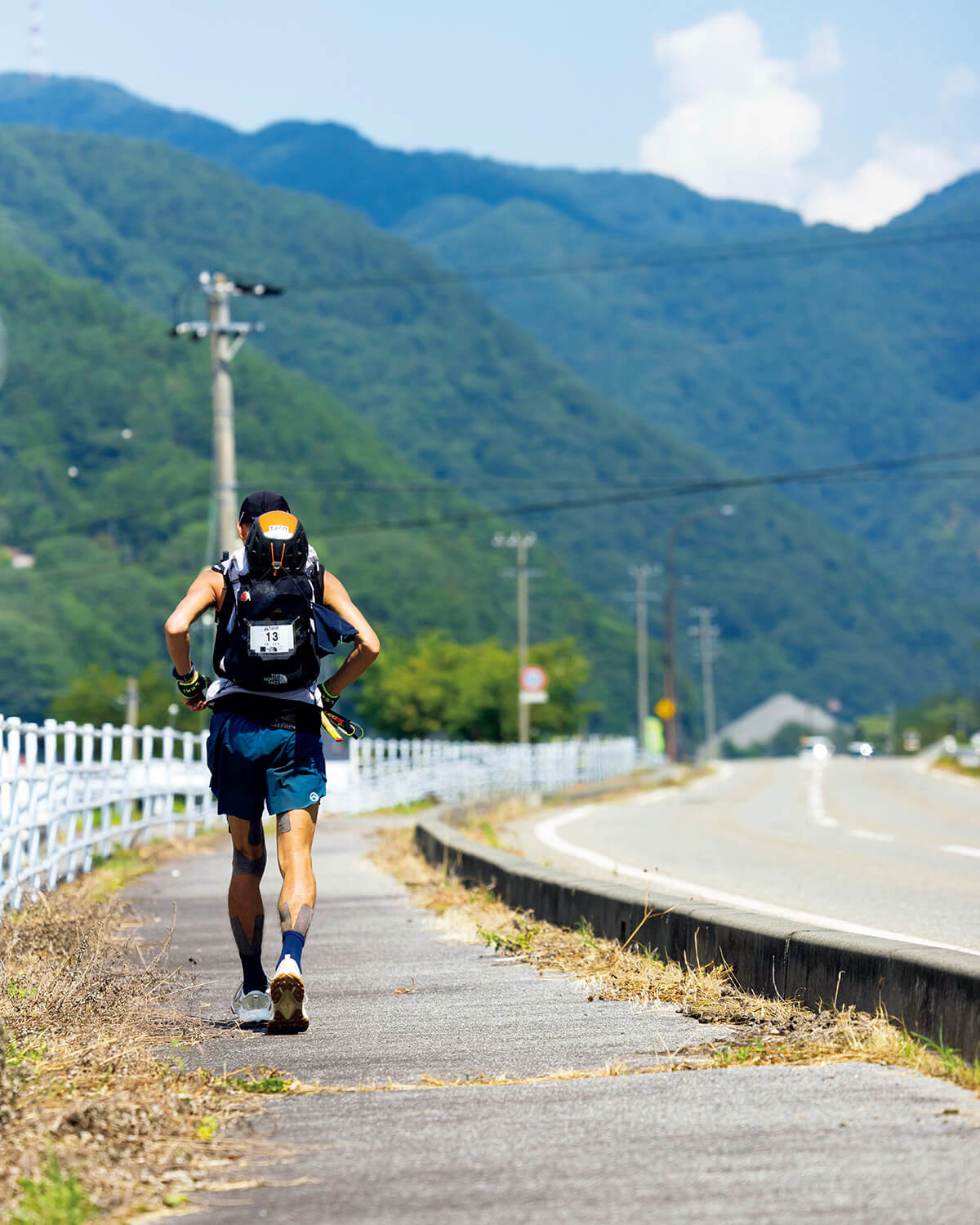
The distance is approximately 415km, with a cumulative elevation gain of 27,000m. This journey is equivalent to climbing and descending Mount Fuji seven times and still running that long distance, and participants must complete it within the time limit of 192 hours (8 days). Participants must carry food and water, and sleep in a tent or by the side of the road. Support from others is prohibited. All they can rely on is their own physical strength and judgment.
Ryo Doi first took on this race in 2021. The race was cancelled due to an approaching typhoon, but in the following year, he won in 2022, finishing in 4 days, 17 hours and 33 minutes, smashing the previous record by 6 hours and 19 minutes. He went on to win again in 2024.
"For me, a race is like a presentation. Based on the practice runs I do beforehand, I plan out the exact timing of my activities, supplies, and naps, and build up my own answers. When it works well in the actual race, I'm happy, and when it doesn't, it's fun to think about what I did wrong."
In the scorching heat of August, they move forward day and night, weaving along 3,000-meter ridgelines from Mount Tsurugidake to Mount Yari, Mount Kisokoma to Shiomi, Arakawa, Akaishi, and Mount Hijiridake. The wind blows violently along the ridgelines, making it difficult to even bivouac (emergency evacuation). Auditory and visual hallucinations are not uncommon. They say they sometimes hear the sound of a babbling river as singing, and see Chinese characters floating on the stones.
"Even at times like that, I'm surprisingly calm. I realize that I just haven't had enough sleep. During the 2022 race, after crossing the Northern Alps and descending to Kamikochi, I went through a tunnel and lay down on the side of the road and closed my eyes for 20 minutes. Then I was able to move again. I didn't feel refreshed, but it was like I had more room to think. I think that when we talk about "limits," it's just our brains automatically putting the brakes on, so if I tell myself that it's okay, I gradually recover."
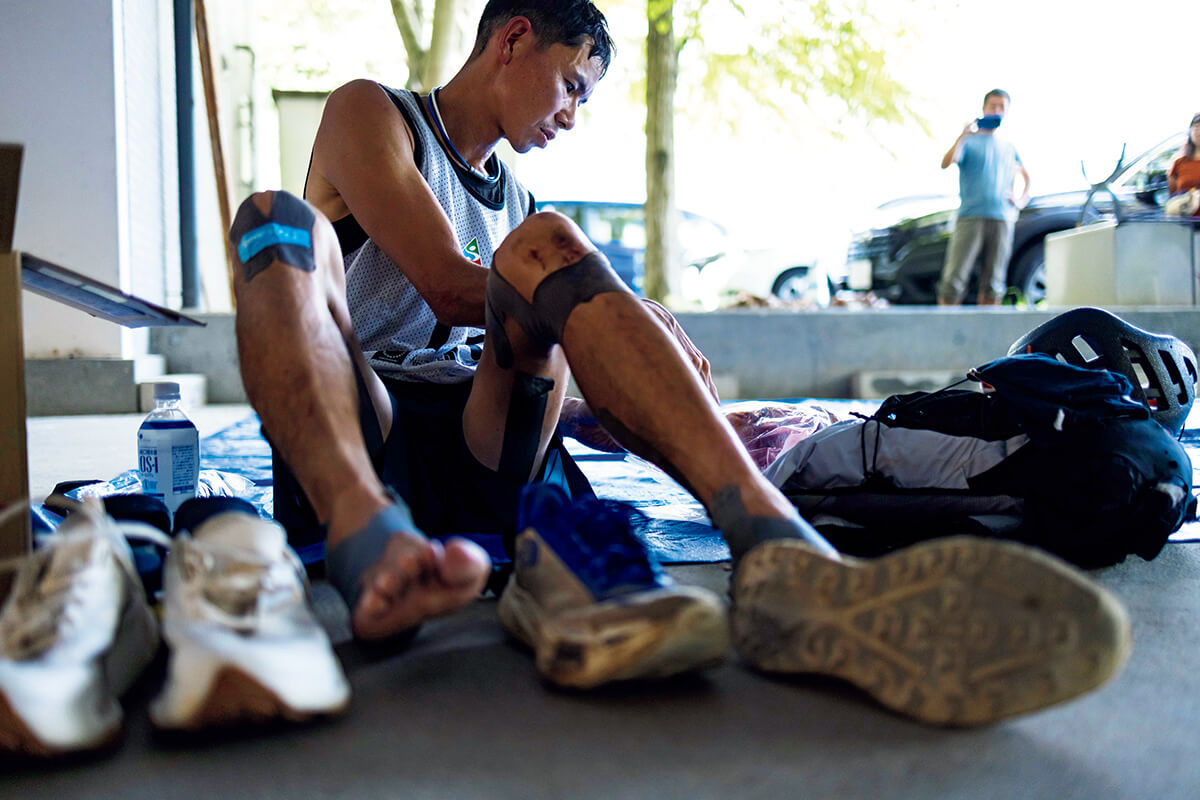
The heat and friction of the asphalt gradually wears away the protrusions on the soles of your shoes, turning even brand new shoes into tatters. 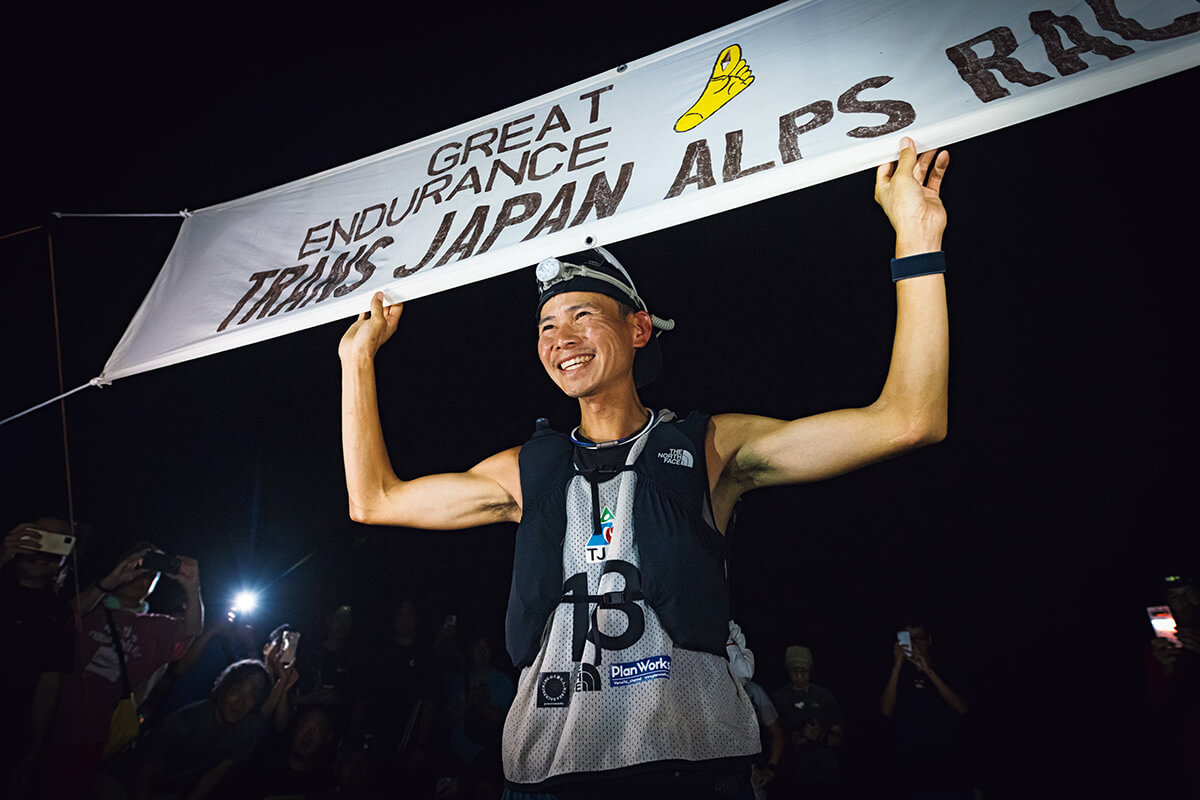
The moment of reaching the finish line after putting everything on the line.
However, mountain racing is a race where you can't completely control the weather or your physical condition. Your pace can slow down due to stomach upset caused by food incompatibility or over-nutrition, or you can become so sleepy that you lose track of what happened in a certain section and collapse on the spot.
"When you've been walking in the dark and alone for hours, just seeing the light of a headlamp in the distance can suddenly make your steps lighter. Of course, you have to run the race on your own two feet, but just knowing that someone is cheering you on is strangely invigorating. Even if they're not nearby, the presence of others can give you a huge amount of energy."
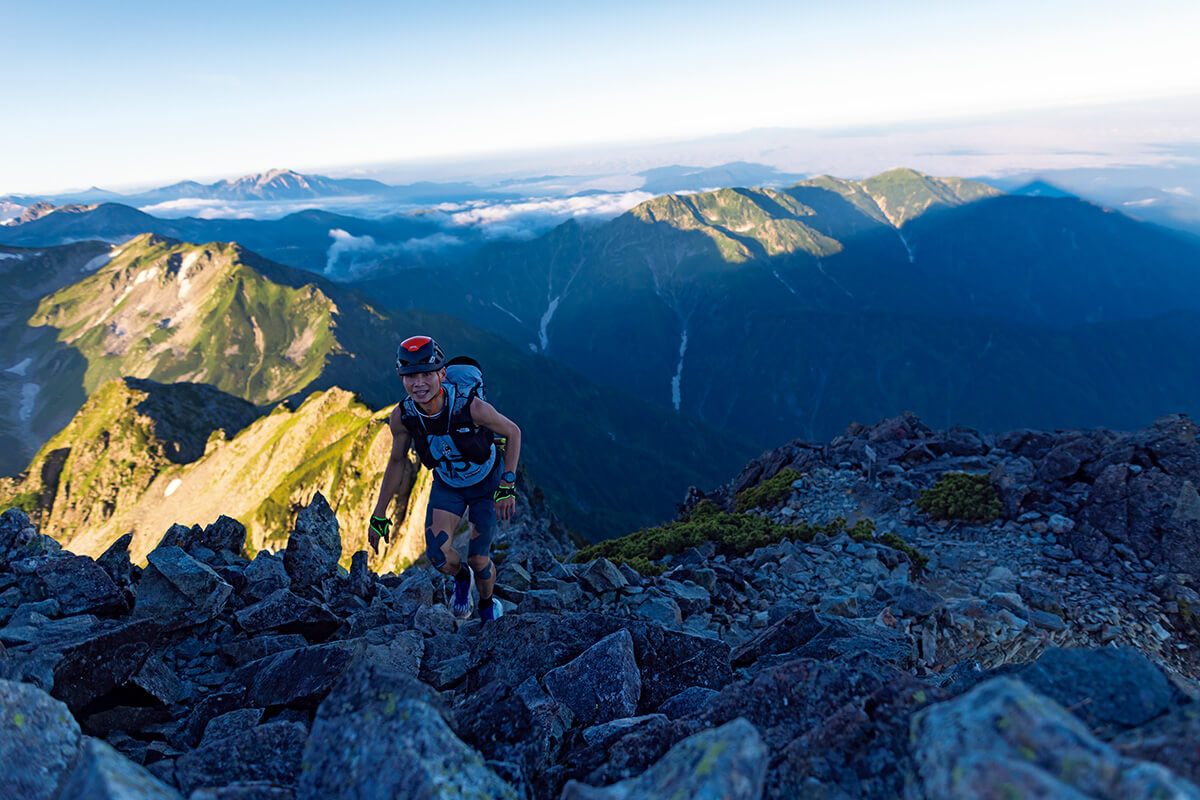
Every time you overcome an unexpected situation, you feel a sense of progress. And at the end of that journey, you may come across a view that feels like a reward.
"When I stand on the ridge before dawn, when the mountain air is at its clearest, the ultramarine sky gradually changes to a paler hue. There are still a few stars left, and looking down I can see a sea of clouds. It's so beautiful it's hard to put into words. Even in the middle of a race, I feel like stopping and looking. What kind of scenery awaits me ahead, and what kind of person I will be once I overcome it? This kind of curiosity may be what motivates me to run."
A journey to experience Doi's adventures
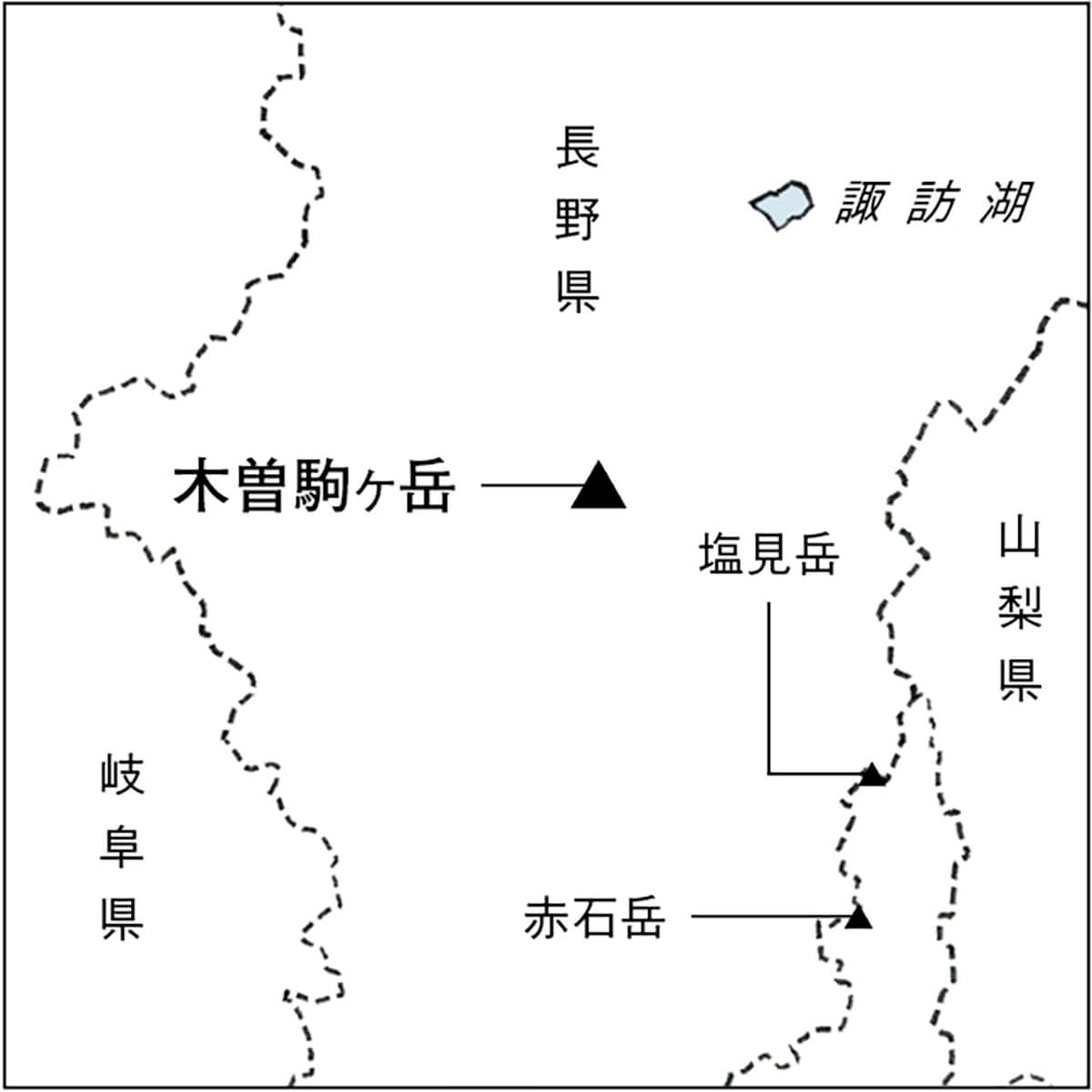
If you use the Central Alps Komagatake Ropeway, you can reach Senjojiki Cirque at an altitude of 2,612m in one go. The walking trail around the cirque takes about 45 minutes, so you can easily walk around in sneakers. "If you climb the mountain trail (Hatchozaka) that continues beyond the walking trail, you will reach the ridge that leads from Kiso Komagatake to Utsugidake, which is also a TJAR course," says Doi.