










The ultimate local restaurant closest to nature and agriculture
Following the car navigation system, we make steady progress through the unsettling countryside. If we hadn't spotted a round table in a gazebo-like building nestled between a cedar forest and rice paddies, we wouldn't have been sure we were there. Even those who are no longer surprised by the local restaurant Moritaka's distance from Tokyo and its location deep in the mountains will still be shocked. Located in Ayabe City, Kyoto Prefecture, "Inaka no Taihou" is as close to the outdoors as you can get. The dress code is "wear that you don't mind getting dirty."
We are greeted by the owner, Mr. Watanabe Yukiki. He is the second generation owner of Kyoto's Chugokusai Taiho, and is a skilled chef who has made the restaurant famous, attracting customers from outside the prefecture, while also maintaining a restaurant that caters to the local stomachs, from families with small children to hungry students and elderly people who have been coming for decades. He moved to Ayabe City in 2021 and opened the restaurant in a corner of Hasugamine Farm, a poultry farm. The current kitchen, workshop and dining room were completed in June of last year.
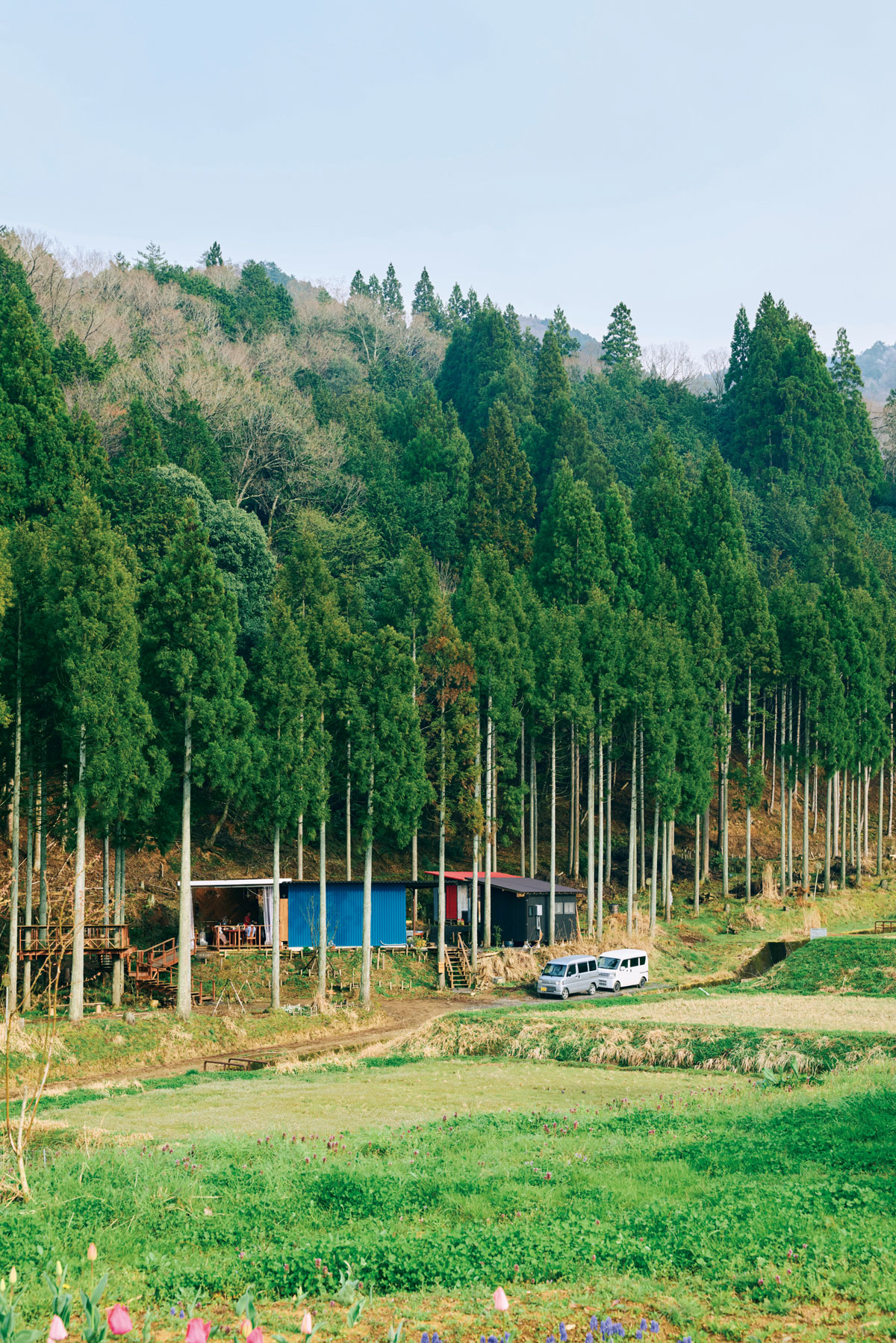
The kitchen and workshop are centered around blue walls, with the storehouse and washroom on the right and the dining room and wooden deck on the left. They also grow their own rice in the rice fields in front. 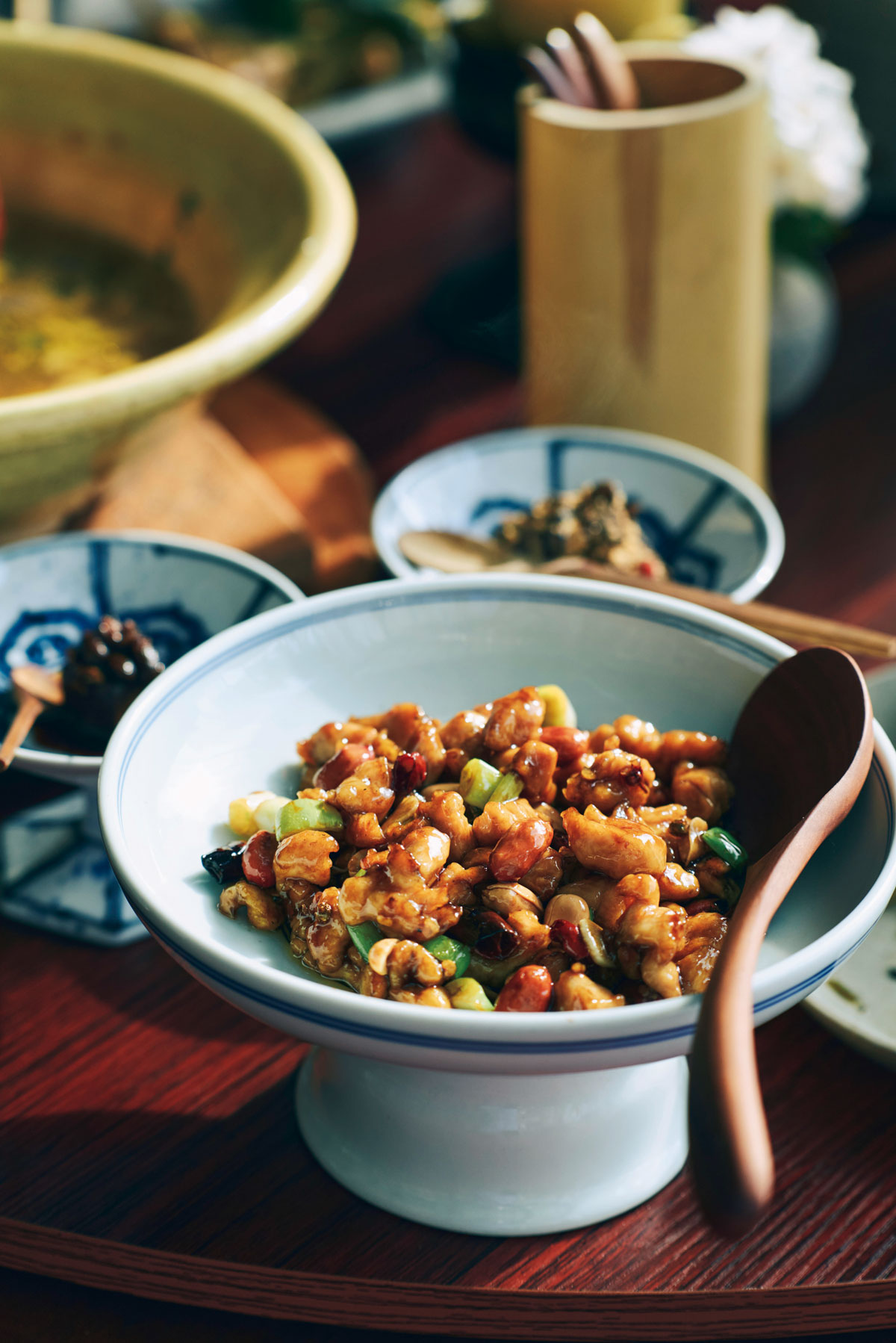
"In Sichuan, Kung Pao Chicken is more popular than mapo tofu or dandan noodles," says the chef. The sweet and spicy flavor of chili peppers, Japanese pepper, and sweet and sour sauce makes it a delicious accompaniment to rice.
The food experience here begins with slaughtering a chicken that has finished laying eggs. The blood is drained, the hair is plucked, and the organs are removed... and finally, the familiar breast and thigh meat is produced. Next, we tour the farm. The pigs have just given birth, and the piglets are busy. Looking out over the land where goats and sheep graze, wild vegetables and herbs are everywhere. "We'll use this in our cooking later, so please help out," we are encouraged to take part in a small harvest. A stroll around the farm and surrounding area serves as the "menu" for the day.
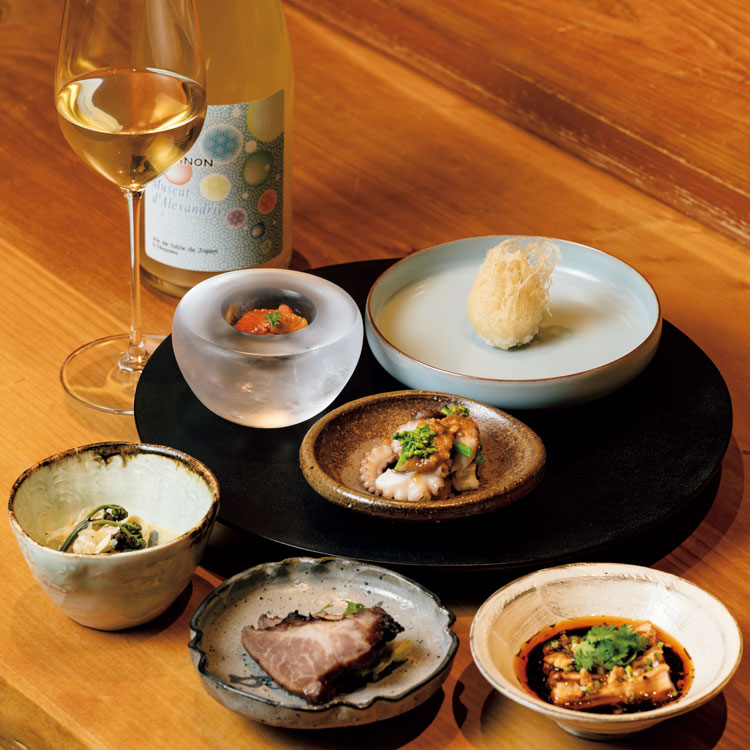
Once we sat at the round table, the dishes were brought out one after the other. Soba-gaki (buckwheat pancakes) garnished with freshly picked cod mussels, and tamagoyaki (rolled omelet) made with fresh eggs and chives that "grow nearby." "In China, tamagoyaki (rolled omelets) with fillings are cooked thoroughly until they are browned. If you're used to fluffy, soft omelets, you'll be surprised," he said, as he skillfully prepared the dishes. Slaughtered chicken innards were boiled and dressed with homemade fish sauce and scallion oil. Salted and preserved venison was fried and paired with mint.
"Salting, aging, drying. We use ingredients that have been preserved in a variety of ways, just like in the mountainous regions of China," he said. The wild vegetables and wild game were given a proper Chinese flavor with chili peppers and fermented seasonings. The main course was chicken herbal soup and stir-fry. We ate the whole chicken to our heart's content.
There are several reasons why Watanabe became interested in rural life. During his annual trips to Sichuan Province, China, he looked forward to dining at farm inns called Noukaraku rather than at restaurants in the city. When he traveled to wine-producing regions in Europe, he was impressed by the hospitality he enjoyed at a winemaker's home, with the taste of freshly picked arugula salad and simply boiled asparagus. Then, the COVID-19 pandemic hit.
"More than the restrictions on sales, I felt a sense of crisis about a business that relied on distribution, including imported ingredients. At that time, I visited Hasugamine Farm, a business partner, and was greatly inspired by the farm manager, Mikisuke Mineji. Because we treat chickens as living creatures, we think about the land where they are raised. I wanted to be part of this cycle and live a life of 'making it myself.'"
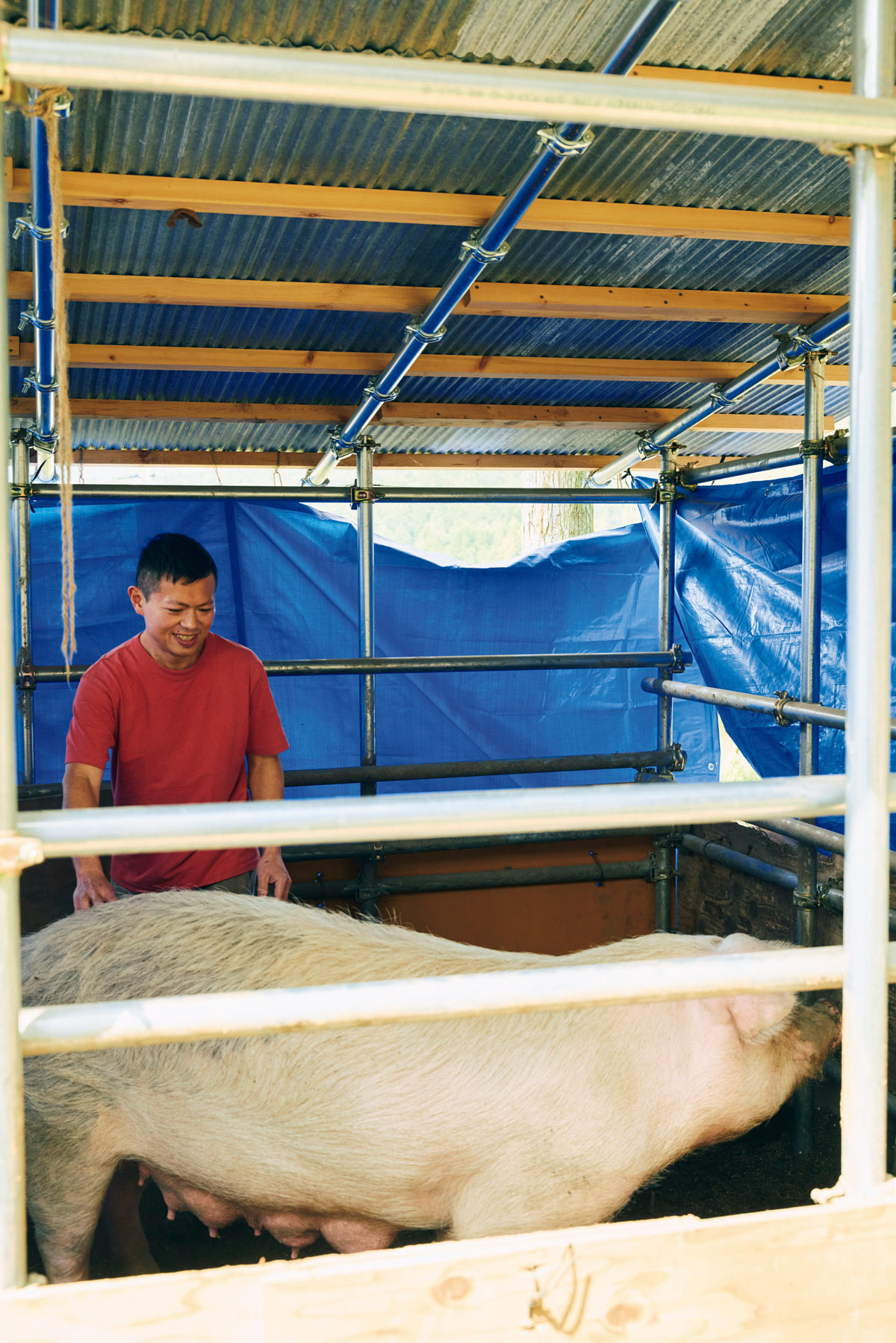
Yuri-chan is a pig that we started raising soon after moving here. She has become a precious companion who gives birth to many healthy piglets. 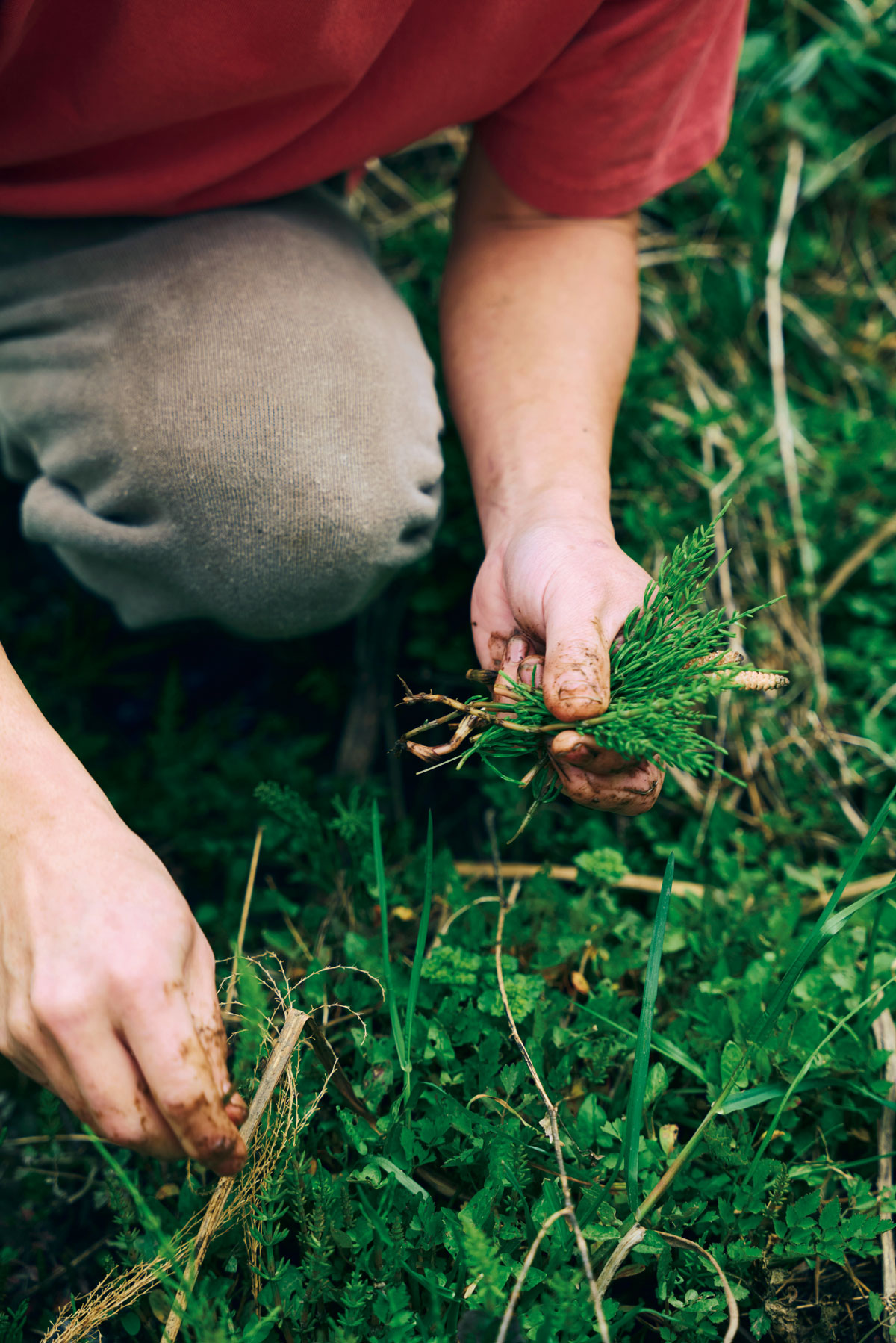
Wildflowers and herbs are hiding here and there in what appears to be just a patch of grass. Watanabe is picking horsetail. 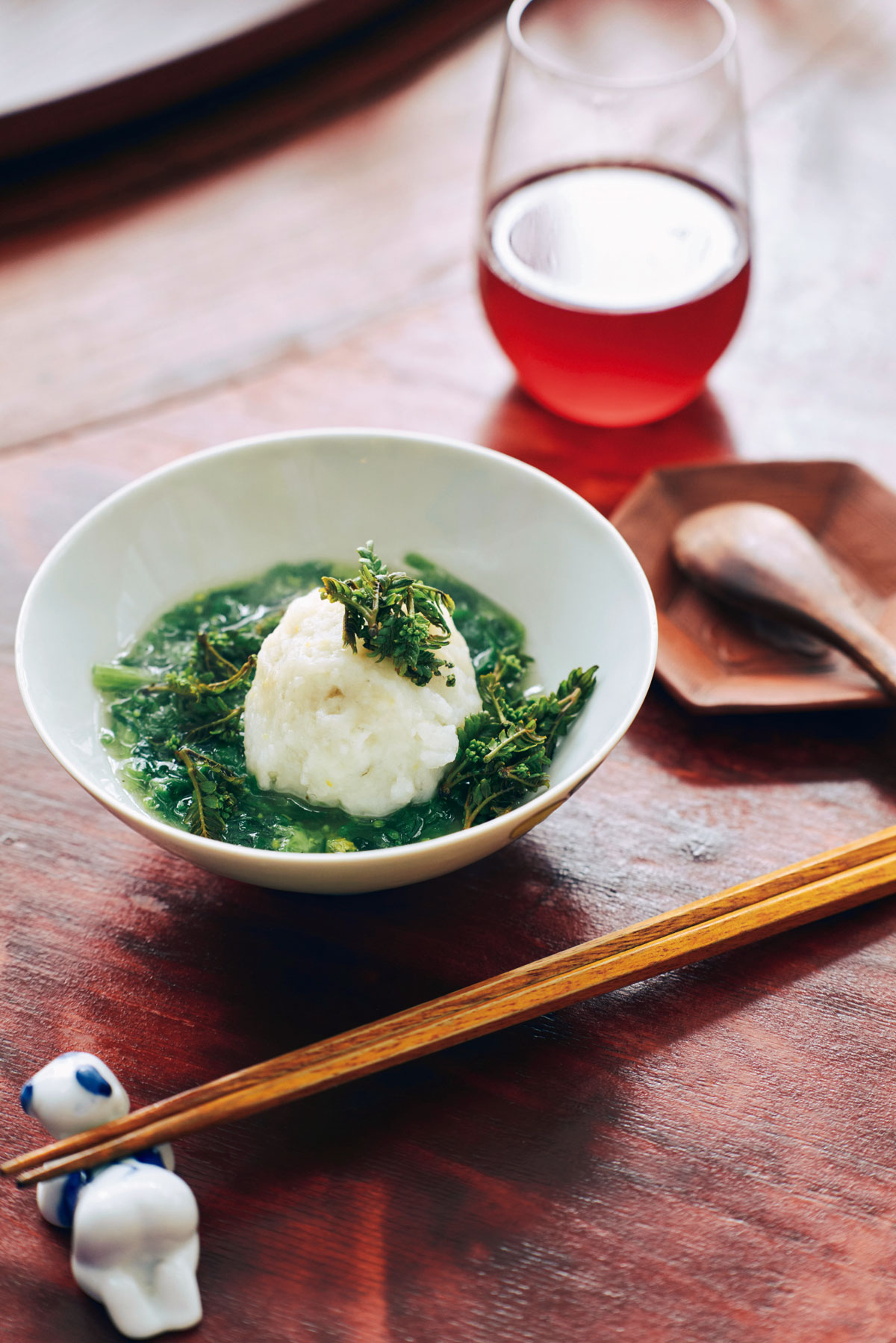
Catfish dumplings with wild boar meat and a sauce made with seven herbs. A Fujian dish made with eel and pork, using local ingredients. 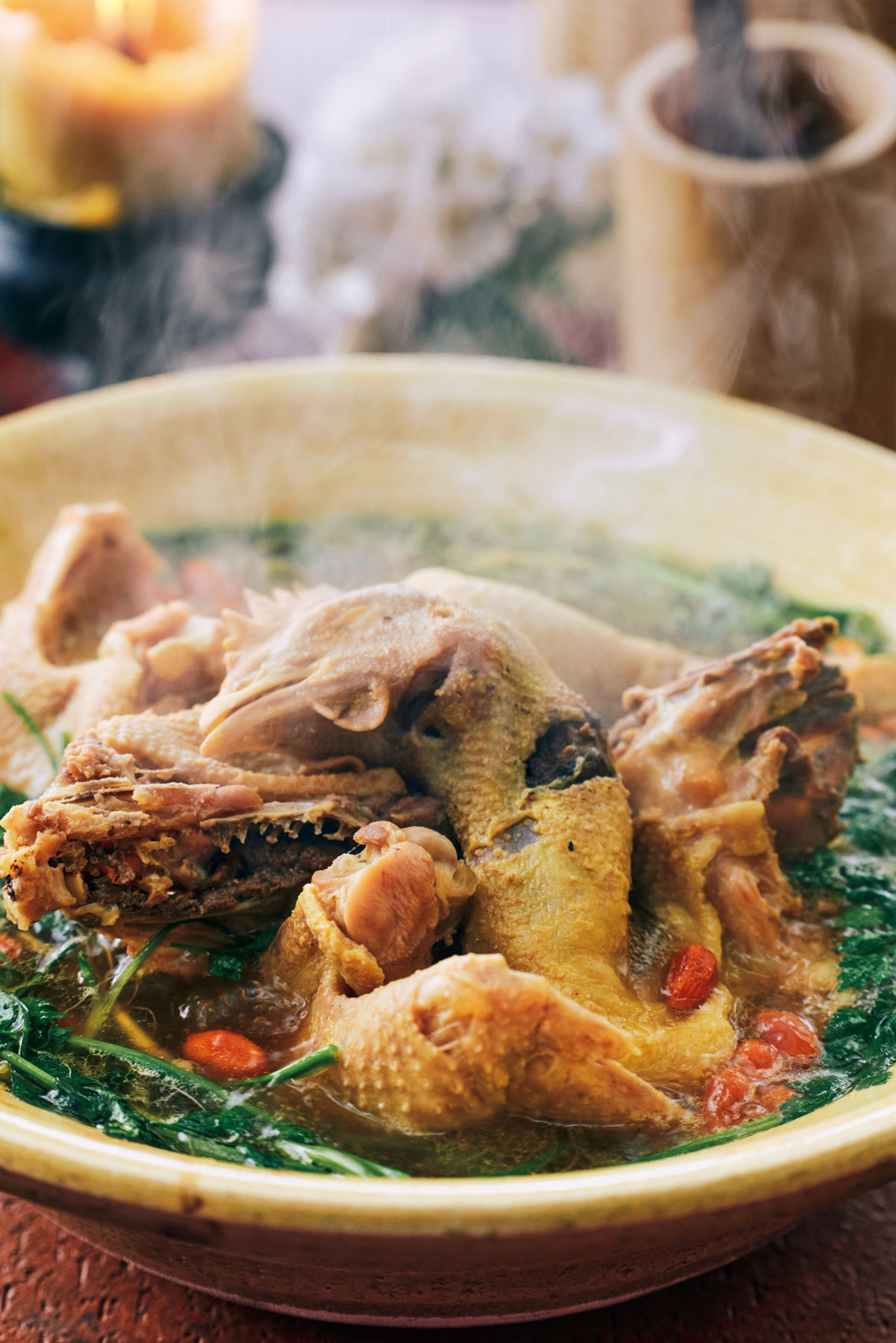
Chicken herbal soup. Made with pure domestic Momiji chickens that have been raised in a free-range chicken coop for two years, the meat is tough but has a strong flavor.
Beyond "gourmet food" is a way of life rooted in the idea of "Shindo Fujitsu" (one's true self).
As soon as he started a restaurant business in the countryside, he felt uncomfortable being lumped in with words like "self-sufficiency." Rather than practicing alone and not buying things, he wants to cooperate with the local community and expand the circle of recycling. He is currently putting this into practice while learning from the farm manager and local people.
"If there is a role for me, it is to be able to turn those ideas into food, and to have people eat it."
The words become more and more heated.
"What I think is important is the idea of Shindo Fuji (body and earth are one). Eating food from the land. By eating foods close to the soil, the body and living things grow together. I'm grateful for the true seasons, which are different every year, rather than seasons created by humans."
Your time at Inaka no Taihou easily goes beyond fine dining.
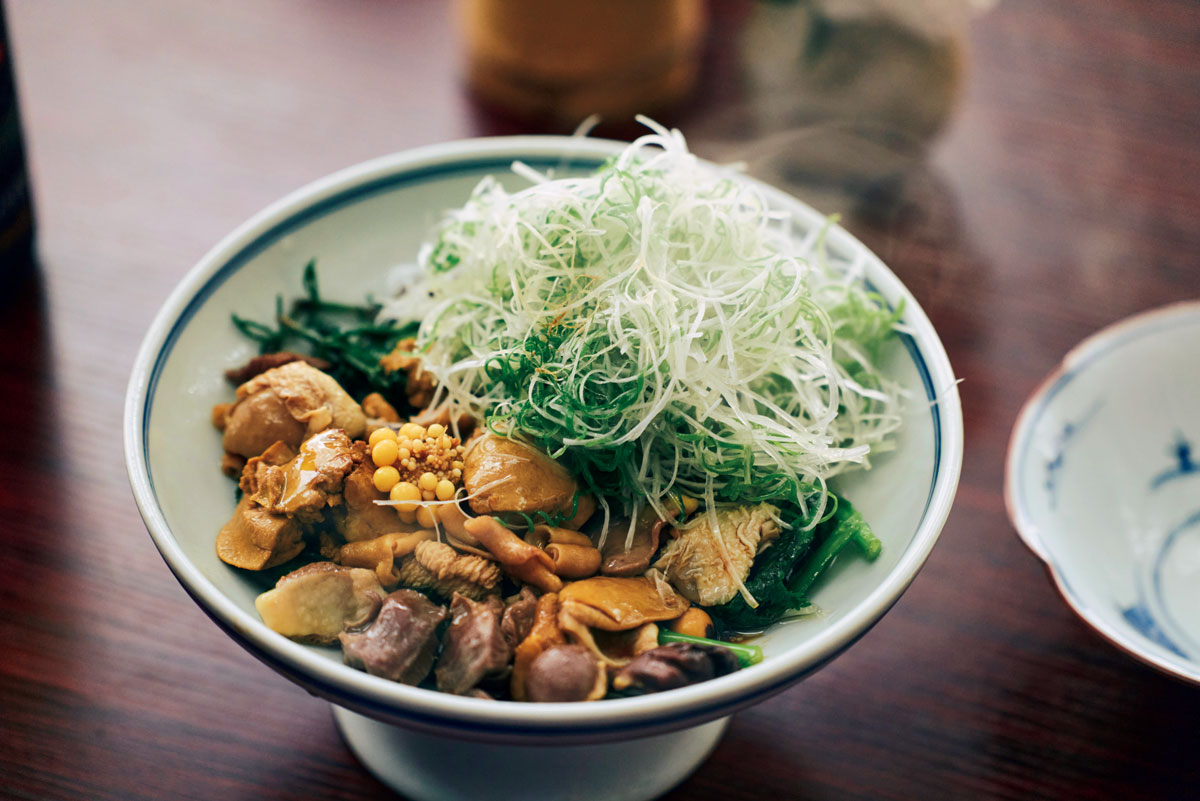
Chicken offal salad. Fish sauce is also made from carp and catfish caught in the nearby river. 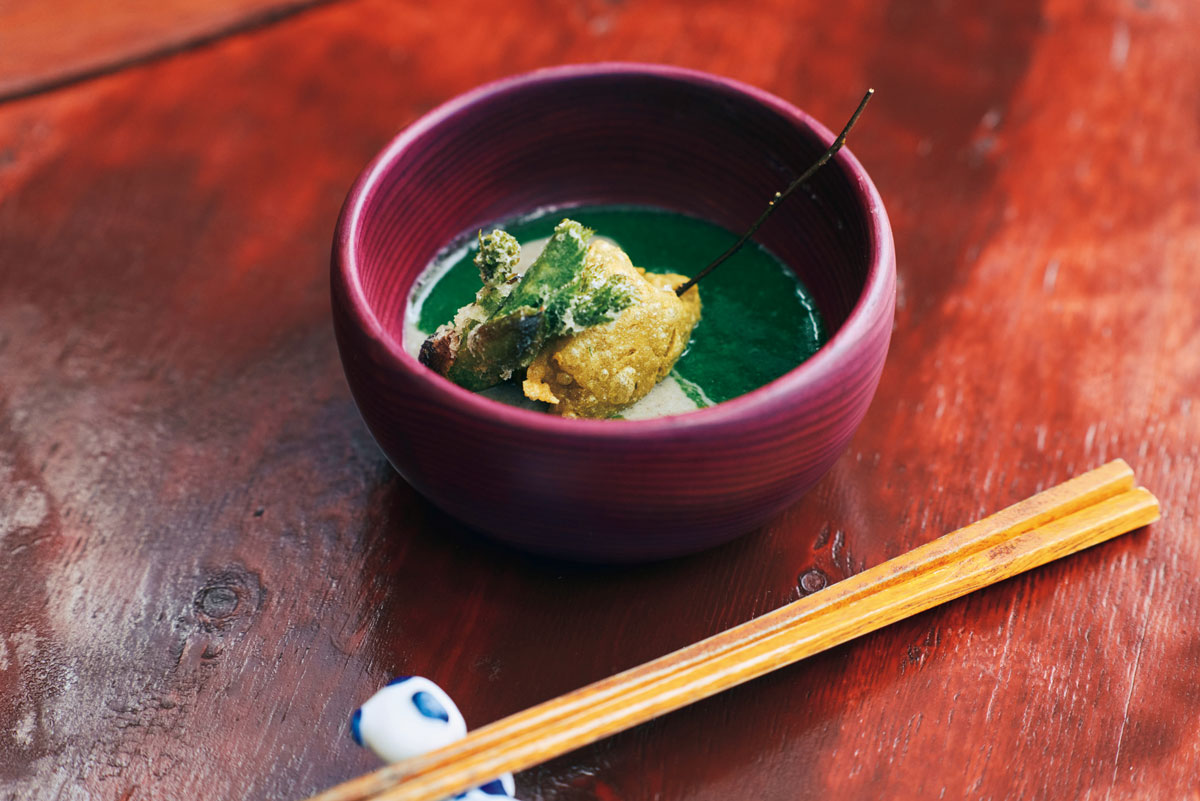
The soba dumplings are made with Tatar soba noodles, which have their roots in Yunnan Province. 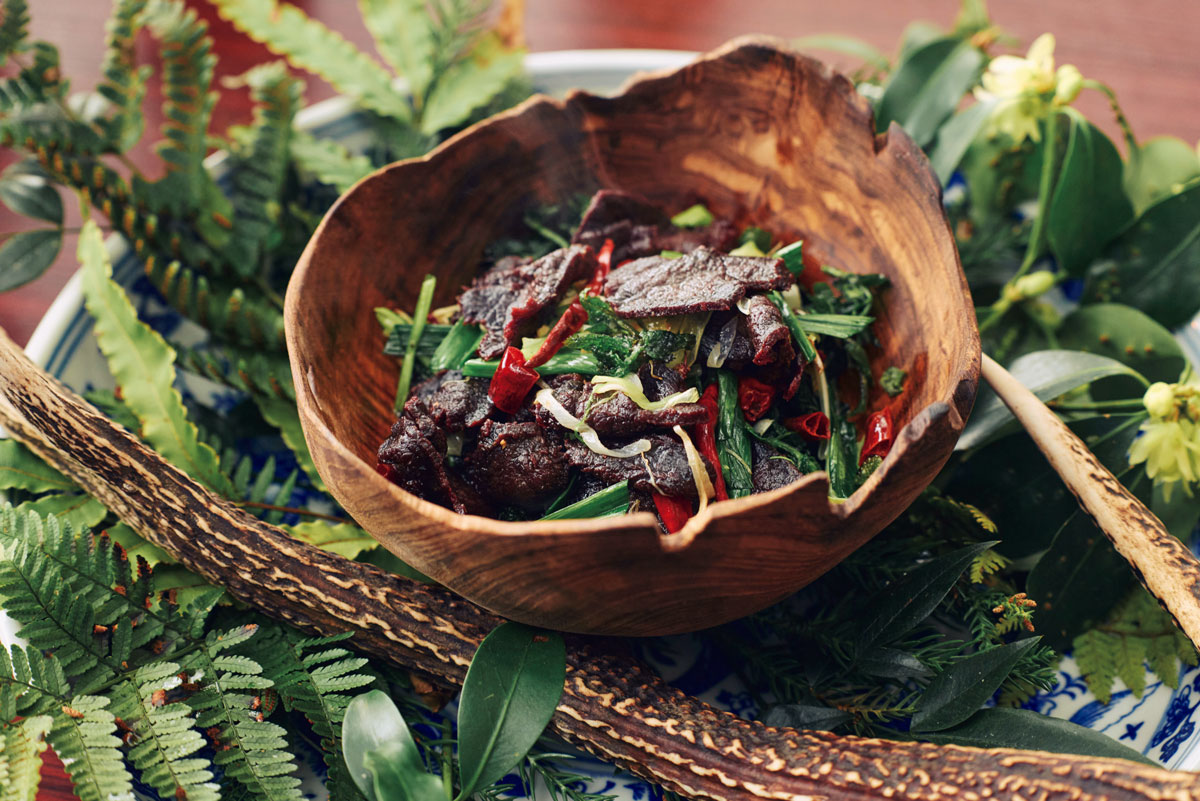
This Yunnan dish, "Mint Dried Bar Beef" (Boho Ganba Niu Rou), is made with beef and mint, and is now made with venison. The salted meat is packed with flavor. 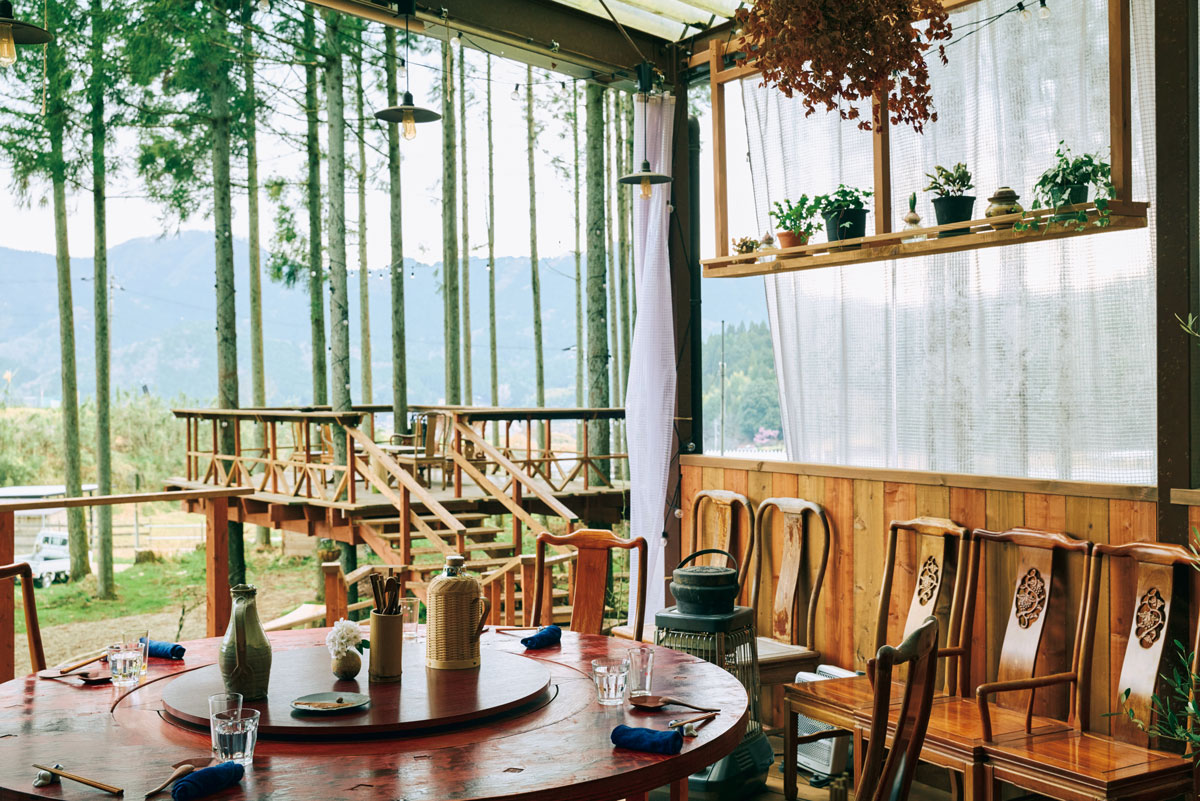
The dining area is half outdoors. Enjoy welcome tea or after-dinner drinks on the wooden deck. 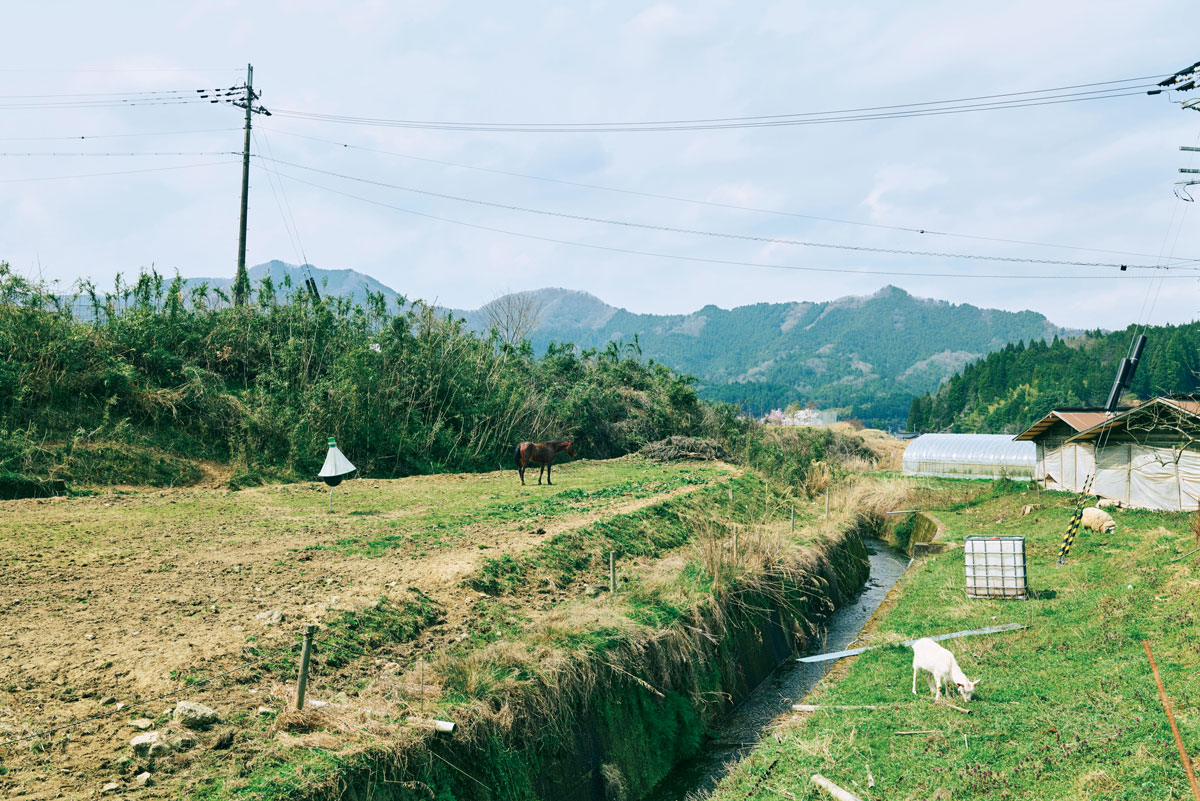
The goats and sheep also seem to be comfortable in the spacious area. They eat the weeds, and their droppings return to the soil, creating an environment in which other plants and creatures can grow. Each animal has its own role to play.