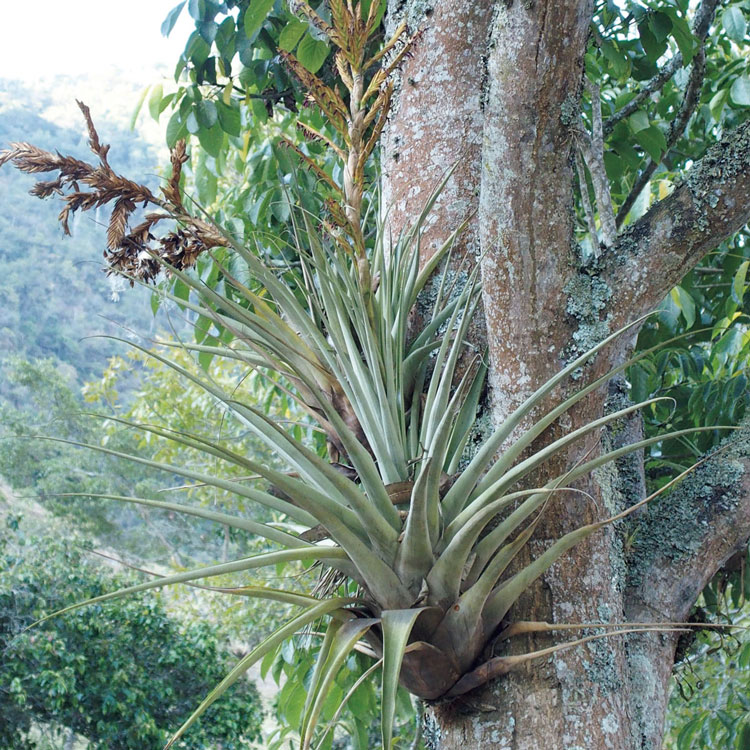











パナマのジャングルプランツ
解説/ニルス・ウィーシーズ
オランダの大学で進化生物学を学び、ハーバリウムや野外調査に携わるニルス・ウィーシーズさん。熱帯雨林の小型草本類、中でもサトイモ科の植物を愛する彼が、8日間でパナマの全土のジャングルと、西はコスタリカ、東はコロンビアの国境付近までを巡った、南米自生地旅の物語。
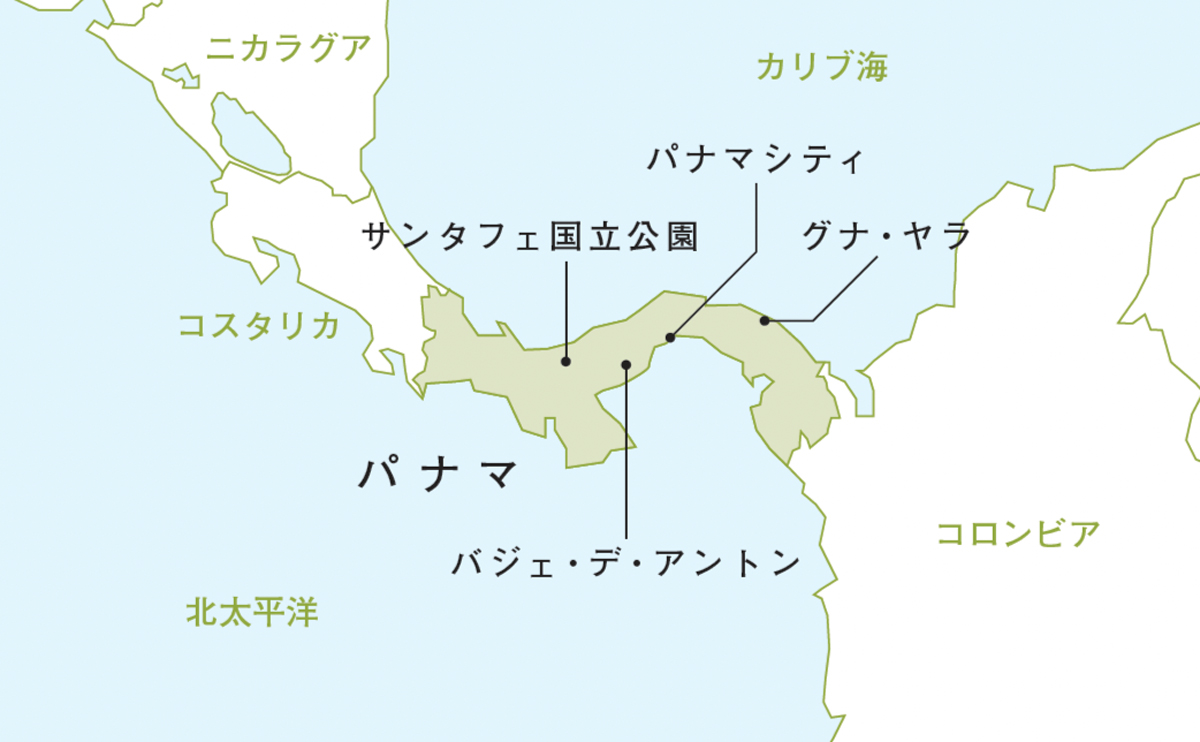
パナマのジャングルに潜む、小さな草木たち
それは2022年4月のこと。オランダから11時間の直行便を経て、混沌として忙しないパナマシティに到着した。夜明けとともに出発し、最初の目的地のバジェ・デ・アントンへ。ここは典型的な螺旋状の花序と細長い葉を持つアンスリウム ウェンドリンゲリの群生地として有名だ。曲がりくねった道沿いの湿った森の高い木々から、いくつものアンスリウム ウェンドリンゲリが垂れ下がっていた。また友人が驚くべき植物を案内してくれた。私の頭よりも大きな花を咲かせるモンステラ ティタナムだ。だが、時間は限られている。すぐに次の目的地、サンタフェ国立公園へ向かった。
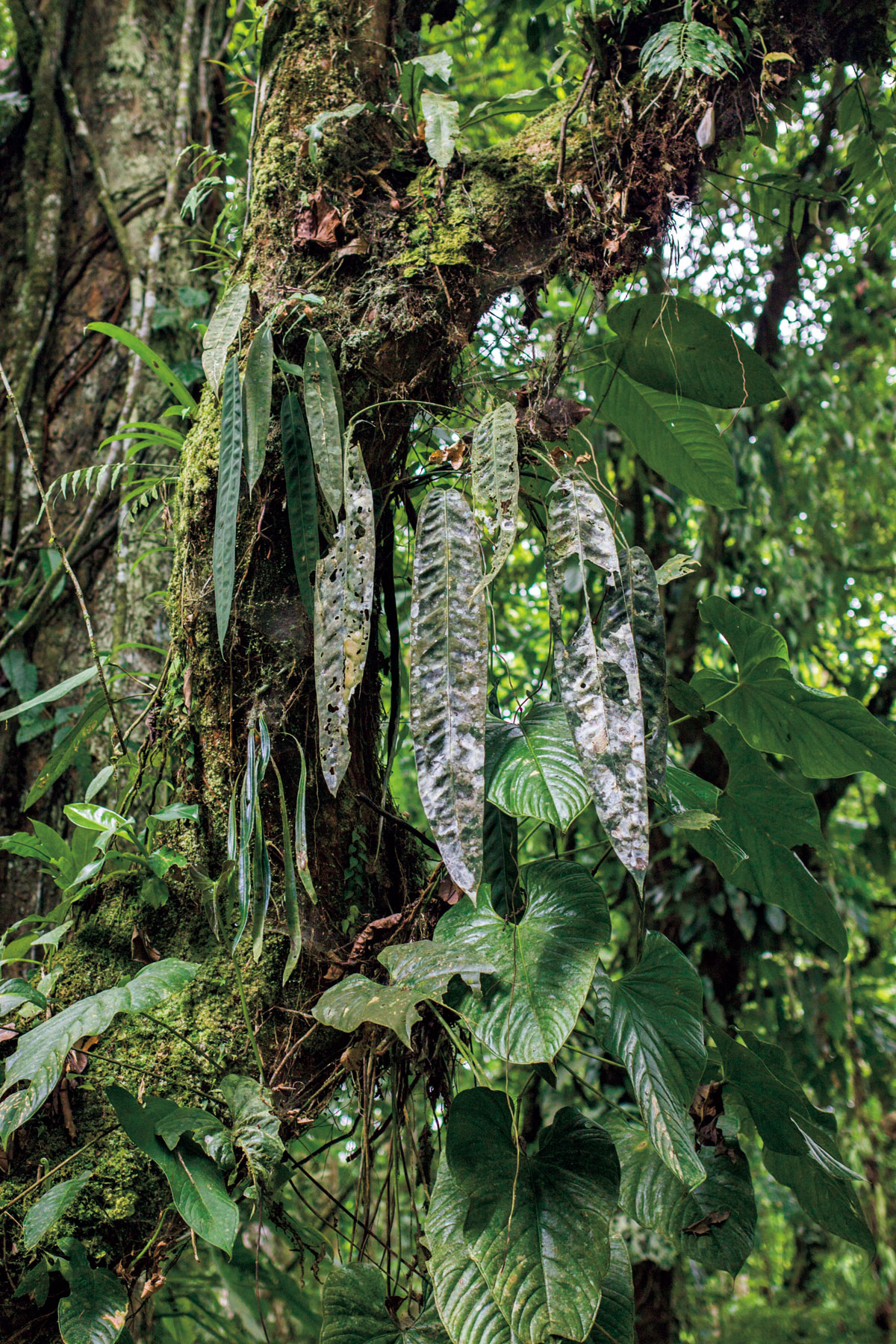
アンスリウム ウェンドリンゲリ
Anthurium wendlingeri
有名な垂れ下がるアンスリウム。湿潤な場所、または川の上方など、非常に高い木の上にのみ育つ。細長く模様のある葉は最長2mに達し、花序はコルク抜きのようにねじれている。
フィロデンドロン ヴェルコーサム
Philodendron verrucosum
このパナマのジャングルを巡る旅で最初に見つけた植物の一つで、バジェ・デ・アントンで発見。葉は大きく美しい模様があり、葉柄はとても毛深かった。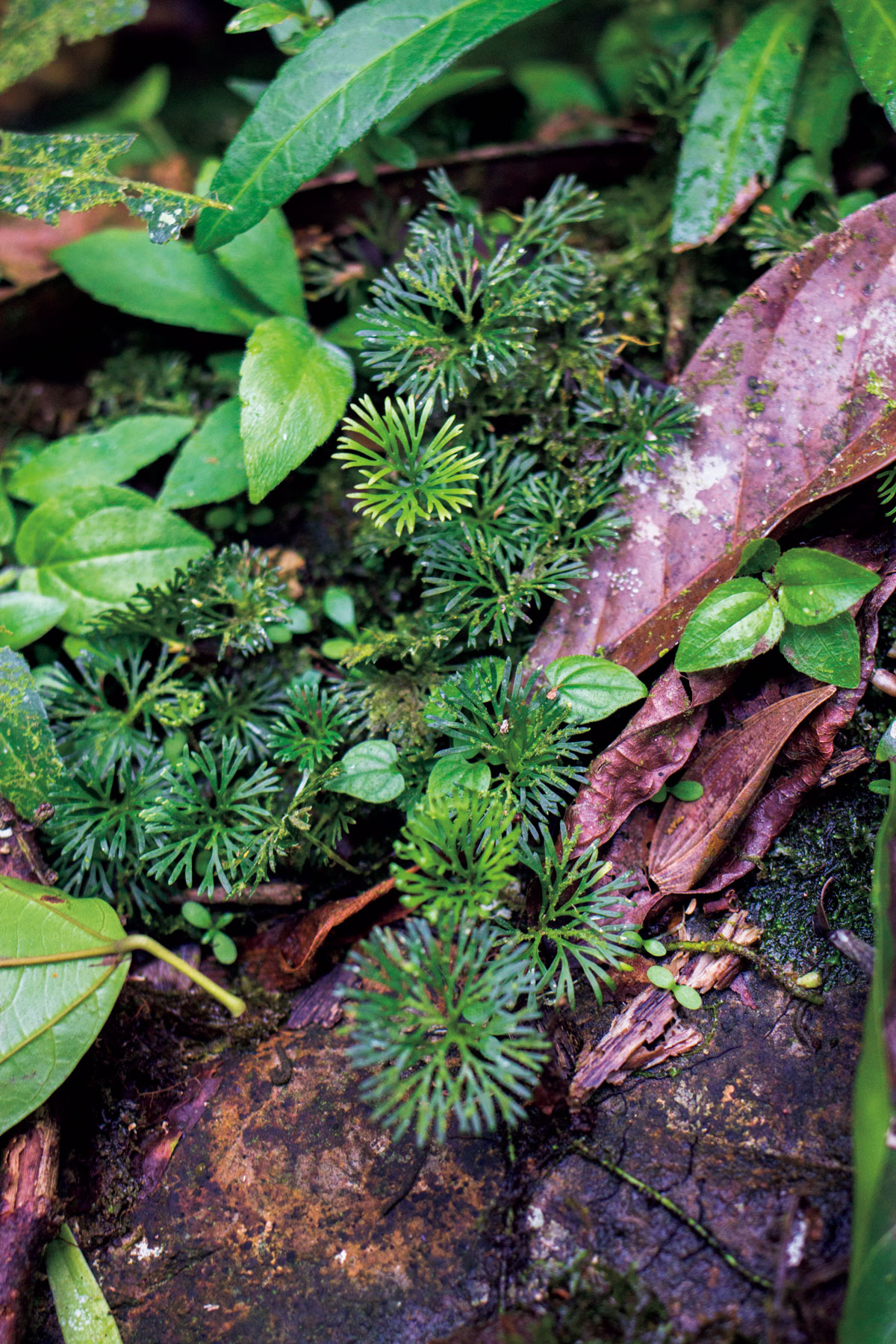
エラフォグロッサム ペルタツム標準型
Elaphoglossum peltatum f. peltatum
葉の形状に富むエラフォグロッサム ペルタツムの中で標準的とされるもの。パナマ全域に広く分布しており、西から東まで色々な場所で見ることができた。
標高の高いサンタフェに到着すると、同じアンスリウム ウェンドリンゲリが見られた。しかし、ここに生えているものは葉がずっと幅広く短かった。北の海岸に向かう途中、道路沿いに大きな滝を発見した。興味を引かれ森へと入ると、友人たちはすぐに近くでアンスリウムを見つけた。しかし、私が目を奪われたのは滝の周囲の岩だった。そこには、アンスリウム ルピコラやスパティフィラムキンディエンセといった渓流環境に適応したサトイモ科植物が生えていた。ホマロメナやスキスマトグロッティスと似た植物で、常に湿った空気に包まれた岩で育つ。
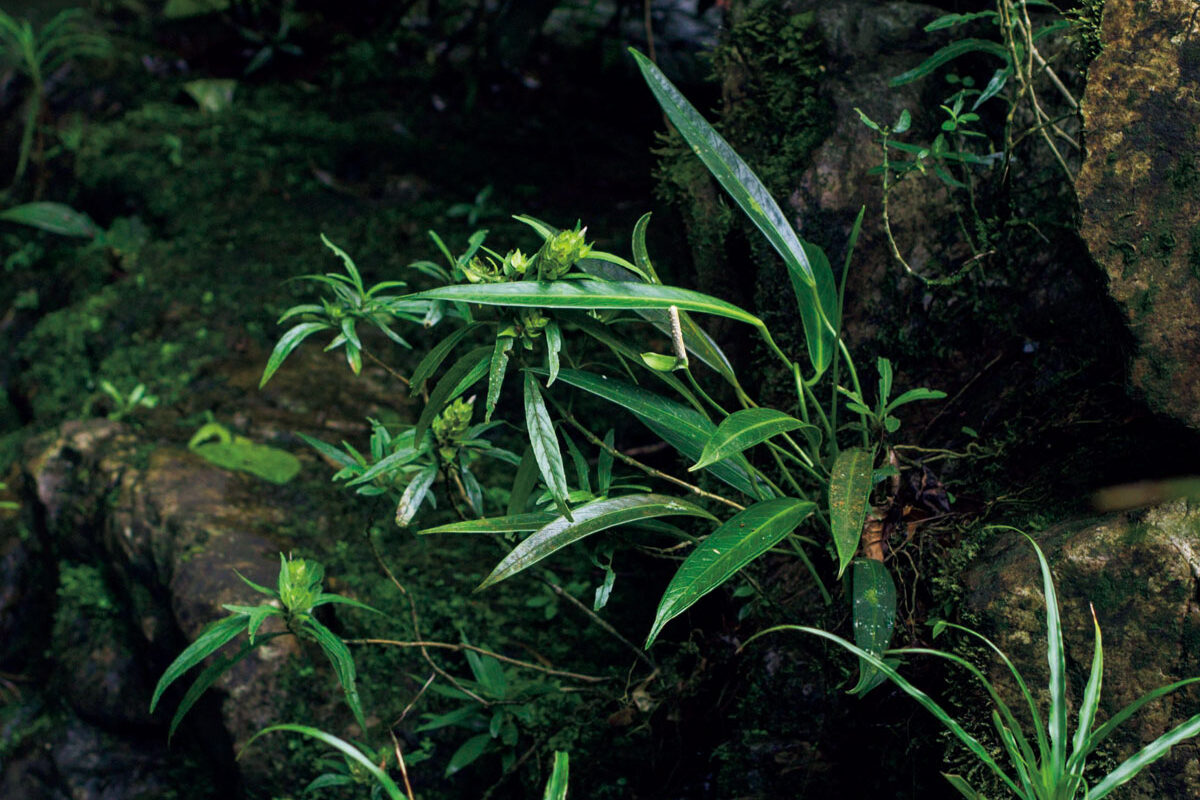
アンスリウム ルピコラ
Anthurium rupicola
滝のそばで見つけた、分厚い葉を持ち、川や滝の岩の上で育つよう適応したアンスリウム。一つの岩に群生する。以前、ボルネオで見つけたヘテロアリダルムを思い出させる。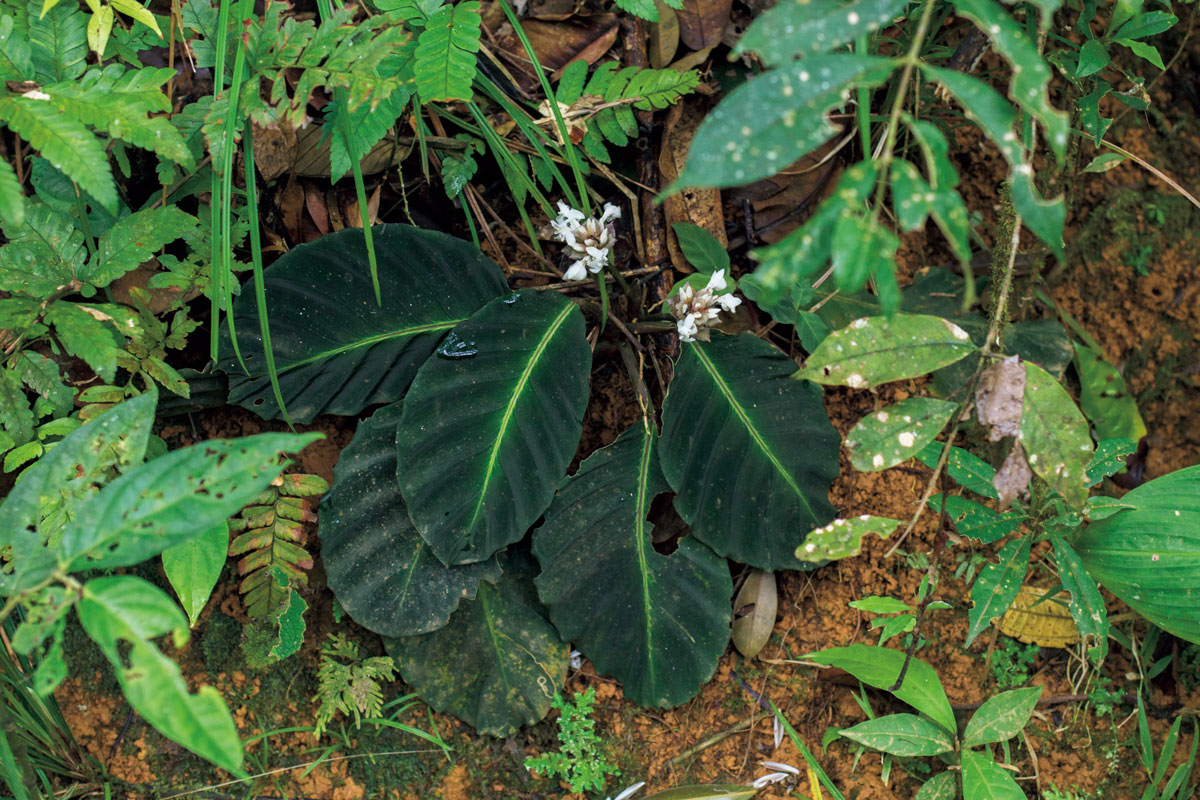
ゲッペルチア ドレスレリ
Goeppertia dressleri
パナマからコロンビア北西部に自生する多年草。グナ・ヤラの暗い森では、葉が暗く、裏面が赤い植物が多く見られる。少ない光量から、より多くの光を捉えるための適応だ。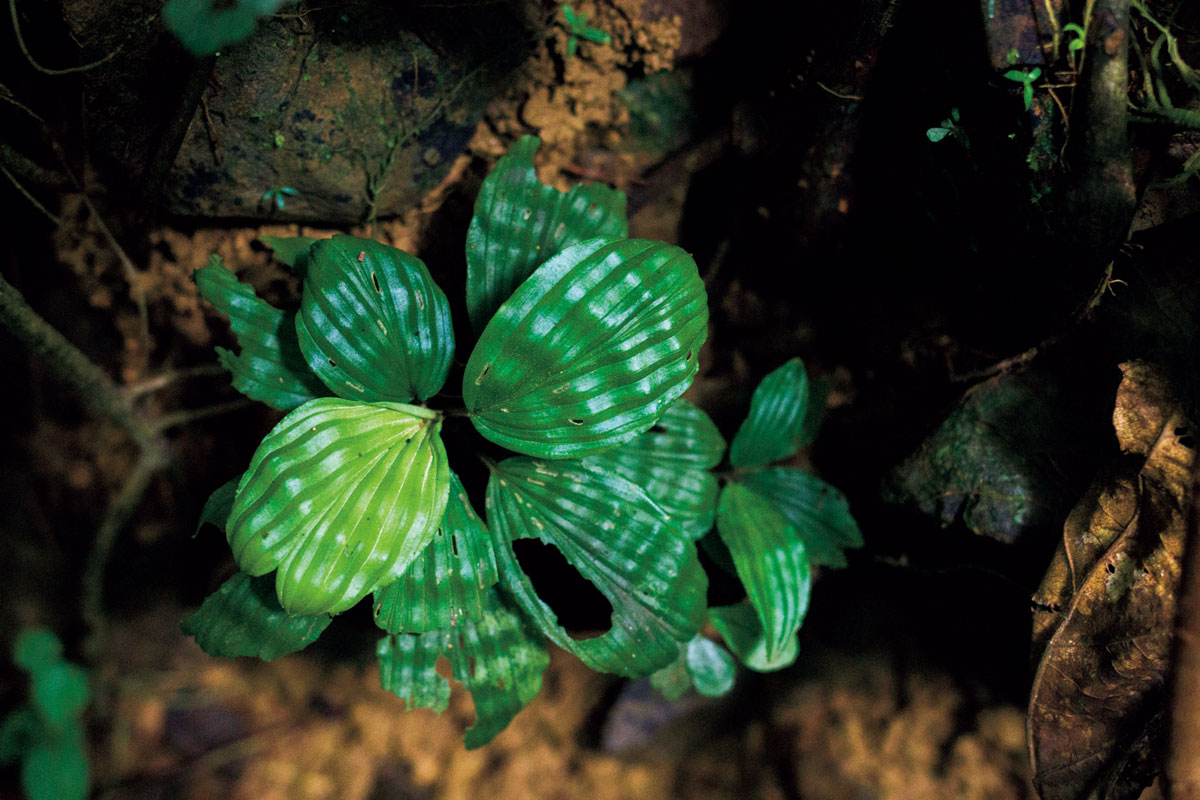
ディクラノピギウム ミニマム
Dicranopygium minimum
最近報告されたディクラノピギウムの新種。小川沿いの岩の崖に生育する。高さ15cmと、知られている中で最も小さいディクラノピギウムである。
その後、滝のそばの岩の上に落ちた枝を見つけ、私は大好きな小型の着生蘭を探し始めた。これらの蘭は滝のそばの高湿度の場所で生長し、日当たりの良い樹上で育つ。普段は手が届かない場所に生えるが、落ちた枝はそれを見つけるチャンスとなる。枝には、地衣類やコケ、シダ類がびっしりと生えており、有名なエラフォグロッサム ペルタツムもあった。蘭だけでも10種以上があり、私の親指の爪よりも小さなプラティステレ テイロリイも!そして、枝にぶら下がる不思議なものを見つけた。作り物のように鮮やかな紫色の葉。その葉を裏返すと、これも蘭だとわかった!それはレパンテス パントミマ──めったに発見されず、写真すらほぼない謎の蘭だった。こうして探索の一日が終わり、日没前に森を後にした。
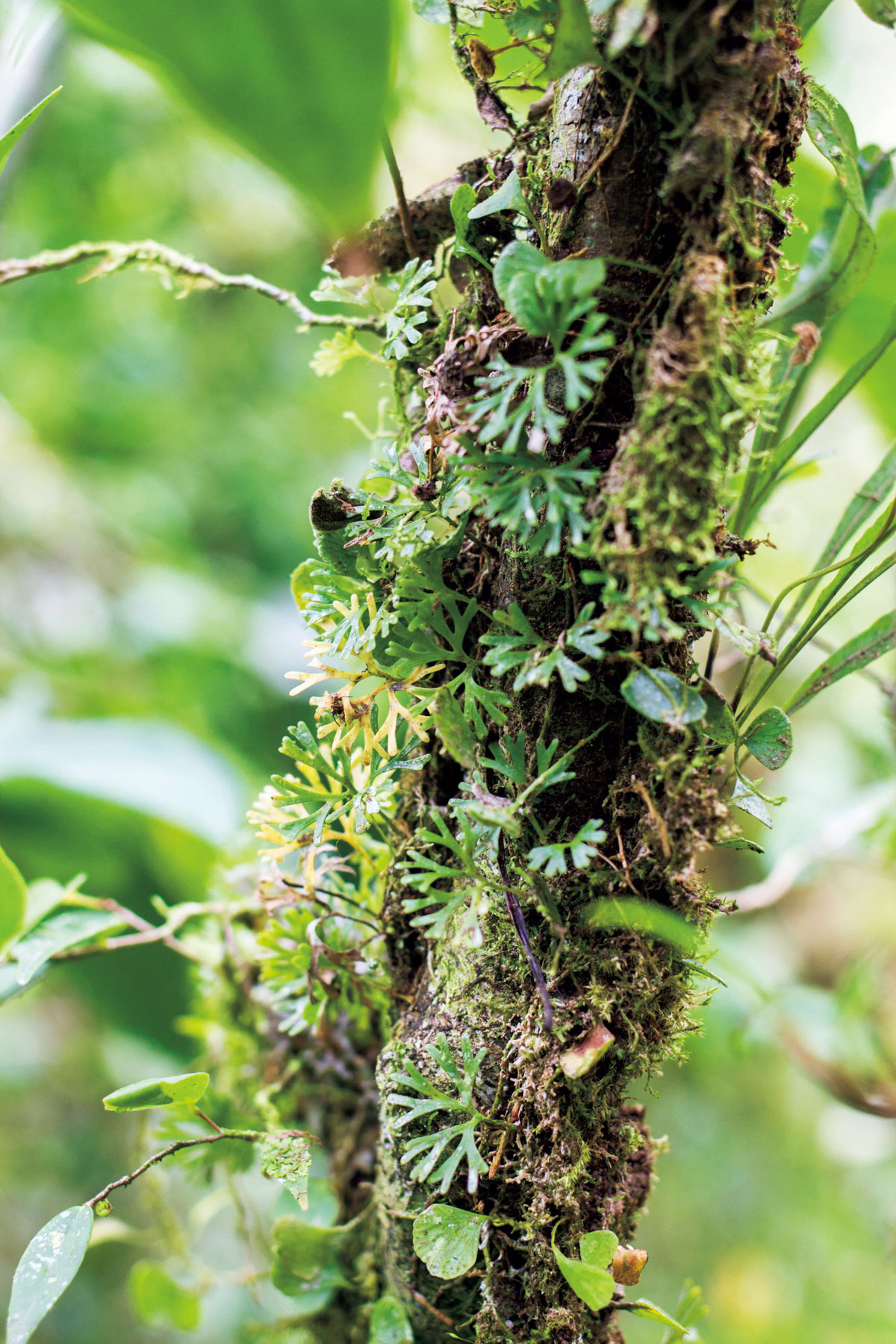
エラフォグロッサム ペルタツム
Elaphoglossum peltatum
前ページのものと比べてもらうとよくわかるが、こちらは珍しい形態のエラフォグロッサム ペルタツム。葉はとても厚く多肉質で、先端が丸い。個人的にとても気に入っている。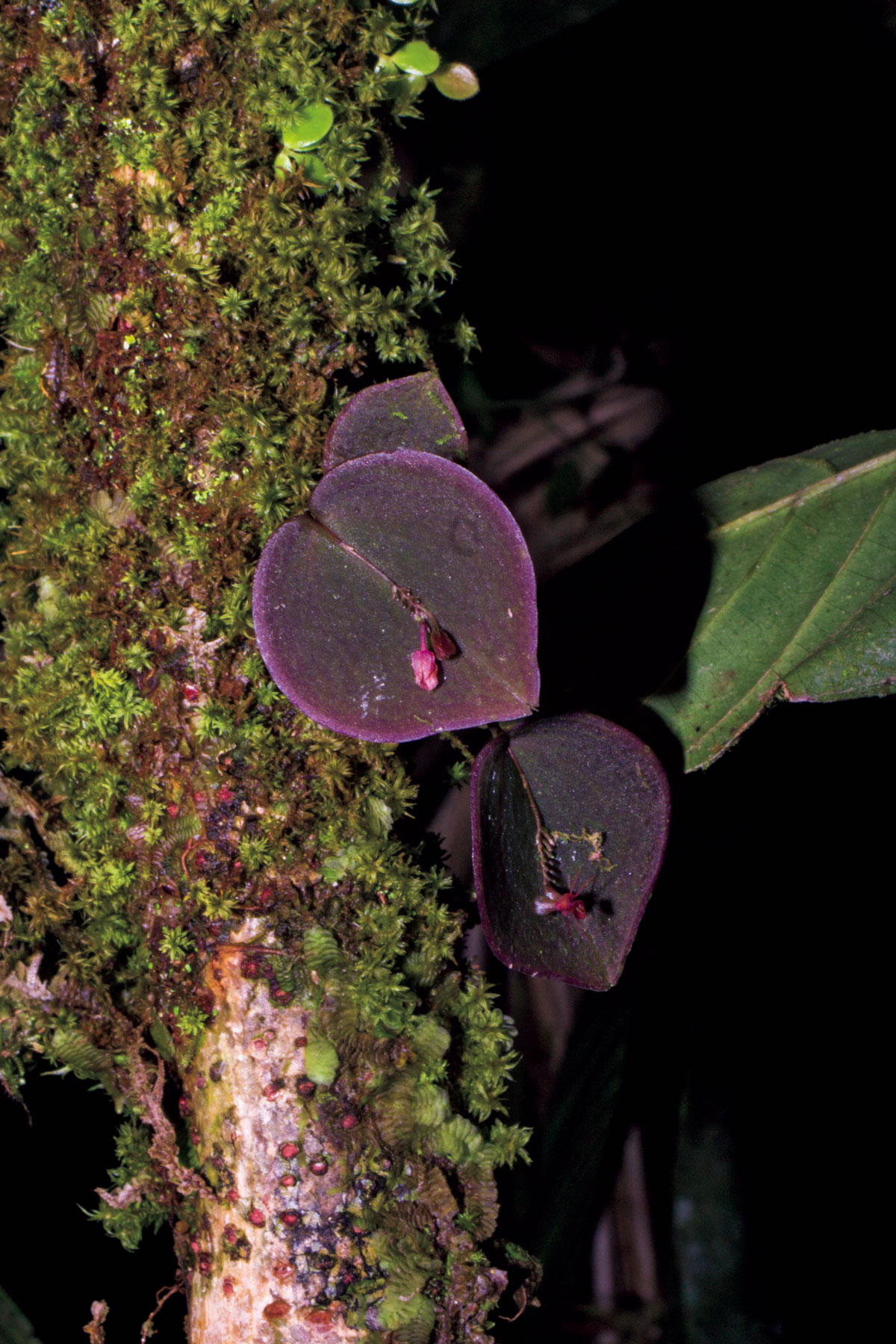
レパンテス パントミマ
Lepanthes pantomima
サンタフェから北の海岸に向かう途中の滝で見つけたミニチュアの蘭。全体が紫色で、とても珍しい。エクアドルのレパンテス カロディクティオンに近縁だが、こちらの方が美しい。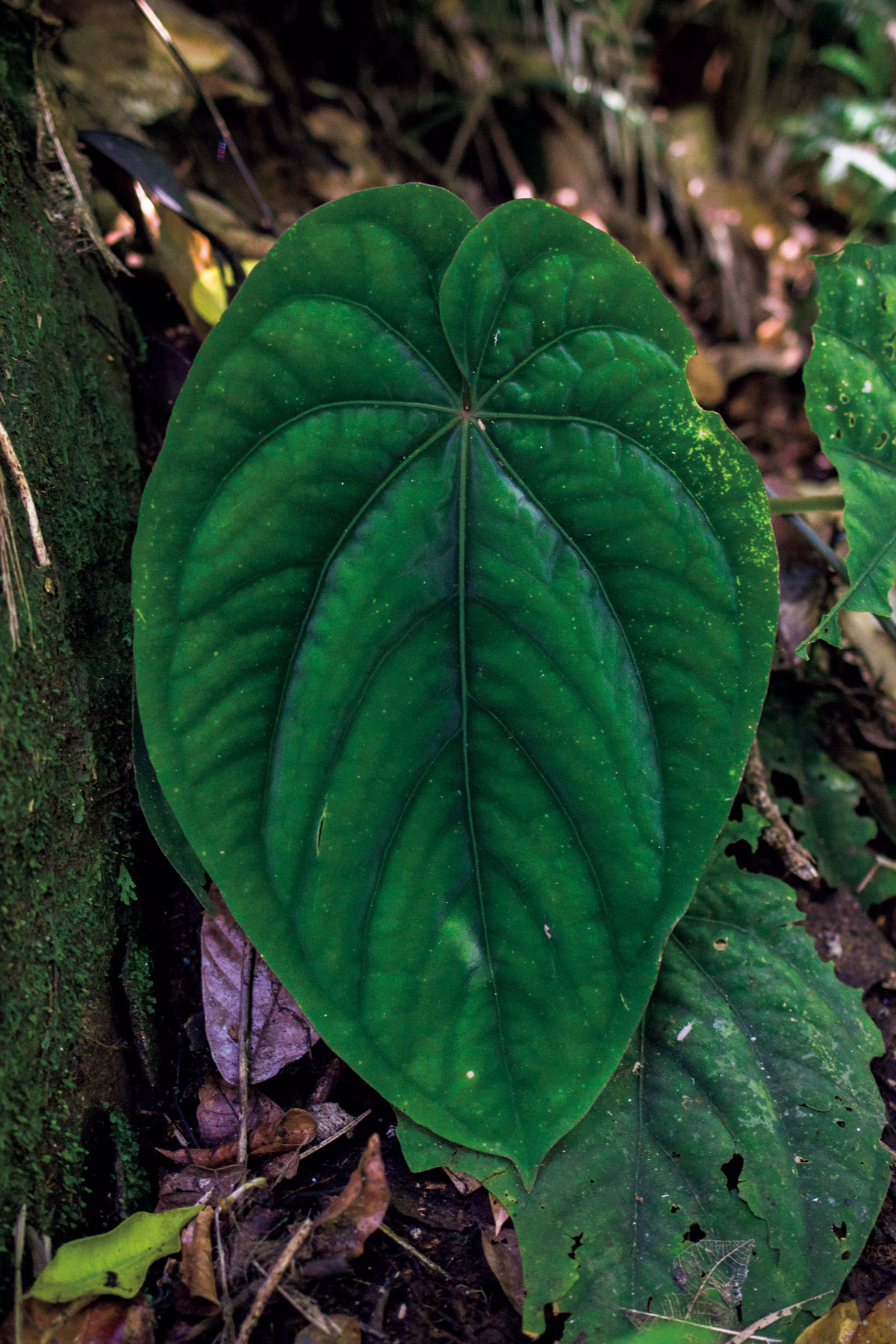
アンスリウム ドレスレリ
Anthurium dressleri
非常に高価なアンスリウムの一つで、このタイプは産地特有のもの。葉は濃い緑でベルベットのような質感を持ち、花序は美しい黄色。大きな白い仏炎苞(ぶつえんほう)がつく。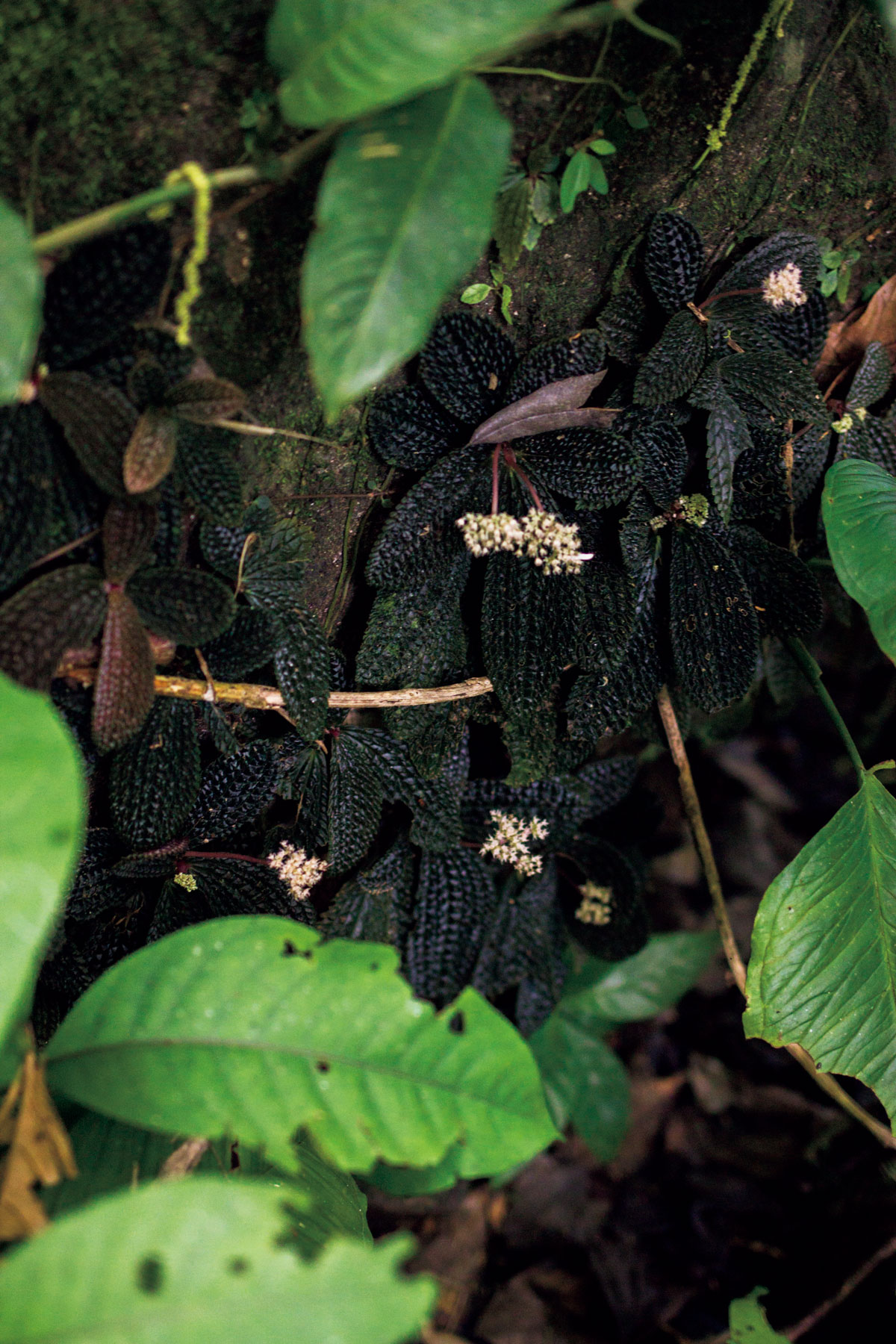
ピレア不明種
Pilea sp.
砂岩の崖に生えていた暗い葉色のピレアの不明種。この毛深いピレアはパナマのコロン地域の低地にのみ生育する。この場所は、以前行ったボルネオよりも高温だった。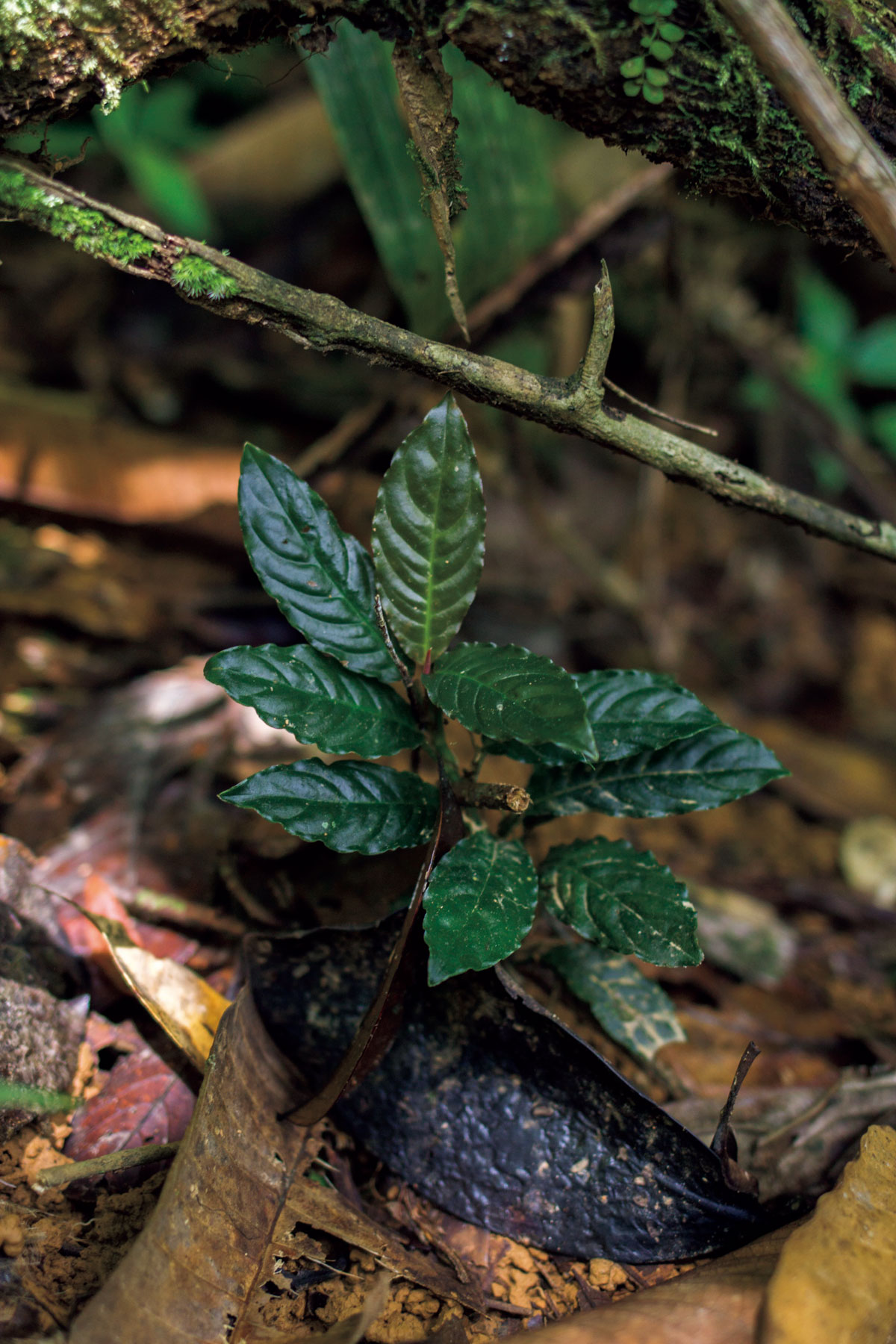
ロドスパサ不明種
Rhodospatha sp.
色合いが美しい若いロドスパサの不明種。成熟するとこの素晴らしい色は失われてしまう。着生する木を見つけるまでは地生でかわいらしい姿だが、着生後の葉は1mにもなる。
旅も折り返し地点を迎えた。数日間のドライブを経て、著名な〈エル・ジャノ=カルティ道路〉へと到達した。この道路は、パナマシティの東側で唯一、内陸から海へと抜ける歴史的なルートであり、グナ・ヤラの生物多様性に富んだジャングルを貫いている。学者たちにとって絶好の調査地であり、その生態系は詳しく記録されてきた。ここではディクラノピギウム“グナ・ヤラ”やアンスリウム クナヤレンセを見ることができる。夜遅くに着いたロッジは閉業していて、交渉の末、電気も水もトイレもない部屋に1人80ドルで泊まることになった。野犬のせいで一晩中眠れなかった。
翌朝、我々は植物探しに出発した。森の中に入って数分もしないうちに、ディクラノピギウム“グナ・ヤラ”を見つけた。小さな植物で、漆黒に近い青色の葉を持ち、葉柄と葉裏は赤い。歩みを進めるごとにその数は増え、やがて地面は何千ものディクラノピギウムで埋め尽くされていた。その数はあまりに多く、前に進むには彼らを踏まなければならないほどだった。
成熟すると、ディクラノピギウムの花序は爆発し、母株の周囲に何千もの種子を自動的にまき散らして、大規模なコロニーを形成する。その群れの中に、大きく光沢のあるディクラノピギウム サディスティチウムが1株だけ見つかり、葉は黒と赤が均等に交ざっていた。この色は、同じ川筋に自生するモノレナ ドレスレリやゲッペルチア ドレスレリと同様に、低光量への適応だといわれている。森の静かなざわめきに包まれながら漆黒の植物たちの中に立っていると、まるで隠された世界に足を踏み入れたような気がした。
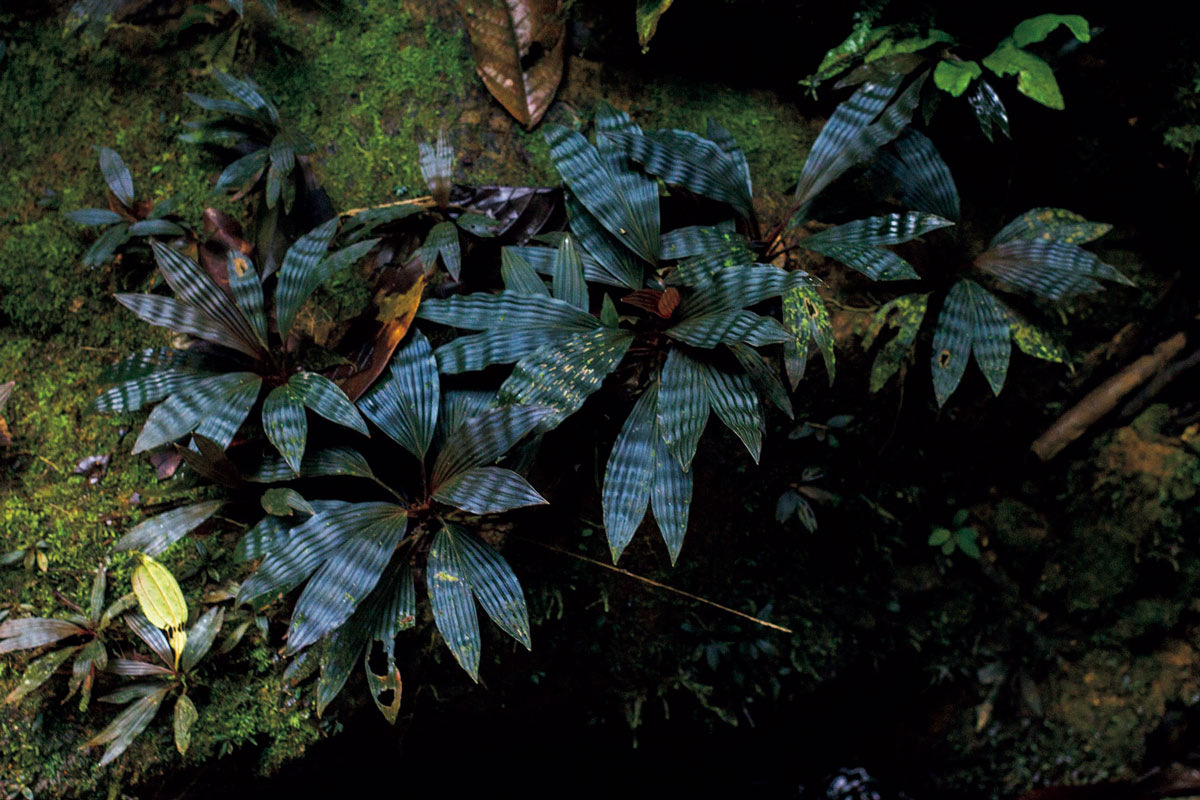
ディクラノピギウム “グナ・ヤラ”
Dicranopygium "Guna Yala"
グナ・ヤラの川床に群生していたディクラノピギウム cf. ハーリンギイ。個体数が非常に多く、ブセファランドラ不明種のようにカーペット状になっていた。
モノレナ ドレスレリ
Monolena dressleri
パナマ原産で、湿った川沿いに育つ小さなノボタン科植物。葉は小さく漆黒のままで、ゆっくりと生長するため、テラリウム向きの美しさを持つ。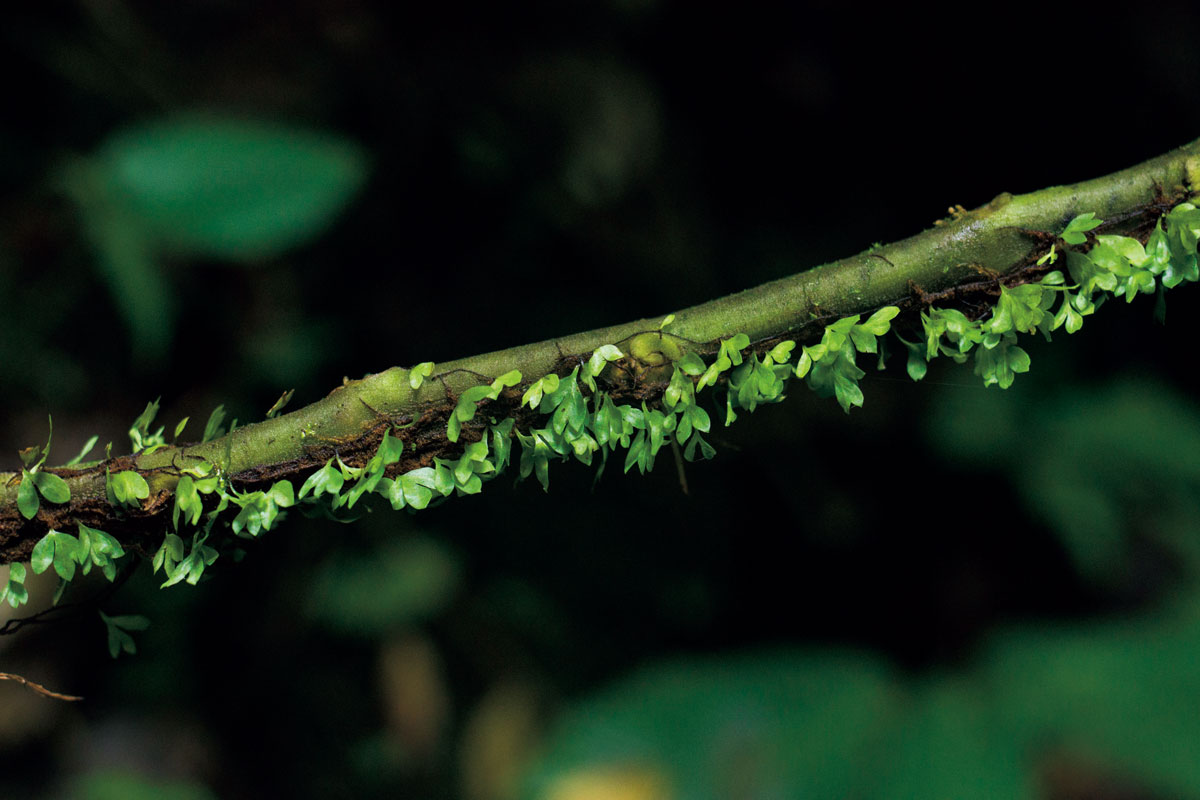
アスプレニウム ホロフレビウム
Asplenium holophlebium
南米原産。川辺の岩や枝に生えていたミニチュアのシダ。高湿度でないと生きられないため、自宅で育てる場合はテラリウム栽培が向いている。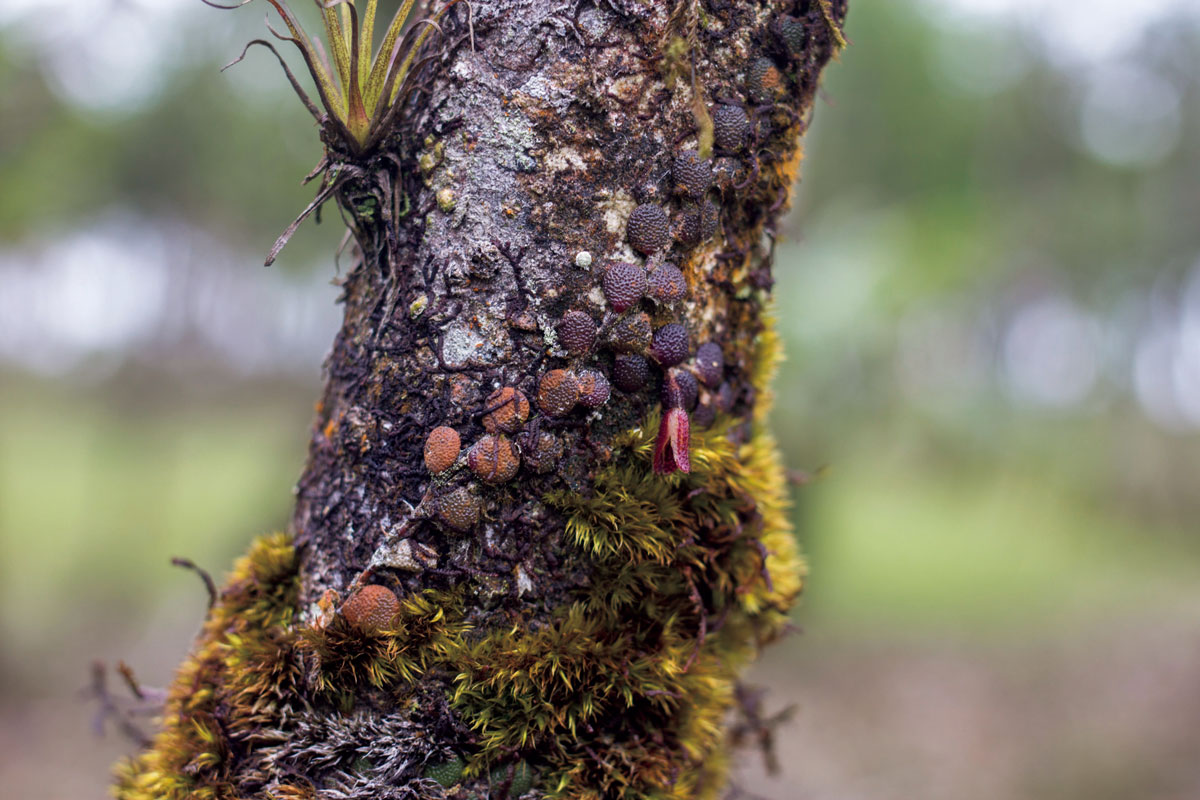
フロエオフィラ ペペロミオイデス
Phloeophila peperomioides
雲に包まれた山頂で見つけた、小さな多肉質の着生蘭。花には毛が生えており、とてもユニーク。フロエオフィラ属はわずか6種で構成されていて、これはその一つ。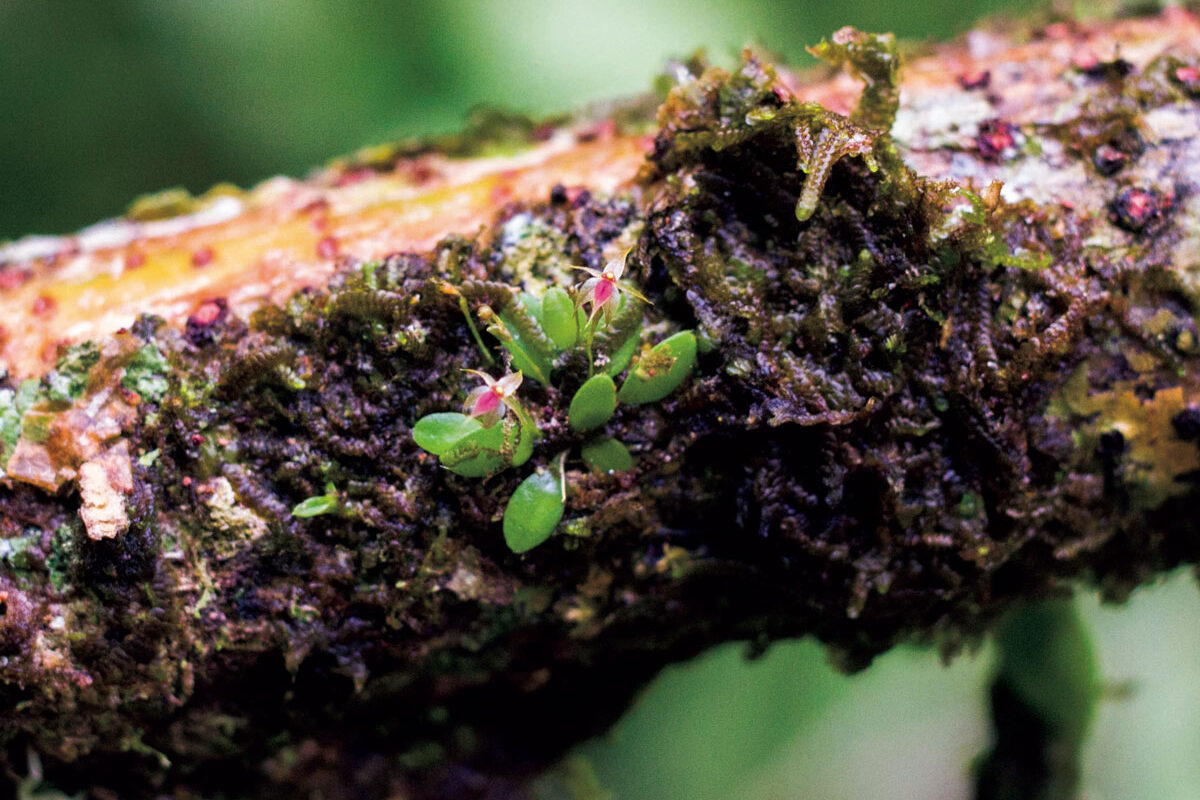
プラティステレ テイロリイ
Platystele taylorii
サンタフェから北の海岸に向かう途中の滝のそばに落ちた枝に生えていた植物。非常に小さく、全体でわずか1cm程度で、ほとんど目に入らない。世界で最も小さな蘭の一つ。