









Awakening to what it means to be human
The latest installment in the Planet of the Apes series, considered a milestone in animal science fiction, Kingdom of the Planet of the Apes, was released in 2024. The first film, released more than half a century ago in 1968, left a striking impression with its depiction of a world ruled by apes, but what surprises has the latest installment brought? We asked Mephisto Prize-winning author Kotori Sudo, whose sci-fi mystery novel Gorilla Trial Day, about a female gorilla who can sign, to analyze the film.

"This film is billed as a'completely new addition to the series,' and it certainly has a different feel to the first one. The 1968 version was released during the Cold War. There was a certain realism to the fear that if a nuclear war broke out, humanity might be wiped out and ruled by apes, and that was what made it a horror science fiction film. However, the latest film has deliberately taken a step outside the science fiction genre. I felt that it was closer to Star Wars.
"SW" is actually more of a space fantasy than a science fiction film, or even more mythical. Just as Luke Skywalker sets out on a journey, this film also follows the story structure of a "hero's journey," with the chimpanzee Noah embarking on an adventure. However, towards the end, humans become involved, and a pre-ape world is hinted at. Perhaps science fiction motifs will come to the forefront in the next film and beyond."
apes
In "Judgement Day," gorillas are portrayed as gentle characters who dislike fighting, and as surprisingly sensitive and prone to diarrhea, but what about their portrayal in "Kingdom for the Planet of the Apes"?

Director: Wes Ball / Released in 2024 / Humanity has degenerated, and various types of apes have established a kingdom.“now”Set in a world 300 years after“A completely new film in the "Planet of the Apes" series”Noah, a chimpanzee of the Eagle tribe who can control a hawk, sets out on a journey to save his family and friends who have been taken away by the dictator Caesar.
"I enjoyed the film itself, but it seemed to me that our understanding of gorillas and bonobos has stuck more than half a century ago. Rather than realistic portrayals, it prioritized the general audience's preconceived notion that gorillas are violent, and character design that relied on their strong appearance. Kyogoku Natsuhiko told me about my novel,'I was able to tell this story because it was about gorillas,'and he certainly is right. It was precisely because I recreated the gentle nature of gorillas that dislikes conflict that I was able to reduce the violent depictions and stick to rational interactions.
In terms of realism, I also made sure to make sure that readers could empathize with the emotional movements of Rose, the main character, a gorilla. My aim was to think about what it means to be human through gorillas. So rather than imagining what gorillas are thinking, I wanted to ask the question: if gorillas have the same emotional movements as humans, is that human? So I wrote the gorilla's feelings as if they were human.
A science fiction work that illuminates humanity through different perspectives and bodies
"Gorilla Trial Day" is often compared to the science fiction manga "Darwin's Incident." Sudo says of the story, which features a "humanzee" as its protagonist, who is more intelligent than humans and stronger than chimpanzees, "It seems like an animal rights issue, but it actually depicts humans, and the themes are similar to my novels. I'm looking forward to seeing what happens next." He adds that the appeal of science fiction that depicts different creatures is that it allows him to explore alternative ways of being human.
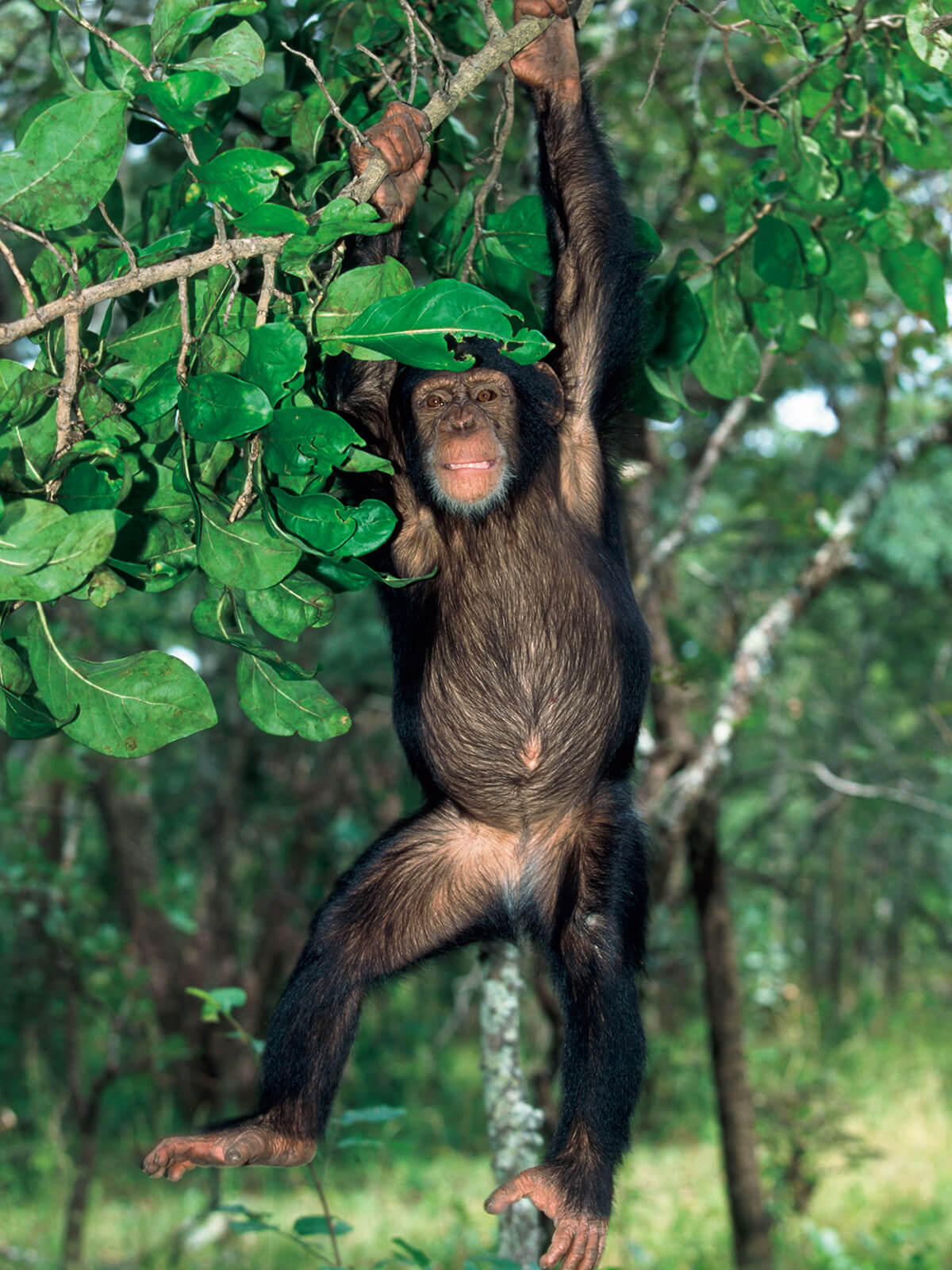
chimpanzee

"Robert J. Sawyer's novel trilogy,'The Neanderthal Parallax,' is a story in which parallel universes inhabited by Cro-Magnons and Neanderthals intersect. It shows that the reality we live in is just one of infinite possibilities, and invites us to imagine a different'now.'
Neanderthals


From left: "Hominid," "Human," and "Hybrid."
All three works are written by Robert J. Sawyer and translated by Uchida Masayuki. Published in Japanese in 2005. This trilogy connects the universe in which Neanderthals evolved with the universe in which Homo sapiens evolved. The first work won the Hugo Award for Best Novel in 2003. "I was conscious of the idea that different species share common emotions in 'Judgement Day.'"
"The Cretaceous Period, a novel by Liu Cixin, the author of The Three-Body Problem, is a story about dinosaurs and ants coexisting and building an advanced civilization, but at the same time, it's interesting to see how it parallels human history. Now that the development of AI is changing the way humans live, science fiction that reconsiders the human condition from the perspective of animals and other species will provide fresh inspiration."