










How to discover the four factors that determine lifespan?
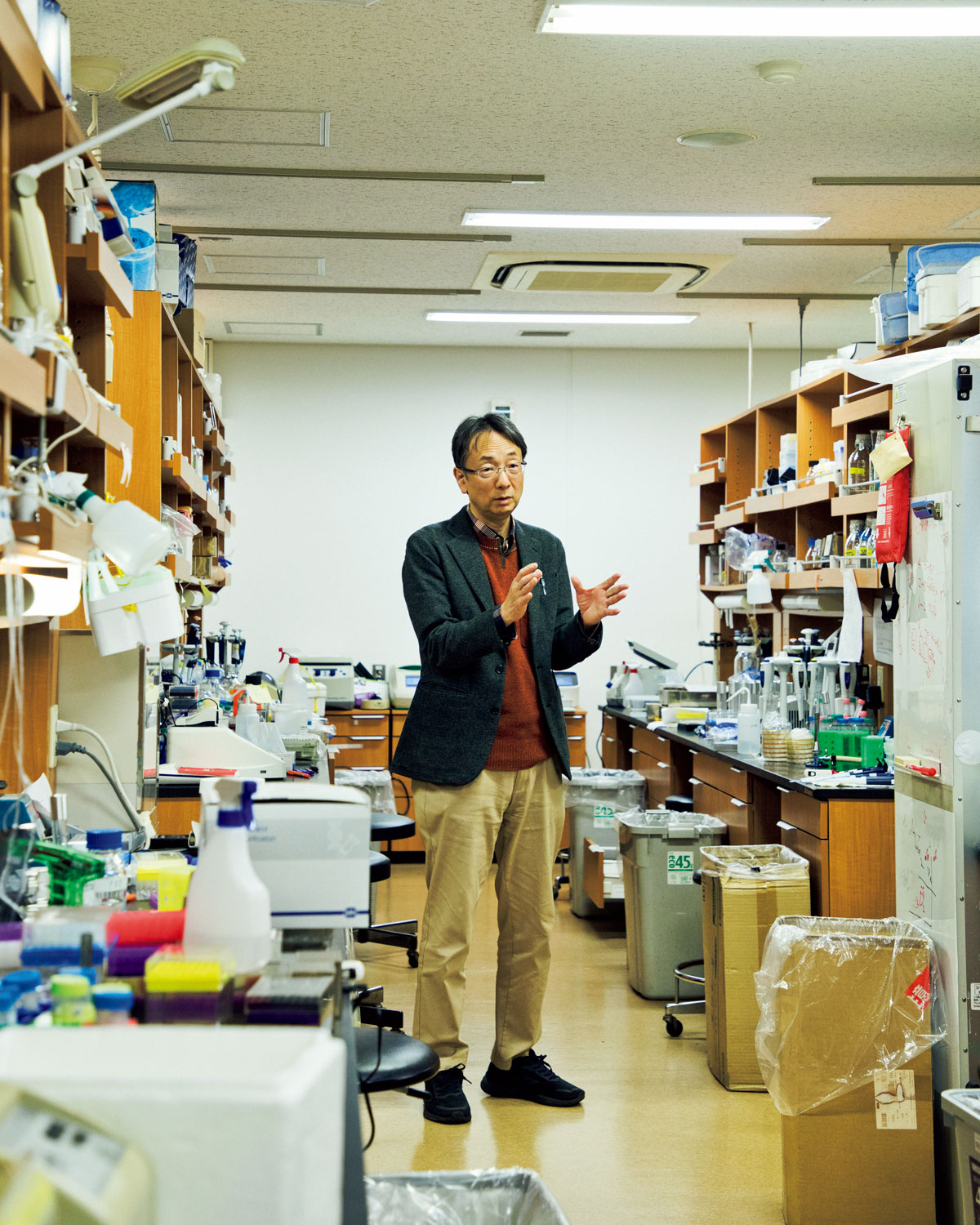
"I'm going to find the four factors that determine lifespan and win the Nobel Prize," said Professor Kobayashi Takehiko with a grin. He explained about his research into aging with gestures and body language.
"Aging is the deterioration of the genome. This is a fundamental principle common to all living organisms. Deterioration progresses every time a cell divides, and exposure to ultraviolet rays causes damage. The older we get, the more damage accumulates, which can lead to cancer and dementia, for example. This is where genome repair genes become important."
It is known that organisms whose DNA is less susceptible to breakage have longer lifespans. For example, humans have DNA that is more than 10 times less susceptible to breakage than mice. In fact, repair genes function differently. When human repair genes are introduced into mice, the resulting lifespan is determined to be a factor that determines lifespan.
"I'd like to find about four in the next five years. Professor Shinya Yamanaka won the Nobel Prize for the Yamanaka four factors." The "four" factor is a bit of a pun... but there are already candidates. For example, an enzyme called sirtuin, which activates repair, is said to have extended the lifespan of mice by 20%.
By the way, if human repair factors were used in experiments, wouldn't it extend the lifespan of mice, but not humans? "Of course, humans already have ideal repair capabilities. However, if we could further improve their function, it is possible that lifespan could be extended even further.
In the future, AI will likely design even better cofactors and structures. What's most important is that it will extend the period in which we can stay healthy. It will allow us to die peacefully and peacefully. That would be the best thing, wouldn't it?