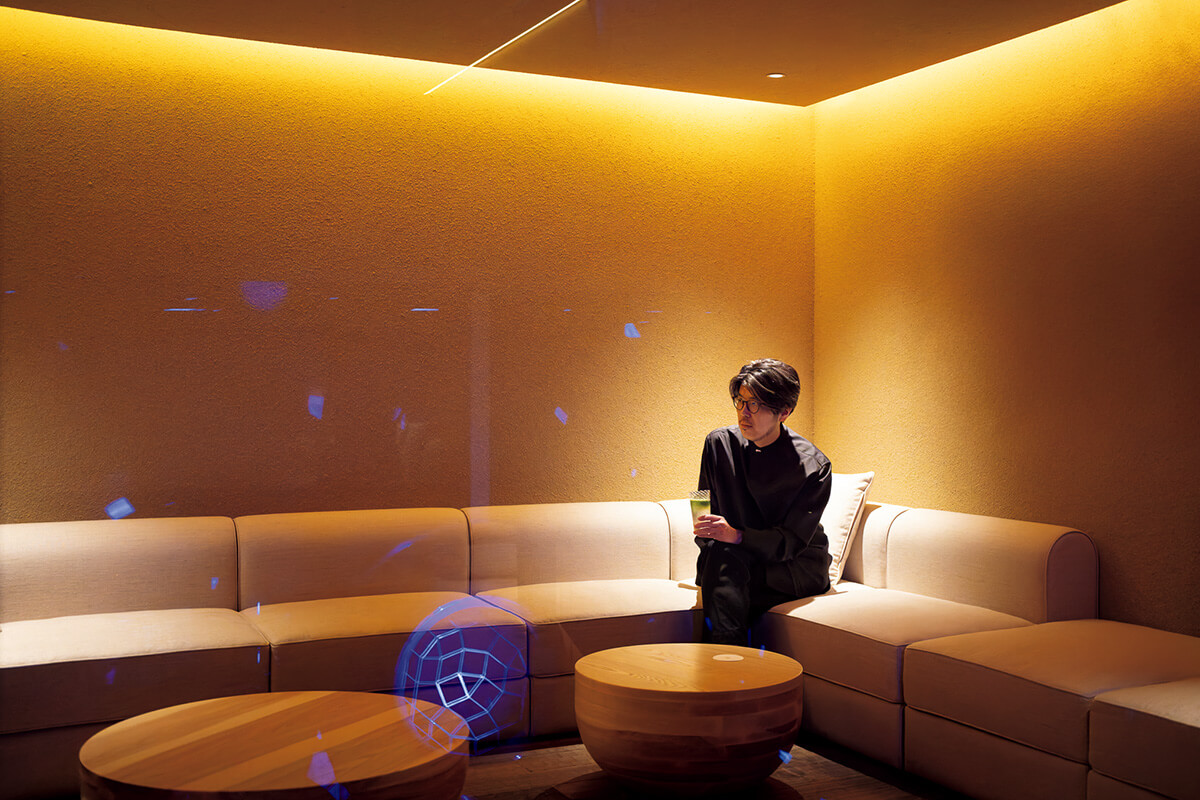











From History to Story. A salon that inherits the stories of ancient cultural figures and weaves new stories.
"Gion, a place in Kyoto where culture has been especially carefully preserved, is home to people who view things from a long perspective of 100 or even 200 years. I feel that there is a beautiful space in the communication that takes place in such a town."
This is what novelist and filmmaker Genki Kawamura says. When he became interested in Gion culture after working on a Netflix drama he helped plan, he was blessed with the opportunity to renovate a townhouse and open a salon there.
"Kyoto is a city where creators like Murasaki Shikibu and Sen no Rikyu have woven history. Even now, there are people of the same generation who are inheriting the ancient stories and trying to create new ones. A culture that Tokyo has almost forgotten lives on here, including myself. I thought that in this city, a place could be created where Eastern and Western cultures could come together again."
Kawamura entrusted the creation of the space to New York-based architect Shohei Shigematsu, and artist Olafur Eliasson, who Kawamura says he admires for the universal light he creates. Kawamura commissioned the two by handing them the script.
"I wrote a script called 'Gion Monogatari' about the kind of people who would gather here and the conversations that would take place, and asked them to use that as a starting point for their own ideas."
Short story "Gion Monogatari" Genki Kawamura
Introduction [JO]
"Story" is tucked away in a quiet alley behind the bustling Gion district in Kyoto. It is a hideaway where intellectuals from Japan and around the world gather to mingle. A lantern hanging from the entrance of the elegant townhouse is lit, and tonight's "Story" begins. Opening the lattice door on the first floor reveals an open-air courtyard garden. The courtyard garden of light, created specifically for this "Story," allows you to feel the breath of the world. Time flows within the courtyard garden, just like a theatrical stage. There, you will find "the whole universe," representing the entire universe, and "flowers, birds, wind, and moon," representing Japan's four seasons.
Break [HA]
As you go up the stairs, you will come across a tranquil bar counter, where you will find the owner, dressed in a kimono as vibrant as a flower arrangement.
"Welcome"
The owner entertains his guests with sake from Kyoto. Kyoto tea masters, potters, kimono craftsmen, and chefs share drinks, and novelists, painters, and businessmen from Tokyo and around Japan join in. As the night draws on, actors, singers, and film directors from overseas join in, and everyone "forgets time" as they talk and gaze out at the courtyard garden.
Kyū
As the night deepens, the geisha gradually gather. The sound of the shamisen begins, and the dance begins. Enveloped in the misty, snow-like light shining in from the inner garden, the dreamlike night passes.
Stories have been born from history and time. Here at Monogatari, past and present, East and West blend together to create new stories. And before morning comes, the guests leave.
Like any story, when it ends, a completely different world unfolds before your eyes.
Thus, Gion Monogatari was completed in the spring of 2025. The moment you open the lattice door facing the street, you are invited into a story from somewhere, some time ago. In the center is an atrium reminiscent of a small garden. Surrounded by three floors, the entire space is bathed in Eliasson's installation light, which dances slowly like mist or snow.
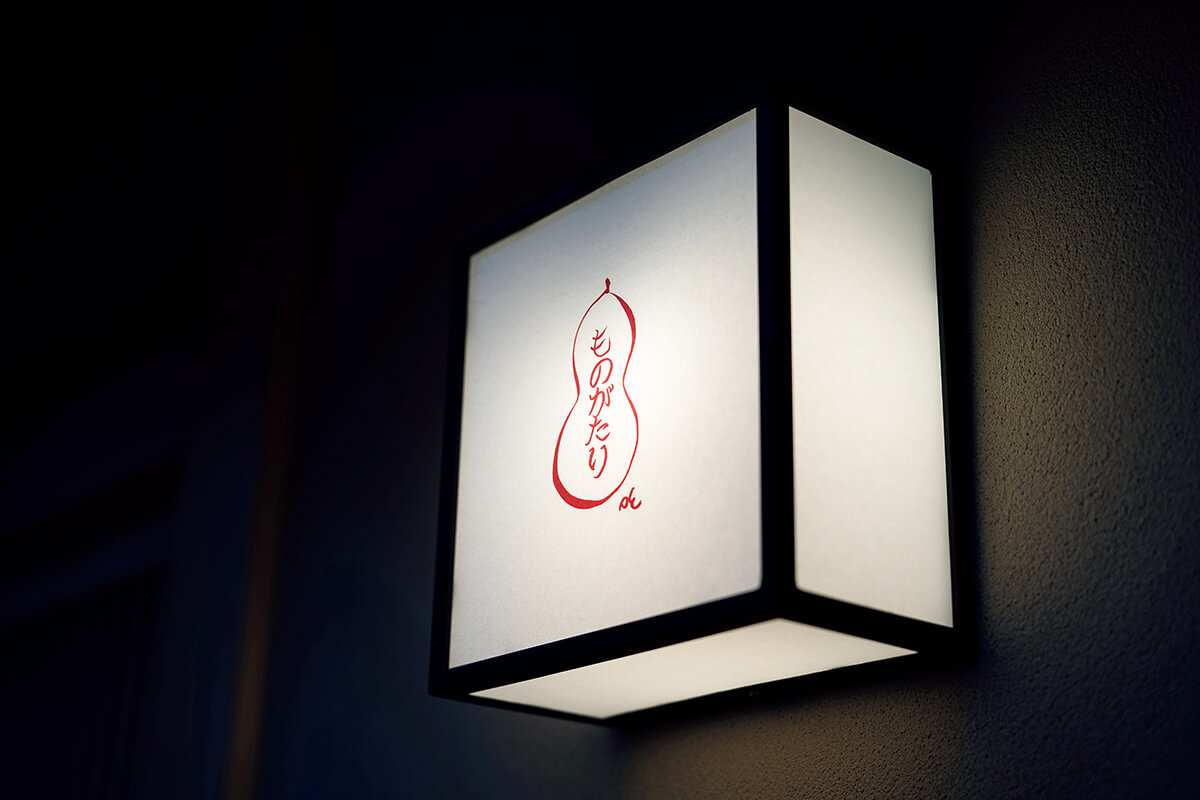
The word "Story" written on the lantern on the front is the first Japanese word that Eliasson ever wrote with a brush. 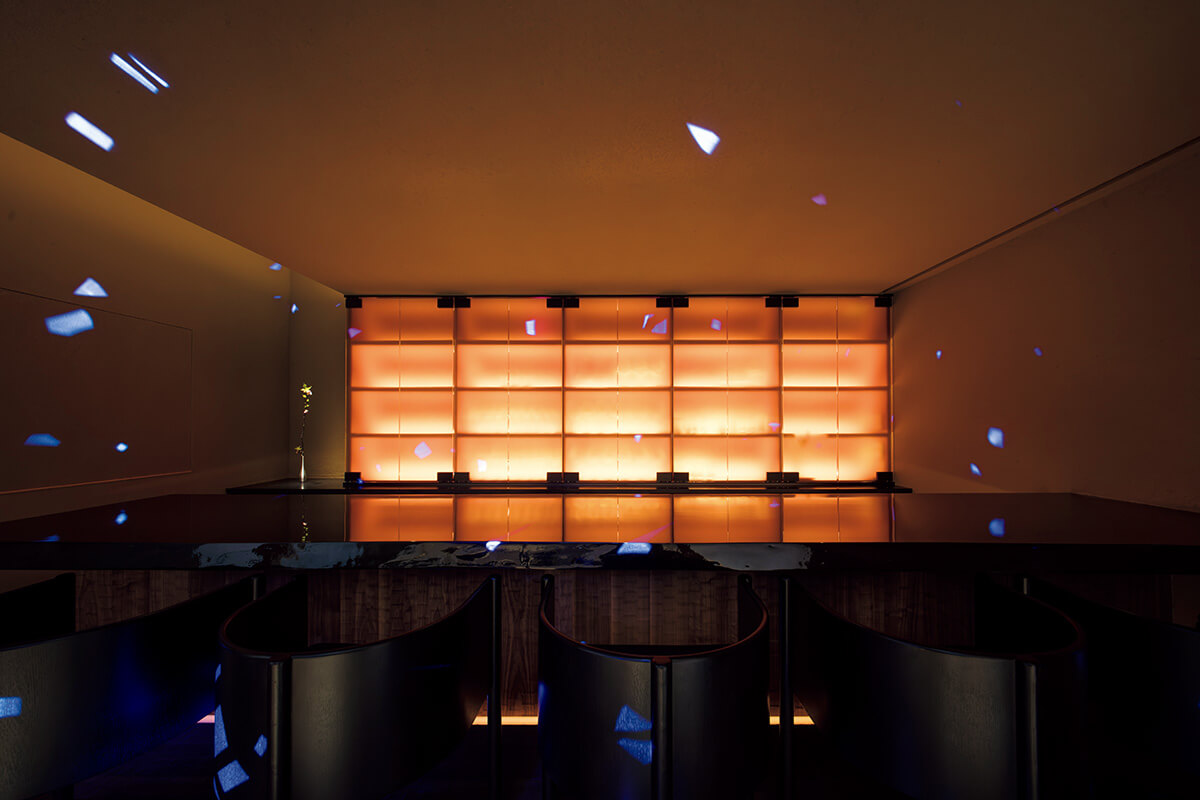
The shelves at the front of the bar are painted orange, Eliasson's favorite color. The interior latticework, plastered walls, and chestnut wood floors were all finished by Kyoto craftsmen.

"Shigematsu designed a space with a gently continuing split-level layout on each floor. Each scene does not exist in isolation, but rather contains a connection to the next, just like the story of a film or novel. Olafur then staged these scenes with light. When you look up at the light projector on the top floor, it looks like a movie projector.
It's like the world of the movie "Cinema Paradiso." Looking at the light works in the box-like space with a high ceiling, you feel as if you're inside a projection room. Two people have taken a script written by one filmmaker and expressed it in a way that goes beyond imagination. It's truly moving."
Kawamura says that whenever he visits Kyoto and spends time here, he always loses track of time.
"Looking at Olafur's garden and enjoying a conversation, I feel a connection to the town and its people that transcends time. It's a precious moment."
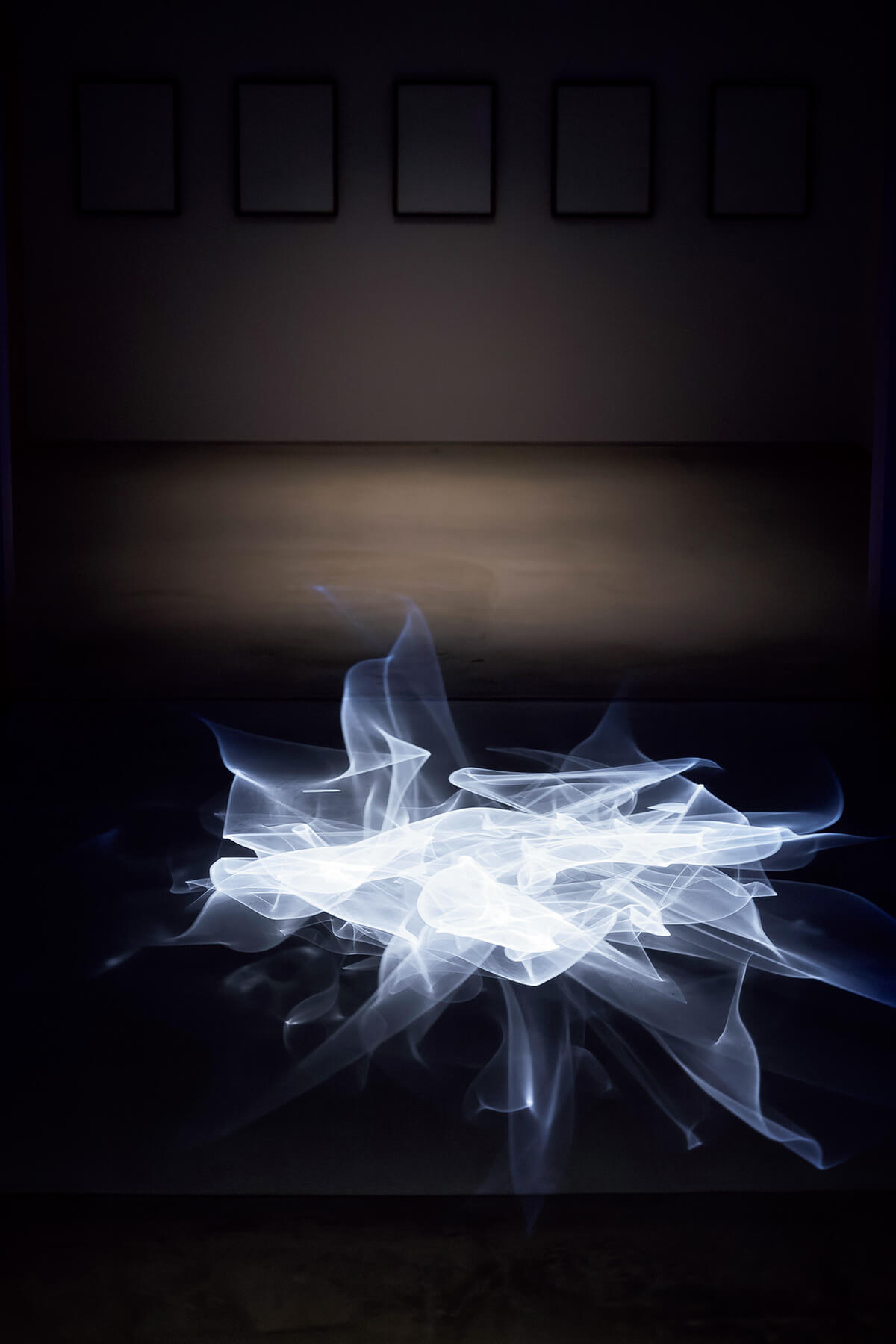
Olafur Eliasson, The nowhere garden, 2024;Commissioned by Gion Monogatari © 2024 Olafur Eliasson
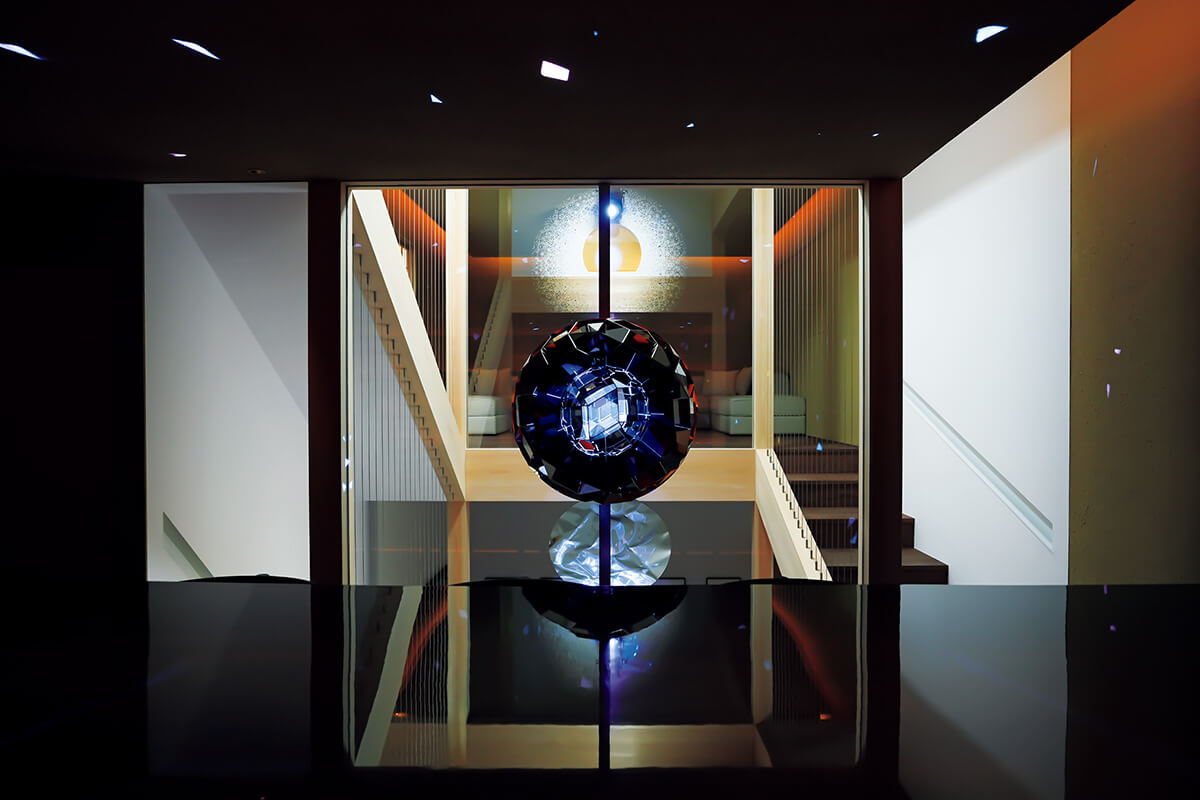
Olafur Eliasson, The nowhere garden, 2024;Commissioned by Gion Monogatari © 2024 Olafur Eliasson
"There is space where stories from ancient times and modern times intersect."
Genki Kawamura