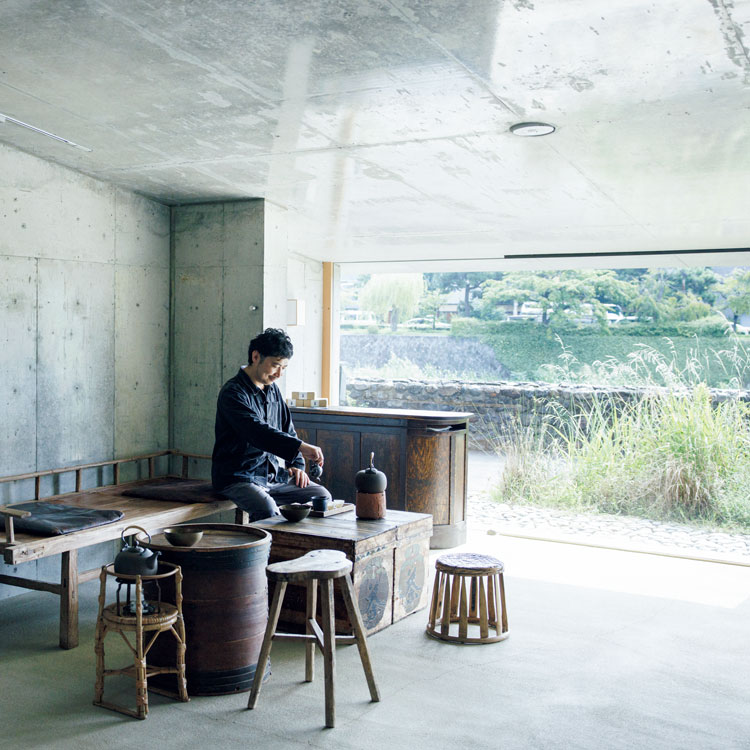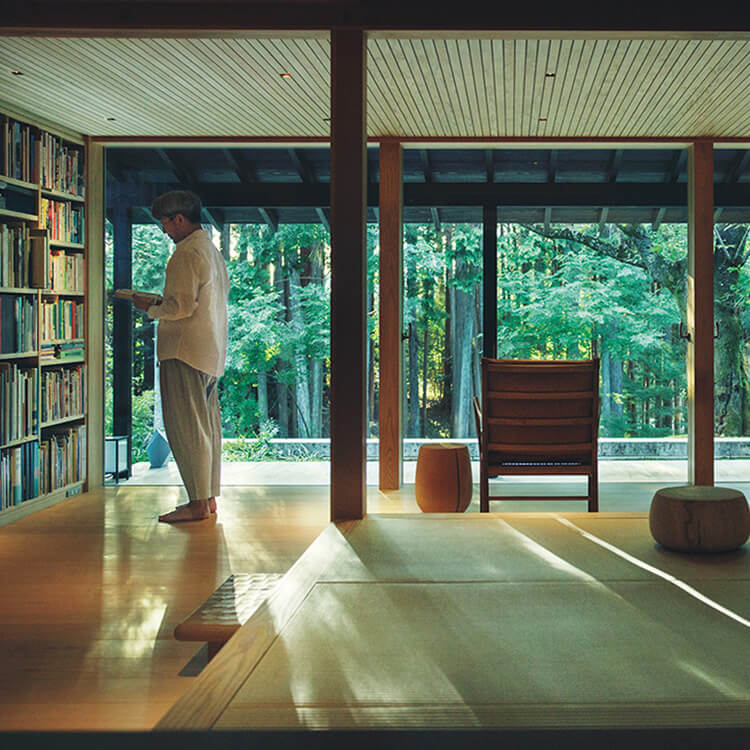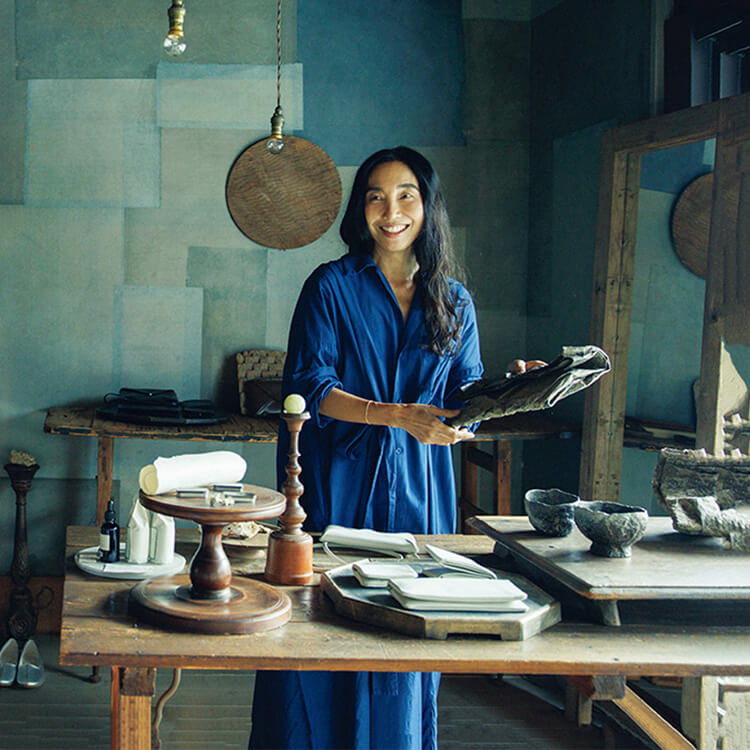











A tranquil gallery filled with aesthetic sense where you can forget about the country and the era and simply face the objects.
"The moment I stepped onto the street leading to Kenkun Shrine, I felt the tranquility of the town and the special atmosphere of this place surrounded by temples and shrines," recalls shop owner Ryo Suzuki.
Having lived in Paris for a long time after studying art history, he says he has been drawn to old buildings and monasteries since he was young. He observed architecture in detail around the country and continued to collect antiques, when he came across this building by chance and decided to move there.
He traveled to Kyoto via Hiroshima. In 2021, he acquired a Kyoto townhouse built in 1926 (Taisho 15) that was a grain wholesaler, and supervised the design to create a gallery. While retaining the design of a Kyoto townhouse, such as the latticework on the exterior and the atrium ceiling in the passage garden, the space exudes a mysteriously exotic feel. By using natural materials and stripping away the architectural design, the space is reduced to its essential elements, transcending time and country.
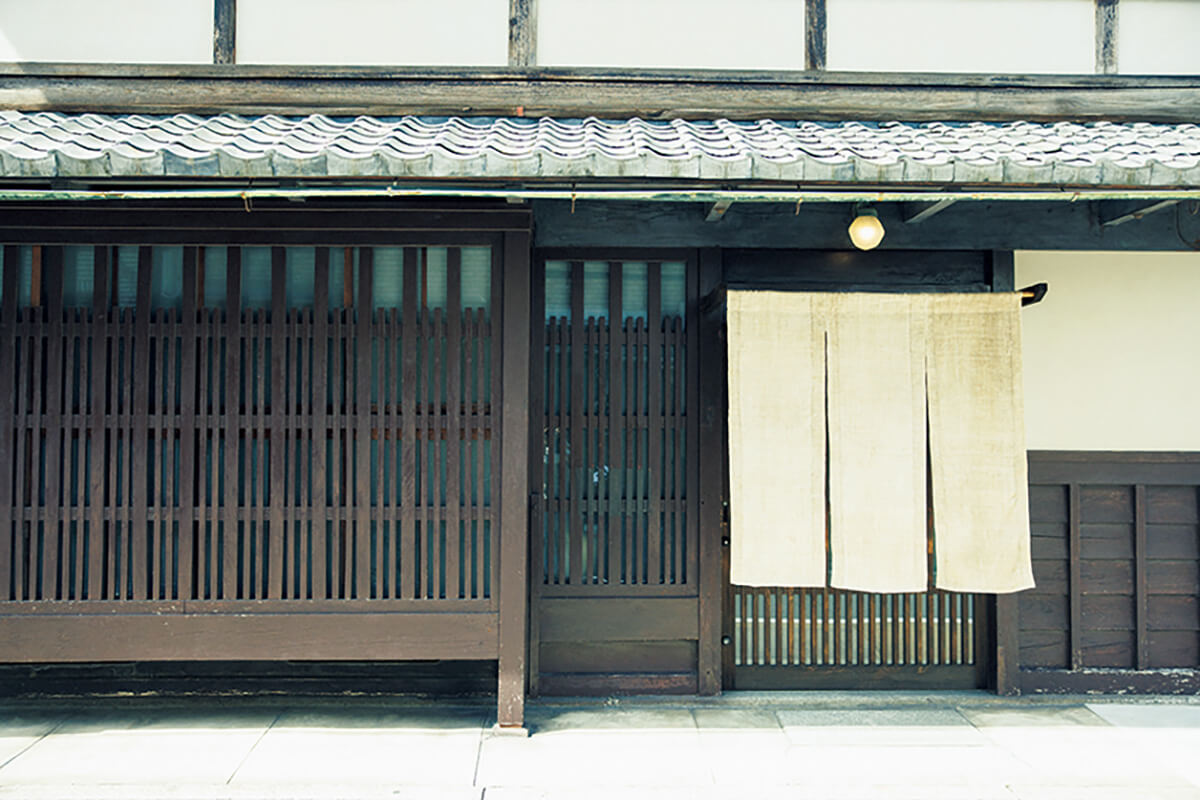
It faces Kenkun-dori, which leads to Kenkun Shrine on Funaokayama. The plaster on the outside is not pure white, but has been repainted a soft cream color. 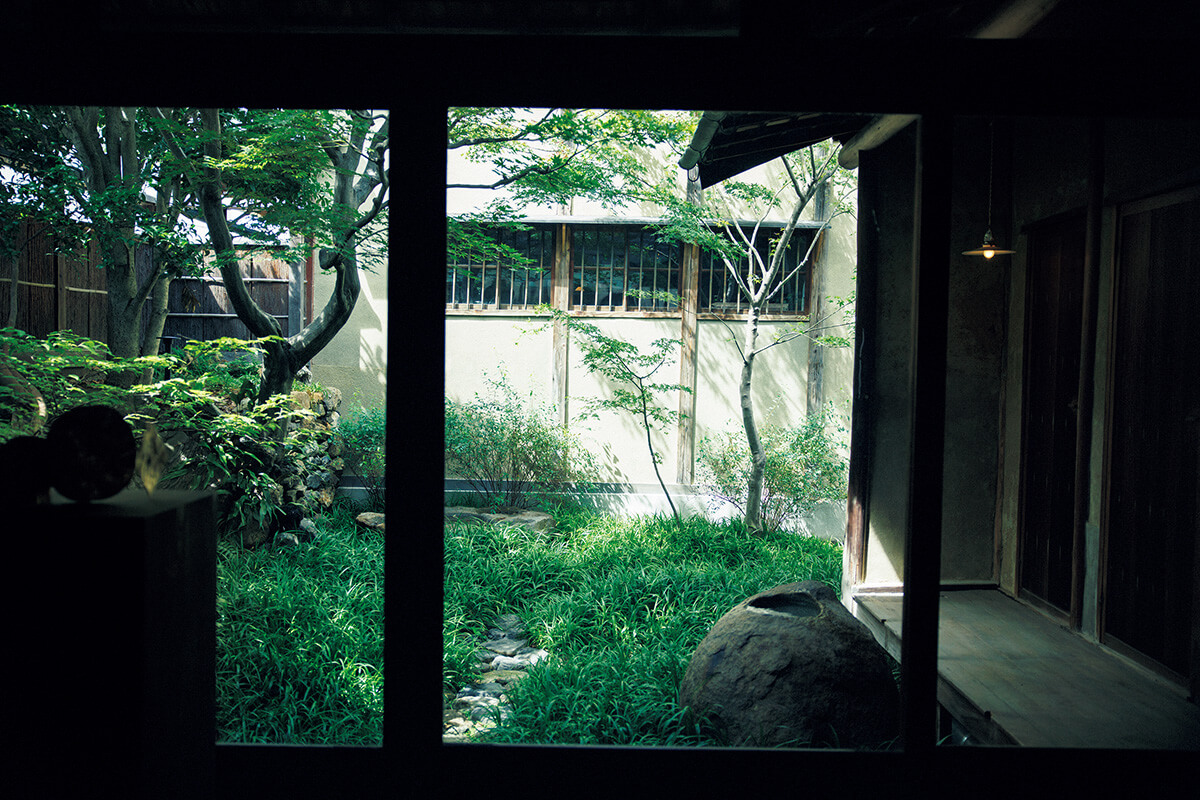
The courtyard has been renovated to allow visitors to feel a sense of nature even in the city. However, this is still incomplete. 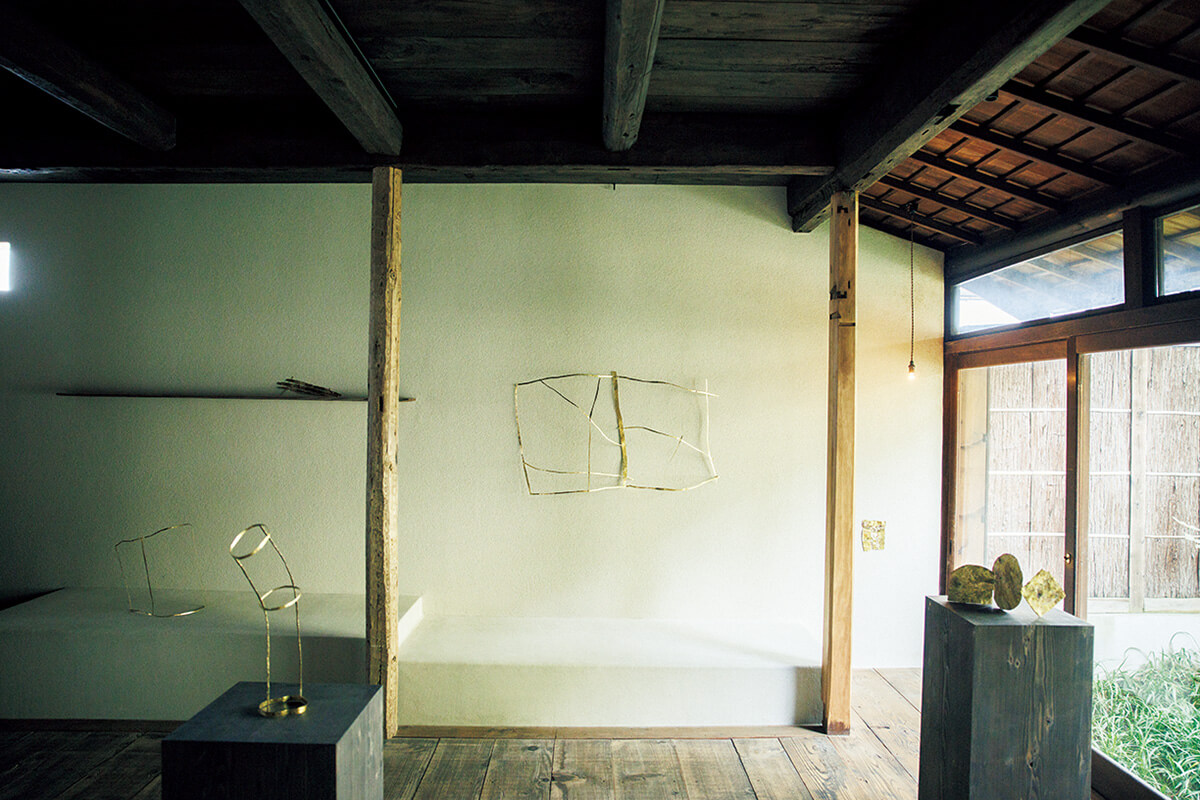
The minimalism of this new alcove highlights the artwork, while the lacquered walls give it a warm feel.
The gallery will host exhibitions of contemporary artists, antiques, and fine art, including ceramic artists Watanabe Takayuki and Yamamoto Masahiko, woodworker Yano Yoshinori, fashion designer iai, and metal artists Akino Chihiro and Kanamori Masaki.
"I'm interested in the universal 'something' that underlies the culture that humans have cultivated since ancient times, and I'm strongly drawn to things that combine that with modernity," says Suzuki. The exhibition, which delves into the inner workings of the creators and captures their essence, is born from a deep and direct encounter with the artist's worldview, providing an experience that can only be found here.
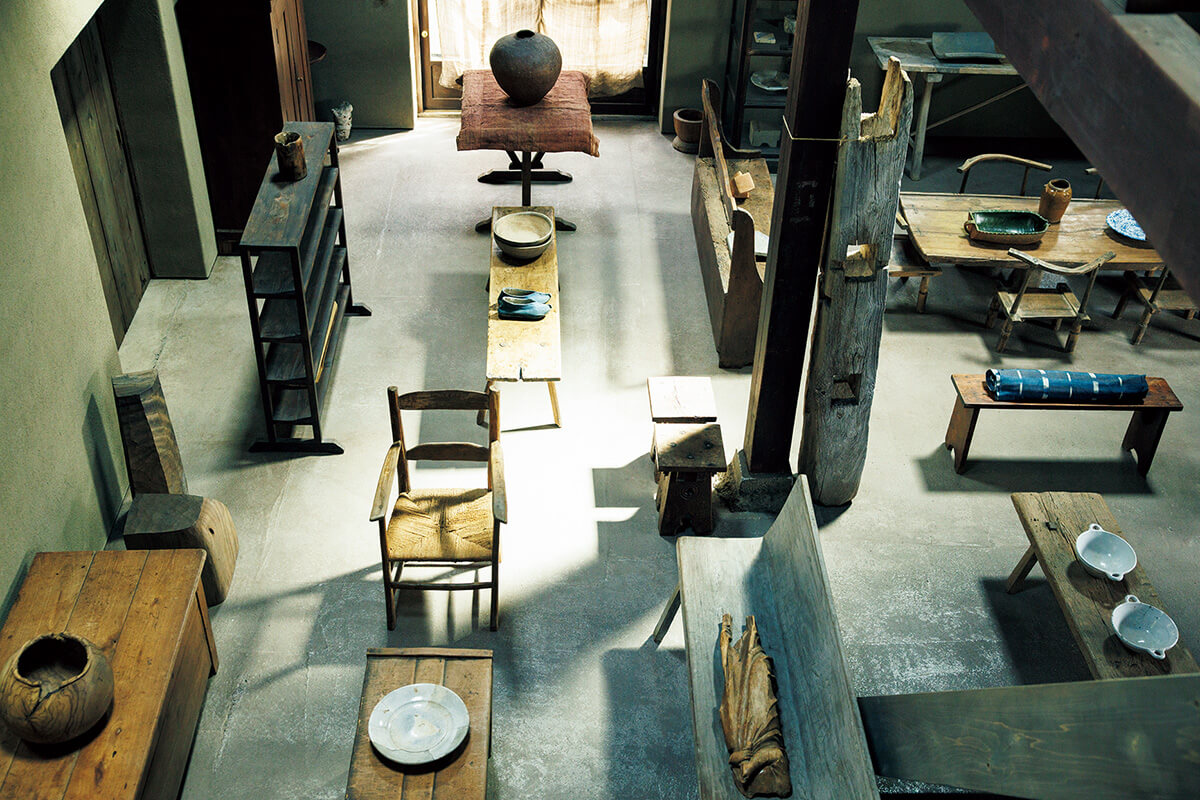
Suzuki says, "Before I knew it, I had collected a lot of things, from ancient to modern." The antiques on display are diverse, and many of them have beautiful shapes and stories to tell. 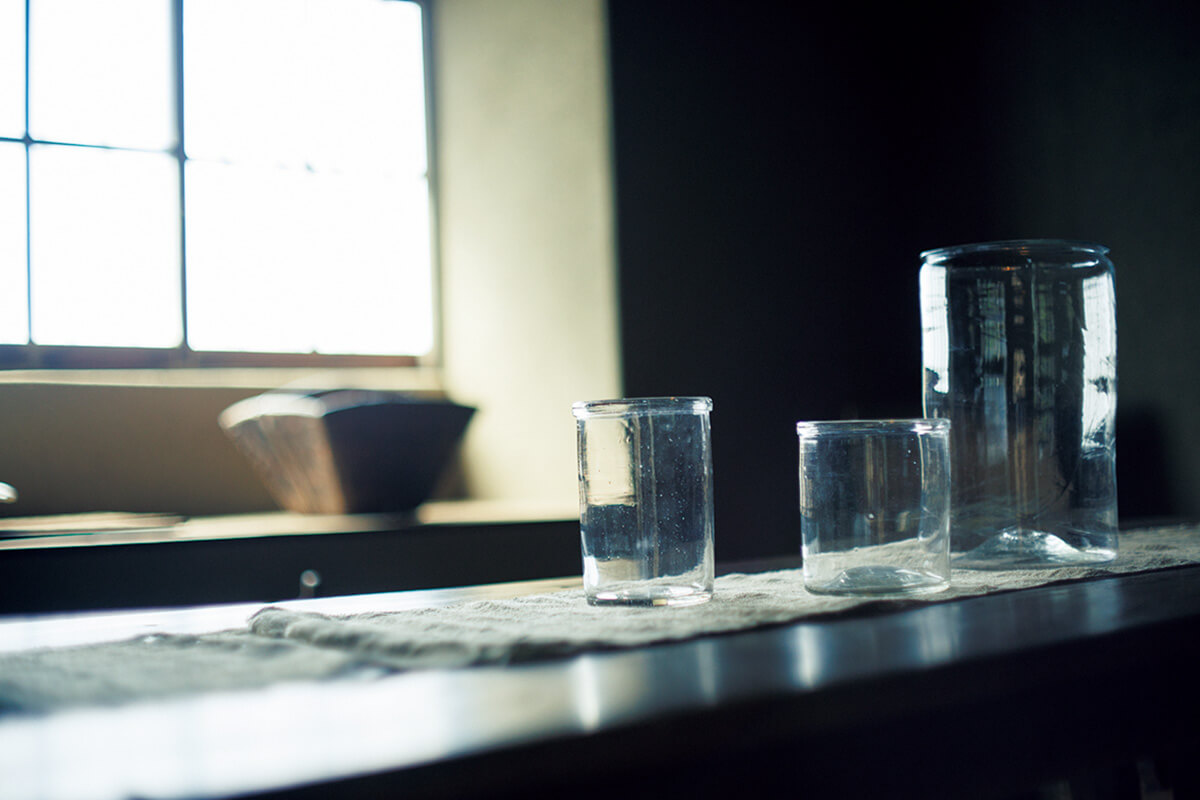
The shimmer, transparency, and light of antique glass accentuate the presence of objects, and glass is one of his favorite materials.
At the same time, the space is constantly evolving. In spring 2025, a new exhibition space was added to the barn. "What I wanted to create was a space like an atelier that would be a source of inspiration for visitors. I wanted it to be a space where works from ancient to modern times, from all over the world, that evoke the spirituality of the time and place, and that are in tune with the space and the body, can come and go freely, and continue to change," he says.
The exhibition features a wide variety of beautiful items from ancient times to the present, including antique furniture and tools from around the world, pottery and objects by contemporary artists, paintings, and three-dimensional works. These two spaces, where the soft light pours in, help you realize the essential beauty that resides in objects. There is a special feeling that makes you want to empty your mind and visit.
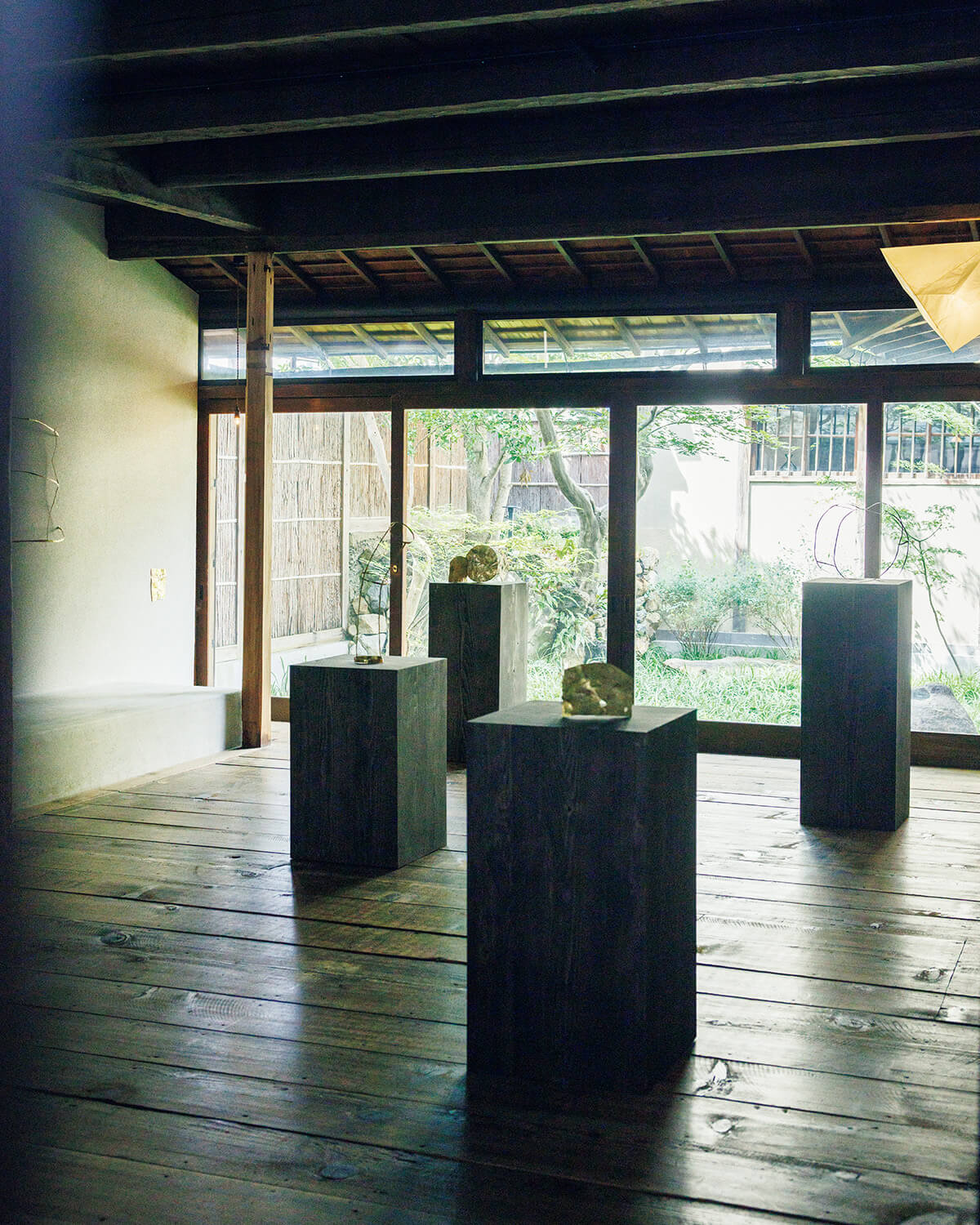
The gallery has a courtyard outside the window and a barn in the back. The exhibit features works by metal artist Chihiro Akino. The atmosphere changes depending on the content of the exhibition. 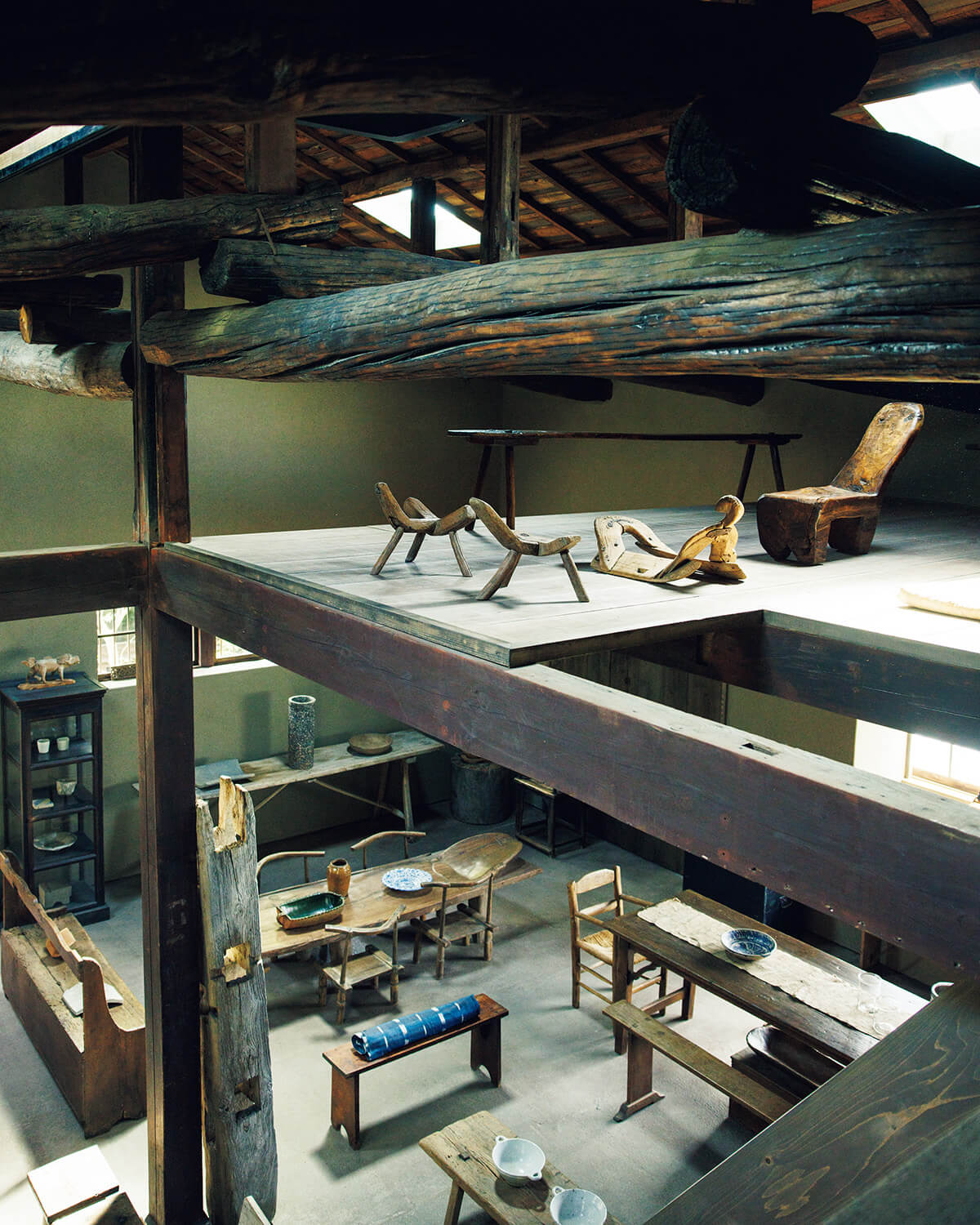
The barn has a bright and airy atmosphere and is filled with items that are close to people's lives, such as works by contemporary artists, antique furniture, ceramics, glass, and textiles. 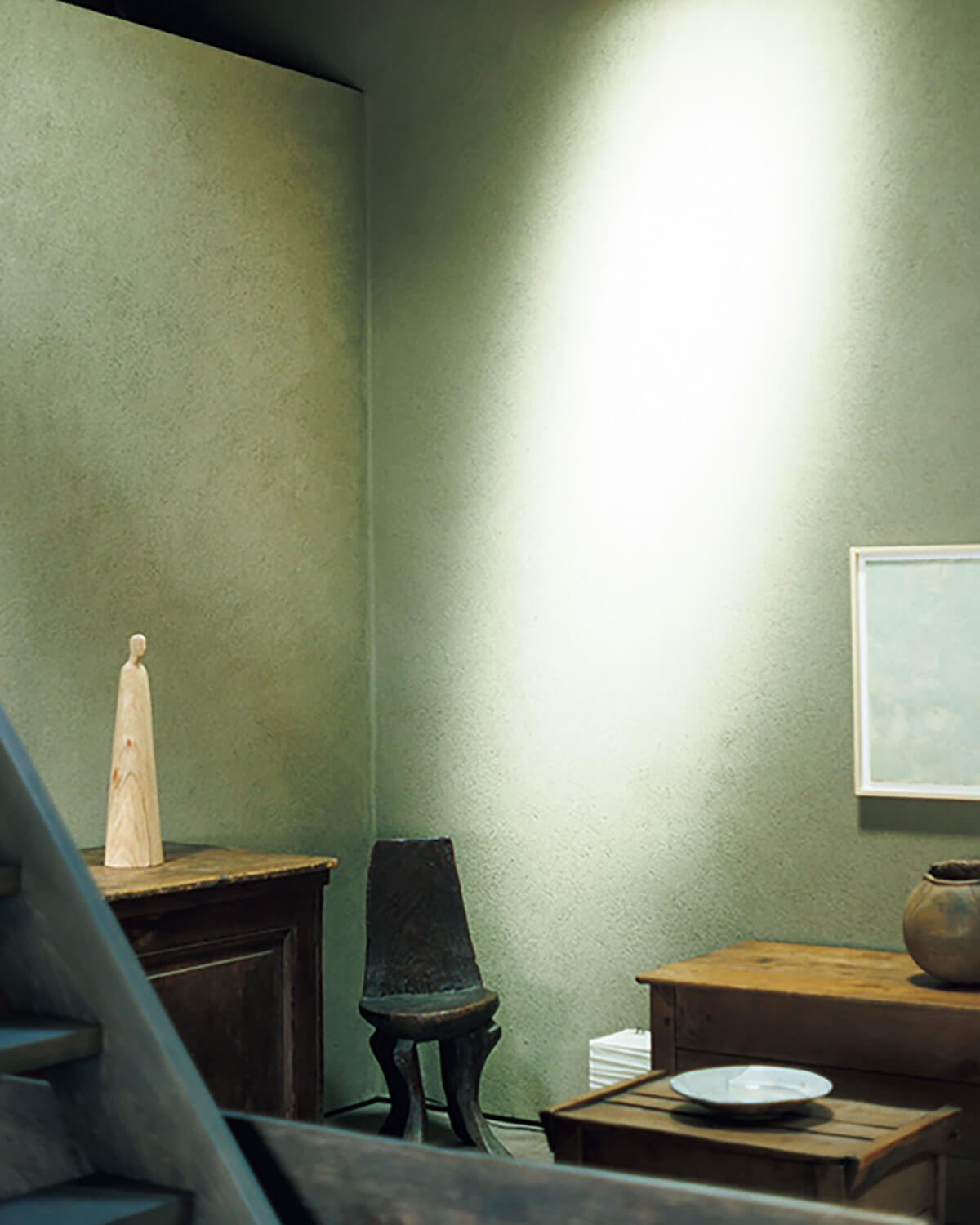
During the renovation, a skylight was added to the barn, allowing the light to shine in like a spotlight, giving it a divine, church-like feel. 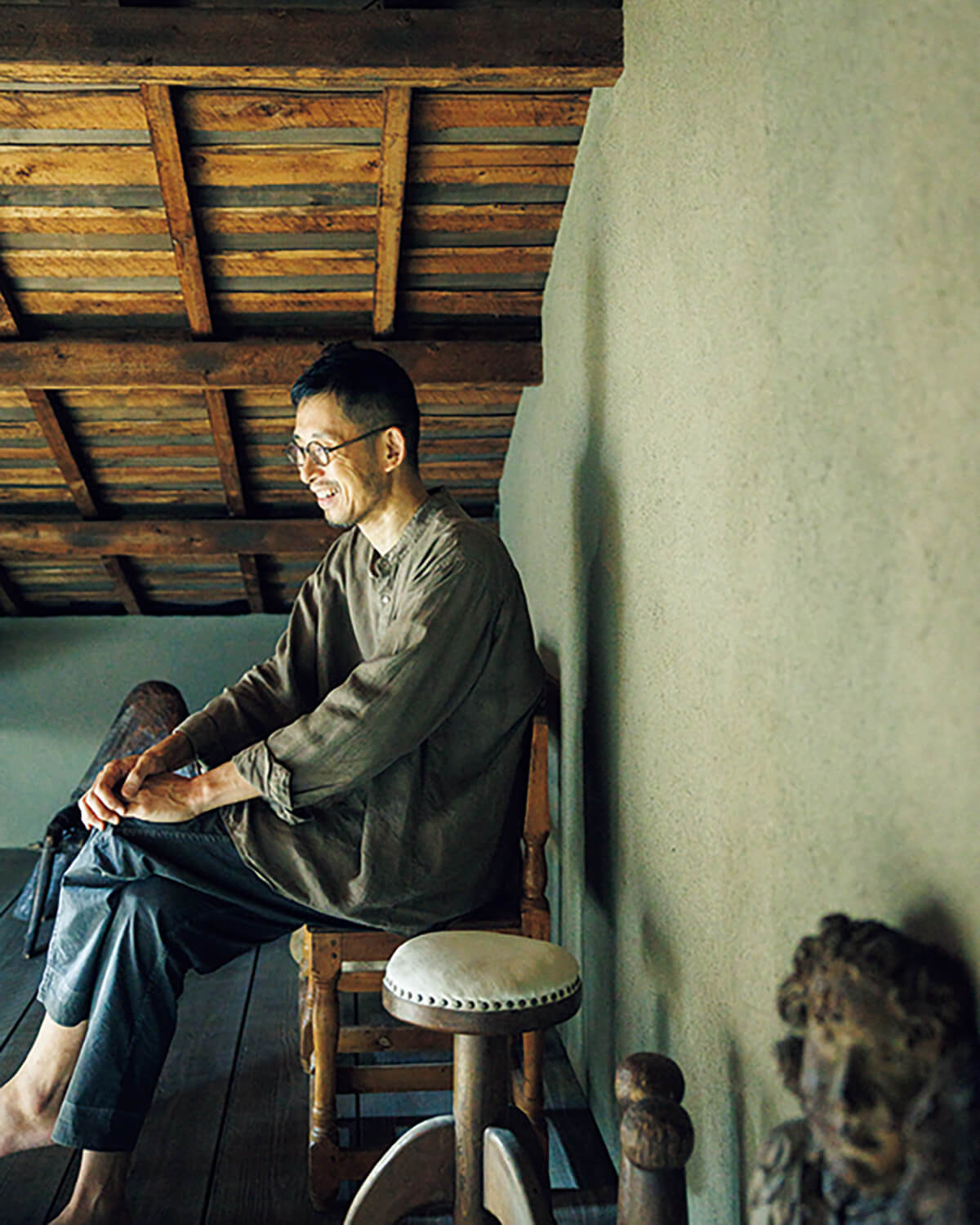
Ryo Suzuki, a gallery owner, was also in charge of the renovation and selection of the tableware for MUBE. "When I first saw the land and building, I felt a positive vibe, just like this place. I'm happy to be able to help preserve this old building and create a space that will last into the future."
Ryo Suzuki talks about the blank spaces in Kyoto
A view of Kyoto and long-lasting clothing that will tune your life
Living in Kyoto, I realized that the city is much more densely packed than I had imagined. To calm my mind and body and take a breather from my daily routine, I take a detour and pass through the banks of the Kamo River and temples. The view from Mt. Funaoka, just a few minutes' walk away, is beautiful in the early morning. Whenever I want to escape the crowds of the city, I feel a sense of security knowing I can escape there at any time.
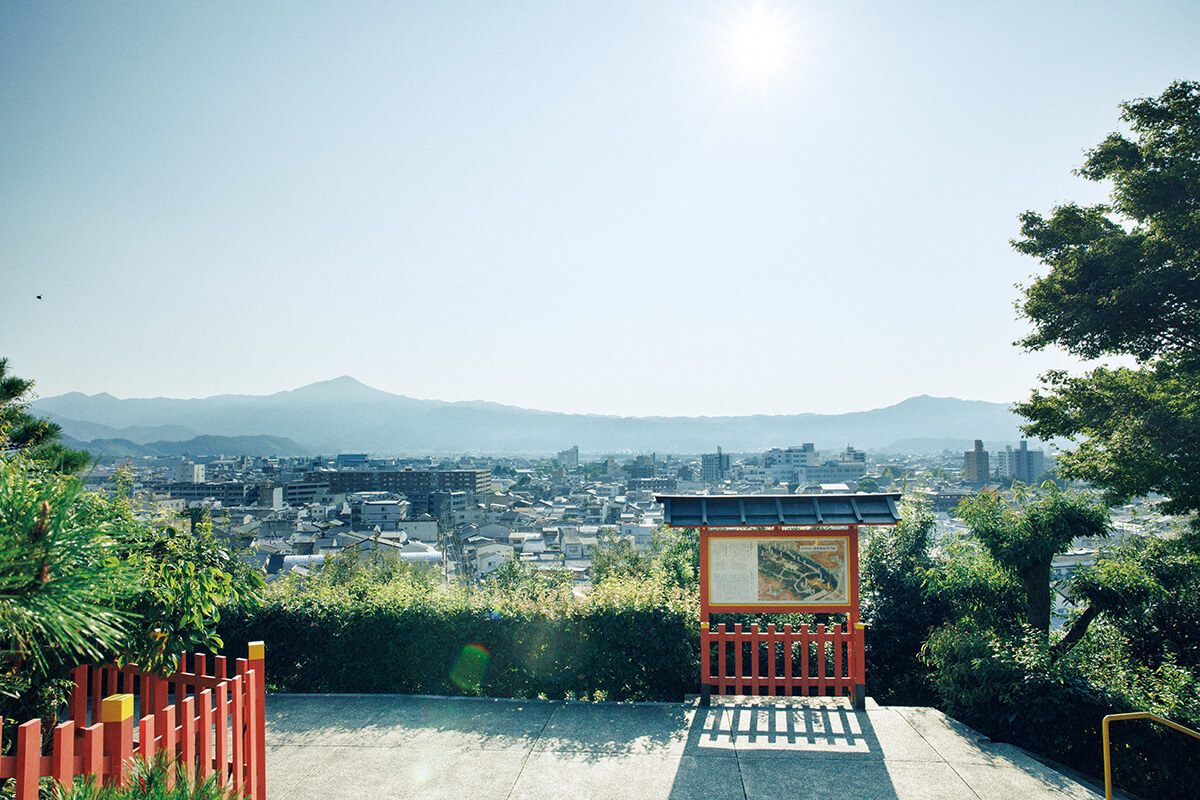
"The hill is Funaoka." So wrote Sei Shonagon in her The Pillow Book about Mt. Funaoka. Though it is only a small hill at 112m above sea level, you can get a panoramic view of Kyoto city from the summit. It is easy to see why Emperor Kanmu decided to move the capital to Heian-kyo long ago. You can see people climbing the mountain as a morning habit, practicing tai chi, and people making early morning visits to Kenkun Shrine halfway up the mountain, making it clear that the mountain is an integral part of local life. Kenkun Shrine enshrines Oda Nobunaga and is also famous for the swords associated with him. Incidentally, although it is affectionately known as "Kenkun Shrine," its official name is "Takeisa Shrine."
I've been a fan of MITTAN since it was first launched. I admire their commitment to the essence of clothing, including repairs and re-dyeing, and their commitment to being environmentally friendly.
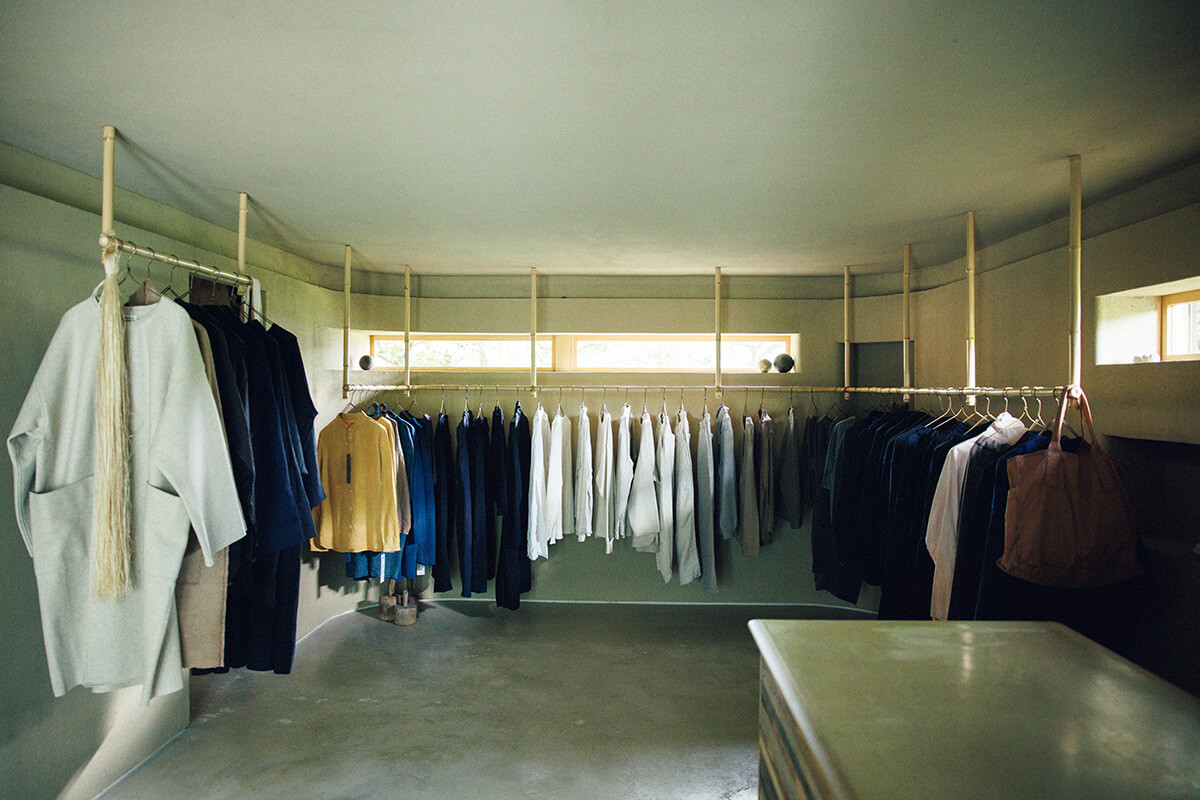
Founded in 2013 by designer Takeshi Mitani, MITTAN is a brand that proposes modern ethnic clothing based on the history of clothing and fabrics around the world. Alongside the shop, they also have a repair atelier where they repair and re-dye the clothes they sell, and even buy and resell them, with the aim of creating clothes that will last a long time. The store has been renovated using natural materials such as earthen walls and bamboo, and is filled with comfort, in line with the brand's concept of beautifully aging.