







"It's fine to just arrange the sushi you buy at the supermarket. Try grilling the toppings, or marinating them and then putting them back on the rice. That's how sushi-making begins."
So says Naoya Maeda, a freelance sushi chef known as "Sushilance," who makes sushi at events and gatherings with friends. What started as a hobby has gained popularity and has been featured in the media, expanding his circle. It turns out that what got him so absorbed in making sushi was a surprise for his partner.
"I wanted to do something unique for my girlfriend's birthday, so I thought it would be fun to make the sushi myself and give it the appearance of being a 'gift from a sushi restaurant.' I got a sushi restaurant set ready at home and watched YouTube videos and tried to make it by imitating what I saw. She was really happy, and I got really excited myself, so I just got hooked from there."
Maeda has always loved eating sushi. He had always enjoyed experimenting with different sushi styles, such as grilling sushi he bought at the supermarket, but this was the first time he had actually prepared and made sushi properly. It was the moment the door to the world of sushi opened for him.
"At that time, I was so unfamiliar with it that I ended up getting rice all over my body (laughs)," says his partner Kaho with a laugh.
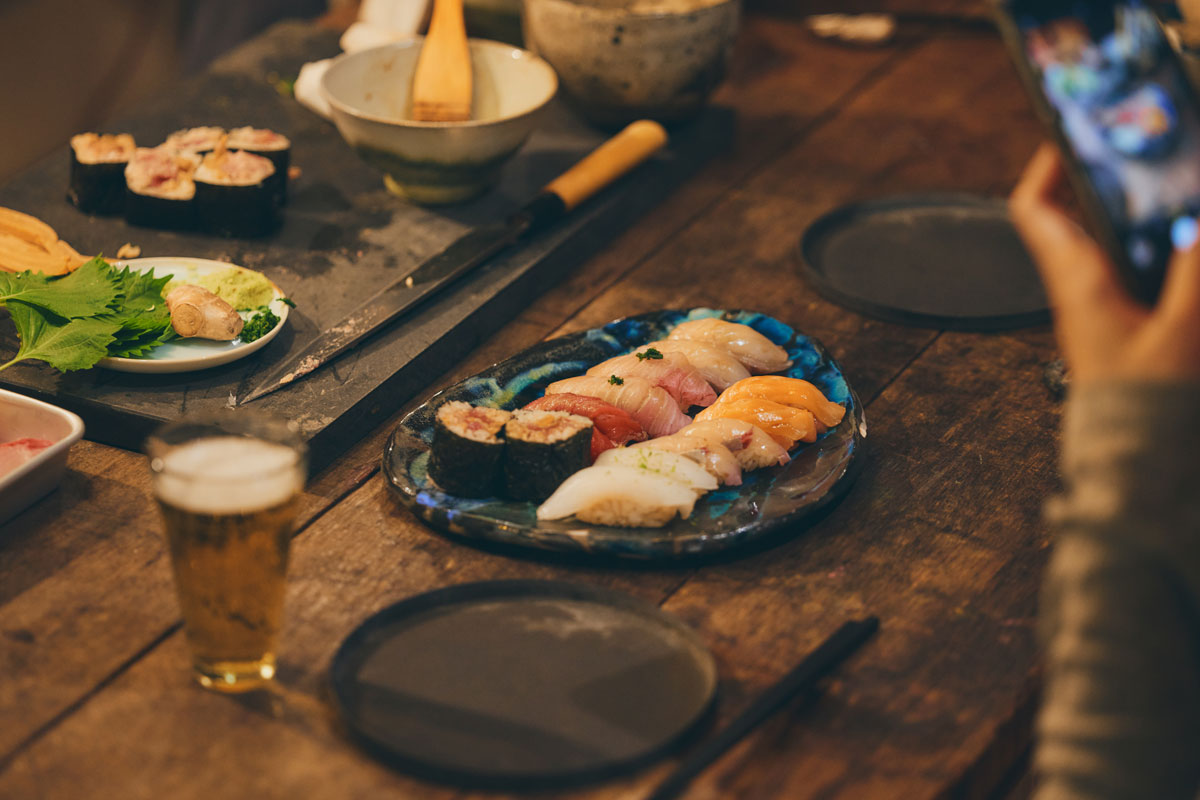
Maeda prepared the sushi for this shoot. The sushi includes flounder sushi marinated in kelp, which pairs perfectly with the red vinegar rice, and the irresistibly sticky squid sushi, which has a fragrant sudachi citrus flavor. 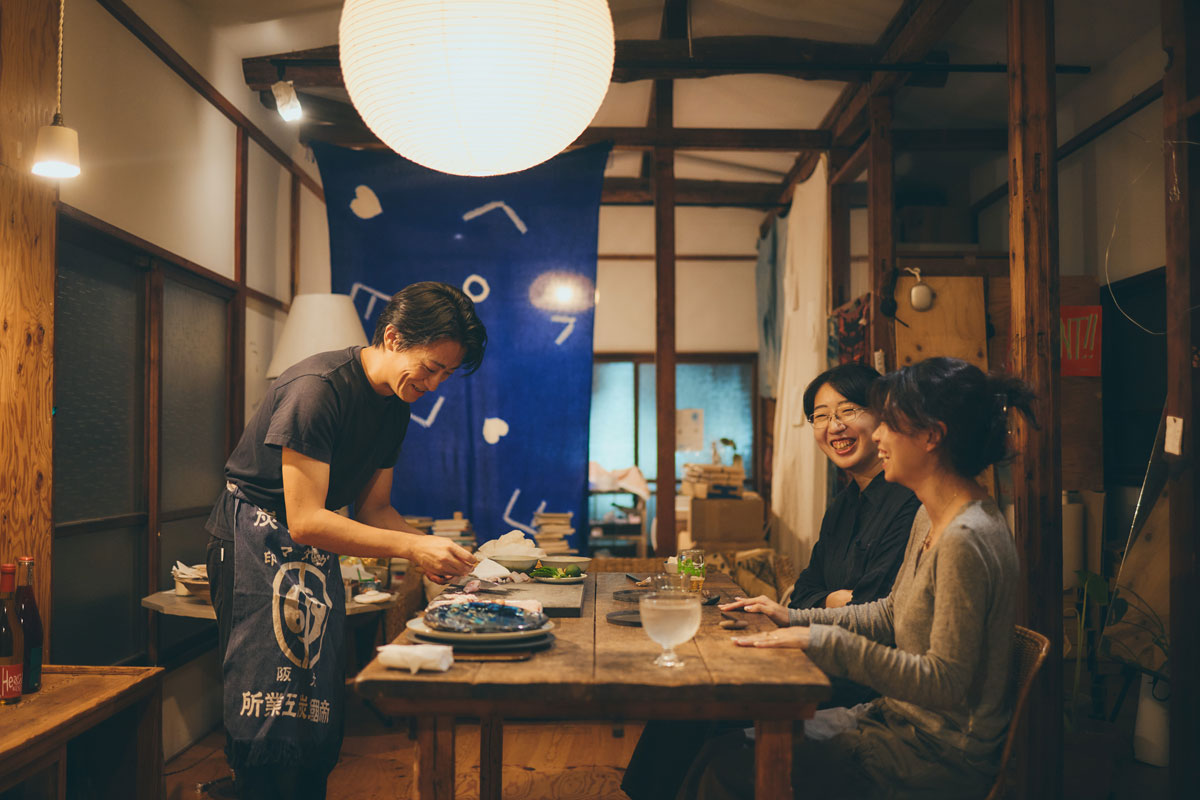
This time, my partner Kaori (front right) and their friend Yuho (back right) gathered at Sushiya Maeda to enjoy home-cooked sushi.
The classics of home-made sushi are hand-rolled sushi and chirashizushi. Nigiri sushi is a difficult task, as the way the sushi is pressed and the ingredients are cut is crucial. That's why the extra effort required is full of surprises and discoveries. Maeda's curiosity was piqued by the depth of this process.
"At first, I thought anything would taste good if it was seared (laughs). After I got hooked, I tried aged sushi with various ingredients, and I learned how to make delicious red vinegar rice at a sushi restaurant, and in that way I developed my own style of sushi."
Maeda says that at most, he would gather around six friends and serve sushi about once a month. He enjoys doing things freely, such as holding collaborative events with friends who are knowledgeable about alcohol, and sometimes using tamagoyaki (rolled omelets) made by his partner, Kaho, as sushi toppings.
"Maybe I simply wanted a place to get together. Up until then I had never hosted a home party myself, but sushi became one way to do so, and I started hosting them. I think that was one of the reasons I got hooked."
Word about Maeda spread, and he had an encounter that led him to become seriously involved in the world of sushi.
"About a year after I started making sushi, I was interviewed by a magazine, and after reading the article, I received a direct mail from an Edomae sushi restaurant in Sasazuka asking if I wanted to work for them."
This connection led Maeda to start working part-time at a sushi restaurant alongside his regular job. His experience there mixed with what he wanted to do, and he went into further exploration mode.
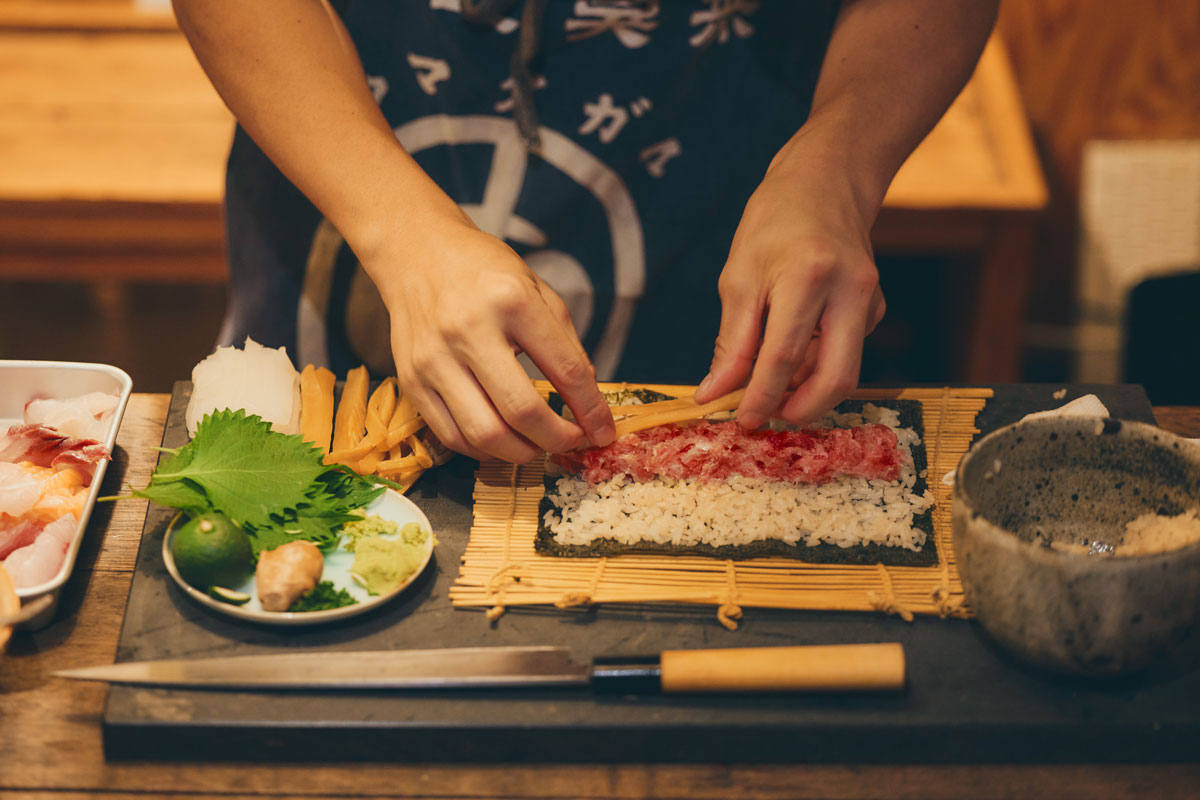
Sushiya Maeda's signature Toro Takumaki roll uses Robatazuke instead of Takuan pickled radish. "Coarser seaweed melts in the mouth more easily than denser seaweed, and it goes well with Toro Taku," says Maeda. 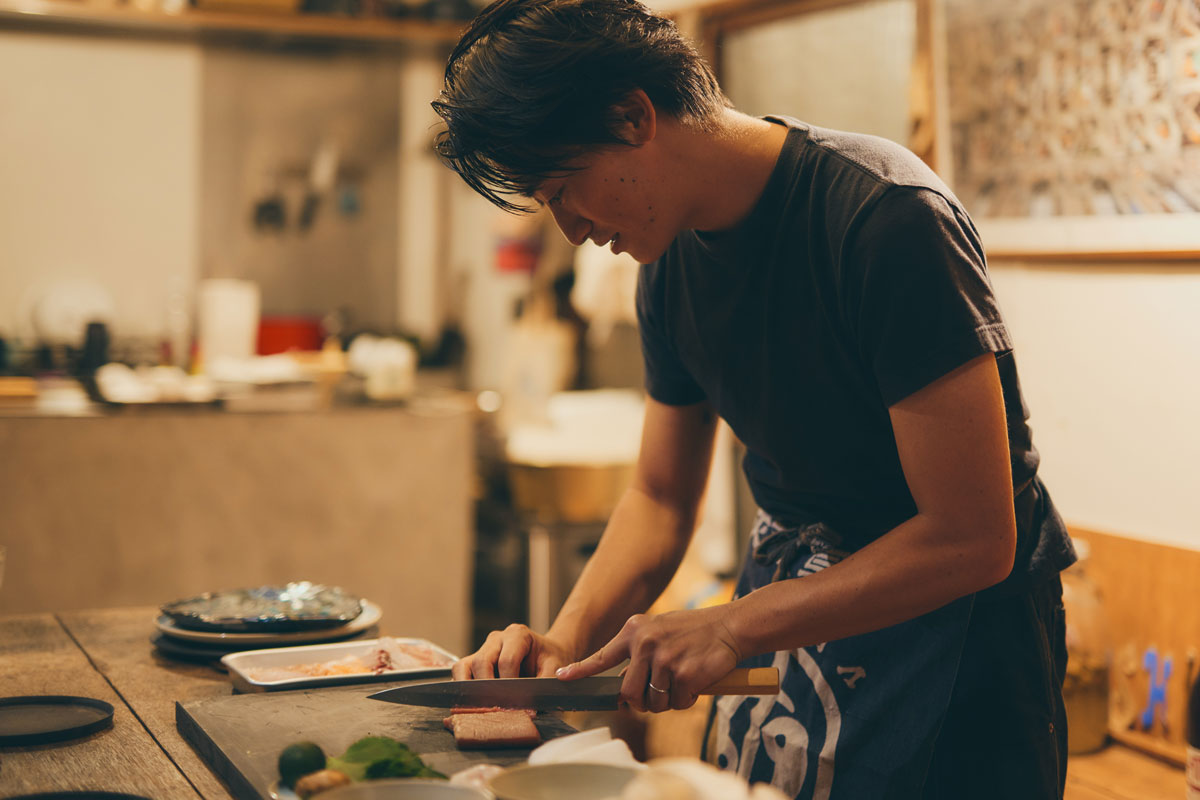
The sushi restaurant where he worked part-time was a delivery service, so he started making sushi at company offices and bars. "That's where I learned the techniques for making sushi anywhere, how to prepare sushi, and knowledge about fish." 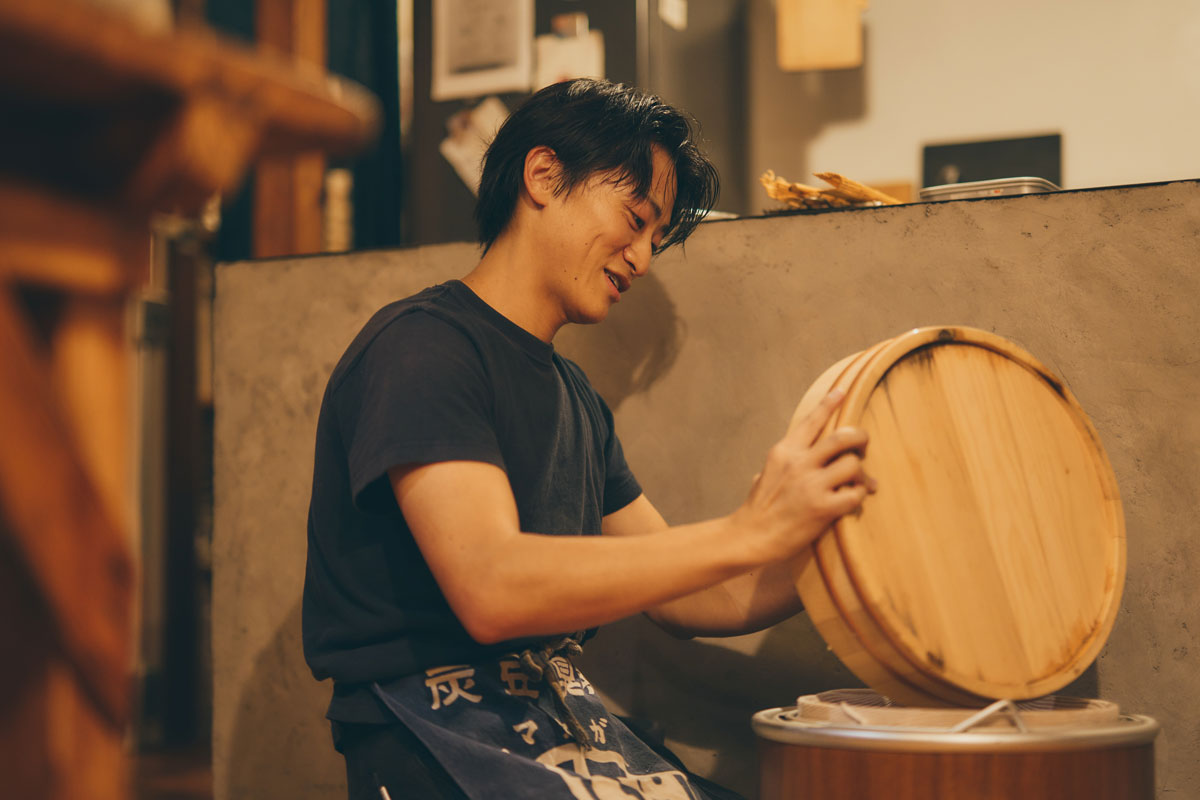
He collected the tools by asking around at sushi restaurants. The rice warmer (bottom right), which keeps the rice at the right temperature of about 50 degrees to maintain its original light and fluffy texture, was a hand-me-down from his part-time job. 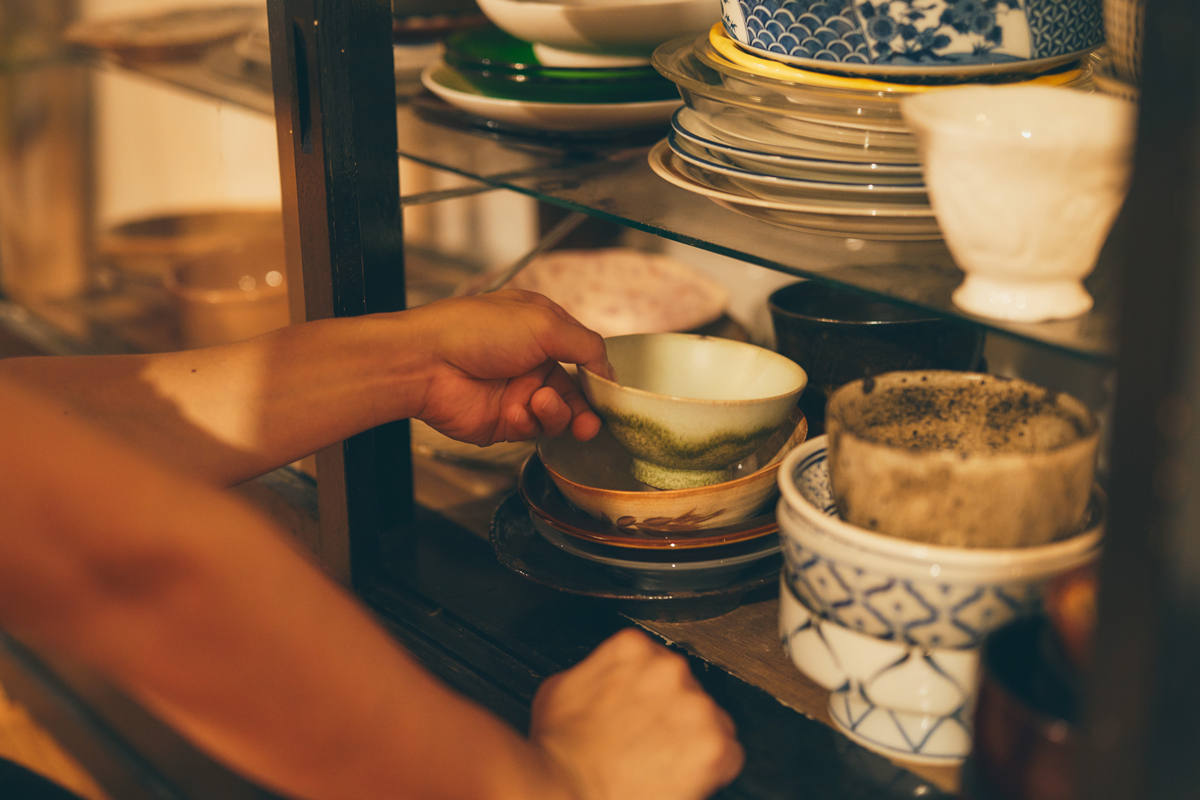
Being able to choose everything from the plates you serve your sushi on is something you can only do at home. "It's nice to have a plate that looks good when you serve the sushi on it. Before I started making sushi, I wasn't interested in tableware, but now when I'm walking down the street and I see a tableware store, I can't help but stop in (laughs)," he said, showing us the dishes displayed in his cupboard. 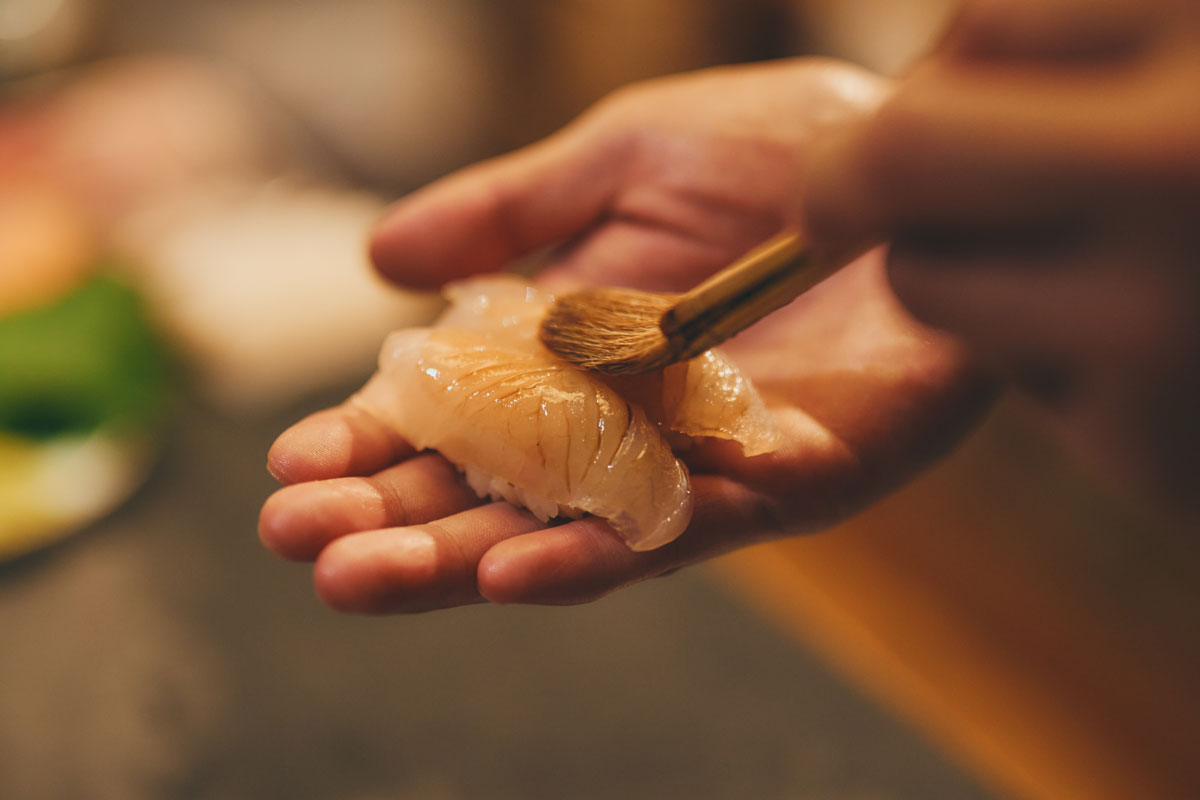
"Applying soy sauce with a brush is the first step to making sushi at home," says Maeda. Just one smear makes it look good and seems to get you in the mood. First, I'd like to buy some sushi from the supermarket and try applying it.
Homemade sushi starts with fun
So, where should you start if you want to actually start making sushi at home? "You don't need any skill to make sushi at home," says Maeda.
"First, try playing around with the sushi toppings you buy from the supermarket, like searing them or brushing soy sauce on them. You can also discover new things by trying different types of seaweed for your rolls. I once had a seaweed tasting party with friends, where I would find something that suited me from the 30 or so types of seaweed at Numatanori in Kappabashi. I think it was the fun of these experiences that got me so hooked on sushi."
The process of making sushi may already begin when you fantasize about what you would do, such as what ingredients to use in kombu, what to make into gunkan, what kind of seaweed to use, and what kind of plate would go well with it.
Although Maeda has delved into the world of sushi to the fullest, he says, "I don't really want to become a sushi chef."
"Rather than wanting to deliver delicious food, I feel like it's more of a selfish thing. I make sushi to pursue my own curiosity, but it also makes the other person happy, which makes me happy too. I think that's fine."
That's why the sushi Maeda serves is relaxed and free-spirited. He often chats with friends as they gather, thinking up sushi arrangements together, or even starts playing board games instead of sushi.
On this day, too, suggestions such as "I think I prefer squid nigiri with salt" were made, and the remaining ingredients were used to make a bold thick roll. The best part of making sushi at home is being able to experiment and improvise with the members who have gathered together depending on the mood of the day.
Maeda says he is happy that his interests are expanding through sushi. "It's fun, so why not give it a try?" he says with a laugh.
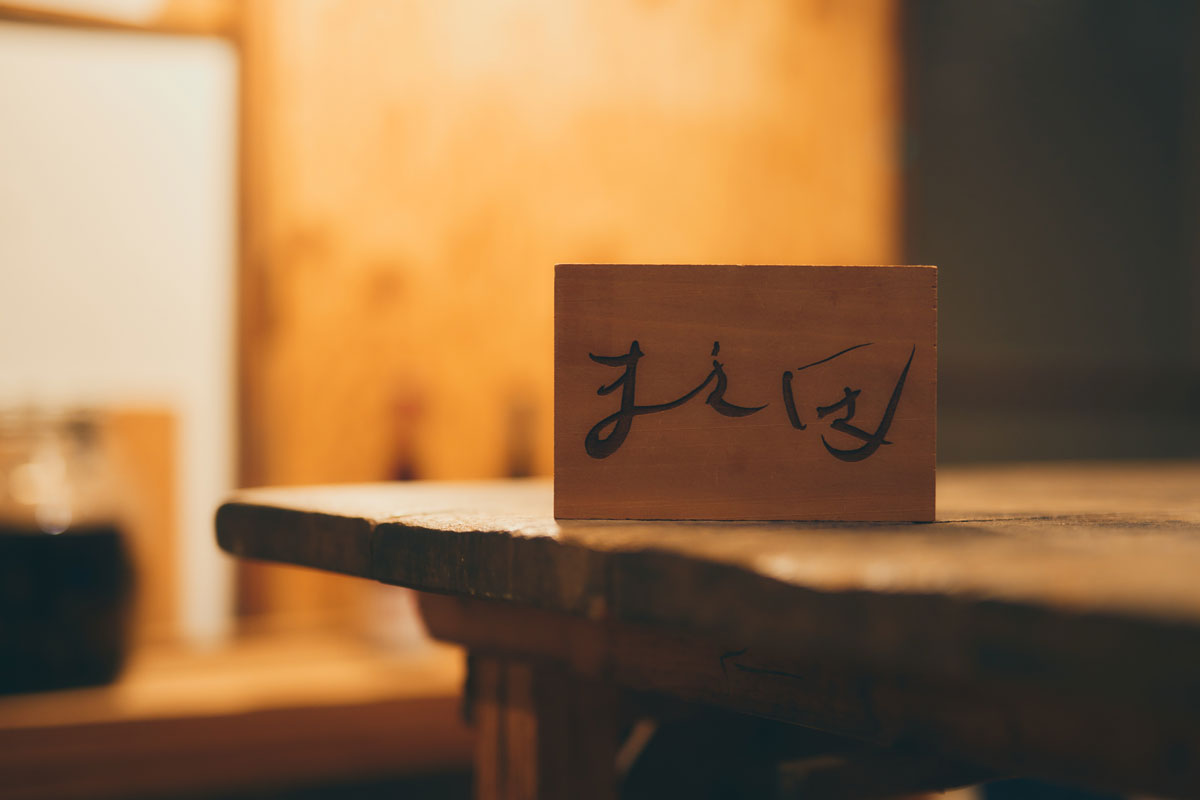
The "Sushi Shop Maeda" sign was carved with letters written by Maeda using a laser printer. If you're trying to make sushi at home, this is something you should definitely try. The sushi restaurant touches are sure to add to the excitement. 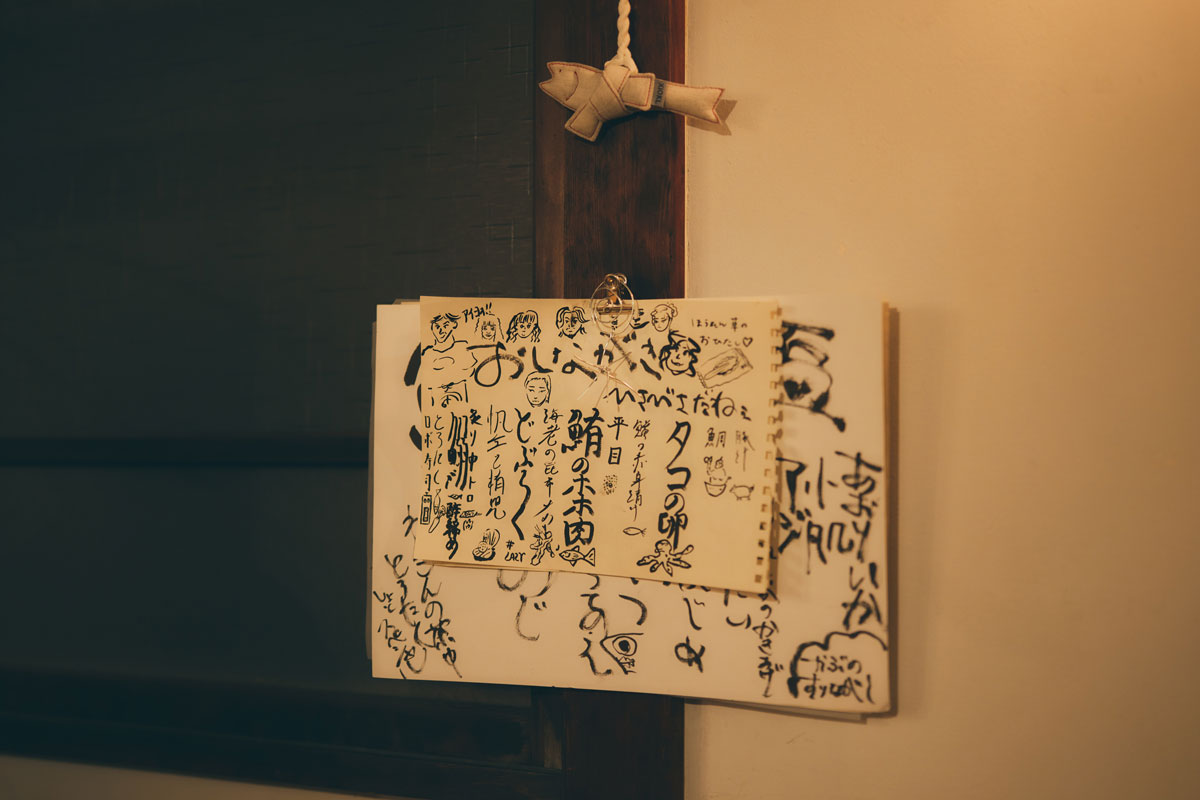
When he gets together with his close friends, Maeda prepares a menu. The members who are there that day write messages freely. "I like doing things together," says Maeda. He has even made T-shirts with the menu printed on them and given them as gifts to his friends.