


I write "as you get older," but recently I've noticed a lot of people using the phrase "getting older," and I think to myself, using katakana at the end of the sentence. And then I think, "What do you mean, "getting older," then, "idiot," that's a roundabout way of saying it, you idiot. Just write "getting older," you idiot. I think I should write insults in katakana too.
The fact that I think this way is probably proof that I'm getting older, my mind is deteriorating, and I can no longer keep up with the changes of the times.
So, going back to the topic at hand, the older I get, the more I feel about the way the Japanese lived in the past. By "way of life," I don't mean some philosophical concept, but rather a matter of daily living and living (I get the impression that the word "living" is preferred by people who use the phrase "getting older").
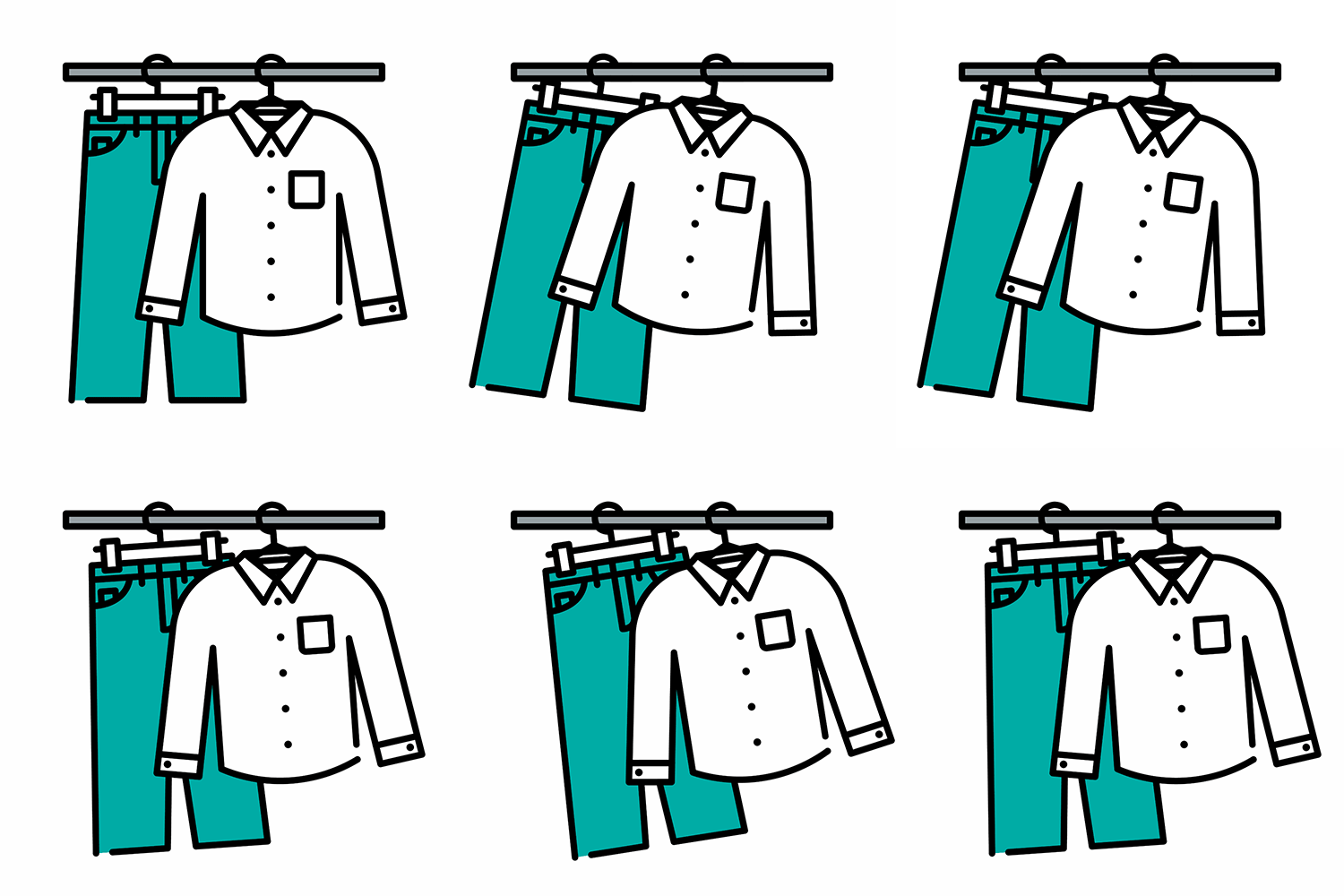
I recently thought about this when, for example, summer ended and autumn began to appear, I had to take my summer clothes like T-shirts and shorts to the laundry or wash them at home and change them into autumn/winter clothes like long-sleeved T-shirts and pants, but there were also days when it was as hot as summer, so I found myself pulling out and wearing the summer clothes I had washed and folded several times.
At that moment, I remembered that in the old days, there was something called "changing clothes." When I was a child, the clothes for that season were stored in a chest of drawers, and the rest of the clothes were put in tin or paper clothing cases with labels saying "winter clothes," "summer clothes," and "seasonal clothes" attached to them, and stored on the bottom shelf of the closet. The paper clothing cases had cloud-like patterns drawn on them. My father's suits and other clothes were hung in a separate, dedicated clothing chest.
In other words, people changed their clothes with the seasons. Changing clothes didn't just mean changing the clothes they normally wore, it also included washing them, folding them, and putting them away in a case. There may still be some households that do this, but compared to the past, people's range of activities has expanded, and as a result the types and number of clothes they own has increased. Also, personal aesthetic sense has expanded, and each person's preferences have become more respected. Nowadays, it's difficult for a housewife to manage all the clothes in the household in a centralized manner, and so I foolishly think that people no longer change clothes as quickly as in the past, saying, "Okay, from today I'm wearing my autumn clothes."
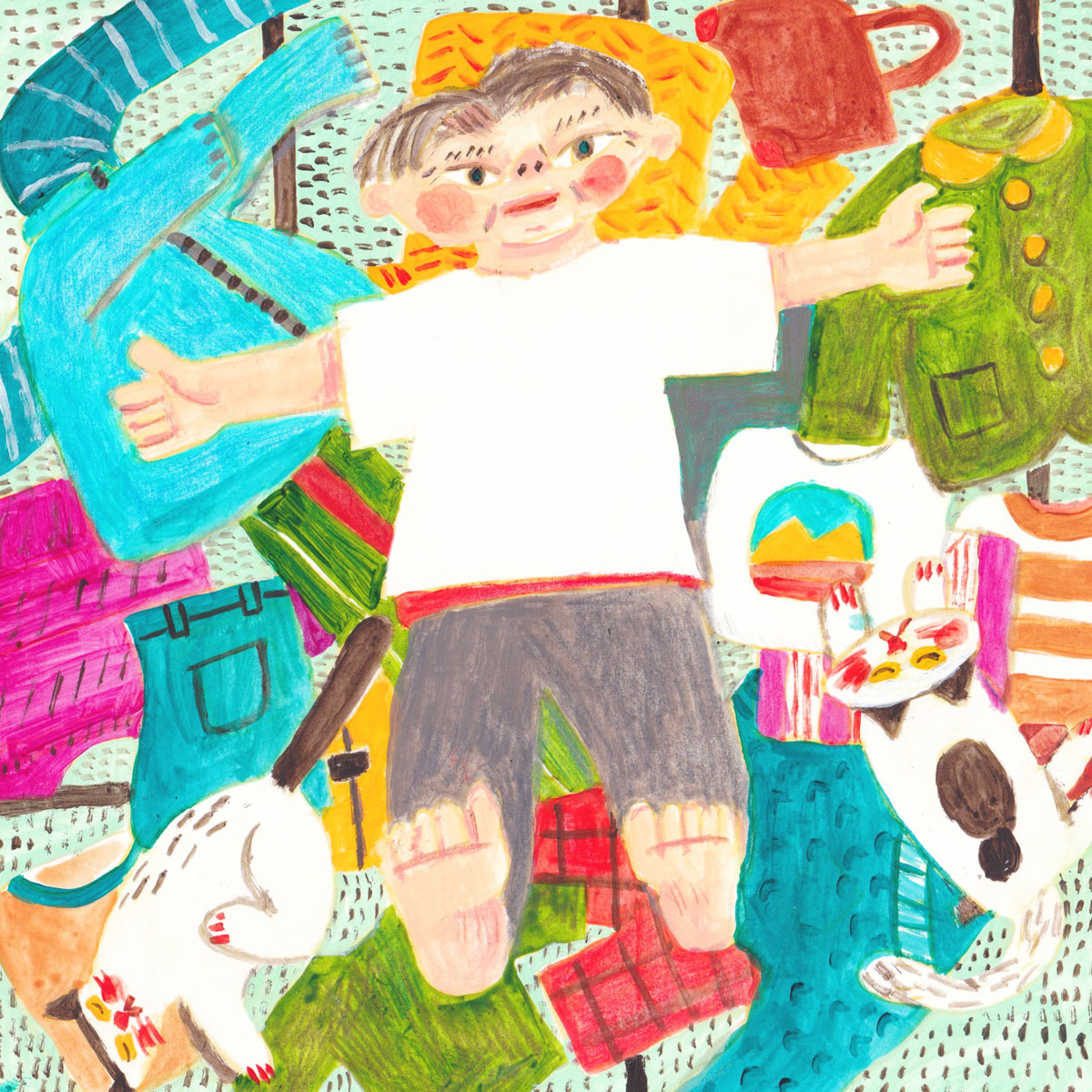
In fact, even though I don't have many places to go and I don't own any formal attire or bondage clothing, I rarely change my clothes in that sense.I just have clothes hanging around or folded and shoved away, and I take them out and put them on or take them off as needed.I have several coats that are decades old (or so I think) without ever washing them and putting them away at the end of the season.
I think the reason why this has come to be is because, as I mentioned above, individual consciousness and rights have expanded. In other words, it is possible to say that people in the past were diligent, while people today are lazy, but it is also likely that lazy people in the past would at least change their clothes, so it is not necessarily the case.
So why did people change their clothes in the past? I think it's because it was a ritual. What I mean is, everyone goes to visit a shrine on New Year's Day, right? They travel somewhere in the summer, right? They dress up for Halloween. For some reason, they eat chicken at Christmas, right? But why do they do that? What's so fun about walking in the cold, in the middle of a crowd, waiting your turn, and throwing coins at people? Is it fun to endure dozens of kilometers of traffic jams, arrive exhausted, wander around tourist spots in the scorching sun, and eat food that's not even that good for the price, or even tastes terrible? Is it fun to shout "Merry Christmas!" without understanding why it's merry, or even what merry means in the first place, and then eat floury fried chicken?
Probably nothing interesting or fun.
But why do we do it anyway? Because it is an event. There is no joy in an event. But there is no pain either. There is no sadness either. So what is there?
You participate in what everyone else in the world is doing, you are a part of society, and if something terrible were to happen, you would not be the only one to die, everyone would die together. You would not be the only one to die alone. Also, if there was something worth celebrating, you would be given a share of it. You would not be the only one left out.
This is a sense of security. It is a kind of survival instinct that remains in humans, who are said to be social animals.
In other words, there used to be events at every turning point in life.
At the same time, it was also rational, because the changes in temperature and humidity that occur when everyone changes their clothes, puts away their tatami mats, and airs out the air during the dog days all at once affect everyone equally, and by carrying out these rituals, there are also practical benefits, such as preventing damage from insects and mold in clothing and tatami mats and protecting the health of families.
One day, a wise man came out and said,
"You guys shouldn't be caught up in such traditional events. Be more individual. Follow the example of the West. Everyone in the West is an individual. They have their own will. So you guys should have your own will too. Don't blindly do something just because everyone else is doing it. If there's something you want to do that day, make that your priority. Go to the movies. Go on a date. Eat pizza on New Year's. It's okay to wear fur in the summer if you want. It's okay to set off fireworks in the middle of winter."
When the people heard this, they were amazed and said:
"That's great!"
Since then, people have come to shy away from everyday events as they are seen as a hassle, and they have gradually fallen out of use. Instead, or rather than replacing them, there has been an increase in empty, formal events advertised and touted by businessmen. However, because these are personal choices, they have become fragmented and degraded into personal events rather than "events." Even with regard to clothing, people have taken out and put away their clothes depending on the weather, and are left to suffer at the sight of mountains of clothes scattered around their homes.
Of course, I was in the same situation, with clothes from various seasons that smelled of natto scattered all over the place, and not knowing where anything was, I would just pull out whatever clothes I wanted from the pile, and end up sweating profusely or shivering from the cold when I was out and about.
During those days, I was thinking that it would be easier if I could just turn repairing the rain gutters and other things into an event. It's already late autumn, though.