









The genius painter father and daughter, Katsushika Hokusai and Oui.
Tatsushi Omori
When I researched Katsushika Oi, I found him to be a very cool person. The COVID-19 pandemic has caused divisions in many ways, but in order to prevent divisions from occurring again, I think we need to think of others before ourselves.
Although Oei had talent of his own, he chose to live a life supporting his father, Hokusai. I wanted people in this day and age to see someone like him, so I made "Hey, Oei."
Ami Matsubara
Hokusai, Utagawa Hiroshige, and Kitagawa Utamaro are all overwhelmingly famous for their prints, but almost no prints by Oei remain, with only a few original paintings remaining.
However, the painting is so impressive that it is still highly regarded today. I believe Oei had deep respect for his father as an artist, and wanted to honor him.
Omori
When you read "The Life of Katsushika Hokusai," you can see that they were truly innocent, completely unconcerned with money or public appearances, apart from painting. But they do seem like people who understood the important things.
Matsubara
Hokusai moved 93 times in his lifetime, and I think he was quite an eccentric person. But his desire to paint never faded until his death. I think it was because he felt frustrated that he couldn't paint to his satisfaction that he lived to the incredible age of 90, which was unbelievable at the time, and was able to pursue his career as an artist until the very end.
Omori
This time, we asked Matsubara to create the illustrations for the film and provide guidance on ukiyo-e, and he drew the scenes himself without any dubbing.
Matsubara
Masami Nagasawa, who plays Oi, Masatoshi Nagase, who plays Hokusai, and Kaito Takahashi, who plays Keisai Eisen (Zenjiro), all diligently practiced painting.
The director had a clear intention to capture the natural image of the father and daughter painting in their tenement house. The night scenes were shot with the light of a single candle, and the set was almost completely dark (laughs).
Omori
It was dark (laughs). I had talked with the art staff about showing it in the flickering light of a flame. The tenement houses generally only had windows facing one direction, and at the time, I would have painted towards that light.
I wanted to capture their lives as they were, without using any lights, and to make people feel that their lives are connected to the present day.
Matsubara
I was surprised at how quickly filming finished each day, as there were no cutbacks or re-shooting the same scene with different camera angles.
Omori
I don't want it to end up being artificial. Through the role of Oei, I want to capture what emerges from Nagasawa herself, so that people will think she really lived in the Edo period.
So as long as he's there as Oei, it doesn't matter what kind of acting he does. Nagasawa-san and Nagase-san are talented actors, so there's basically no NGs for them.
Matsubara
Nagase also seems to think that the first performance is the best, and he kept saying, "Director Omori is the best!"
Omori
(Laughs) If actors aren't prepared for the fact that they are being watched for who they are, they will become interchangeable actors. If they are there as their character without any pretense, I will approve and accept everything.
I also told Takahashi Kaito, "You don't have to pretend. Just be the way you are, a 24-year-old." The younger you are, the more conscious you are of how you want to be seen, and the more you want to guard yourself, but it was great that he was able to let go of that.
Matsubara
I saw the finished work twice and felt like I was peeking into the daily life of Hokusai and his daughter. The first time, I was curious about the scenes I was involved in and thought, "Huh? That picture's not there!" (laughs).
Omori
It doesn't show everything. Sorry! (laughs)
Matsubara
No, no. Usually, drawing is a solitary task, so I thought it would be fun to work together with others in a friendly atmosphere, creating something towards a common goal.
Omori
Film production is like a festival. The process of drawing a picture may be similar to the process of writing a script. But writing a script by myself is also quite fun. Because I can write freely from a blank slate (laughs).
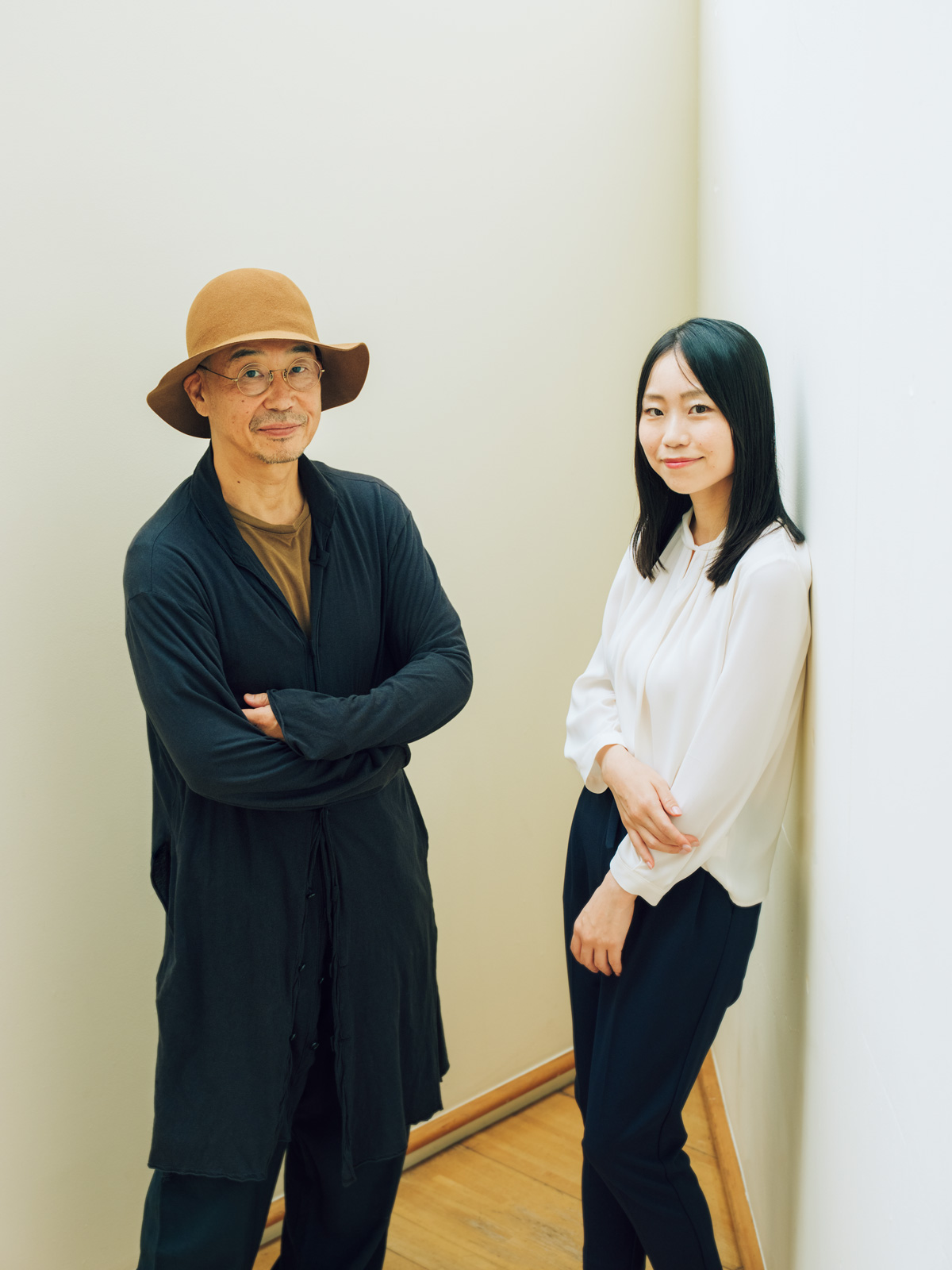
Director and screenwriter: Omori Tatsushi / Original story: "The Legend of Katsushika Hokusai" by Iijima Kyoshin (Iwanami Bunko), "Momoku" and "Nobi" from Sugiura Hinako Sugiura "Myrtle" (Chikuma Shobo) / Starring: Masami Nagasawa, Takahashi Kaito, Nagase Masatoshi and others / Hokusai's daughter, Oei (Oei), returns home from her husband's home and begins living with him in a rundown tenement house. Gradually, she awakens to the joy of drawing, which she had previously hidden away. Nationwide release: October 17th.