







"Love songs are happy, sad, painful, and painful."
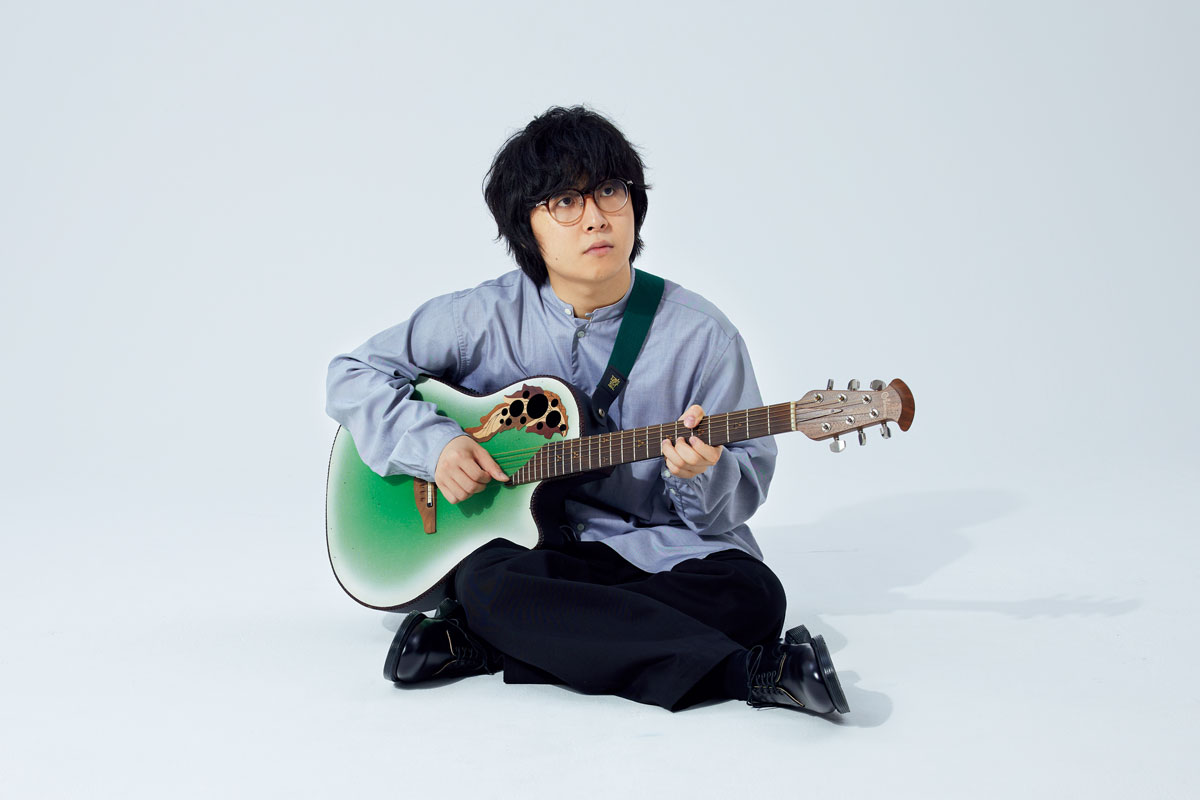
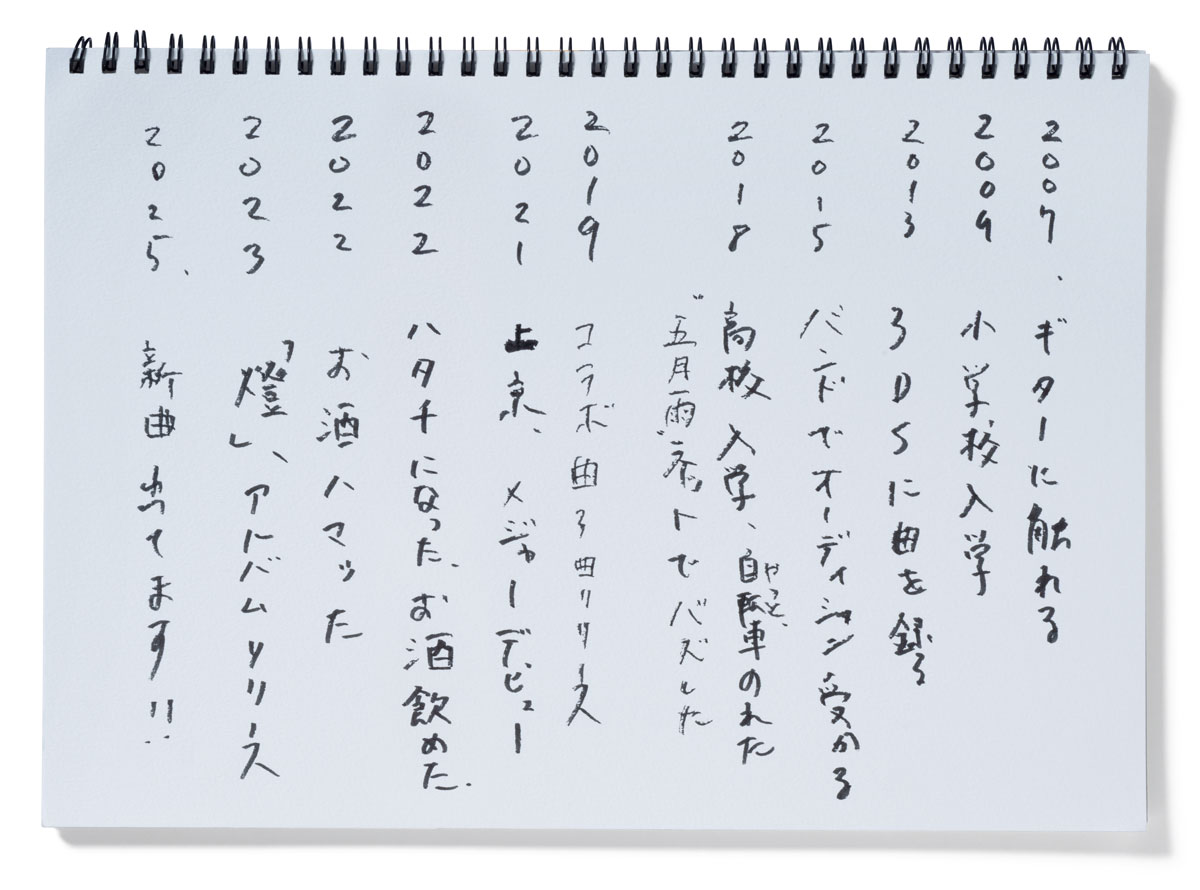
If I had to say the turning point for me, it would be the first time I picked up a guitar. I was watching a video of a visual kei band that my mother liked, and they looked like heroes to me. To me as a child, they became someone I admired, just like Kamen Rider. So, even though I was only four years old, I said, "I want to play the guitar." Then my grandmother suggested, "Why don't you try attending a nearby guitar class?" That was the first trigger.
Looking back, I was able to start making music thanks to the understanding and love of my mother and grandmother. To the me of that time, who didn't realize the preciousness of family love, I would like to dedicate the song "Isn't She Lovely?" by Stevie Wonder. It's a song of overwhelming love that wholeheartedly celebrates the birth of a beloved daughter. Even as a child, I'm sure I felt something in it.
The next turning point came when I was 13 years old. I auditioned for the Unidentified Festival with a band I'd formed at guitar school. At the time, I was only listening to edgy, frantic alternative rock, but I wish I'd been exposed to a wider variety of music sooner (laughs).
So, if I were to give a song to my 13-year-old self, it would be Bill Evans' "Emily." It's one of my top ten favorite songs of all time. The piano melody plays, and each note truly seems to spill out, making me feel the love in the music. I hope that 13-year-old Sakiyama will soon discover this beautiful sound.

The third turning point was when I was 15 years old and performed "Samidare" on AbemaTV's "Variety Kaitaku Variety Himura Ga Yuku." This was a huge turning point for me. I would like my younger self to listen to Akiko Yano's "Donna Toki Mo Donna Toki Mo Donna Toki Mo."
Always, always, always you're wonderful
Akiko Yano "Anytime, Anytime, Anytime"
I first heard this song when I was 18, and it's truly a love song. The opening line, "Just a little," is incredibly cute. It takes your breath away and makes your heart flutter. I thought it was incredible music.
At the time I was into hip hop, so I hadn't yet explored older Japanese music. But it was around the time I started to seek out music I'd never heard before, so even 15-year-old me would have been hooked on this song. The lyrics are simple but incredibly memorable: "No matter what, no matter what, no matter what, you're wonderful." I think they're amazing.

This is a song that could only be created by listening to the music I've listened to up until now.
The next turning point after that was when I moved to Tokyo from Hamamatsu at the age of 18. It was the first time I lived alone, just before my major debut. I also experienced heartbreak there (laughs). For myself, I would like to dedicate the song "Tokyo no Sora" by Maeno Kenta. The lyrics are very poetic.
I actually listened to this song when I was around 20 years old. It's quite rugged and folky, but the scenery of Tokyo that I imagined overlapped with this song. The place where I lived at the time still had old townscapes, and those scenery and memories came back to me.
And the fifth turning point, which is mostly in the present, was when I wrote "Tomo" as the ending theme for the TV anime "Jujutsu Kaisen" episode "Kaitama Tamaori" in 2023. That song then won a special award at the Japan Record Awards. I felt a great sense of accomplishment with this song, and I think it was precisely because I had been exposed to the songs I've mentioned here that I was able to write the melody.
I was simply happy that it was appreciated, but at the same time, there was a part of me that was looking for a more primitive form of "music" that was different from such evaluation criteria. And it was in this context that I came across Takagi Masakatsu's song "Shirai-ki." It is a song that embodies the essence of a primordial song, and it is a song that gives off a mysterious, great "love." It's like a lullaby, and I was shocked to think that this is music in itself.
Although some of the five songs I've listed today cannot be categorically called "love songs," I feel a broad sense of love in them. Love songs can be happy, sad, painful, and difficult to describe in a single word. However, I believe that sounds and songs vibrate in the air, and that the vibrations they convey to the heart are what make them love songs.