






Enjoy both work and play to the fullest. The initial impulse behind the launch of "BRUTUS" was to use the keyword "pleasure."

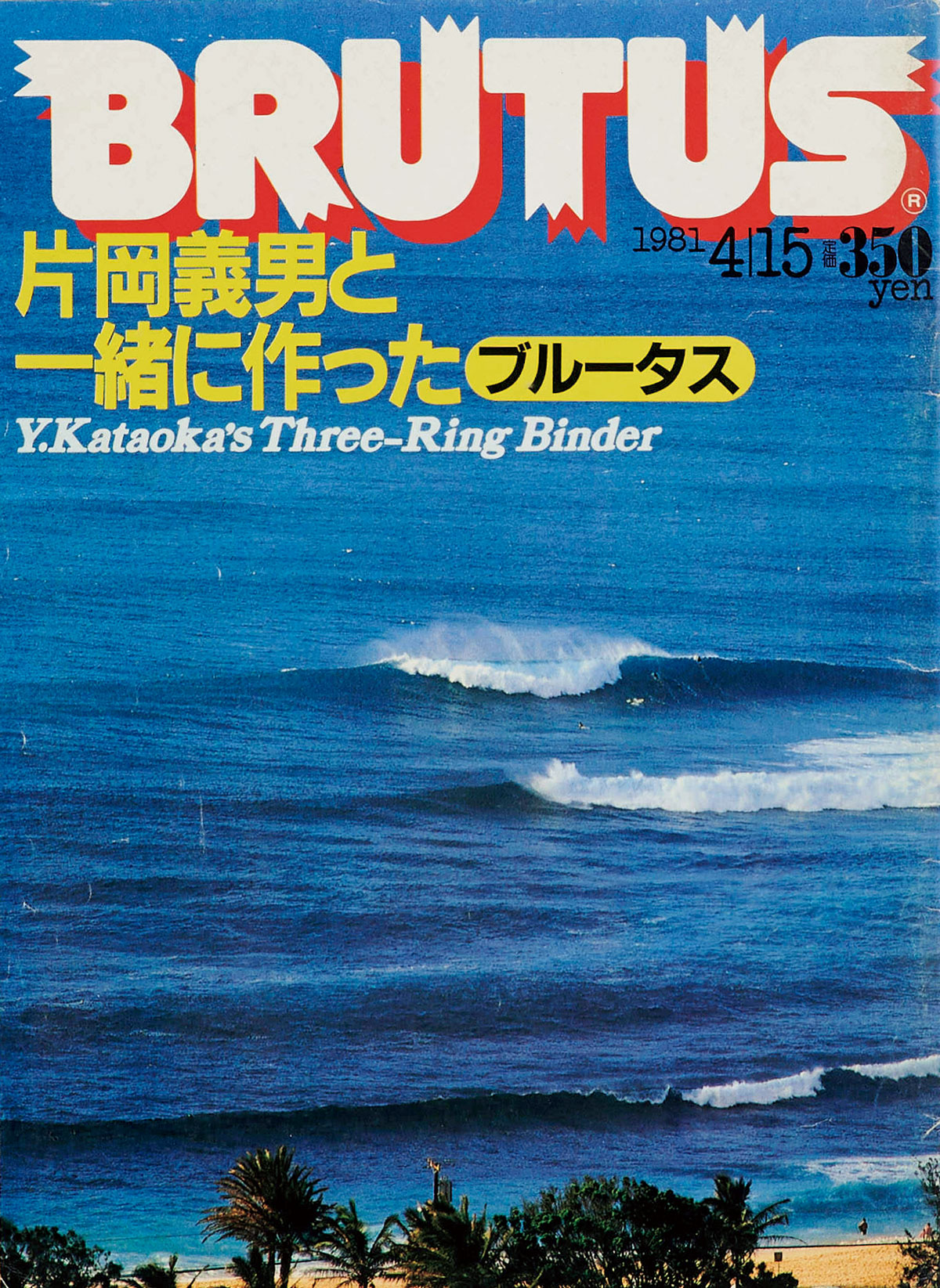
The cover page of the "We did it!" special feature in the first issue in 1980. The photo was taken on a beach in LA, where the magazine was being scouted. BRUTUS declared itself to be a magazine for men who wanted to live their daily lives in a rich and pleasurable way.

edit & text: Kowloon Joe

A child's character is formed by the age of three. Is it an exaggeration to say that the first three issues of BRUTUS contain everything that came afterwards? But I can say this: if we honestly packed it with interesting and passionate things, we would have created a magazine that no one had ever seen before.

Of course, there was a reason behind this. Four years ago, Popeye, which was first published in 1976, was a successful magazine aimed at young people. However, people don't stay young forever. It was about time there was a magazine for people who had outgrown Popeye.

To expand my imagination, I went abroad without a plan. It was a good time. I visited Paris, London, New York, and Los Angeles. I met a lot of people who were enthusiastic about both work and play.

The initial concept was "pleasure." What is pleasure? I wanted to dig as deep as possible into things that are fun. From the first issue, "We did it!" (July 1980 issue), to the third issue, the column "ET TU BRUTE?" asked various people to think about "pleasure." First up were the men: Tokiwa Shinpei, Kuze Mitsuhiko, Kokontei Shincho, Kato Kazuhiko... Next were the women: Kayoko Kishimoto, Oshima Yumiko, Miro Horikiri, Hanayagi Genshu... This column, borrowed from the famous line, "Et tu Brute?", became a staple at the beginning of each issue.

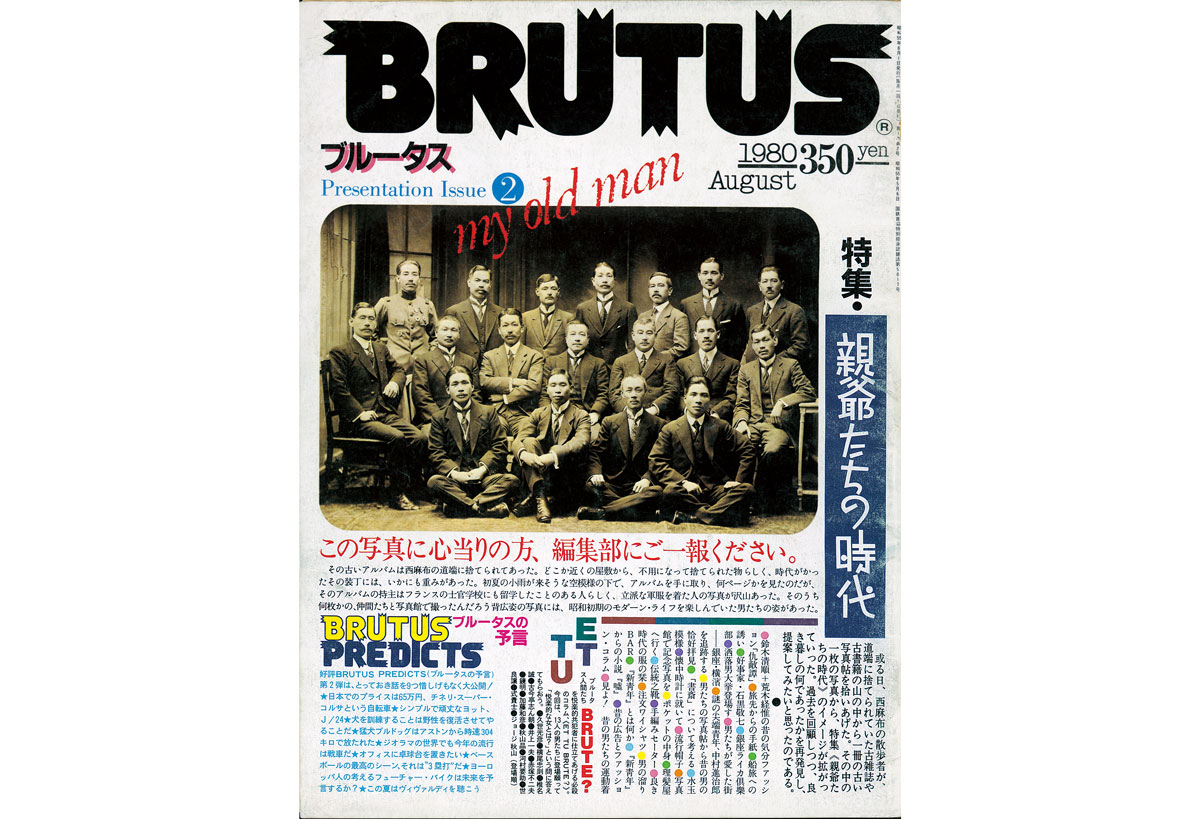
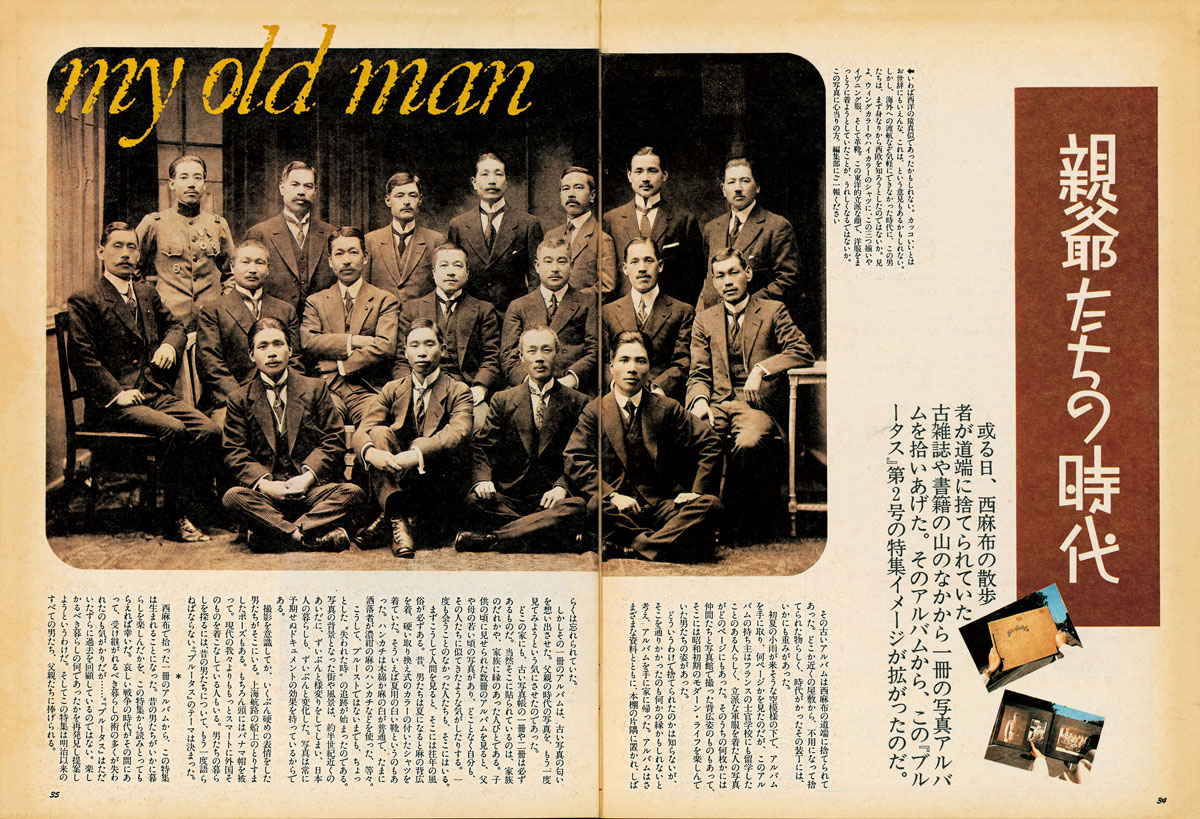
BRUTUS launched as a quality column magazine, but in its second issue, it underwent a further transformation. It all began with an old album discarded on the streets of Nishi-Azabu. The photographs contained within showed men enjoying modern life in the early Showa period. This was pleasure! The idea for the special feature "The Era of Old Men" (August 1980 issue) came to me not as a reaction or aspiration, but as a friend who transcends time and space.

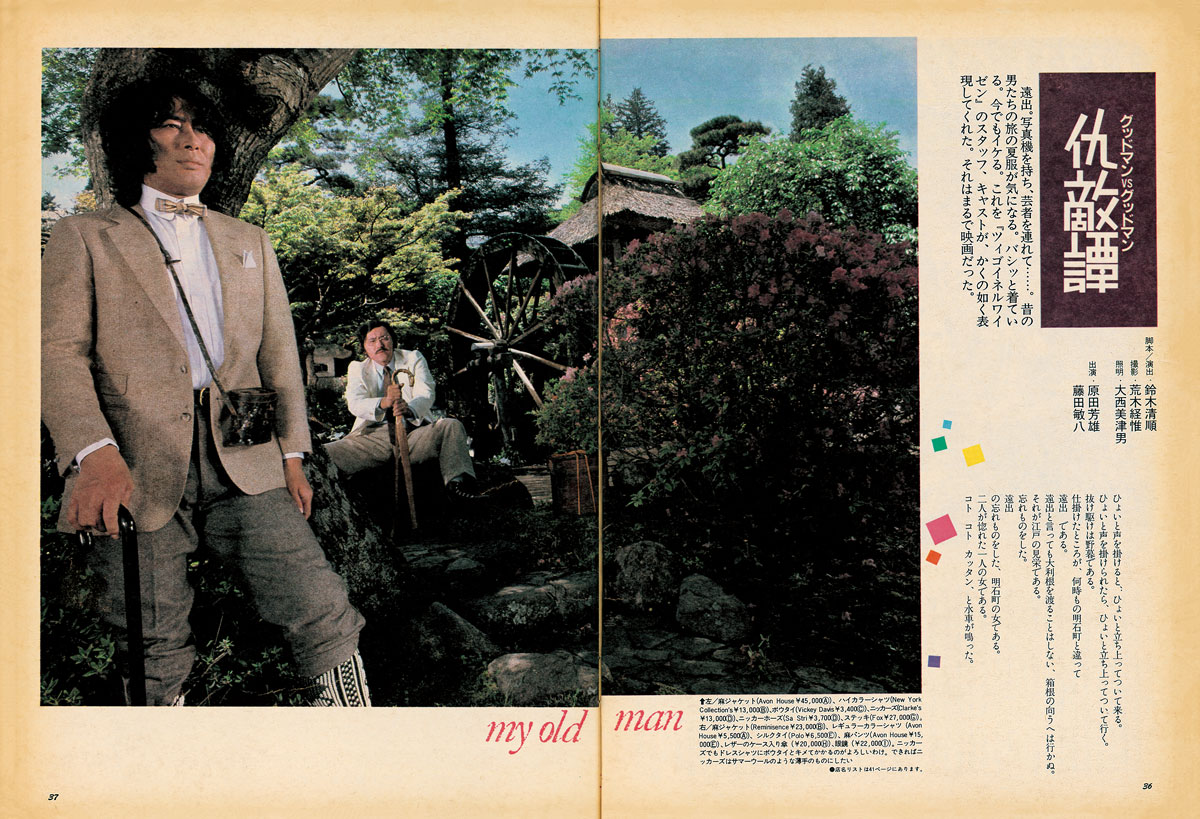
Film director Seijun Suzuki, who also appeared in the inaugural issue, acted as a bridge between us. Based on the worldview of the film "Zigeunerweisen," the gravure, shot by Nobuyoshi Araki at the Fujiya Hotel, features Harada Yoshio and Fujita Toshiya, with lighting technician Mitsuo Onishi, who also appeared in the film. Cruises, Panama hats, traditional shoes, custom-made shirts - all are stylish and desirable.

One of the most memorable features in the second issue is a special feature focusing on Shin Seinen, a modernist magazine that existed from the Taisho to Showa eras. Not content with studying back issues, the author even reprinted a novel (by Watanabe Onsaku) that had appeared in Shin Seinen.

It makes sense, then, that in the same issue, we visited the study of Tatsuhiko Shibusawa. But for some reason, I was more drawn to the space of Shibusawa's study itself, which even his family members would not easily approach, than to the rows of Western books lining the shelves. The approach that would become known as BRUTUS-esque, including the later popular feature "Living Space Studies," was already beginning to take shape at this point.

And in issue 3, we head to the Mediterranean. Paradise photographer Kazuyoshi Miyoshi captures beaches, wine, and local cuisine in dazzling light. This hedonistic trip, different from the futuristic vision glimpsed through art and the tourist guides, can be said to be the origin of BRUTUS' style of overseas reporting.

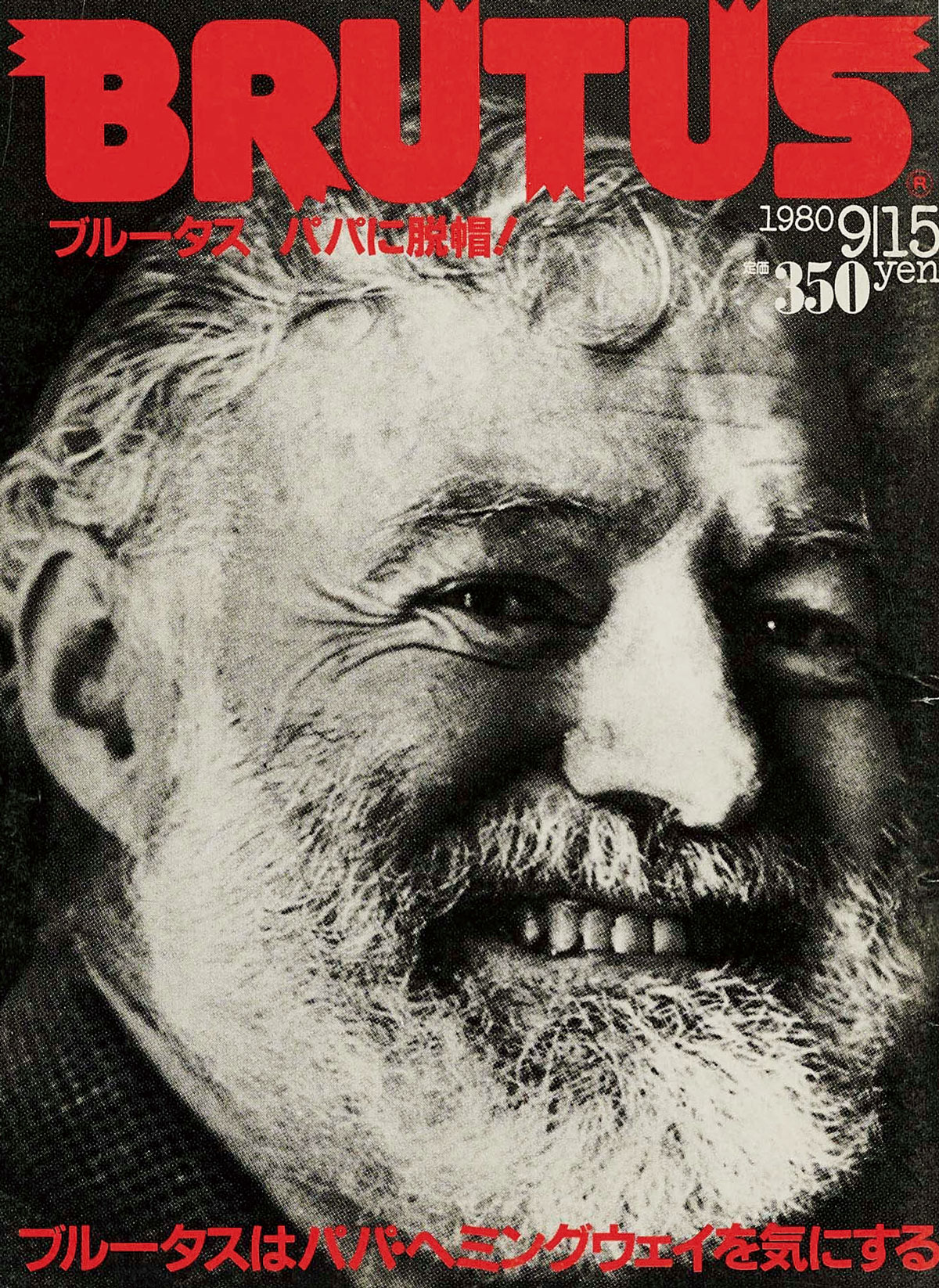
Hmm. It seems like everything is covered up to this point. So what about issue 4? If you take a look, you'll find a special feature called "Brutus Cares About Papa Hemingway" (September 15, 1980 issue) that condenses the essence of the first three issues, including columns, authorial space, and overseas coverage.

Ah, so that's how BRUTUS began.


Gather interesting people and introduce people from all over the world, past and present, who live pleasure-driven lives.

Interview: Yoshihisa Kiname x Jiro Ishikawa Interview and text: Masayuki Kawakatsu

Kiname

What I wanted to do with "Brutus" was to imagine a stand bar in New York where young office workers gathered.

Ishikawa

I took her to P.J. Clark's on Third Avenue.

Kiname

It's packed every night. It's a strange bar where customers relay drinks and change to each other. Manhattan is small and there's no parking.

Ishikawa

After work, we'd meet there, have a few drinks, and then carpool back to the suburbs.

Kiname

I think there aren't many businessmen in Japan who enjoy life in this way yet.

Ishikawa

That's why we stopped by this bar in the first place. Kina and I traveled to four cities - Paris, London, New York, and Los Angeles - to solidify the image of "Brutus." Accompanying us on the trip were Hibiki Tsuzuki, a now-very successful freelance editor, and others.

The trip was a great success, and I got to meet lots of people in each city who have great jobs and live cool lives. I didn't just create media materials, I actually interviewed them. In Paris, not only did I get the wonderful logo I had asked Seiichi Horiuchi to create, but I also persuaded him to become my art director when he returned to Japan (laughs).

The photo album he found cost 2 million yen. What is the truth behind the Brutus legend?

──The concept of the early versions of "Brutus" was "pleasure." What was the inspiration behind this?

Ishikawa

It all started when I was drinking with Horiuchi and saw a girl in the bar and said, "She looks so 'pleasurable'."

──That's a story typical of the talented man who created "Blood and Roses" with Shibusawa Tatsuhiko.

Ishikawa

When we launched the magazine, Kina asked me to find a new keyword. I suggested that "pleasure" be used, as it's neither pleasure nor enjoyment, and that "pleasure" is a word with a lot of nuance, and Kina thought that was a good idea. So, at the start of the magazine, we had a column at the front called "ET TU BRUTE?", in which we asked 12 men to write on the theme "What does a pleasure woman mean to me?". For the first three issues, we had 12 men each write. We wanted to establish the word "pleasure."

──Kokontei Shincho, Kuze Mitsuhiko, Kato Kazuhiko... it's an amazing lineup! By the way, while the first issue had the spirit of being an adult version of "Pobai," the second issue, "The Age of the Fathers," was a big hit. Personally, it was around the time that I saw Suzuki Seijun's "Zigeunerweisen" and rediscovered the coolness of modern men from the Taisho to prewar era.

Kiname

The response came in all at once. I even got a call from the art director at the time, Eiko Ishioka, directly praising me (laughs).

──By the way, is the legend that it all started with an album you picked up by chance in Nishi-Azabu true?

Ishikawa

It's all true. I was struggling with the planning for the second issue, and staff writer Matsuyama Takeshi said, "I found this on the ground on bulky trash day." When he showed it to me, I was impressed by how Japanese men in the past were cooler than men today.

Kiname

We spread them all out on a big table and looked at them together.

Ishikawa

It started out as just a random idea of mine, but I was able to make it happen thanks to the staff who had the ability to elevate it into an interesting feature, and Kina and the company's management creating an environment in which that was possible. Sure, we spent money, but it wasn't like the staff was being extravagant. It was the result of pouring our efforts into creating a completely new magazine.

SHARE ON

FEATURED MOVIES
Featured Videos

BRUTUS
OFFICIAL SNS
Brutus Official SNS

FEATURED MOVIES
Featured Videos