









Movies are like creating a "fake world" based on the real world
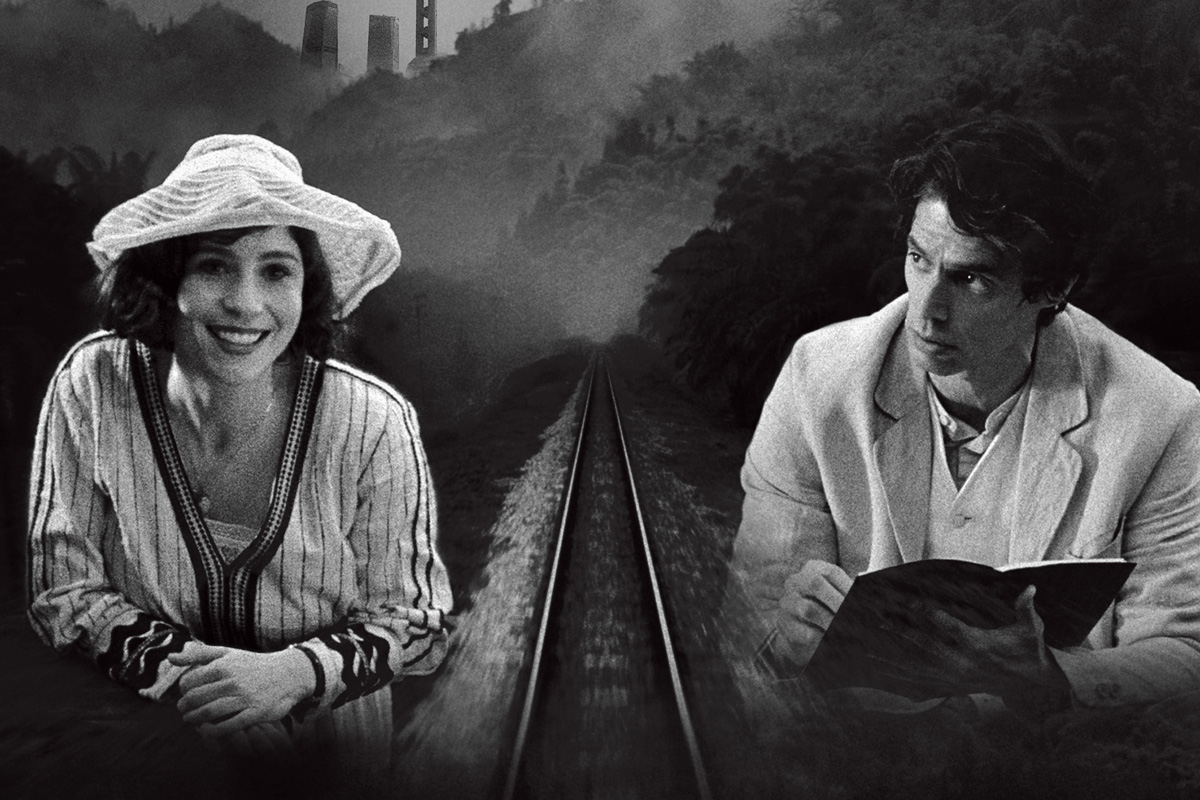
The Grand Tour, the latest film by Miguel Gomez, which won the Best Director award at last year's Cannes Film Festival, will be released this fall. The "Grand Tour" in this case is in the narrow sense, referring to the long journeys from Southeast to East Asia that were popular among Westerners in the early 20th century.
The film begins in 1918, when Edward, a British civil servant, travels to Rangoon, Burma, to meet and marry his fiancée, Molly, whom he left behind in the homeland.
However, for some reason, Edward jumps on a ship from Rangoon to Singapore just before Molly arrives, and the two begin their turbulent journey.
The journey is told in two parts, the first from Edward's perspective and the second from Molly's, and the film mixes a documentary part that captures the scenery from an actual trip to modern-day Asia with a fictional part filmed in a studio.
Gomez has previously stuck to the two-part format for films such as "Heat Wave," which was released in Japan, so we asked him why.
"When I was making it, I didn't intentionally set out to make it a two-part film, for example. However, I thought that for the viewer, having the context change midway through would make the film-watching experience more interesting."
The film is an expanded version of a short episode from Somerset Maugham's travelogue, The Gentleman in the Parlour.
"What I wanted to do was to make a film that felt like a travelogue. I wanted to make a film that actually went on a journey to discover the world, and documented that journey, but at the same time was also a travelogue. So there are three grand tours in this film. One is the grand tour of Edward, one is the grand tour of Molly, and one is the grand tour of us, the crew."

The first thing filmed was the "Staff Grand Tour."
"In line with the episodes in the original work, we as the staff first traveled the same route as the main characters, and wrote the script based on the footage we shot there. For example, we decided to have this scene come after the series of footage we shot in Bangkok. Of course, we had ideas for the structure from the very beginning, so it's kind of like the chicken and the egg, and it's hard to say which came first."
The fictional parts were then filmed in studio according to the completed script.
"In the past, like in Hollywood movies, it was common to build highly stylized and fake sets and film within them, and that's exactly what I wanted to do. I think movies are like creating a false world based on the real world. In short, 'The Grand Tour' shows you the fake world that movies have created."
When you think about it, both of the main characters in this film are supposed to be British, but not only are they played by Portuguese actors, but their lines are even written in Portuguese.
"The producers said, 'If the main character is British, why not use a famous British or American actor?' But, like Molly, I'm a bit stubborn, so I decided that the British character should be played by a Portuguese actor. At the same time, because the story is about a British man traveling around Asia, many local languages appear, but English is the only language that I haven't used.
Some of the scenes don't even have subtitles, so you don't know what they're saying. But it allows you to travel to these foreign countries and relive the experience of not knowing what's going on around you or what people are saying. I hope people will not just watch the journey through this film, but experience it for themselves."
This is Miguel Gomez's sixth feature film. The protagonist Edward is played by Gonzalo Waddington, and Molly is played by Cristina Alfaiate. One of the cinematographers is Sayompoo Mookdiprom, known for his work with Apichatpong Weerasethakul and Luca Guadagnino. Released nationwide on October 10th.