









"During the coronavirus pandemic, all the fishing spots were crowded, but that's not the case now. Fishing is linked to the economy. If pocket money gets smaller, money for hobbies is the first to be cut," says Imashiro Takashi, looking at fishing in the Reiwa era with a critical eye.
As fishing is a sport that can be enjoyed by oneself, the boom in fishing that took off during the COVID-19 pandemic seems to be calming down to a certain extent. "I used to do a lot of different types of fishing, but now I only do river fishing. I ride my bike into nearby mountain streams and use flies to catch amago trout, yamame trout, and iwana char. I've been fly fishing for 20 years... but I'm not getting any better."
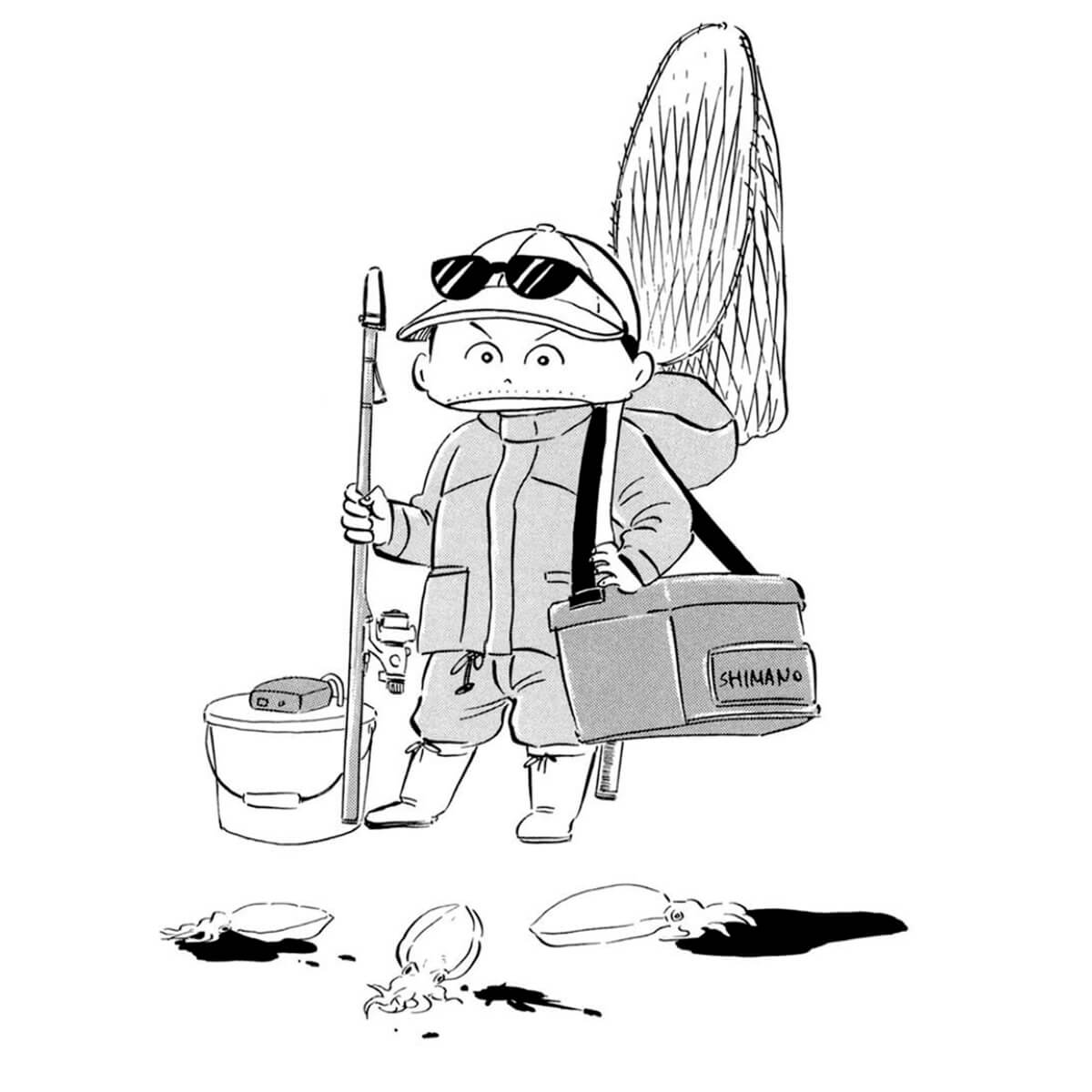
One of Imashiro's representative works, "Tsuren Boy," is a classic fishing manga that depicts the manga artist Himashiro Takeshi's passion for sweetfish fishing.
Even at work, he can't stop thinking about Ayu, and whenever he has free time, he drives his motorbike hundreds of kilometers to the fishing spots. Himashiro has dedicated his soul to fishing, and while Ayu fishing remains his main focus, he has also expanded his horizons to include squid fishing, tenkara fishing, and fly fishing.
"The things depicted in the manga are not necessarily true," says Imashiro, but "Tsuren Boy" gives a sense of his passion for fishing over the four years he spent fishing at the age of 38, spending half the month fishing and the other half working.
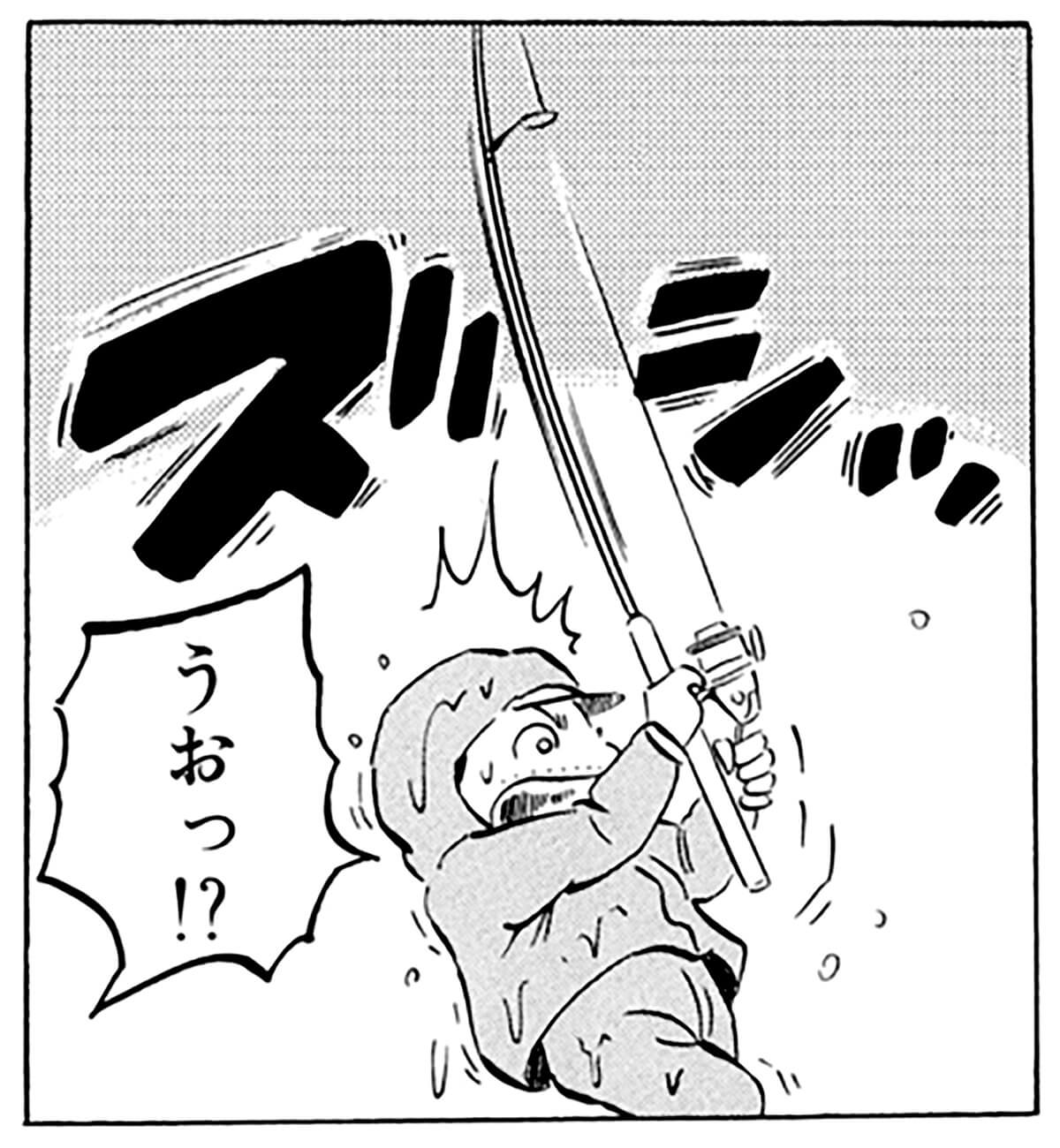
1998-2002 / Imashiro Takashi / KADOKAWA / When asked "Which drawing do you think was the best?" in this manga, he chose the squid fishing scene. The weight of the catch is conveyed through the bend of the rod and the tension of the line. Incidentally, what was caught was not the squid he was after, but an octopus.
©Takashi Imashiro/KADOKAWA
"Before I started drawing that work, I was busy and always working. Manga artists spend all their time indoors, so I got tired of being indoors. As a reaction, I had a strong desire to get outside. So, around the time I graduated from junior high school, I started fishing again, something I had given up on. I had the stamina and passion, and I had quite a bit of money. So I bought some equipment and went on expeditions."
Imashiro's works, such as "Tsuren Boy" and his new work "Tsuriman," feature psychological descriptions and dialogue that only a fisherman could portray. Imashiro's works are not realistic, but the fishing scenes are very real. The way the line stretches, the weight of the fish caught on the rod, the lethargy when you can't catch anything, the joy of catching one... These detailed and deep descriptions are probably why he is so popular with anglers.
Imashiro's first encounter with fishing was at the age of six. There was a river in front of his house in his hometown of Kochi Prefecture, so he cut bamboo to make his own fishing rod and started fishing by imitating others. When asked what attracts him to fishing, Imashiro declared, "The beauty of the fish." "When I caught my first amago trout, I thought what a beautiful fish it was."
As he grew older, his field of fishing expanded to mountain streams and the sea, and that's when he came across Yaguchi Takao's "Tsuri Kichi Sanpei." He was in junior high school. At the time, it was rare for a fishing manga to appear in a weekly boys' magazine, and he became fascinated. "I was more excited by the depictions of river fishing than the sea fishing scenes. 'Tsuribaka-tachi,' which was published before 'Tsuri Kichi Sanpei,' is almost entirely about rivers, and I think it captures the core of Yaguchi's fishing manga. I felt the fishing scenes were well-done, and it's also good that there are many scenes other than fishing. I also think that Yaguchi's experience is quite in it."
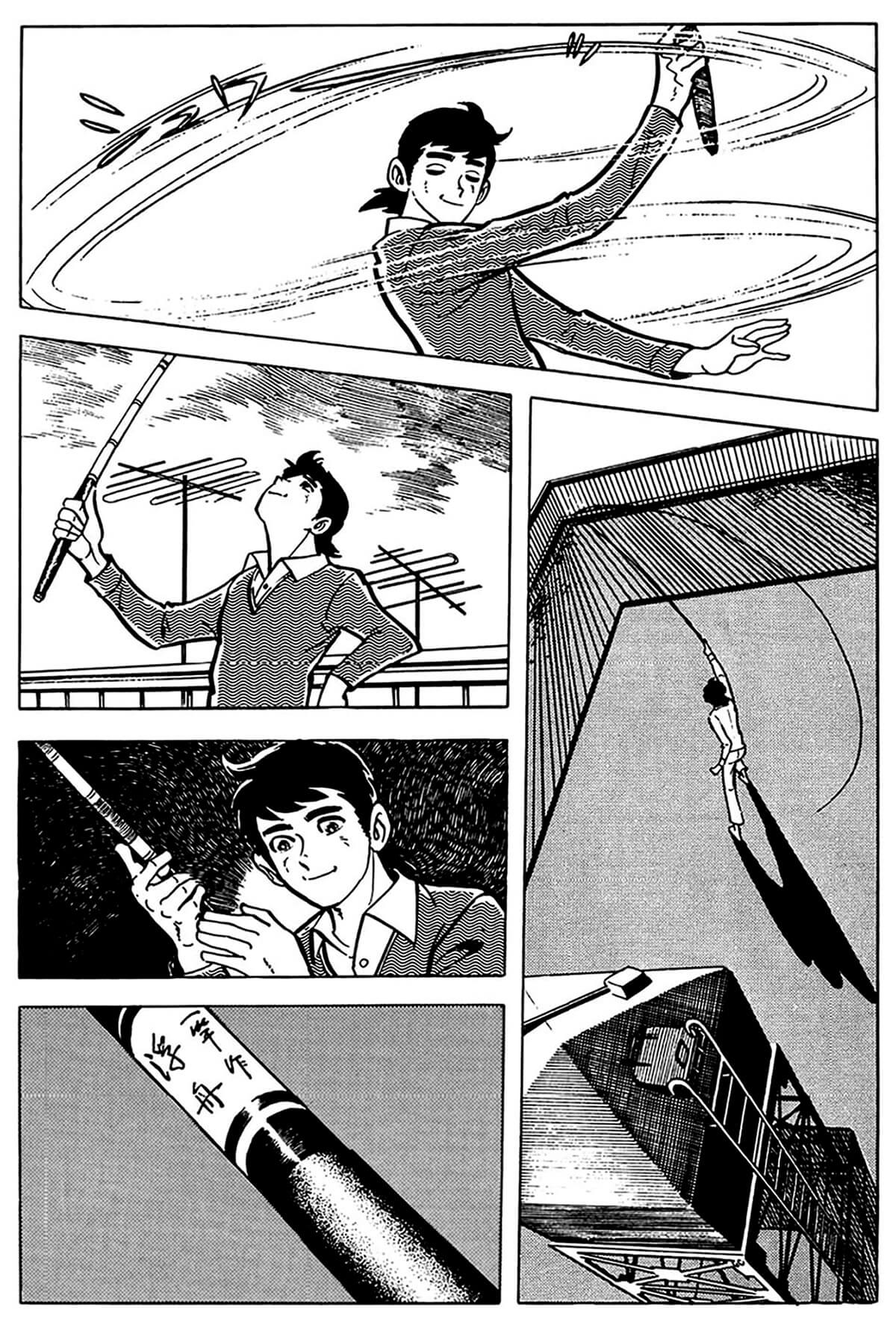
1972-83 / Yaguchi Takao / Futabasha / The author's experience of mountain stream fishing is evident throughout this work. While the theme is mountain stream fishing, the story also evokes memories of war and the scenery of Japan before the period of rapid economic growth, leaving you with the feeling of having watched a good short film in each episode. The characters and worldview are similar to "Fishing Freak Sanpei," which was published after "Fishing Fools." "There's a scene where Yaguchi, who has hit a wall with his manuscript, tries to cheer himself up by swinging his fishing rod on the roof of the studio. It's memorable... but even if he swings his fishing rod, he won't be able to draw manga, so he just does it (laughs)."
©Yaguchi Takao/Yaguchi Productions
According to one theory, there are approximately 10 million anglers in Japan. Despite this volume, there are not many "fishing manga." In today's world, fishing has become so specialized that it may be difficult for a classic fishing manga like "Tsurikichi Sanpei" or "Tsuribaka Nisshi" to enter the market. It also seems to be a difficult genre that requires experience to draw.
"If the manga artist himself can't fish, he can't draw, and he'll run out of material." The tension of the line, the way the rod bends, the way the cast is made, and so on, all require realistic detail. Depicting fish is particularly difficult. Even when looking at pictures in an illustrated guide, it's impossible to draw a lifelike fish.
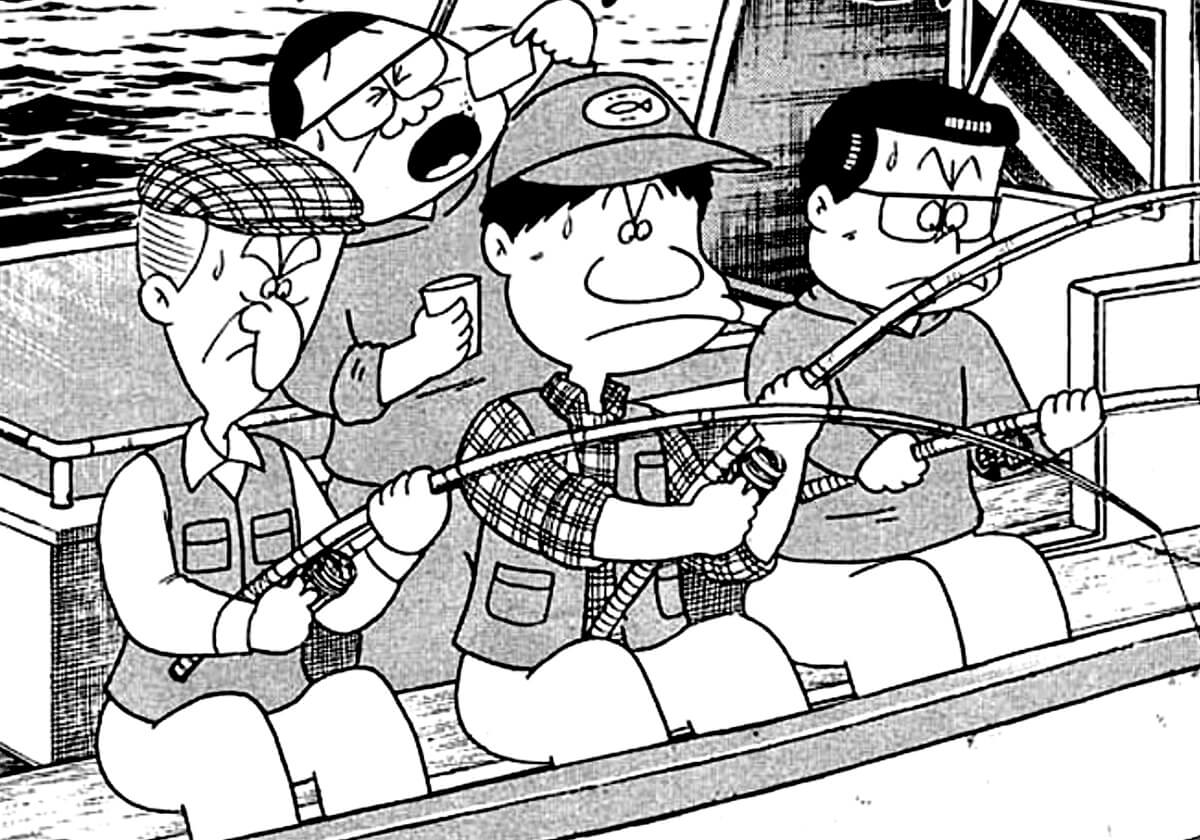
1979- / Yamasaki Jūzō (original story) and Kitami Kenichi (manga) / Shogakukan / A nationally known fishing manga that is still being serialized today, with over 100 volumes in print. It's a setting that any office worker would drool over, with Hamasaki Densuke, a perennial regular employee, and the company president becoming fishing buddies. "Fishing is just a joke, and it depicts a fantasy world. After all, this setting is a dream situation for an office worker (laughs). Everyone has fun and goes fishing in all different ways. It's a worldview that I definitely could not depict."
©Yamasaki Juzo and Kitami Kenichi/Shogakukan
"I think My Super Trout is the best fishing manga for depicting fish. The story is light and easy to read, and the author, Sakagawa Ikuko, is good at drawing fish. When I saw the depiction of the trout in the story, I thought it was really good. Also, I like that it's fly fishing instead of lure fishing." It is the depictions, backed by experience, that capture the hearts of readers.
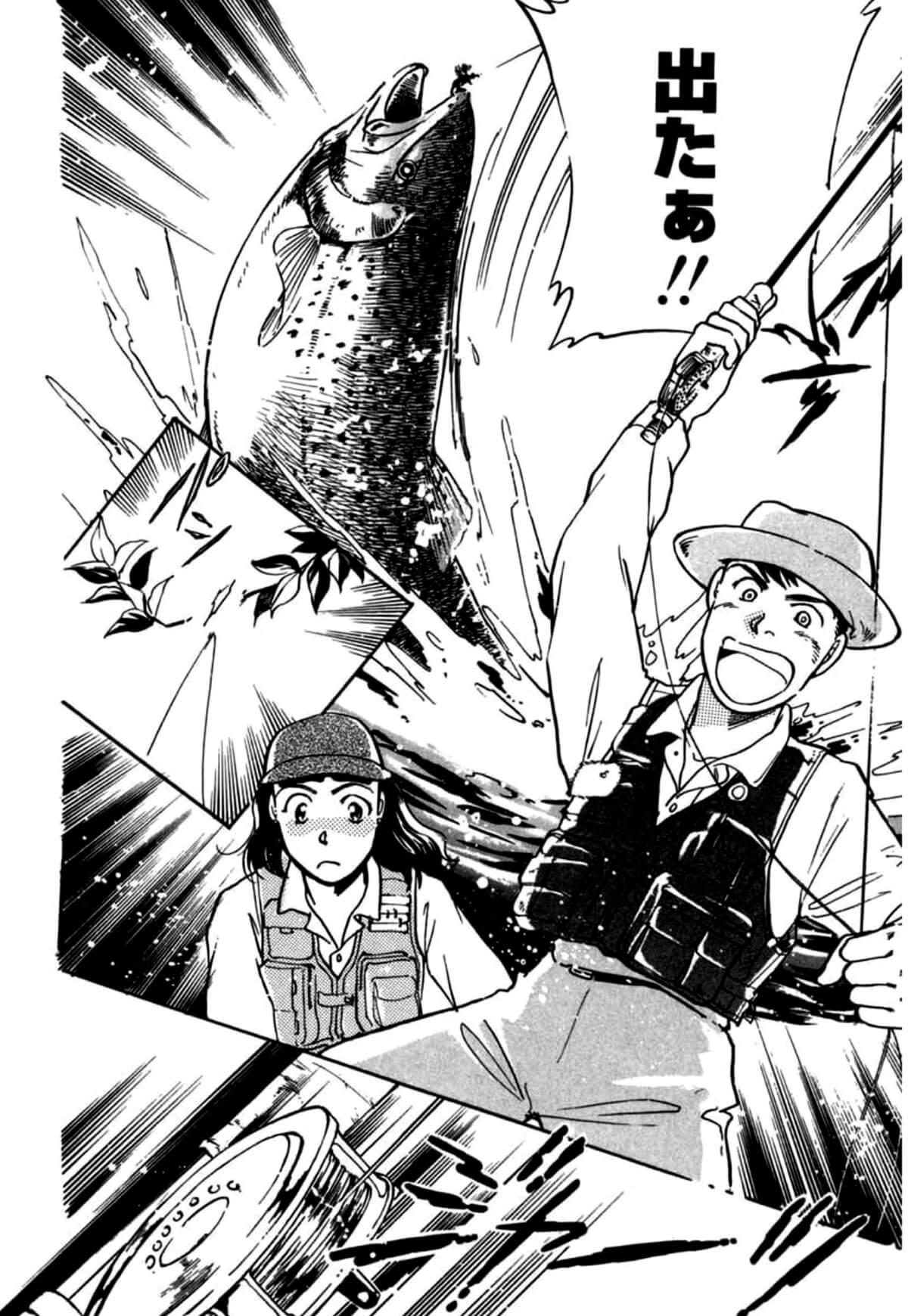
1999 / Sakagawa Ikuko / Kasakura Publishing / Kaji Toshihiko, an office worker who loves fishing, and his boss and mentor, Kamio Chie, try their hand at fly fishing. Talking about fishing is taboo within the office, and despite their mutual feelings for each other, their romance doesn't progress, creating a romantic comedy element. "There are few manga artists who can draw fish well, but the depictions of fish in 'My Super Trout' are truly magnificent." The sequel, 'My Super Trout PLUS', is currently being serialized in 'Tsuri Comic'. The author has a passion for both tanago fishing and fly fishing.
© Ikuko Sakagawa
What does Imashiro think about today's fishing manga? "Today's fishing manga seem to be very materialistic, with a lot of information about how the fish was caught with this lure or this tackle. I feel the same way about YouTube, but I don't think taking shortcuts is fun." Imashiro hopes that people will experience the fun of fishing itself.
"Don't just try sabiki fishing because you can catch fish. If you're an adult, study it, get some experience, and learn the basics little by little. First, buy a fishing rod and try catching fish without a reel. If you go to a fishing tackle shop and ask, they'll teach you. If you're an adult, I think you should do adult fishing."
Sometimes they burst into tears after catching zero, and sometimes they bargain with the sweetfish while being stung by black flies... The protagonists of Imashiro's works struggle with repeated misfortune, but they always get up and go fishing with energy. I hope that you can get a sense of the true joy of fishing from their actions.