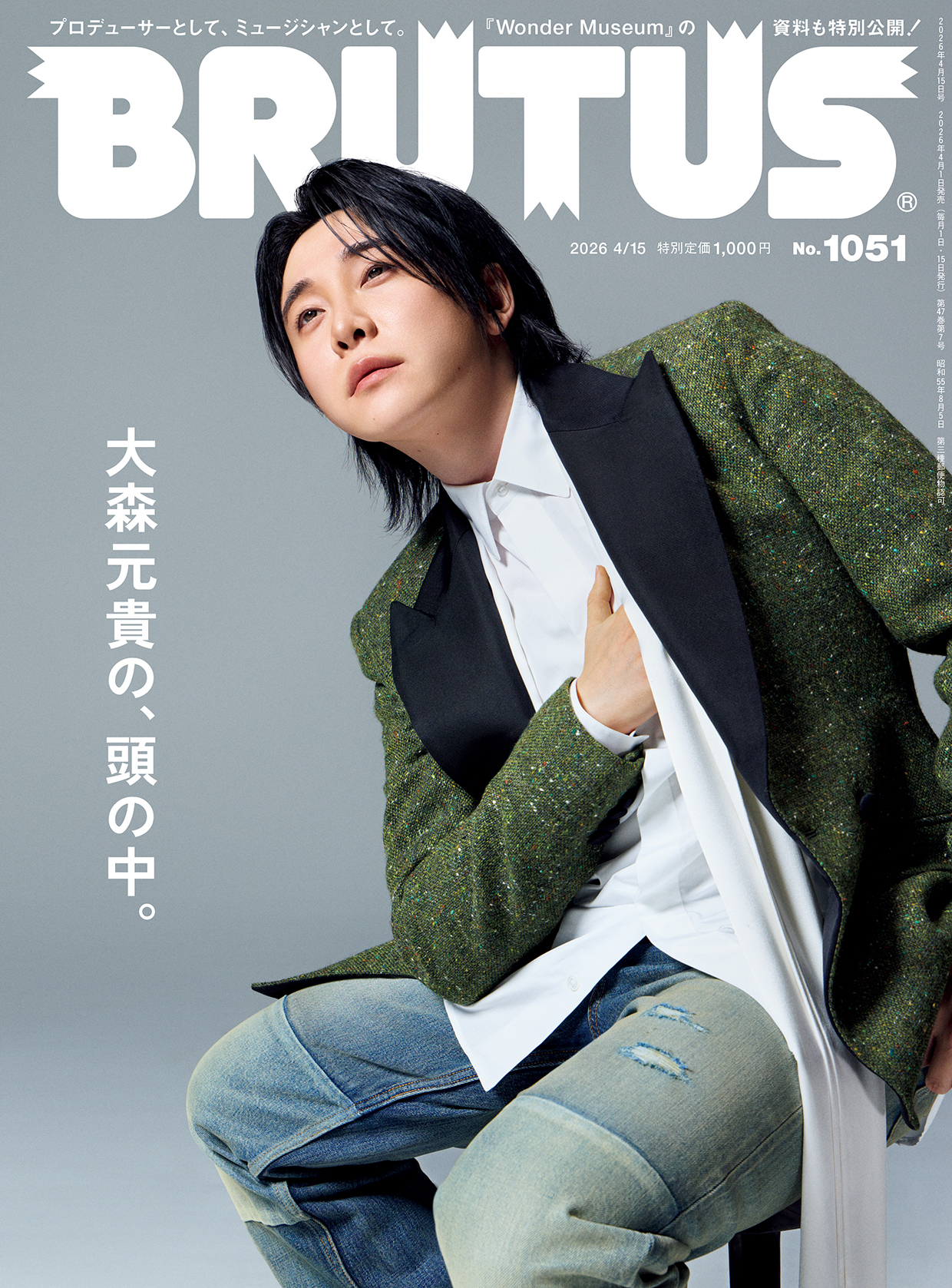











Taichi Yamada and Kuniko Mukoda did something no one else had done before
Written by Hiroki Toki
In the past, TV drama scriptwriters were not well-known. Most of their work involved adapting original works, and there were few opportunities to write original scripts. Yamada Taichi writes, "Writers' names rarely appeared in the TV listings in newspapers, and their income was low compared to the size of their role, so they were generally treated with humiliation." (Yamada Taichi Works Collection 3: Men's Journeys 1, Yamato Shobo).
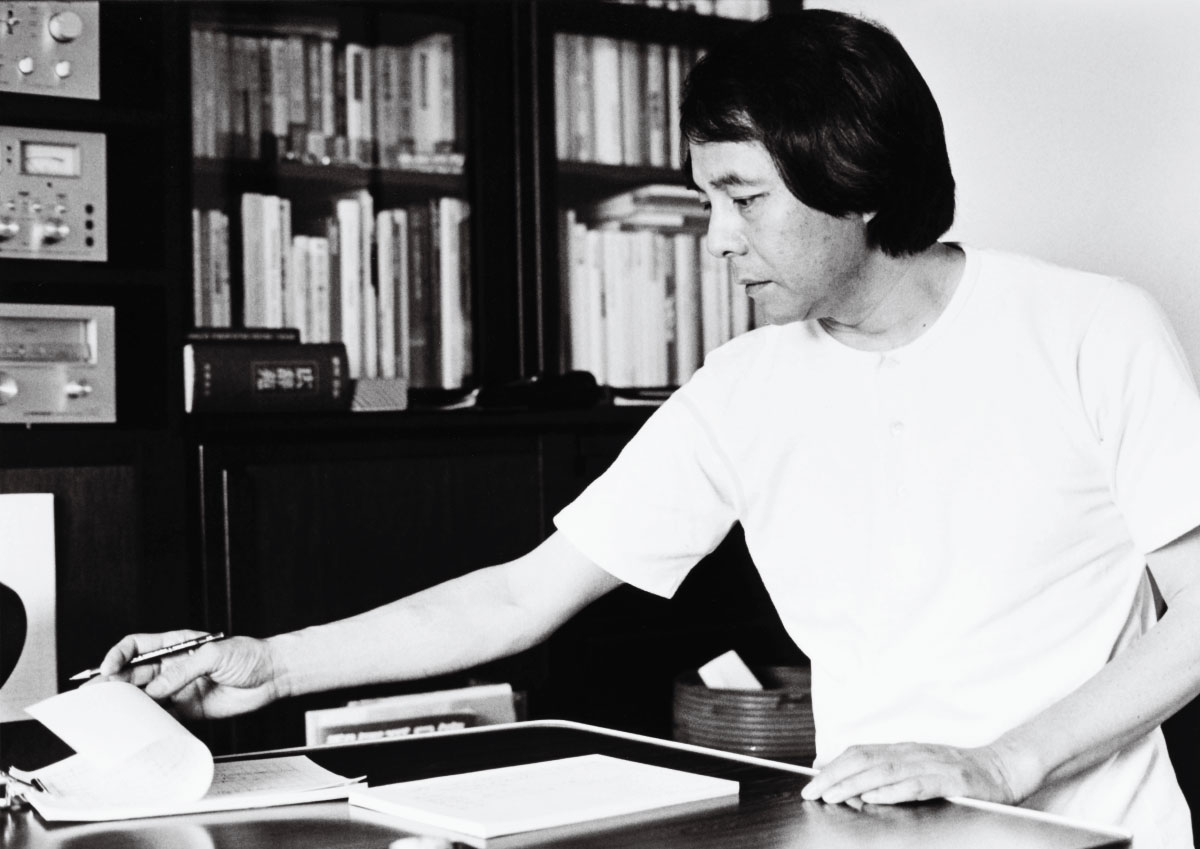
At home in Kawasaki City. He writes with a 2B pencil. He doesn't create a plot, and writes his lines out loud. His second daughter, Saeko, says that reading was his favorite hobby. © Asahi Shimbun
NHK dramas brought about a major change in this situation. The first drama was "Otokotachi no Tabiji" (1976-1982), an original script by Yamada Taichi. At the beginning of the first episode broadcast on February 28, 1976, the screenwriter's name and "Yamada Taichi Series" were displayed in large letters. This was a groundbreaking development. This marked the beginning of the era of screenwriters.
"Men's Journey" is set in a security company and depicts the clash of ideas and lifestyles between a surviving Commander Yoshioka (Koji Tsuruta), and young people born after the war (Yutaka Mizutani, Kaori Momoi and others), and was a huge hit. The show received so many letters from viewers that several booklets were compiled out of them.
Among them, "Silver Seat," the first episode of Part 3, which depicts the issue of the elderly through the unexpected development of a group of elderly people hijacking a streetcar, won the Grand Prize in the Drama category at the 32nd Arts Festival. "A Wheel's Step," the third episode of Part 4, which tackles the issue of people with disabilities head-on, shocked the world with the line, "Don't be afraid to cause trouble for others," and is still often mentioned in news about people with disabilities.
Mukoda Kuniko was five years older than Yamada Taichi and was his senior as a screenwriter, but in 1975 she fell seriously ill and said, "I wanted to write what I wanted to write, properly" (Television Time, by Oyama Katsumi, Torikagesha), and from then on she began writing serious dramas.
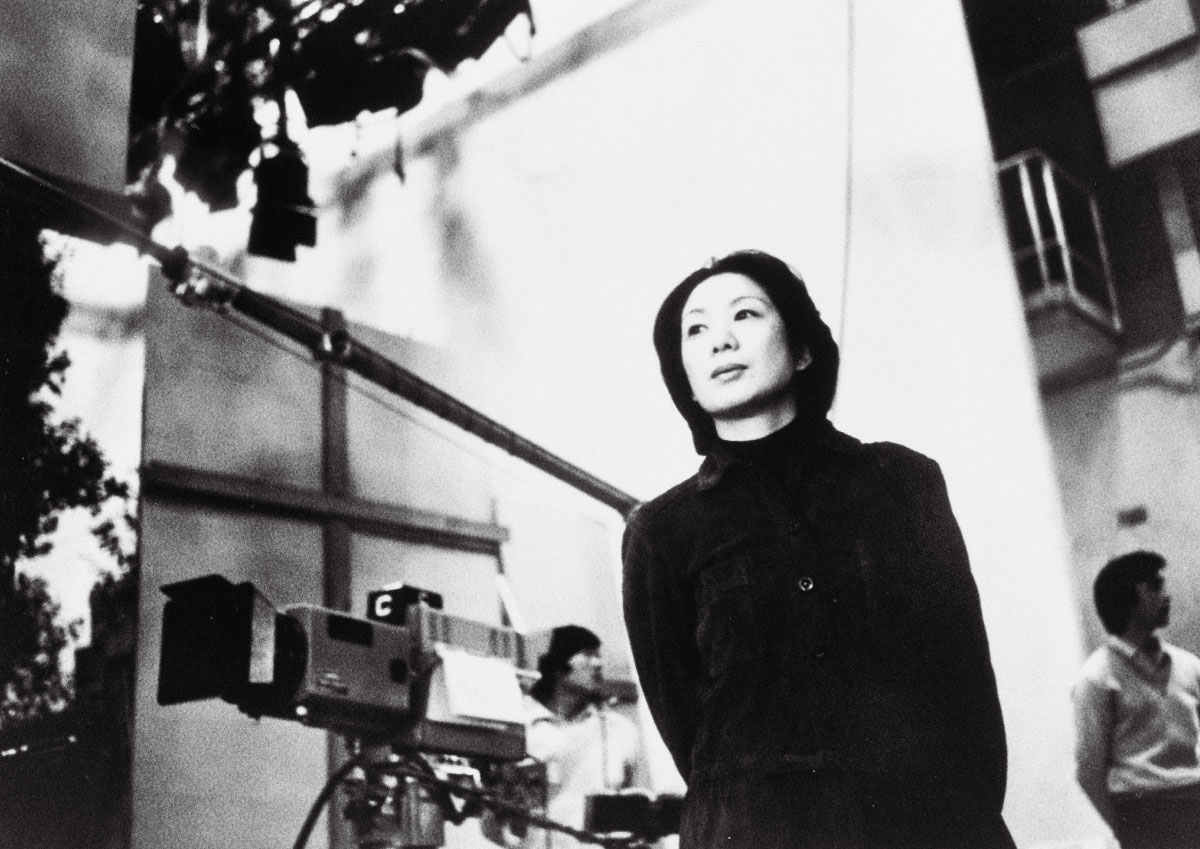
On the set of "A-Un." He was a slow writer, which sometimes made the staff frustrated. In later years, he also showed his literary talent in novels such as "My Father's Apology." © Asahi Shimbun
Regarding her first work, Winter Sports Day (1977/TBS), Mukoda Kuniko herself said in a conversation with Yamada Taichi, "It was the first drama I wrote that didn't need a punch line, that didn't need to make people laugh at every turn. My model was Sorezore no Aki (1973/TBS/Yamada's work)" (Tokyo Shimbun, July 30, 1977). This conversation was the first time the two met, and from then on they began to exchange opinions about each other's works.
In 1972, Mukoda Kuniko wrote two dramas for NHK, "The Needle Woman" and "Momotaro Born from a Peach," but all her other works were for commercial broadcasters. It was then Kondo Susumu, producer of "Otokotachi no Tabiji," who approached her. She first adapted Matsumoto Seicho's "Ekimichi." This led to the creation of the Saturday drama "Saigo no Jizo" (The Last Self-Portrait) (1977). Thanks in part to Tsutomu Wada's brilliant direction, the drama was highly praised.
Then, in 1979, "Like Ashura" was broadcast as part of the "Kuniko Mukoda Series." Four sisters, each with different personalities and lifestyles, are deeply shaken when they learn of their elderly father's affair and the existence of a secret child. This time, it was directed by Tsutomu Wada. Although it was a family drama, the theme music was the march "Ceddin Deden," played by a Turkish military band.
Yamada Taichi was amazed by this, writing, "I have never seen music for a television drama that has produced such an unusual and outstanding effect. For me, this song is inseparable from 'Like Ashura,' and when I hear it, images of Kato Haruko, Yachigusa Kaoru, Ishida Ayumi, Jun Fubuki, and Saba Toshinobu come back to me irresistibly. I feel as if Mukaida's gestures and voice are brushing against my very eyes" (Afterimage of the Moon and Sun, Shincho Bunko).
"Like Ashura" was made into a film in 2003 by director Yoshimitsu Morita, and was remade for Netflix in 2025 by director Hirokazu Koreeda.
In January 1980, when "Like Ashura Part II" began airing, the taiga drama "The Age of the Lion," written by Yamada Taichi, also began airing. It was the first taiga drama to feature a fictional character as the protagonist, rather than a famous historical figure, and to have a script written by the screenwriter without an original novel. Through two characters, Kariya Yoshiaki (Kato Go), a samurai from the Satsuma domain, and Hiranuma Senji (Sugawara Bunta), a low-ranking samurai from the Aizu domain, the Meiji Restoration was portrayed from the perspectives of the winners and losers.
Yamada Taichi recalls receiving the following phone call from Mukoda Kuniko: "I had been working on NHK for a year on the show 'The Age of the Lion,' and at first things weren't going well and I was going through a really tough time, but when I finally started to look good, she called me and said, 'You've improved so much. You're all right now,' and I'll never forget that" (Yamada Taichi, "About Our First Meeting," in Mukoda Kuniko TV Works Collection 4: Family Fever, Yamato Shobo).
Also in March 1980, Kuniko Mukoda's "A-Un" began airing on NHK's "Drama Ningen Moyo" time slot. It is one of her masterpieces and arguably her most popular. The story is set in the early Showa period. Mizuta Senkichi (Frankie Sakai), a humble office worker, and Kadokura Shuzo (Naoki Sugiura), a war profiteer, are polar opposites in both personality and appearance, but they are comrades in arms and best friends.
Mizuta's daughter (Kayoko Kishimoto) senses that Kadokura's uncle has feelings for her mother, and suspects that her father and mother are aware of it too, but no one speaks a word about it so as not to upset the delicate relationship. Mizuta's father explains that it is "the two guardian lion dogs, A and Un, who guard the shrine."
In the Tokyo Shimbun interview cited above, Mukoda Kuniko praised Yamada Taichi's script "Kishibe no Album" (1977/TBS), saying, "Sugiura Naoki (the heroine's husband) is great. He's outstanding," and she has cast him in this drama as well. The theme music is "Adagio for Strings and Organ" by Tomaso Albinoni, which fits perfectly and adds to the nostalgic charm of the drama. The director is Fukamachi Yukio.
In July of that year, Mukoda Kuniko won the Naoki Prize for her novel. The following year, "Zoku A-Un" was broadcast. There were plans for a sequel, but unfortunately, Mukoda Kuniko died in a plane crash on August 22, 1981, at the young age of 51.
The Mukoda Kuniko Award was established in 1982. It is given to the outstanding television drama scriptwriter of the year. Yamada Taichi was the second recipient of the award. The winning work was the drama special "Glimpses of Japan" (1984), broadcast on NHK. It was directed by Nakamura Katsushi, who also directed "A Man's Journey." The film is a fascinating portrayal of the life and character of Koizumi Yakumo (Lafcadio Hearn). Hearn loved Japan deeply, and that was why he was troubled by the country's changes. Through his life, we are reminded of what Japan has lost in the midst of modernization.
At the awards ceremony, Yamada Taichi said, "In modern times, rational and functional things are highly valued, but perhaps we also need to respect the irrational and useless." Four plays within a play will also be featured: "The Mujina," "The Legend of the Ghost Waterfall," "The Snow Woman," and "Hoichi the Earless." George Chakiris, who danced in "West Side Story," was surprisingly perfect for the role of Lafcadio Hearn, and Dan Fumi's Koizumi Setsu was also perfect for the role, and it seems that the image of this couple will remain in the hearts of many viewers.
Yamada Taichi's dream from a young age was to create a drama with an elderly protagonist, and he realized this dream with Ryu Chishu's trilogy, "Nagareba" (1982), "Fuyu Gaikei" (1985), and "Kon no Autum" (1987), which were all on NHK. "Nagareba" won the Best Director Award at the 23rd Monte Carlo International Television Festival. "Fuyu Gaikei" and "Kon no Autum" were directed by Fukamachi Yukio, who also directed "A-Un."
The 1999 Yamada Taichi drama "The Most Beautiful Time" stars Yachigusa Kaoru and Kato Haruko, who also appeared in "Like Ashura." A woman (Yachigusa Kaoru) who lost her husband a little over two years ago is suddenly visited by a stranger (Natsuyagi Isao) who tells her, "Your wife was dating your husband."
Yamada Taichi's final work for NHK was "Where the Knife Goes," released in 2014. The production supervisor was Kondo Susumu. An old man (Matsumoto Koshshiro) deliberately breaks the leg of a young man (Imai Tsubasa) who is about to stab a passerby with a knife, and then offers to let him stay in his home until his injuries heal. He continued to write ambitious works until the very end.