









UNDERSEA
Always prepare backup equipment in case of unexpected events
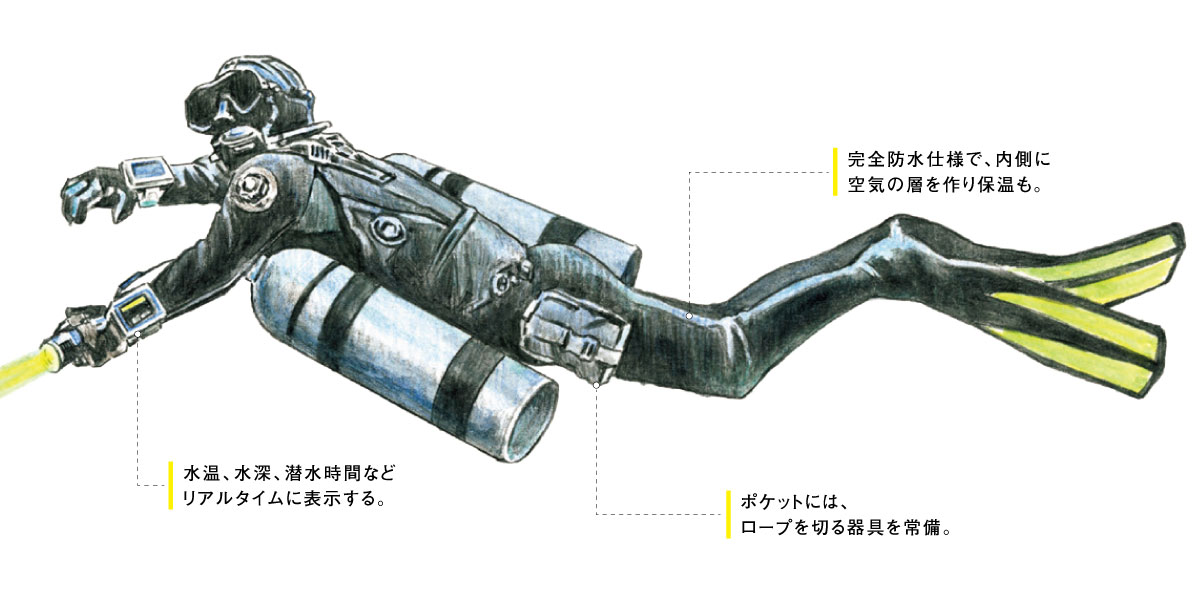
The ocean, which covers roughly 70% of the Earth's surface, is a place full of mysteries. Many divers are fascinated by the unexplored ocean floor and sunken ships. However, diving deeper than 40 meters requires a special license. Underwater activities, where there is no air and no sunlight, require a backup to switch to in case the light goes out or the cylinder breaks down.
They manage their breathing gas so that only one-third of the cylinder remains when they surface. They sometimes dive wearing a rebreather, a device that allows them to reuse breathing gas. In cold water, they wear dry suits to keep their bodies dry, and dive computers that calculate remaining dive time are worn on both arms. They are always prepared to eliminate human error.
ALPINE (Takayama)
Clothing, food, and gas tanks: Equipment is becoming lighter
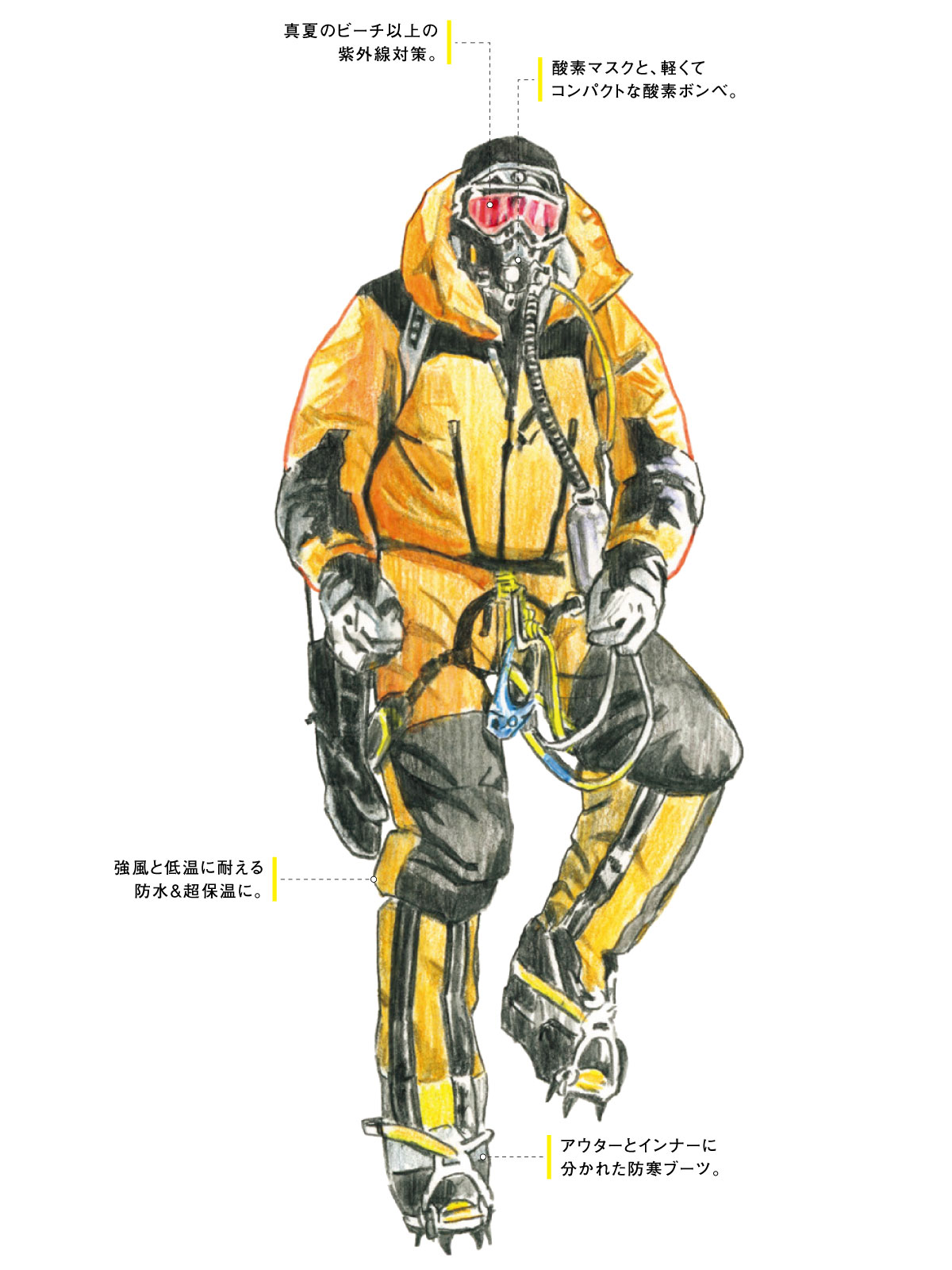
High mountains are the perfect destination for those who strive to reach their limits. The desire to experience the unknown drives adventurers to test their physical and mental strength. For example, altitudes of over 8,000 meters in the Himalayas are known as the "death zone," with temperatures reaching around minus 30 degrees Celsius. Strong winds blow, and dangers such as avalanches and hypothermia are constantly lurking.
The first way to protect yourself is by perfect layering. Multiple layers of high-performance clothing are worn to block out the cold, wind, and snow, and finally, large-capacity down-filled clothing is worn on the top and bottom to keep you warm. Hands, which are prone to frostbite, are wrapped in down mittens, and cold-weather boots with separate outer and inner layers are worn for the toes, with crampons attached, as you make your way across the glacier.
Near the summit, where the air pressure is low, the amount of oxygen that can be delivered to the body with one breath is reduced to less than one-third, so climbers carry oxygen tanks on their backs. Efforts are still being made to reduce the weight of all equipment and food carried to allow for as much freedom of movement as possible.
POLAR REGIONS
Neglecting measures to protect against the cold and sweat can be fatal.
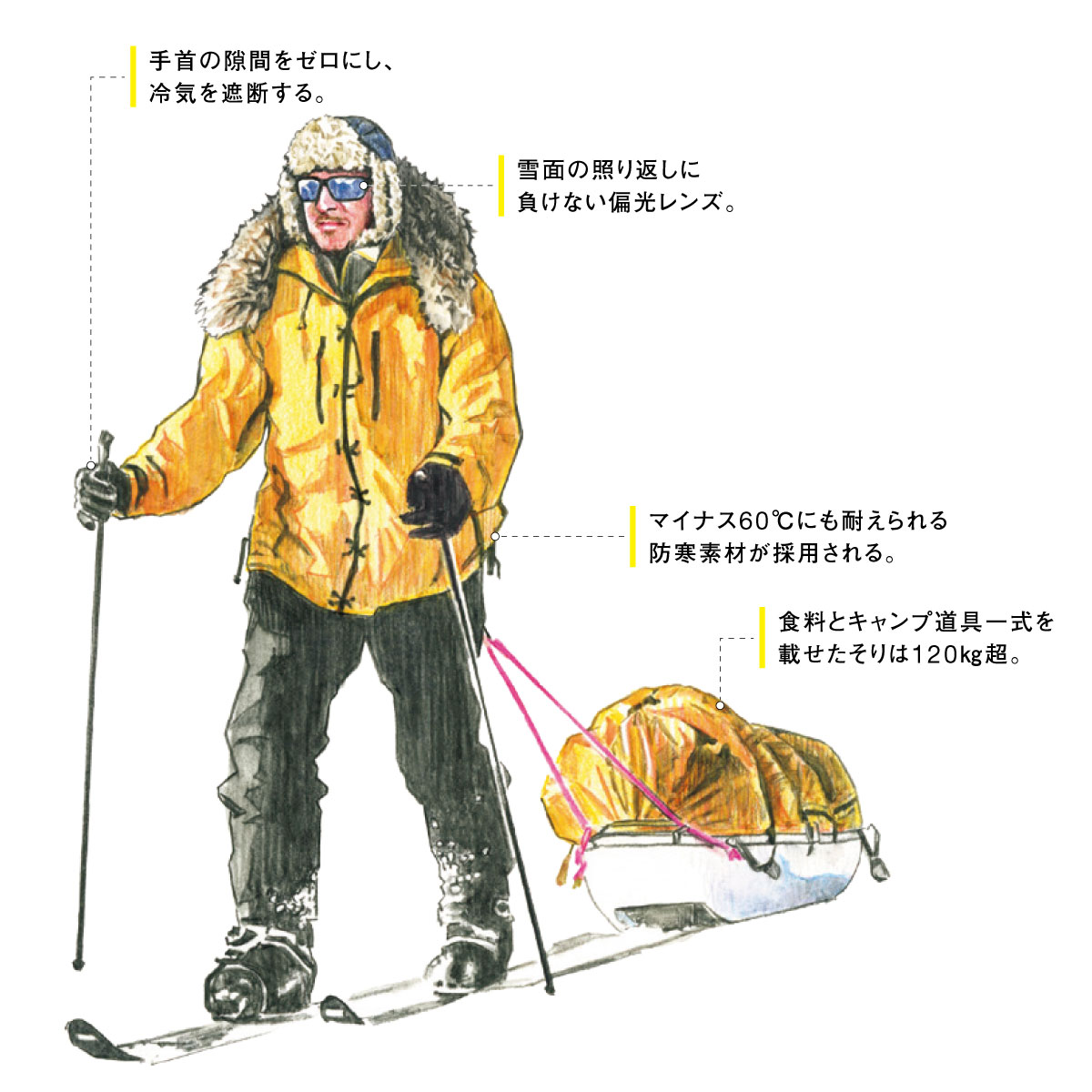
Antarctica once recorded the coldest temperature ever recorded, minus 98 degrees Celsius. The average winter temperature in the Arctic also falls below minus 25 degrees Celsius. Of course, you need to take measures to protect yourself from the cold, but if you're adventuring alone, pulling a sled loaded with luggage, you'll sweat. Preventing this sweat from cooling down can be tricky.
In extreme cold, it's not possible to change clothes, and sweat freezes quickly. To prevent this, layering is key, combining heat retention and cooling, blocking out cold air and allowing breathability. Wear an inner layer such as merino wool, then layer a mid-layer, an insulating layer, a windproof layer, and a down jacket, in that order. Since snow doesn't melt at sub-zero temperatures, waterproofing is not necessary in polar regions. Some adventurers choose cotton down jackets for their sweat-wicking properties.
CAVE
Extremely strong, waterproof, quick-drying and stretchy
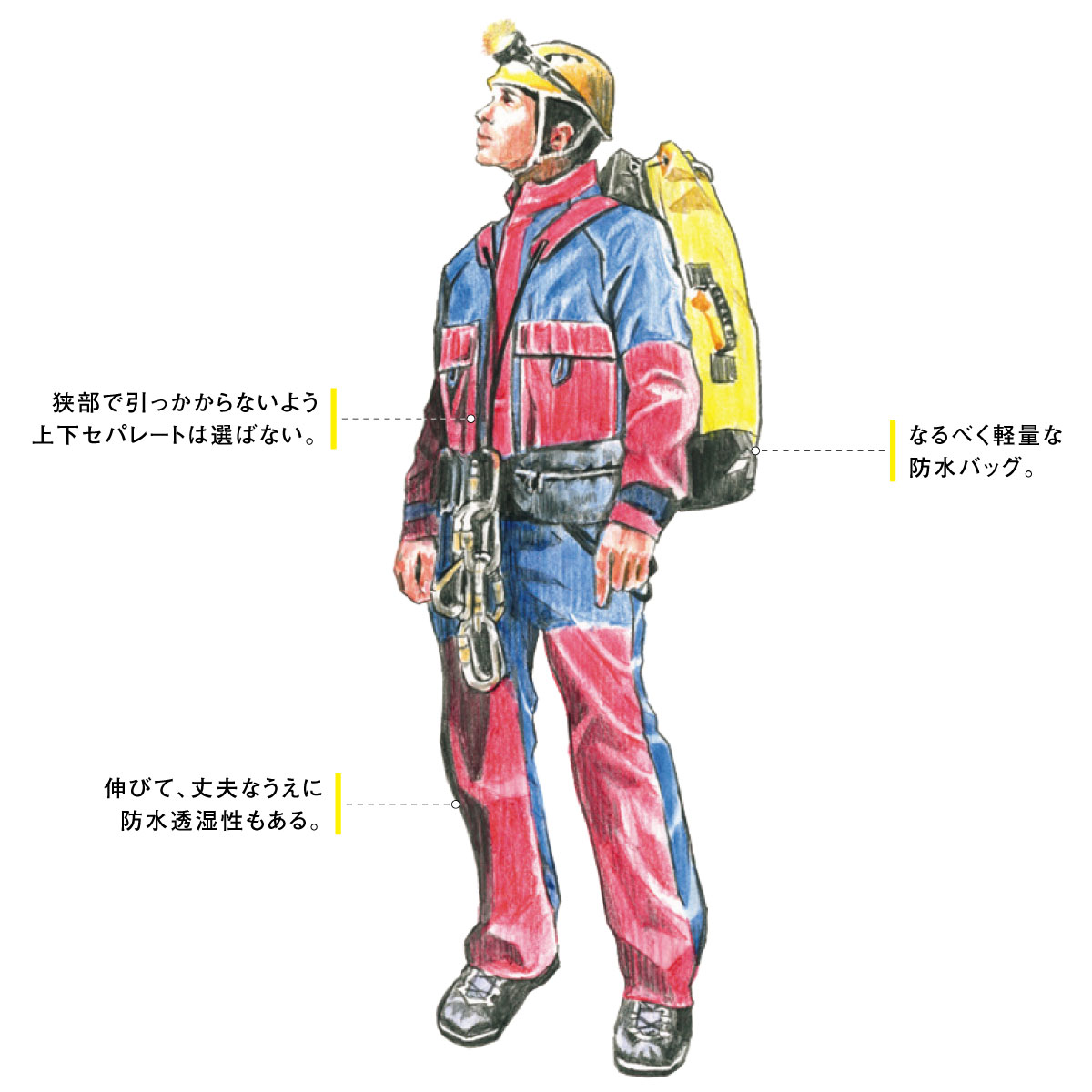
Deep in the earth, there are mysteries created by nature, such as glittering limestone caves and volcanic caves carved out of lava. The path to these spectacular views involves passing through a succession of gaps just wide enough for a person to fit through. To avoid being held back by clothing, participants literally walk along uncharted ground, clad in a one-piece jumpsuit.
In dark caves where sunlight does not reach, humidity levels are often over 90%. Even if clothes get wet with sweat, it is impossible to make a fire, and the best you can do is dry them using body heat. For this reason, innerwear that wicks away sweat and keeps the skin dry at all times is chosen. In recent years, custom-made waterproof, quick-drying, and stretchy overalls from Japan's Finetrack have become a key support for adventurers.
SAILING
Highly waterproof to protect you from wind, rain and sea spray
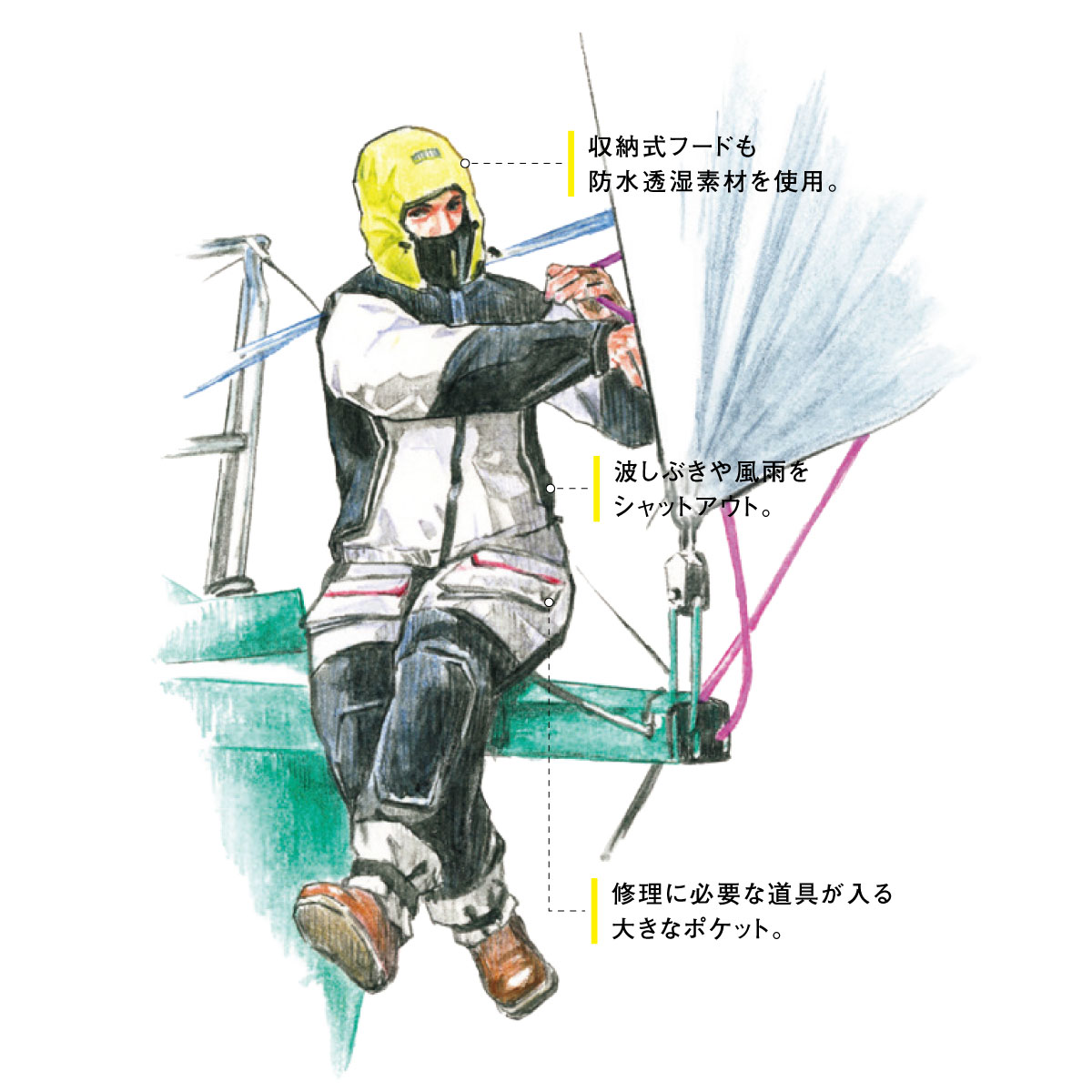
Solo ocean travel is one of the most grueling, especially the round-the-world yacht race, where the boat is propelled only by the power of wind, waves, and tides. It lasts approximately 90 days. To be constantly prepared for changing weather conditions, enthusiasts wear shoes with high grip to keep their feet from getting caught on the deck, where the spray of the waves and wind and rain are raging, and for safety, they wear waterproof clothing with reflective accents to make them more visible.
The jacket has a high neck to withstand extreme cold such as the Southern Ocean, and the hood can be worn over a helmet. The wired edges can be freely adjusted to ensure good visibility. The fabric is strong enough to prevent holes even when repeatedly working on the knees or while bending over, and key areas such as the hips and knees are reinforced with padding.
DOWNHILL
Overcoming fear by wearing safety gear
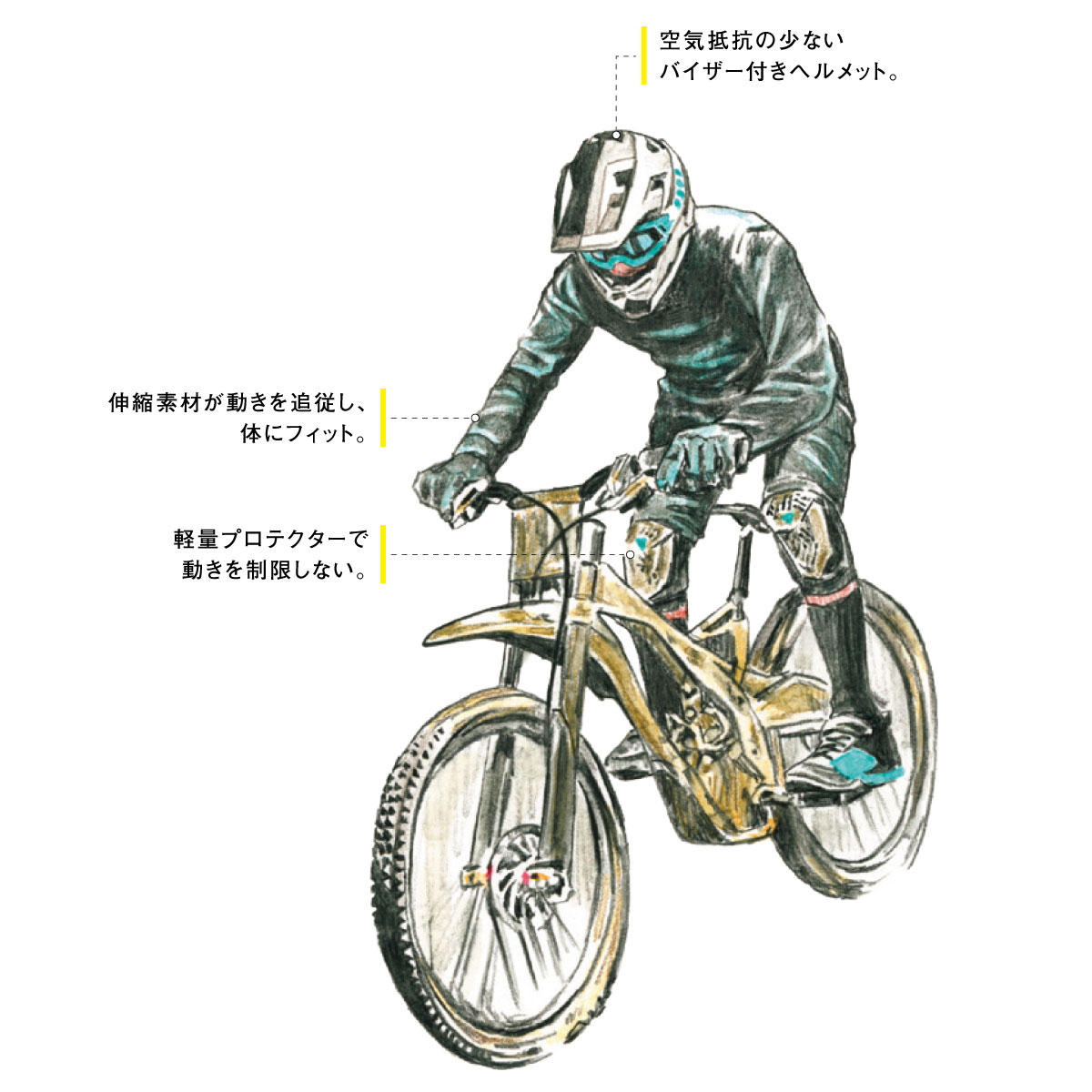
Mountain bikes are a type of extreme sport in which riders ride custom-built bikes down mountain and hill trails. Top riders ride at speeds of over 60km/h down steep slopes covered with large rocks and exposed gravel, so a fall can lead to serious injury.
This highly maneuverable machine features a lightweight, highly rigid carbon frame, suspension that can handle even the roughest road surfaces, and powerful brakes that can stop even at high speeds. In case of an emergency, full-body protectors for the chest, knees, elbows, etc., as well as a full-face helmet are essential. Goggles are also essential to protect your eyes from insects and dust, so that your vision is not obstructed even for a moment.
CLIMBING
Sharpen your senses with minimal equipment
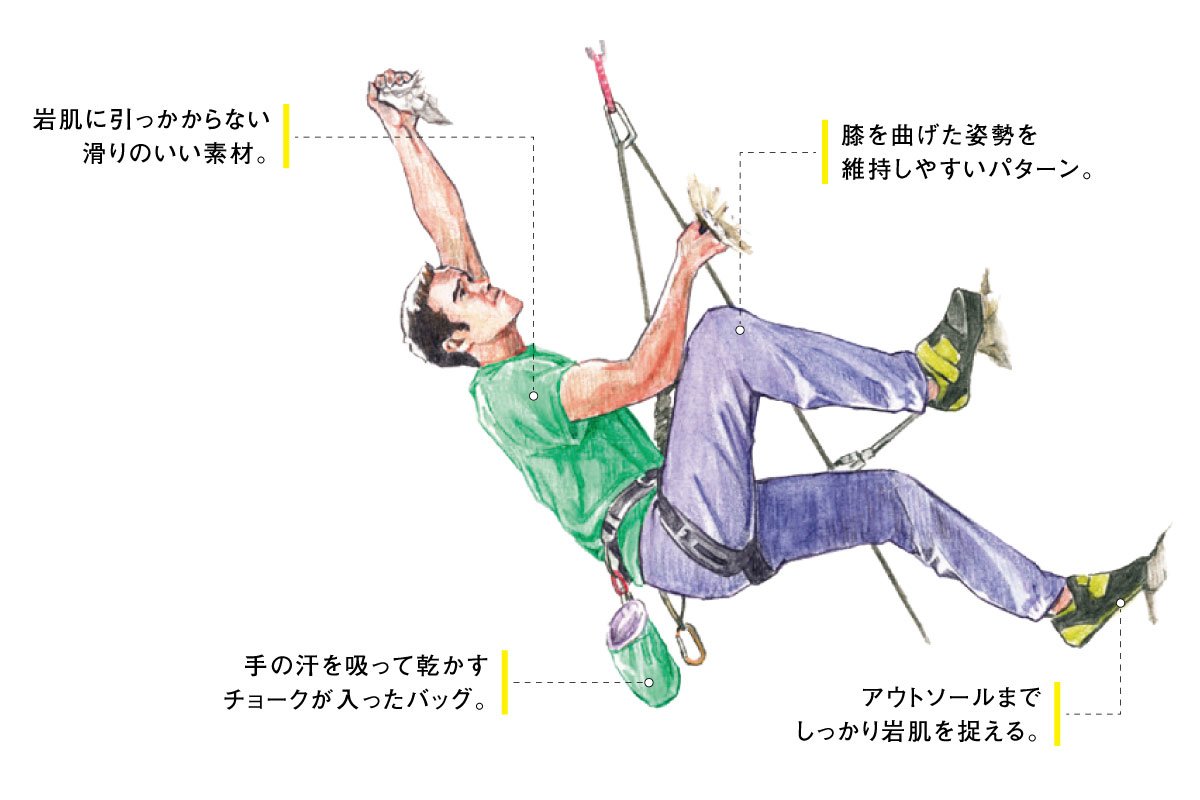
Climbing involves climbing up sheer cliffs hundreds of meters above the ground using only your hands and feet, with minimal equipment such as a rope and safety devices. You put chalk on your hands to prevent slipping, and wear climbing shoes covered in rubber from the soles to the sides, allowing you to firmly grip the rock face as you climb.
At first glance, the clothes look like everyday clothing, but even these are designed to help you avoid losing energy during long periods of activity. The functional T-shirts are lightweight, down to the last thread, making them feel "as close to naked as possible," while the three-dimensional climbing pants are patterned to make it easy to hang on to the wall in a half-squat position. Both are made from a slippery material to prevent the fabric from getting caught on the rock surface.
WINGSUIT FLYING
Flying in the sky with an air-filled "wearable parachute"
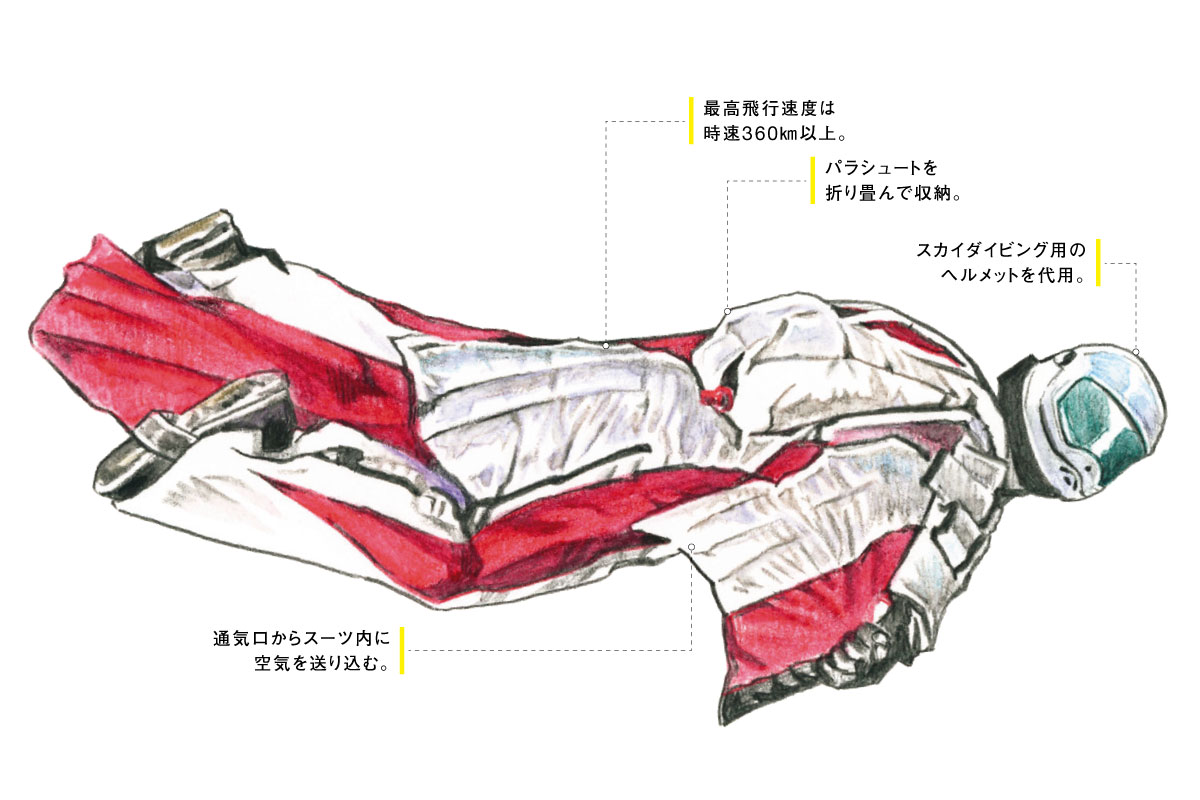
Some people attempt base jumping, where they parachute from buildings or cliffs, or skydiving from airplanes, using wingsuits, which are also known as "wearable parachutes."
The pioneer of this technique is skydiver Patrick de Gallardon. In the 1990s, he built a wingsuit that allowed him to fly using his entire body as wings, making him a superhuman and a birdman. The structure that Patrick invented, in which air flows in through vents in the armpits and ankles as the suit falls, inflating the entire suit, has remained unchanged to this day.
It can convert vertical free fall into horizontal gliding, and by slightly tilting its body or neck, it can freely control its direction and speed. It is equipped with a parachute on its back to ensure a safe landing. The smaller its wings, which extend from its shoulders to its armpits, the more agile it can fly, and it can reach a maximum flight speed of over 360 km/h.
RALLY RAID
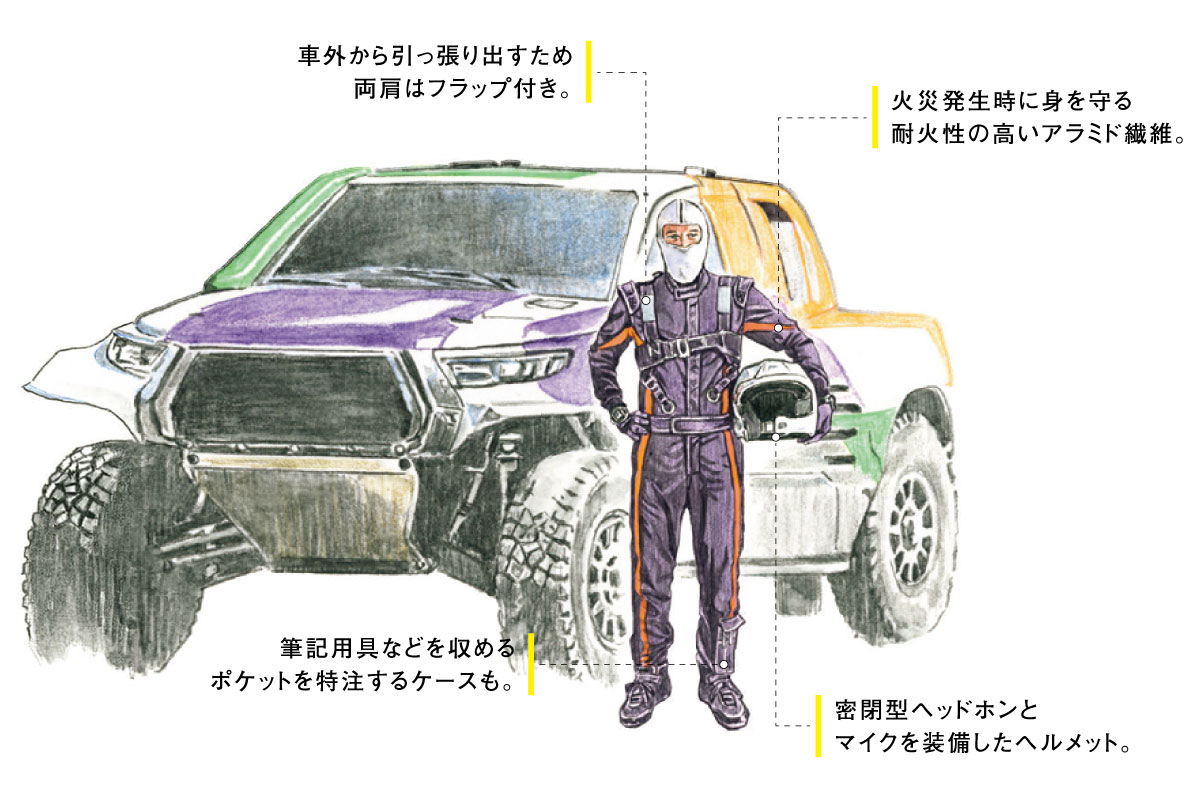
Cover your body with fire-resistant material in case of an emergency.
Rally raids cover all sorts of terrain on Earth, but the Dakar Rally is said to be the most grueling of them all, covering a total distance of 10,000 km over two weeks, racing through scorching deserts and rocky mountain ranges.
Even when it's hot, short sleeves are not an option, and the driving suit, shoes, and gloves are fireproof in case of a fire. The helmets, which protect the head and neck, have built-in microphones and speakers for communication between crew members. In an emergency when a driver cannot escape on their own, there are flaps on the shoulders so that someone can pull them out of the car. Some drivers even have custom-made pockets on their ankles so that they can take out a pen while driving.