







Experience the design and creativity of the manga artist who created "Ghost in the Shell"
Manga artist Masamune Shirow has produced important works in the Japanese science fiction scene, including the 1989 release of Ghost in the Shell. From the 1980s to the 1990s, he portrayed high technology, which was not yet widely accepted in society, and the ethical and social issues that arose from it, from a unique perspective. In recent years, his works, including those adapted into anime and films, have once again attracted attention both in Japan and overseas, as they are deeply linked to modern science and technology such as AI and androids, and the state of our information society.
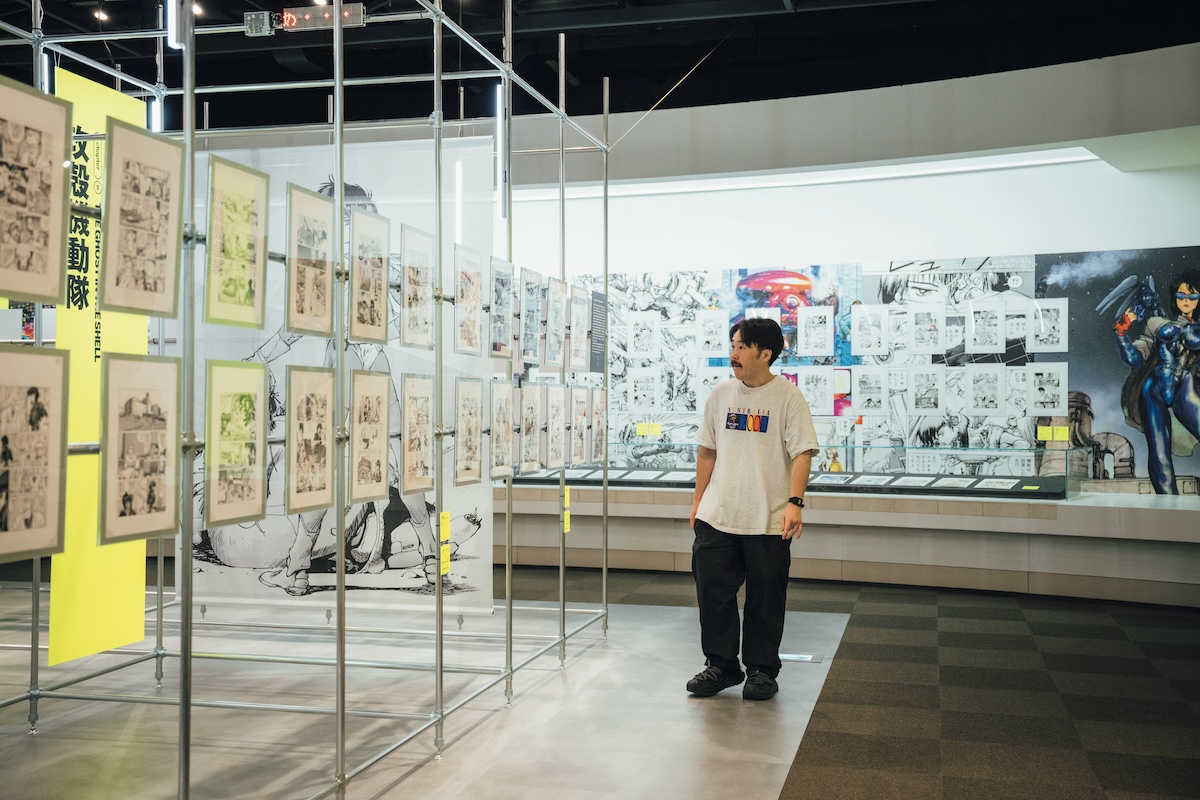
This year marks the 40th anniversary of Shirow Masamune's debut in a commercial magazine, and his first major exhibition of his career is being held at the Setagaya Literary Museum in Tokyo. Due to popular demand, the exhibition will travel to Shinsaibashi PARCO in Osaka from September. On this occasion, painter Ochiai Shohei, who has been a Ghost in the Shell fan since his student days, visited the exhibition. What did Ochiai think of this rich exhibition, which features over 300 analog and digitally printed manuscripts of his major works?

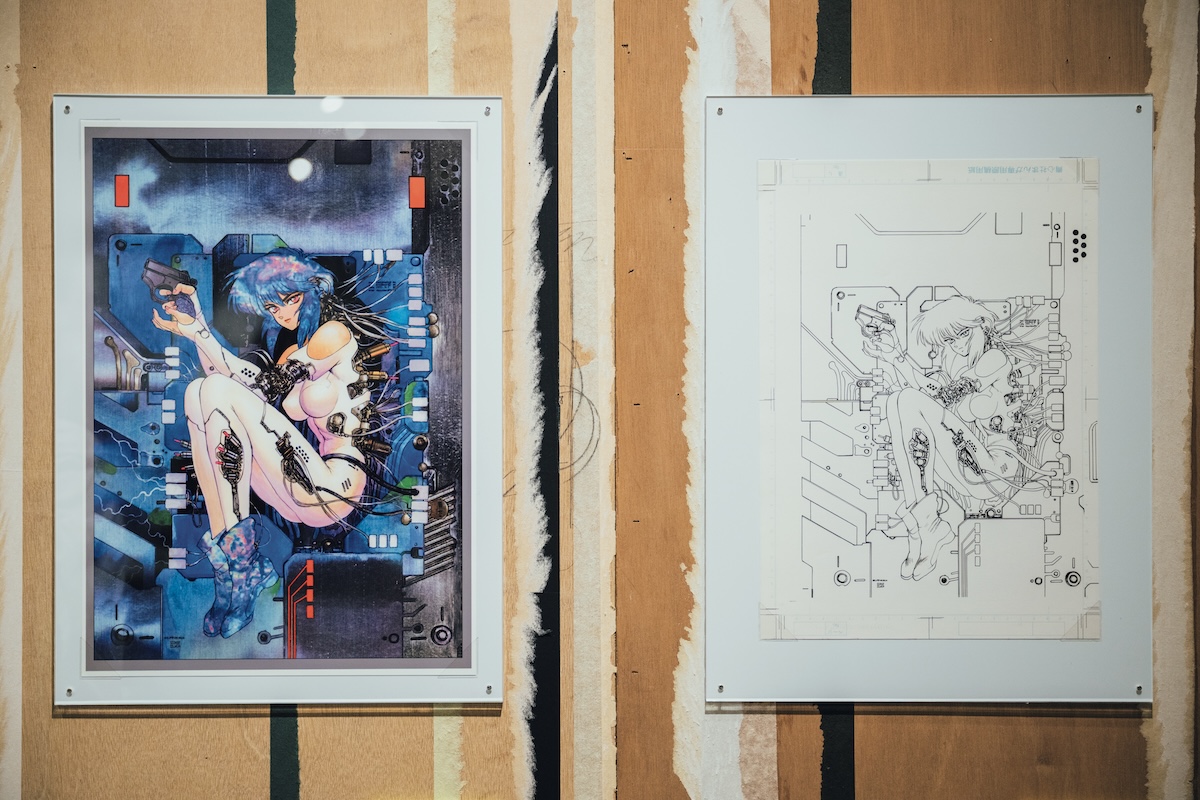
©Masamune Shirow/Kodansha
"Shirow's works are in a league of their own, not only in terms of story but also in terms of the originality of his artwork. I studied product design at Tama Art University, and there were many students, including myself, who respected Shirow. I feel that Shirow's artwork is connected to the so-called 'futuristic future', the kind of future that people in the past would have imagined, as was the work of Naoto Fukasawa. I feel that in the way the lines are drawn and the field of view of the frames, in the backgrounds, mecha, architecture, etc., I sense a 'future that doesn't exist in reality' and I am strongly drawn to it.
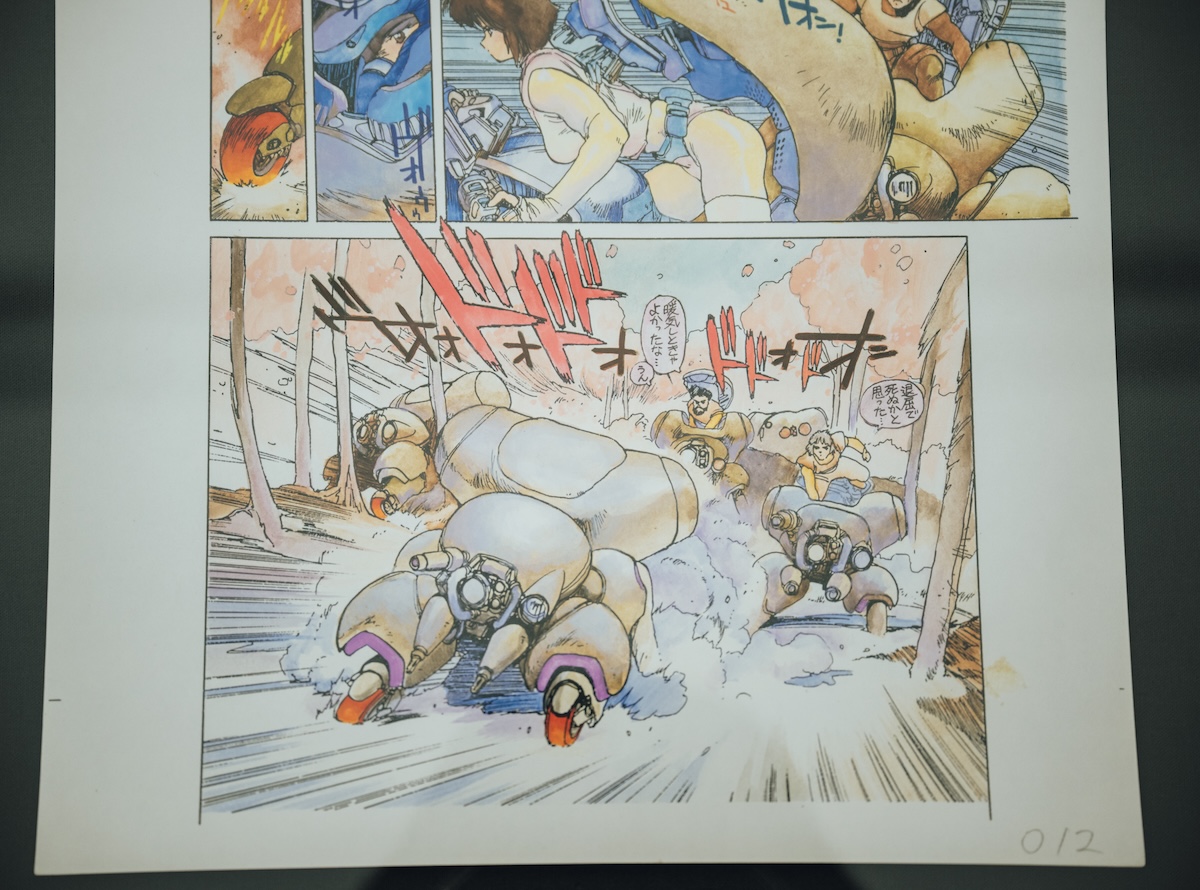
What's particularly distinctive is the use of curves and surfaces in various places. For example, the corners of the machines are rounded, the buildings are depicted with curves, and the view is reminiscent of a fisheye lens. This gives the image a futuristic feel, and I think it also contributes to the originality and strength of the image.

©Masamune Shirow/Kodansha
According to Shiro's editor, Takeshi Katsurada, Shiro often draws from a low angle, fisheye-style wide-angle shot rather than from the character's point of view. Furthermore, the wide field of view created by the aerial composition is filled with information, resulting in vast and detailed drawings, and dynamic drawings and overwhelming information density coexist within each panel.

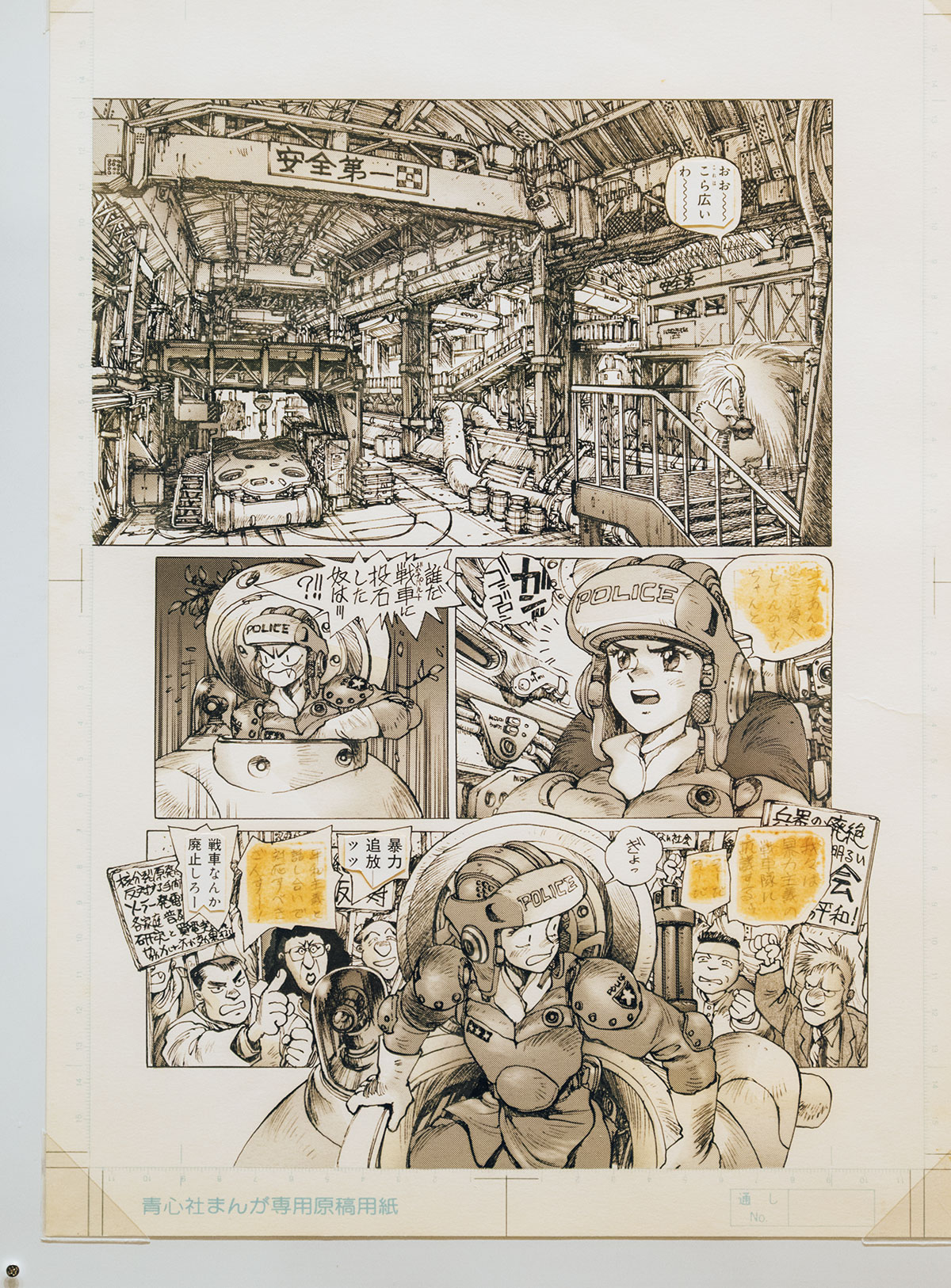
©Masamune Shirow/Seishinsha
"Looking at the analog manuscripts on display, I was shocked by the sheer amount of background information. When I draw, I'm the type of person who looks closely and wants to express every last detail in minute detail, but in Shiro's case, the number of lines he has drawn is incredible.
Every line has meaning and is efficient, and the presence of this one line makes it look more realistic, and it shows that no compromise is made on the small details. I was fascinated by the technique that realizes this in every frame of the manga, while making the image look larger and more profound within each frame.
Personally, I've been trying to make my paintings look bigger recently, so I was really inspired by this. Looking at the exhibition, I realized that this kind of meticulous skill, what could be called craftsmanship, is what supports the story at the core of the work."