










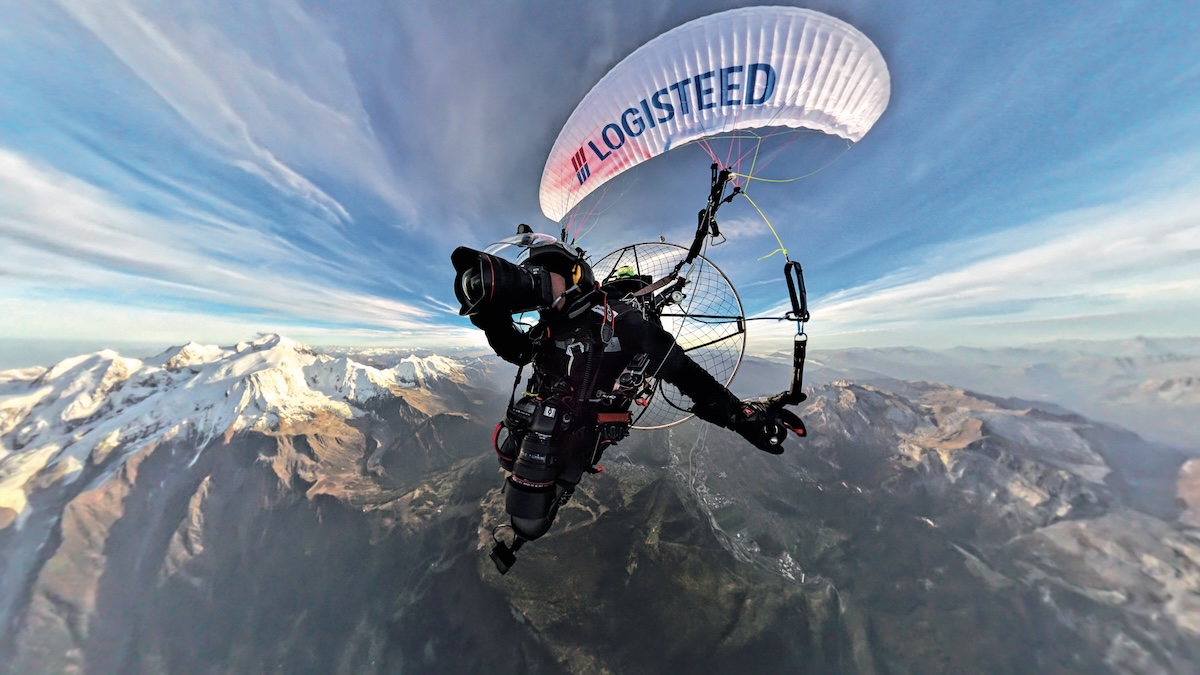
While piloting his motorized paraglider, Naohiro Yamamoto, aerial photographer, reads the changes in wind and light, searches for the perfect composition, and prepares his camera. He gazes at the Earth through the viewfinder.
"When I was 14, I had the opportunity to visit the famous Preikestolen cliffs while traveling with my family in Norway, where I was living at the time. Standing there and looking at the scenery, I had the first experience of 'feeling the Earth.' The dream of flying that I had had almost every night since I was old enough to understand things linked up with reality, and I vaguely thought that flying would be my way of life in the future."
The first thing to do before a flight is to read the topographical map and weather data. This is to predict the movement of the wind and clouds and determine the best takeoff point. After preparing the filming equipment, the paraglider is unfolded and the propeller-equipped engine is attached to the back. When the wind is right, it's time to take off.
"The most nerve-wracking part is getting up into the air. Are you sure it's safe and can you read the wind? Getting it wrong can be life-threatening."
Behind those words lies the memory of an accident that nearly cost him his life. In 2019, he launched the "Above the Seven Summits Project," a world-first attempt to photograph the highest peaks on all seven continents from the air. During a test flight leading up to the first flight, on Mount Kilimanjaro in Africa, a fire broke out in the engine at an altitude of 2,500 meters, and the flames spread to his back and arms.
"It was so hot and painful. I thought I would rather jump than burn to death, so I struggled upside down, and by chance the fire went out. It was a miracle."
Still, looking at the sky from the window of my hospital room, I thought, "I want to fly again soon."
"However, I have developed a fear of death, and I can no longer say things like 'risking my life' as casually as I used to. I just love flying, I'm not an adventurer."
Although the aerial photography of Mount Kilimanjaro in 2022 was limited due to equipment malfunction, the flight was completed without incident. The second and third flights are progressing steadily, with the second flight to Mount Kosciuszko in Australia and the third flight to Mont Blanc in France.
"Over Mont Blanc, the strong winds crushed my wings in half, but thanks to my prior training, I was able to respond calmly. I was also able to capture from the air the föhn phenomenon, which is caused by winds blowing down over the mountainside, and it was a satisfying experience. You can take beautiful photos with a drone, but I feel like there's a soul in a photo that I capture by flying myself and capturing the undulations of the terrain and the thickness of the wind with my own body."
What Yamamoto captures is the Earth itself, scooped up along with the air.
A journey to experience Yamamoto's adventure
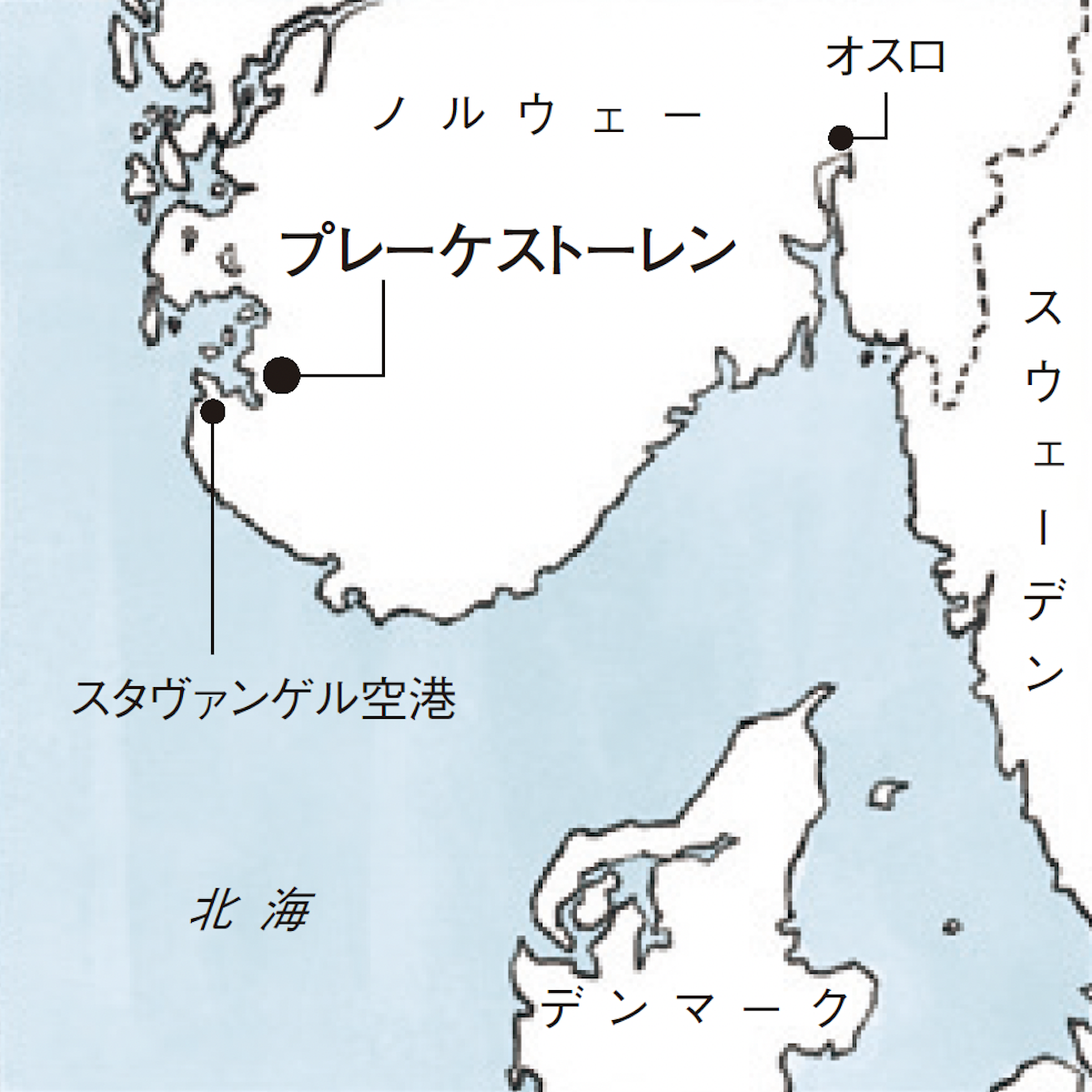
Take a domestic flight from the capital, Oslo, to Stavanger Airport. From there, it's just under an hour by car or ferry and bus to the Preikestolen trailhead. After walking about 3.8 km one way, a towering vertical rock wall appears. "The actual summit is further up the ridge, and there are fewer people there, so you can get a panoramic view of Lysefjord," says Yamamoto.