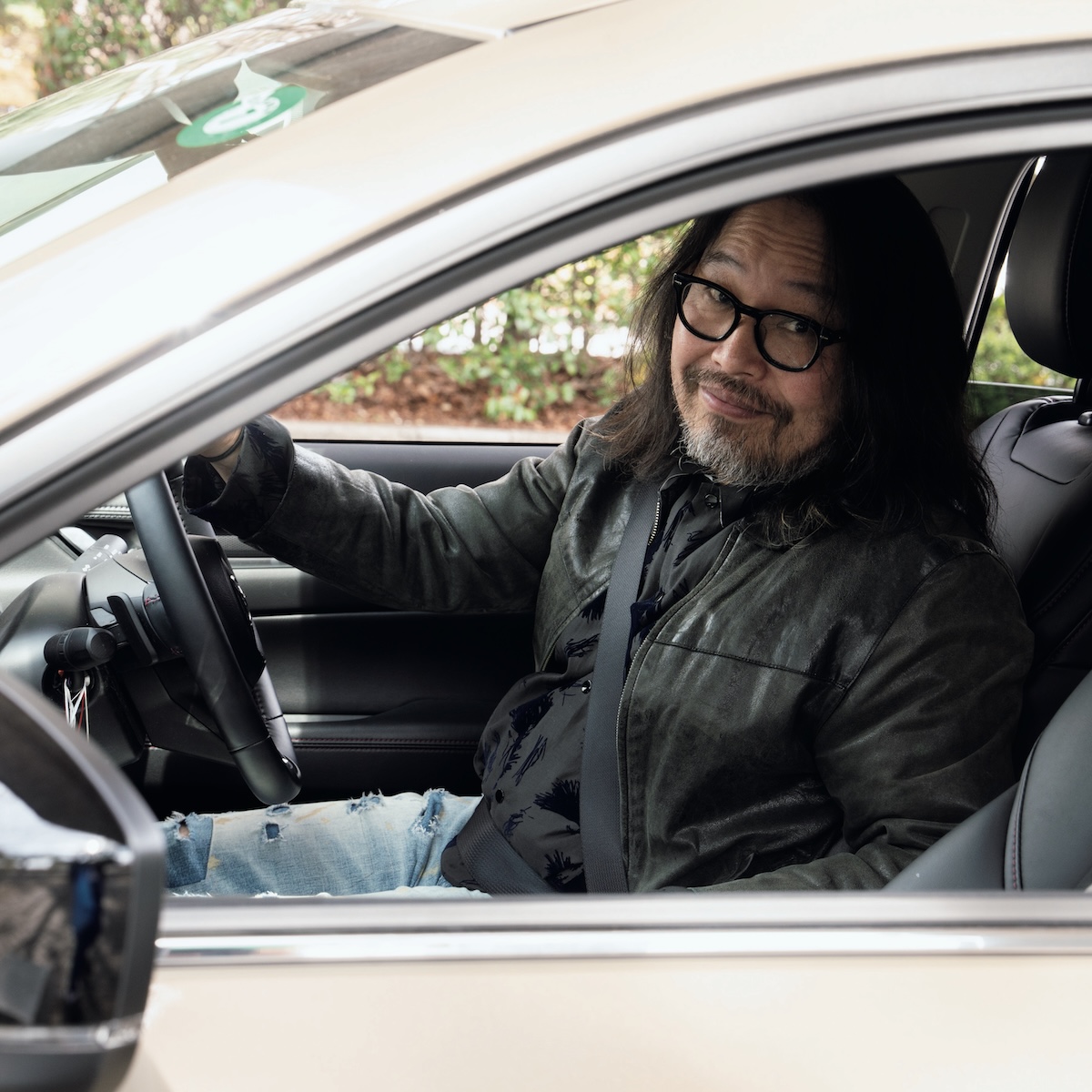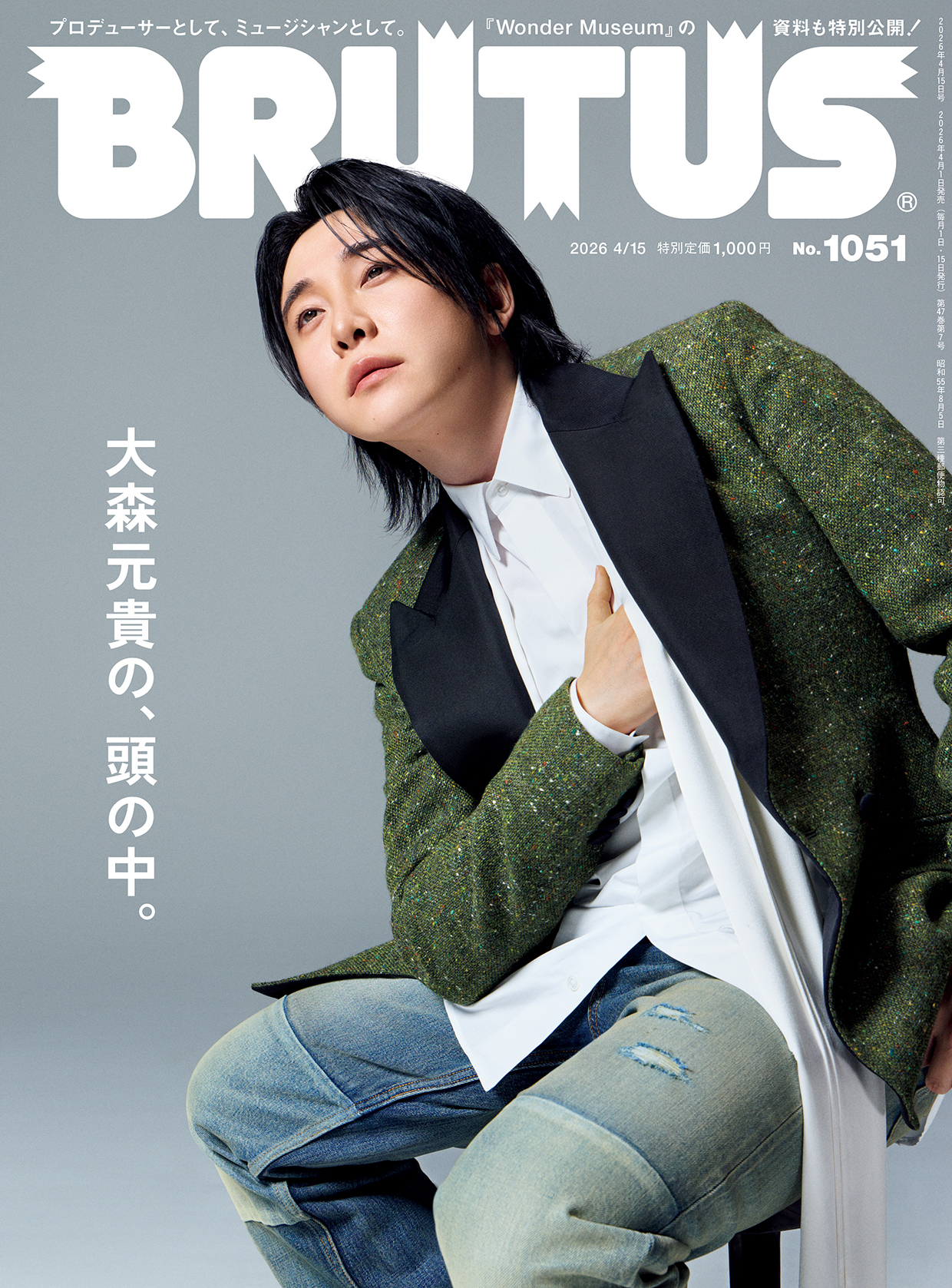











"I feel like interesting things only come from places where there's no money."
Keiichi Sogabe (hereinafter S)
My father was a banker. Ever since I was in elementary school, he would often tell me, "Don't raise your standard of living." He would say, "If you have a lot of money coming in, it's easy to raise your standard, but it's hard to lower it, so be careful about that" (laughs).
BRUTUS (hereinafter referred to as B)
That's pretty early advice for an elementary school student (laughs).
S
"Don't sign as a guarantor" and "When you lend money, assume you won't get it back" (laughs).
B
Did that teaching live on?
S
It may be somewhere inside me. In the 90s, when Sunny Day Service's albums sold tens of thousands of copies, I received a lot of royalties, but I never spent any of them. Until I got married, I lived in an apartment that was over 40 years old.
So, I had a lot of leeway when I launched ROSE RECORDS. The moment we launched, all of our funds were gone due to necessary expenses, but it was a wash.
B
In addition to the label, you also opened a cafe and record store called CITY COUNTRY CITY in Shimokitazawa, but the COVID-19 pandemic that began in 2020 has also brought about big changes.
S
CCC was doing well and stable, and we were about to open a new curry restaurant (Curry no Mise August). But people started disappearing from the town. We had no choice but to close CCC for the time being, and all the staff started offering takeout curry at August. I stood in front of the restaurant every day calling out to customers. It was a real challenge.
B
Money issues are weighing on my mind again.
S
For the first time, I worried about money. First of all, I couldn't perform live. I still had to pay rent for my shop and office. It was quite a shock to realize that people don't help each other financially at times like these. But there was no point in sulking, so I went to the Japan Finance Corporation to borrow money.
B
Despite the COVID-19 pandemic and the restart of Sunny Day Service, ROSE RECORDS
I get the impression that it's more of a place to create creative freedom than to make money.
S
That's right. From the beginning, we weren't thinking about getting rich quick. We just wanted to avoid going into the red, pay our staff, and be able to live our own lives. However, it costs money to make music, and it wouldn't be possible if we continued doing it the way we did when we were on a label. So we just thought about how to make it cheaply. On recording days, we would make our own rice balls and fried chicken and bring them to the studio (laughs).


B
Truly self-sufficient.
S
The label is always running on a shoestring, so once every few years we get into financial trouble, but luckily we get a big job and get out of that pinch. If we just keep going without pushing ourselves too hard, something will come up when we're in trouble, or so I feel (laughs). Plus, I get to decide how I do things myself. That's the best part, isn't it? However, because I also cover the production costs myself, sometimes I have to scrap a piece I've worked so hard on and it all goes to waste, which is tough (laughs).
B
Is that even possible?
S
Yes, there is. Sunny Day's "DANCE TO YOU" (2016) is a perfect example of that. It was almost finished, but I scrapped it altogether. But I wanted to keep working on it, so I went to a practice studio in town for 500 yen an hour, set up a microphone by myself, and recorded on my computer. After that, I completed that album. It was a tightrope walk, but it was well-received and sold quite well, so it broke even again.
B
But even if you have a huge budget, that doesn't mean you can make a really good film, right?
S
Not at all. Ideas come from a place of scarcity. Whether it's music or fashion, I feel like interesting things only come from a place of lack.