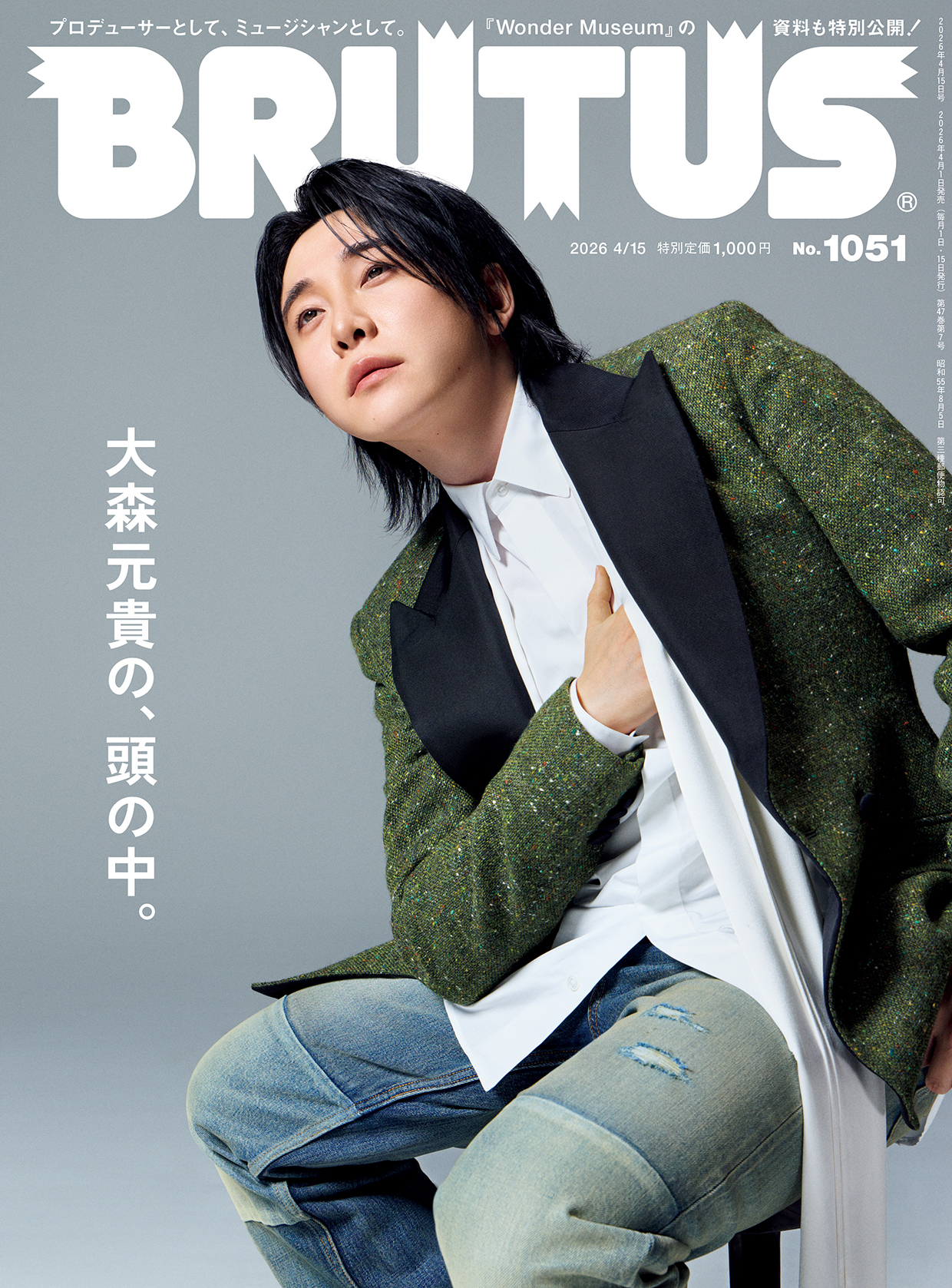











It's not easy to write lyrics that express the fact that I've always been "the musical me."
It's such a luxury to be able to listen to the new album before it's released. Thank you (laughs). The cover is also great, isn't it? It has the impact of being a true Japanese rock and roll band. My first impression after listening to the album was, "This is the Southern All Stars I love!"
I listened to their previous album, "Budou," with the feeling that it was a work by Southern All Stars who had gotten older, with a slightly stronger message, but this album, how should I put it, seems to transcend time and space; it's definitely modern Southern, but I like the feeling that it can't be said to be from any particular era.
In terms of the atmosphere of the album, it's further ahead than "Sakura," but it also feels like it comes before "Killer Street," and while it's more advanced than "Budou," it doesn't feel like the next work after "Budou"... can you get the idea? (laughs)
The inclusion of "Sadness is Beyond the Boogie," which he wrote in the 70s before his debut, may also reinforce this feeling. Normally, you'd want to change the lyrics to something like "Sadness is Beyond the Boogie '2025'" and change the line "Hair care is rinse and shampoo" to "conditioner." It's also nice that he keeps it as "rinse."

This album really does feel like music that transcends time and space, a Southern All Stars that transcends time and space. Please tell Kuwata-san, "Nagano was moved" (laughs).
The lyrics of "Dream Space Trip" even mention "Iggy Pop," and the line "Shohei Ohtani 's autograph is right in front of me" is a hip-hop lyric sensibility that speaks of the present without pretense. They're not even thinking about future generations.
I felt the same way about "Tokyo Sally-chan" by Inamura Jane back then. I wondered if they deliberately included the word "Tokyo-Dome" because it was around the time the Tokyo Dome was built. I thought the way they used proper nouns was amazing, even though it seemed like a joke at first glance. There was no nasty intention to make it a timeless classic that would be loved for a long time. I thought that sensibility was similar to that of a rapper.
It's not like Kendrick Lamar's "Not Like Us," but it's a mindset of filing away the "now." Keisuke Kuwata doesn't have such petty thinking as creating something with future generations in mind.
The last song, "Relay ~ Mori no Uta" is also good. Especially the line "I'm sorry I'm stupid." I don't know what he really means, but the way Kuwata says it somehow brings me to tears. It feels like an expression of how he has always been beneath music, always been "a servant of music," and I think his lack of arrogance is amazing. It's not something that can normally be written.
I also like the fact that Kuwata-san doesn't do any weird training and remains slim. I always think it's cool that he doesn't try to exaggerate or make himself look bigger, but just plays music as he is.
Hit Me Lyric
Sorry for being stupid
From "Relay ~Poem of the Forest"
My Favorite Southern

Matilda Baby (1983)
"It was played every time on 'Ucchan Nanchan's All Night Nippon.' I was surprised by the lyrics and the worldview, but it's not vulgar at all and it's a great song."
Melody (1985)
"When I first heard it as a teenager, I thought of it as an 'adult song,' but even now it's a song that awakens my 'longing' for music that seems within reach but is out of reach."
Tokyo Sally (1990)
"Even among my favorite songs, 'Inamura Jane,' this song completely overturned my concept of expression. I think it's packed with all of Kuwata's eroticism and literary qualities."