









Looking back through the history of art, dogs have been a frequent motif throughout history. However, philosopher Marc Allizard analyzes that this is not just because they are familiar to us in our daily lives.
"Dogs are gentle and calm, but because they have wolves as their ancestors, they can also be ferocious. Although they were originally wild animals, they have chosen to coexist with humans, so they are always surrounded by the factors of nature and civilization. Furthermore, they are innocent yet sexually uninhibited. Our ancestors perceived these paradoxes as mystical and worshipped dogs.
Typical examples are the "guard dogs of the underworld" such as the ancient Egyptian god Anubis and Cerberus from Greek mythology. Dogs are messengers who mediate between opposing elements such as life and death, masculinity and femininity, and are also symbols of Misfits (beings that do not conform to conventional rules)."
In contemporary art, it is these contradictions inherent in dogs that give the work a strong message.
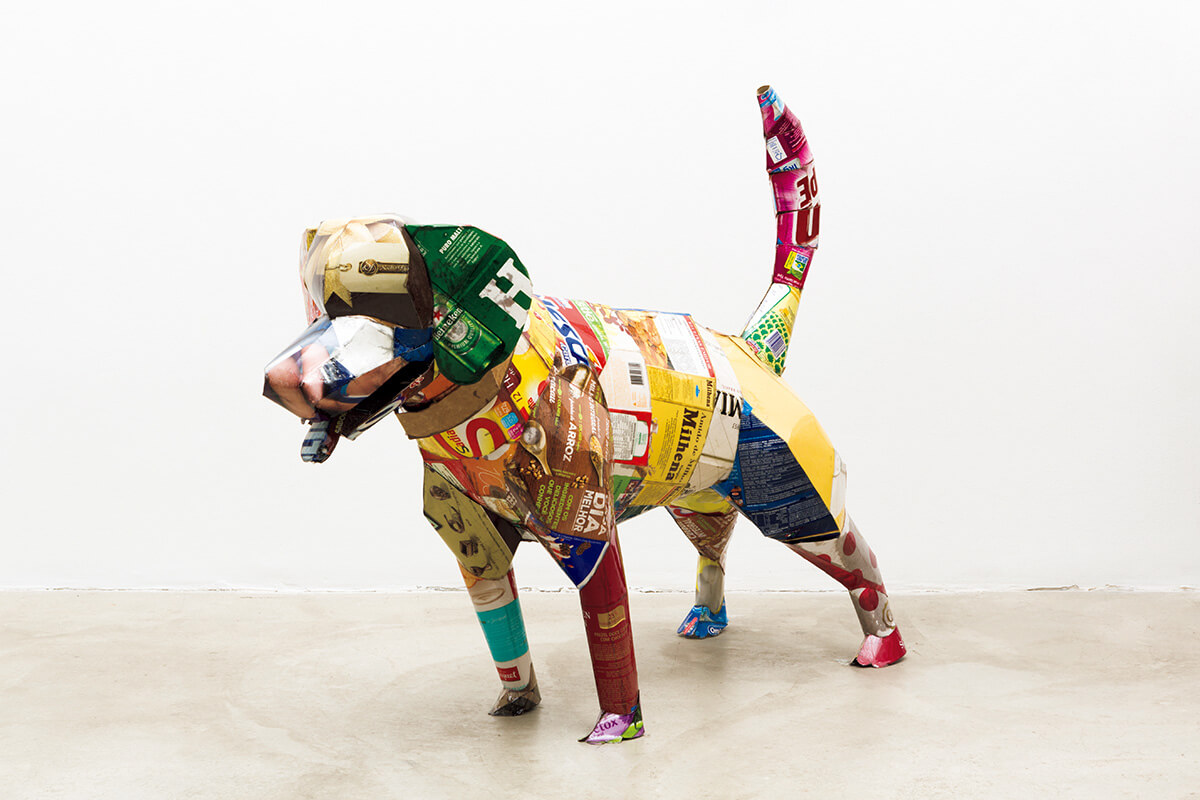
It's like a dog-shaped robot!? A dog object made from recycled materials
Neil Belfa "Untitled" (from the exhibition 20xx) / A colorful dog object, actually made from scrap materials. It was created by Belfa, a French artist who has caused a sensation with his style that integrates sculpture, video, painting, and more. "Some of the works in this series have cables like extension cords running through them. In other words, the dog is a conductor, and can also be interpreted as a guide that invites the viewer into a place somewhere between fiction and reality." Installation, 2017.
Neïl Beloufa, 20xx, Mendes Wood DM, São Paulo, 2017. Image courtesy of Mendes Wood DM São Paulo, Brussels, New York.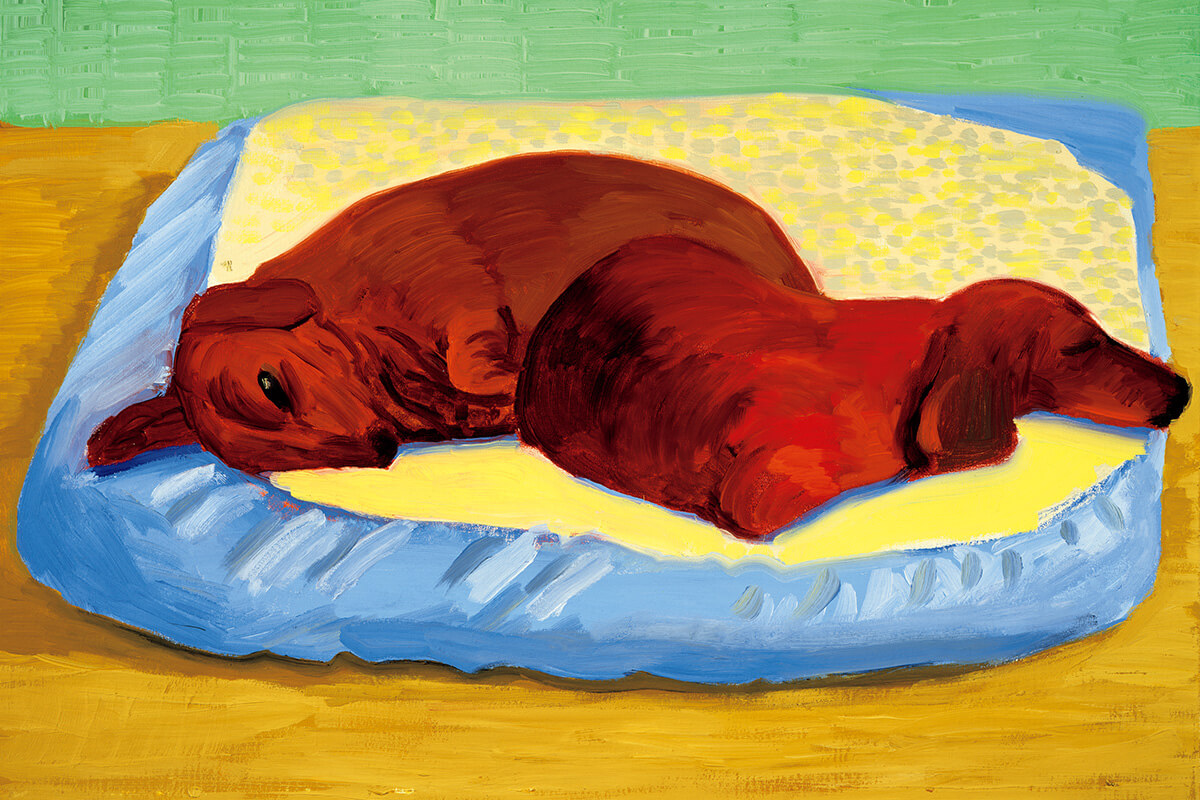
Behind the heartwarming, peaceful atmosphere lies a deep human emotion.
David Hockney "Dog Paintings 43" / The master Hockney has a series called "Dog Paintings," which depicts two of his beloved dachshunds. "It was around this time that he lost a close friend to AIDS, so it's interesting to see the opposite elements of loneliness and isolation hidden within the bright and happy touches. Dachshunds are apparently a breed favored by artists, and Picasso and Warhol also had them as pets." Included in the art book "Dog Days." Oil painting, 1995.
©David Hockney Photo Credit: Steve Oliver Collection The David Hockney Foundation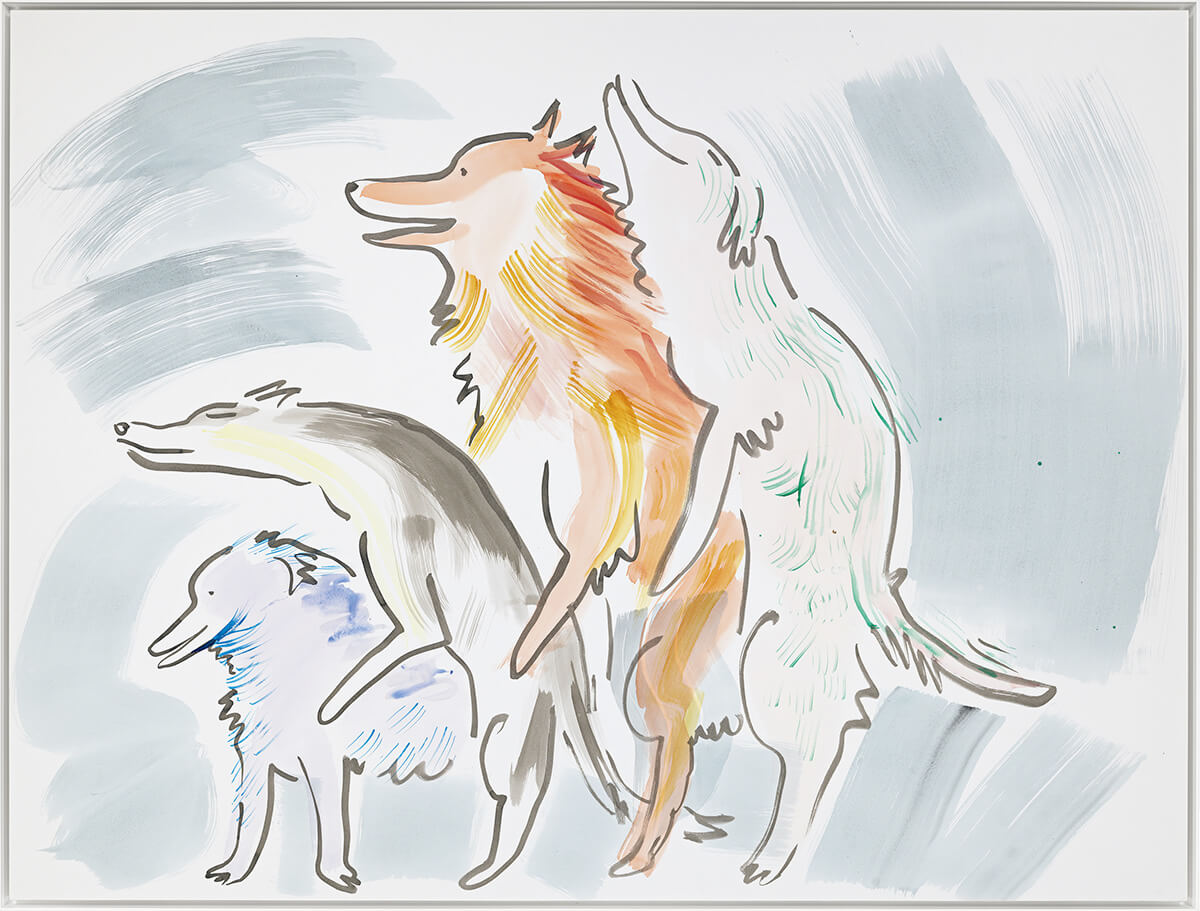
Dog? Wolf? A cute yet slightly poisonous watercolor painting
Camille Henrot, "Trickle-Down Effect" - A work depicting four dogs that look like both dogs and wolves, with a delicate touch reminiscent of Matisse. "At first glance, it appears to be painted in soft pastel colors, but what emerges is the inherent wildness and unrestrained sexuality of dogs. It is a profound piece that even evokes the evolutionary history of dogs from wolves." Henrot is a French artist based in New York, and has been attracting attention for his work that combines drawing, photography, and video. 2015, watercolor.
Courtesy of the artist and Metro Pictures, New York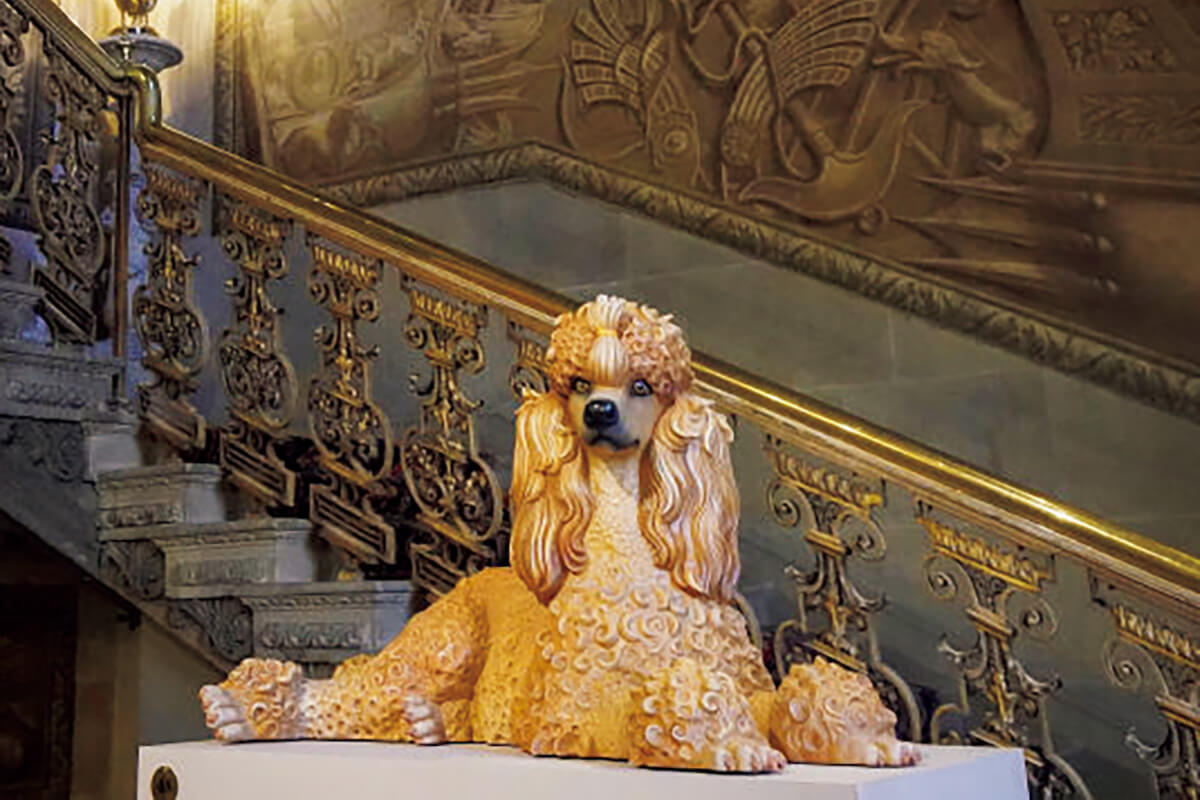
The original dog work by a pop art star who continues to challenge the boundaries of traditional art
Jeff Koons "Poodle" / When thinking of Jeff Koons' dog art, the first thing that comes to mind is "Balloon Dog." However, Alizar recommends the giant poodle sculpture that preceded it. "Koons is an artist who continues to explore the boundaries between high art and low art. It's amazing how he has managed to express his own stance in the contemporary art world through this elegant yet tasteless poodle." 1991, polychrome wood.
Photo by Getty Images DR/Jeff Koons
"Since the dawn of modern art in the 1920s, artists have been intent on eliminating boundaries between the viewer and the work, and between art and non-art. Dogs as a motif act as an ambivalent intermediary, directly appealing to the viewer's thoughts.
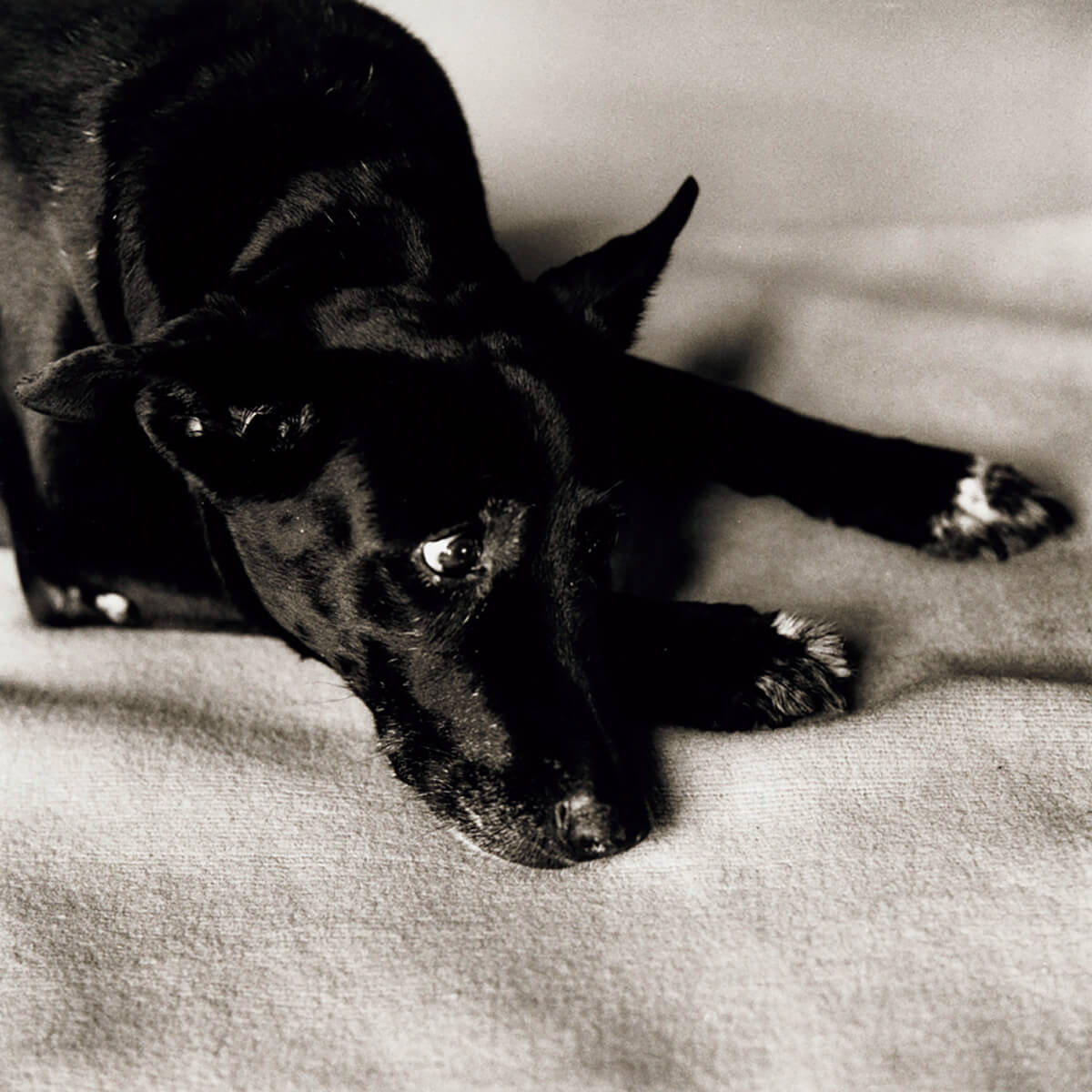
For example, photographer Peter Hujar's photographs of stray dogs reveal the dog's gender, which lies somewhere between masculinity and femininity. Vietnamese artist Dang Vo chose photographs of the Pekingese dog, native to China, as the medium for his work Looty.
He sees his own identity, which does not fit into the social framework, as a stray dog.
Peter Hujar, "Clarissa Dalrymple's Dog, Kirsten" / Hujar, one of America's leading photographers of the 1970s, preferred to use dogs as his subject. "Hujar was gay and raised by his Ukrainian grandparents without parents. The somewhat melancholic dogs seem to embody the man himself, who fluctuates between various aspects such as gender, language, and family in the midst of the big city of New York." Vintage gelatin silver print, 1984.
©The Estate of Peter Hujar, Courtesy Mai 36 Galerie, Zurich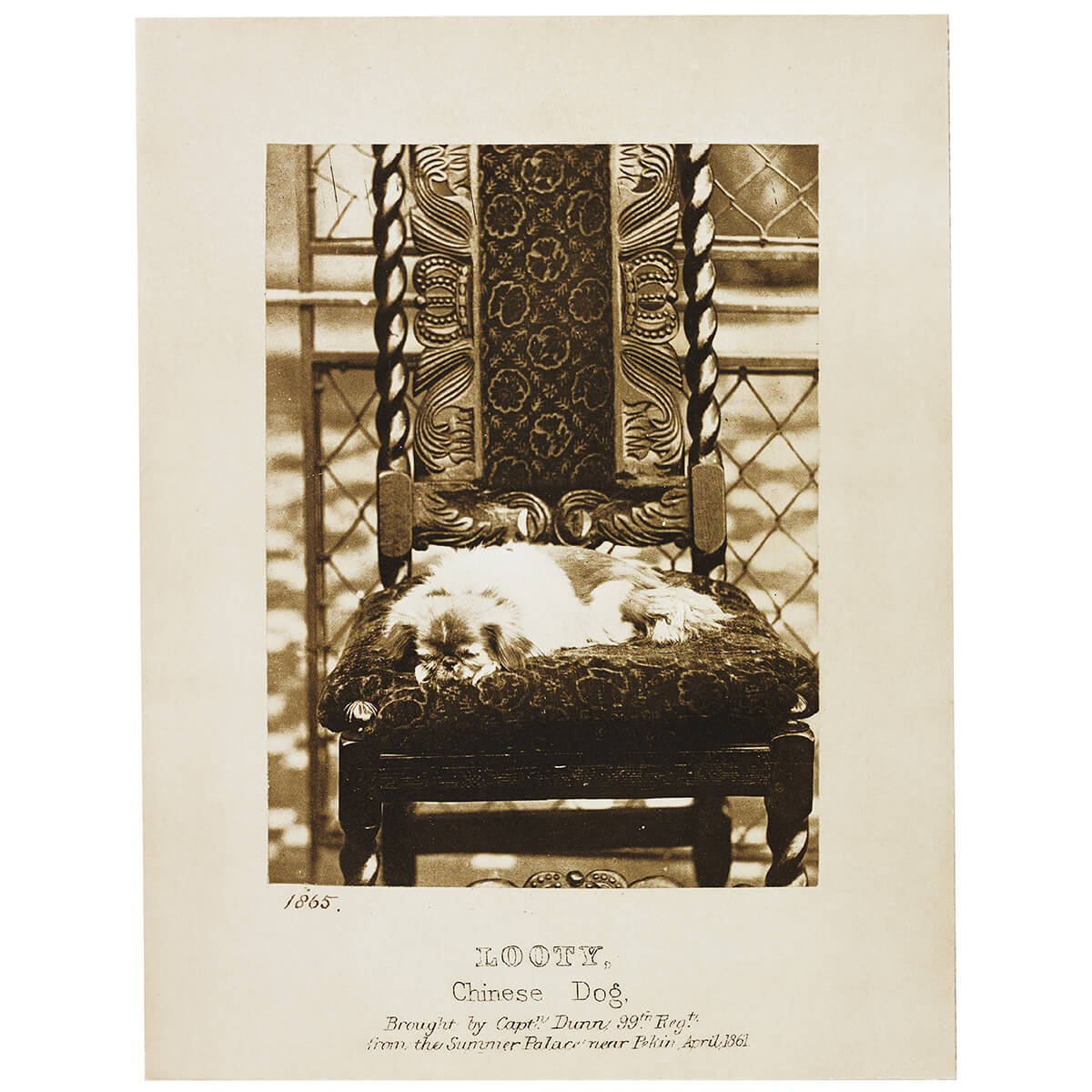
Depicting himself as standing between the East and the West through historically famous dog photographs
Danh Vo "Looty" / Looty is a Pekingese dog rescued from the Old Summer Palace, a detached palace of the Qing dynasty in Beijing, in 1861, and first brought to the UK. "Looty" is a work that incorporates a photograph of Looty. "Not only does it represent my position as an artist of Asian origin (Vietnamese) active on the stage of Western art, but it also appeals to themes of cultural appropriation and Western-dominated globalization." Color photogravure, 2013.
©Danh Vo. Courtesy of Take Ninagawa, Tokyo.
From this choice, we can discern the artist's intention, as he identifies with himself as someone who drifts between the boundaries of Western and Eastern art. By leaving a note in the form of a dog, the contemporary artist is communicating with us viewers.
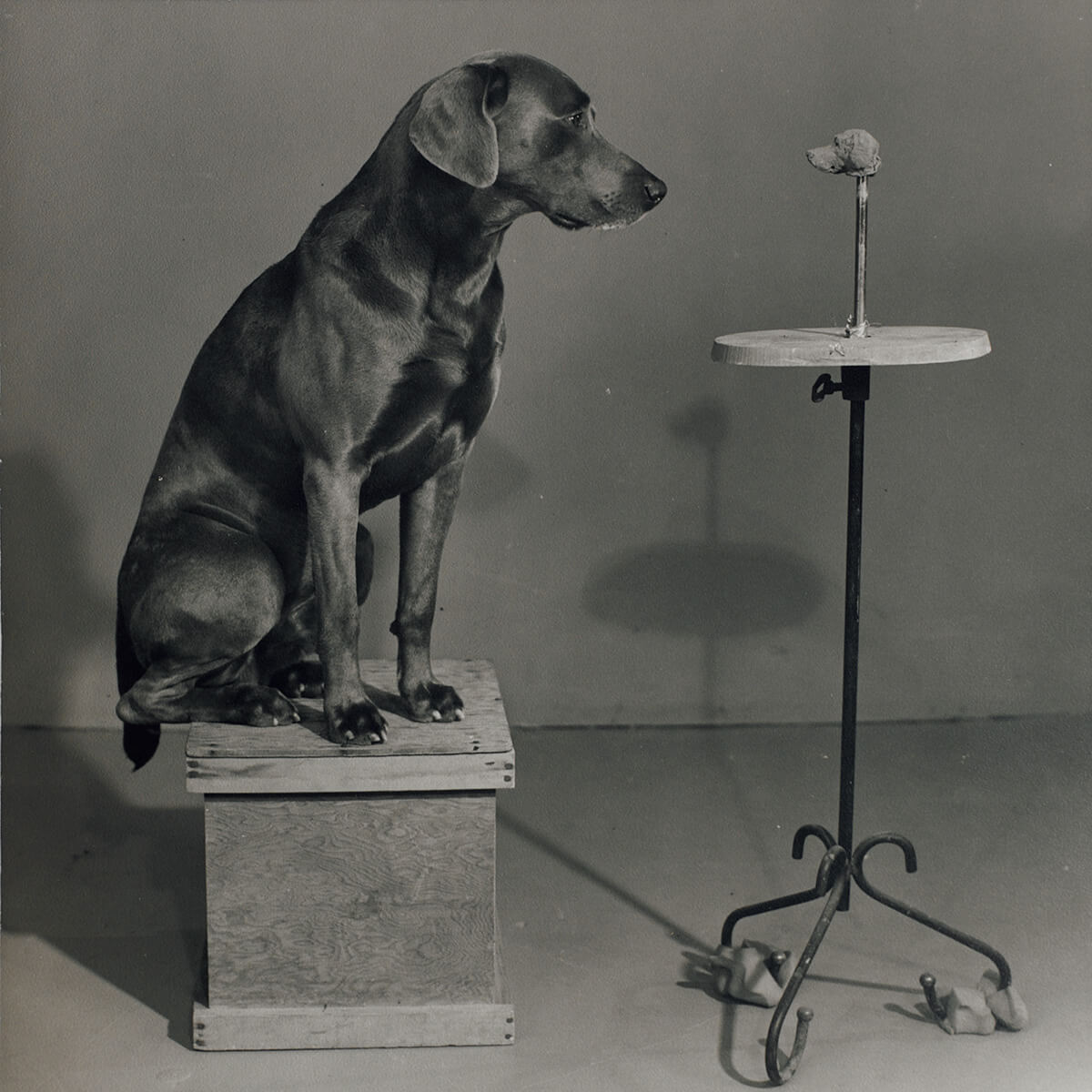
Interpreting the hidden contrast with masculinity in the work of a leading dog artist
William Wegman, "Man Ray Contemplating the Bust of Man Ray" / When it comes to dog photography, this is the man! Wegman is an American photographer known for his many cute works. "It's significant that his beloved dogs are always large hunting dogs, the Weimaraner. The moment you notice the contrast between the pop and docile images and the dog's inherent ferocity, you'll be taken aback." Gelatin silver print, 1978.
Courtesy William Wegman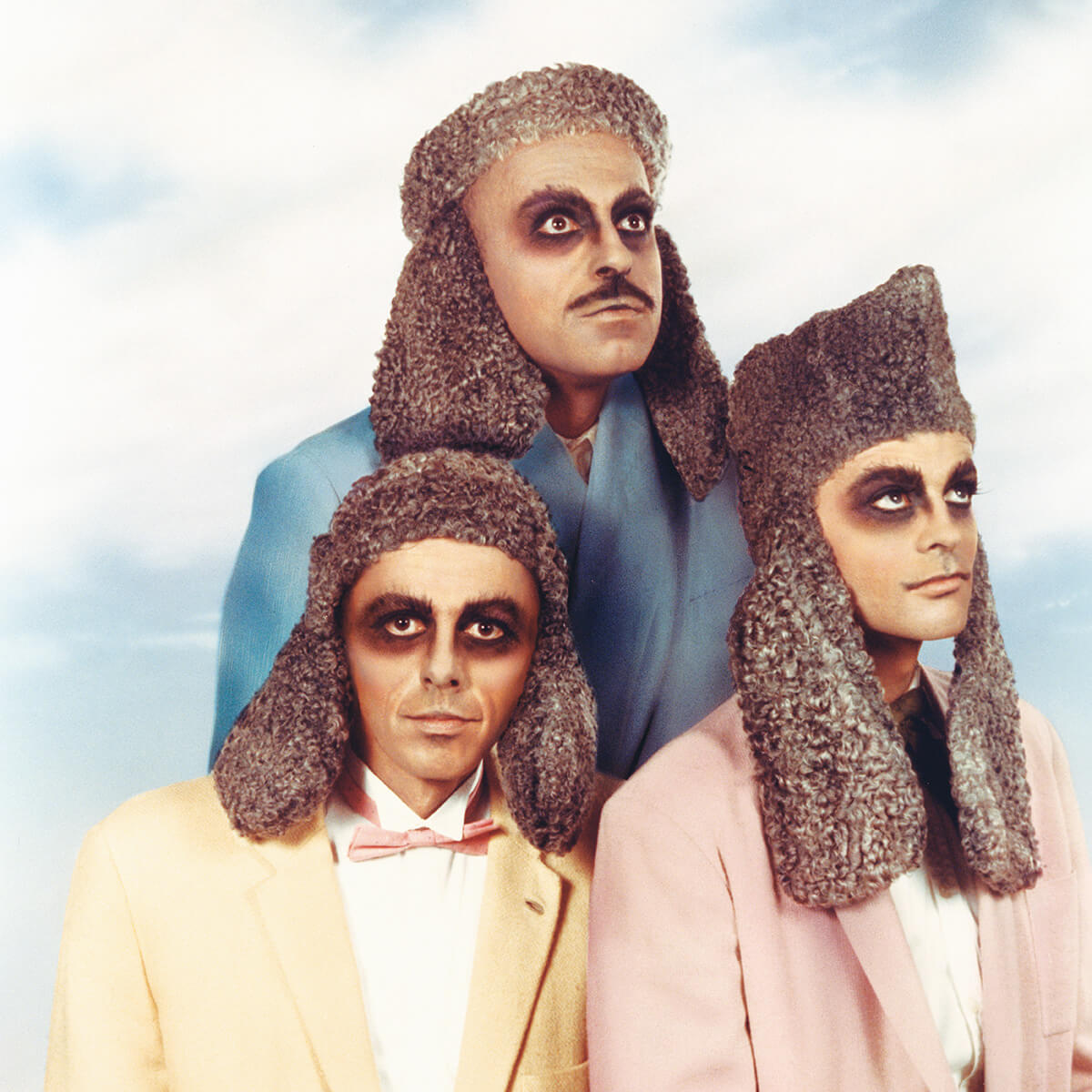
A scathing, satirical message to critics who don't accept gay sex.
General Idea "P is for Poodle" / General Idea was a group of three openly gay male artists active from the 1960s to the 1990s. "The key point is that they assimilate themselves with the femininity associated with poodles. It's a witty message to art critics who continued to exclude their work from discussion because it was deemed too sexual." There are several other works that use poodles as a motif. 1982-89, C-print.
©Estate of General Idea Courtesy of the Estate and Mitchell-Innes & Nash, New York