










I came to meet the ancestors of the Shiba Inu and my friends in Sanin! Shimane
Daifuku the Shiba Inu sits in front of the large shimenawa rope at the Kagura Hall of Izumo Taisha Shrine, politely greeting the gods of Izumo, which he is visiting for the first time. "Wow, he's so well behaved!" and "What a cute Shiba Inu ♡", he is quickly surrounded by tourists, who are taking pictures of him with their smartphones.
As expected, Shiba Inu's popularity is alive and well everywhere. Daifuku's expression as he is photographed seems somehow proud. He is used to being photographed because his family always takes lots of photos of him. In fact, just a moment ago he was overwhelmed and excited by the large torii gate that appeared before him, but the moment he entered the shrine grounds, he seemed to have sensed the sacred atmosphere, as he regained his usual composure and turned around with his famous squinty eyes saying "cheese."

On the first day of the trip, we stayed overnight in Kyoto. Daifuku was relaxing in the hotel. He was in relaxed mode in his cage. 
On the second day, we took a detour to the Tottori Sand Dunes. The figures of people walking in the distance looked like grains of rice. Have they descended upon the giant Daifuku Sand Dunes?
Daifuku, a 6-year-old male, is described by his owner, Ryunosuke Goto, as a "tsundere." So even though he turns his tail towards me, he glances back at me and gives me a sidelong glance. And when I take a good photo, he rushes over as if to say, "Praise me big time!" and licks my face profusely. He loves both dogs and people. And he loves traveling.
"Until now, Daifuku has traveled to Hokkaido, various prefectures in Tohoku, Shinshu, Shirakawa-go, and other places, but this is his first trip to Sanin. Along the way, he stopped off in Kyoto and the Tottori Sand Dunes, and he was full of energy and in a good mood throughout. It's his first time visiting this place, so maybe Daifuku is excited too," said Daifuku Papa Goto.
The purpose of this trip is to visit the hometown of Sekishu dog "Sekigo," which is said to be the ancestor of the Shiba Inu. After paying our respects to the gods, we head south along the Sea of Japan, heading for the birthplace of the Shiba Inu.

We also paid a visit to Izumo Taisha Shrine. 
Daifuku was overwhelmed by the sheer size of Izumo Taisha Shrine, from the torii gates to the shimenawa ropes.
The ancestor of the Shiba Inu can be found in the mountains of Shimane Prefecture. What is the Sekishu Inu, the roots of the Shiba Inu?
Although the Shiba Inu is generally referred to as such, its origins are actually quite diverse. Since ancient times, they have been kept as local dogs in the mountainous regions of Japan, and have played the role of hunting dogs accompanying hunters. They were subdivided into several groups based on their distribution area, such as the Kawakami Inu and Togakushi Inu that originated in Shinshu, the Mino Shiba Inu that originated in Mino, and the Sekishu Inu and Inaba Inu that originated in Sanin. However, their numbers have drastically decreased due to wars and epidemics.
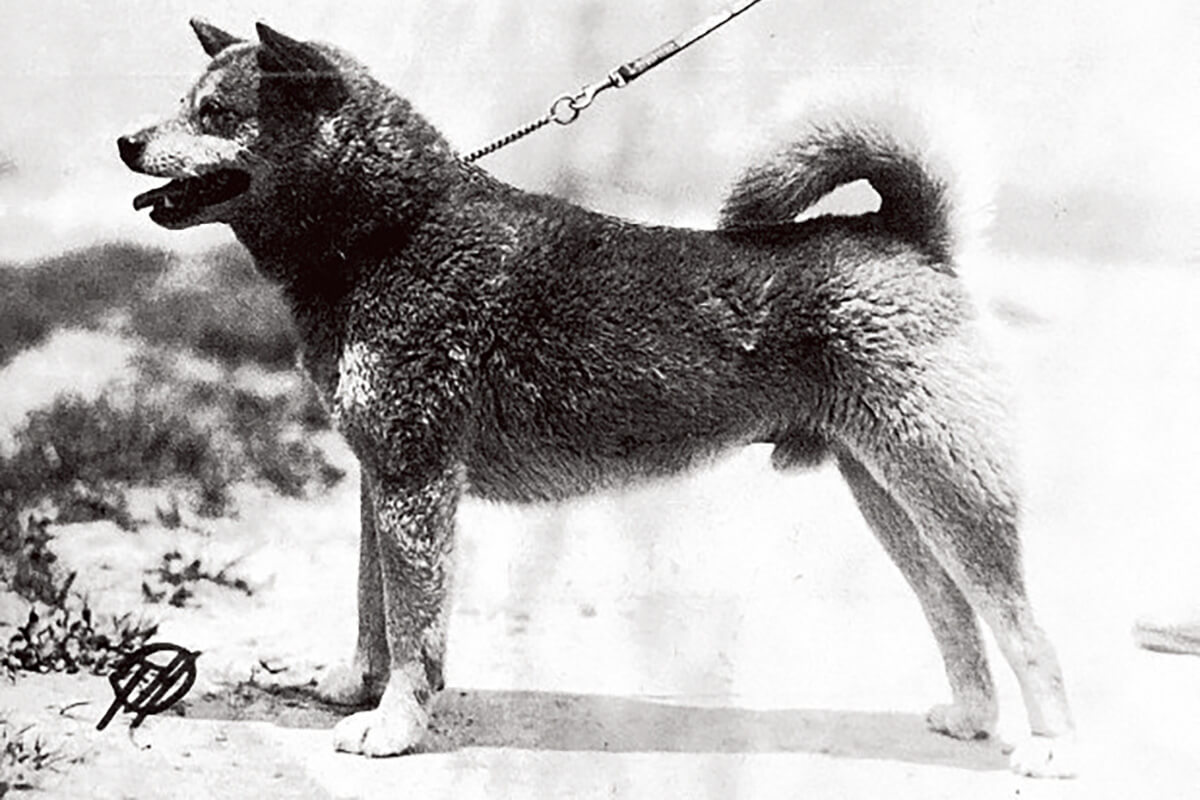
During the preservation movement in the early Showa period, a cross between the Sekishu dog "Ishigo" from Iwami (the name for western Shimane Prefecture) and the Shikoku-born "Korogo" resulted in the birth of "Akago," a grandson of which was imported to Nagano Prefecture, where it thrived and left many descendants. The majority of the dog breeds known today as Shiba Inu have their origins in the Shinshu Shiba Inu.
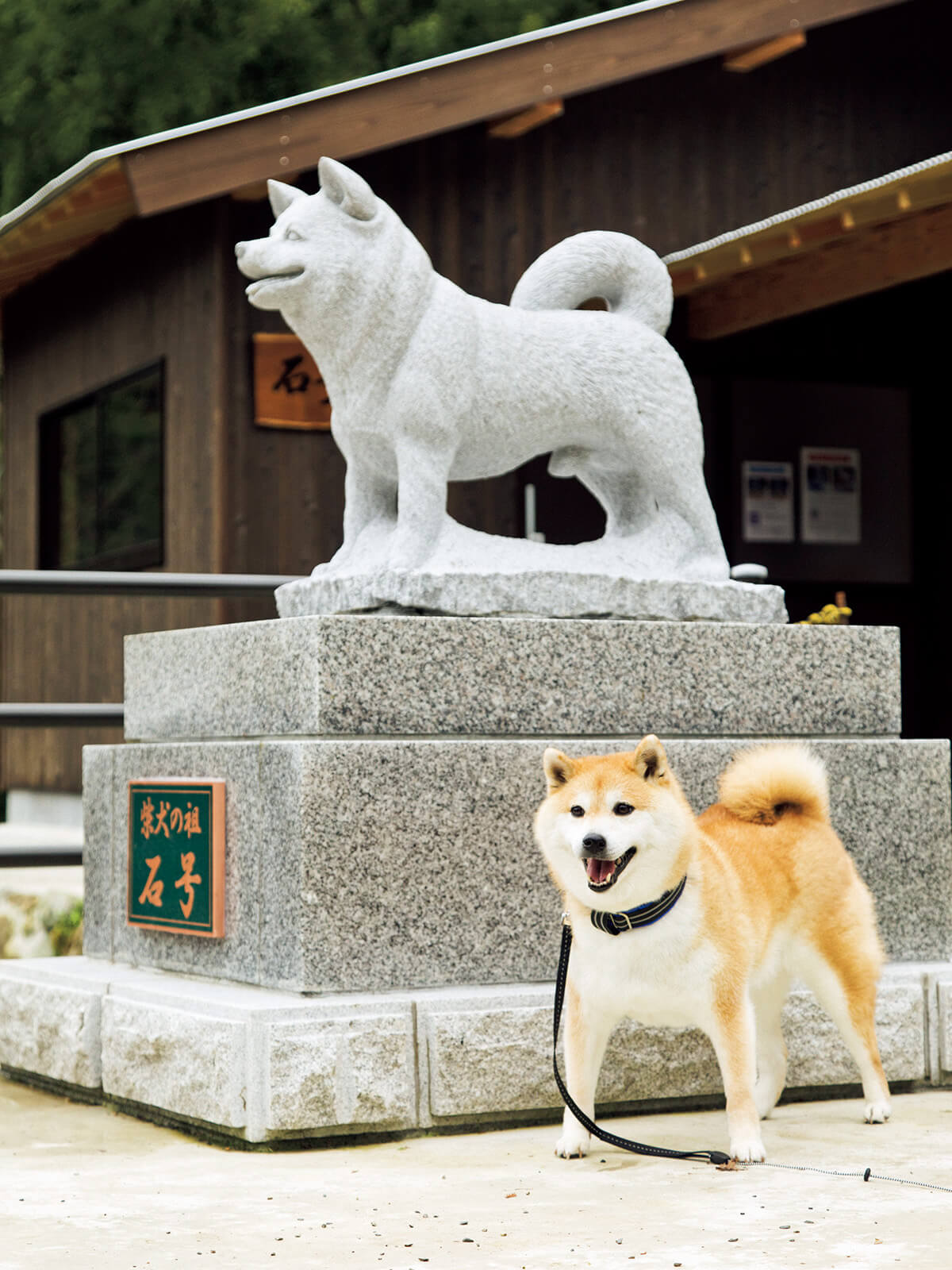
In other words, the Sekishu dog "Ishigo" is the ancestor of all Shiba Inu dogs. Ishigo's birthplace is here in the Iwami region of Shimane Prefecture. Unfortunately, the Sekishu dog is already extinct. However, Shiba Inu dogs that look very similar to the Sekishu dog are still running around the fields and mountains.
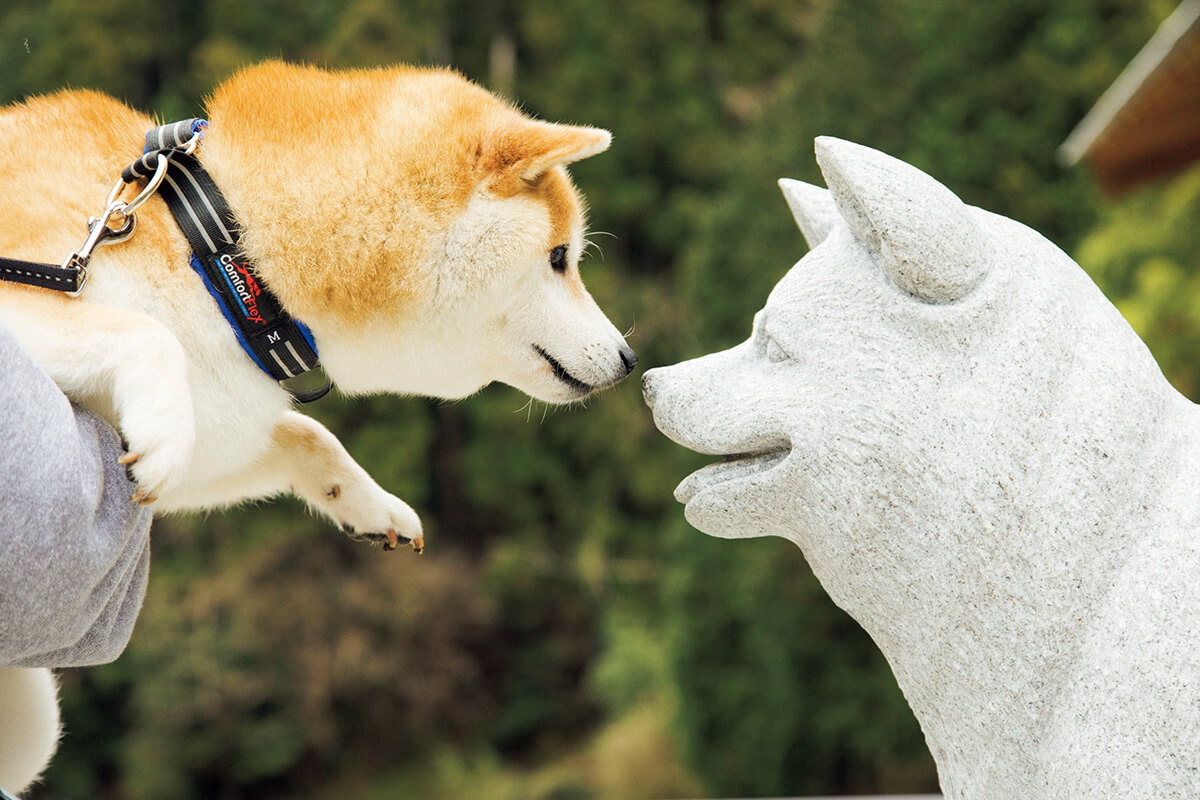
Fierce and kind-hearted: Ishigo, the ancestor of the Shiba Inu
About two hours after leaving Izumo Taisha Shrine, Daifuku said goodbye to the vast expanse of the Sea of Japan, passed through rural scenery, and continued climbing up a narrow, winding mountain path until he came across a house standing alone on a hill. This was the home of Shimoyama Shinichi, where Ishigo was once kept. It is now open to the public as Ishigo Village, and there is no end to the descendants of the dogs who visit. When he arrived, Daifuku was greeted by three Shiba Inu dogs with unique personalities. First, the three dogs introduced themselves.
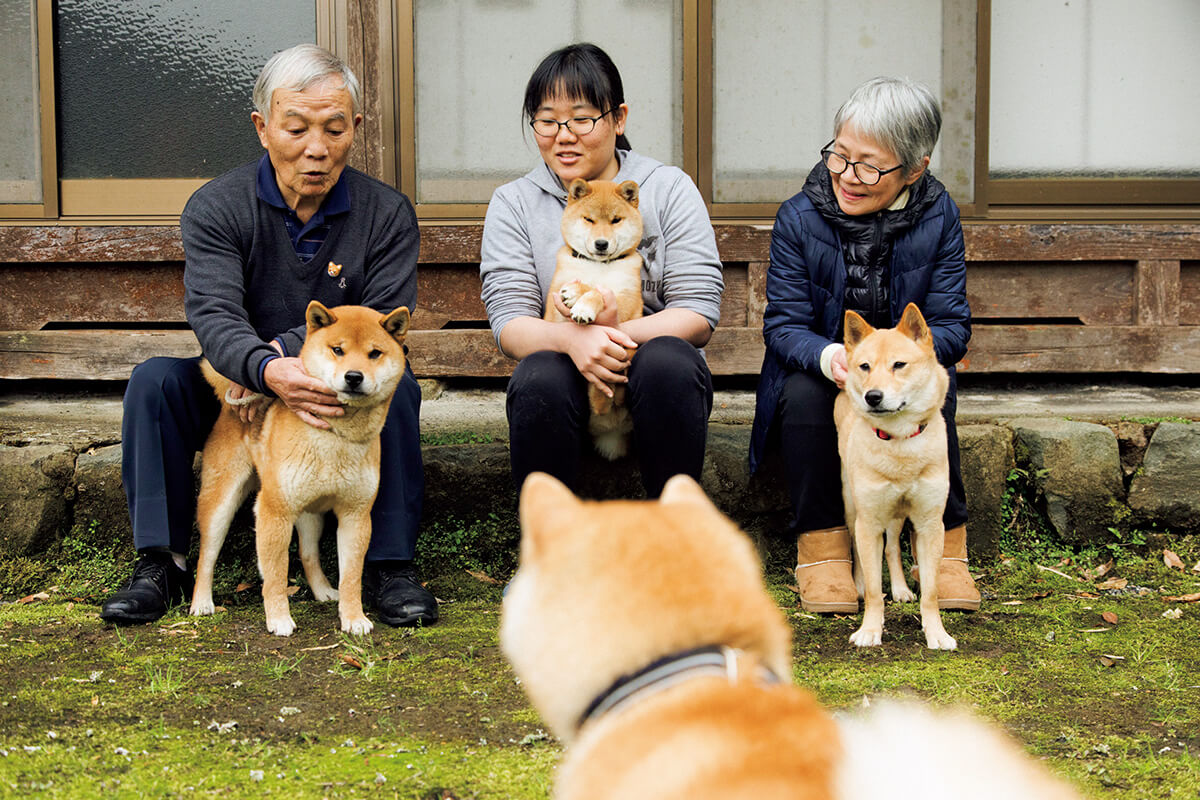
Koichi is a three-year-old male with adorable, fluffy fur. His body is manly, with his feet firmly planted on the ground, and his fierce features are complemented by his charming, round eyes. He is a well-known good-looking man in the local area, and is said to resemble the Sekishu dogs of the past, so much so that he is said to be a throwback.
And then there's Sunny, a three-year-old female dog. Slim and toned with muscles, her thin face gives off a cool vibe. At first glance, she doesn't look like a Shiba Inu. In fact, Sunny is a rare breed of Shiba Inu endemic to the San'in region, born from crossbreeding the endangered Inaba Inu with the Sekishu Inu. Her owner, Kawabe Mayumi, says, "She's an actress." Although she's lazy at home, outside she displays a dignified beauty that belies that.
The youngest of the three, Keiji, is just 100 days old. He was born in Fukuyama City, Hiroshima Prefecture, and apparently just recently moved to the neighborhood. He's the picture-perfect adorable puppy, but he doesn't back down when Daifuku meets him for the first time, and he's the only one of the three to stand up to Wanwan, revealing his mischievous personality. Everyone there was amazed, saying, "We can't wait to see what he does in the future."

Although he only stayed for a few hours, Daifuku seemed to enjoy his time in the Shiba Inu's hometown. At the end, he took a commemorative photo with Sunny, a San'in Shiba Inu, looking his most dignified of the day. 
Cage, a Sanin Shiba Inu.
The strong and gentle Shiba Inu is the embodiment of the Japanese spirit
By nature, Shiba Inu are not friendly towards strangers, and are intelligent and brave. And above all, they are loyal to their masters. They are strong and gentle dogs. Koichi's owner, Yanagio Atsuo, is the branch chief of the Shimane branch of the Japan Kennel Club (at the time of the interview) and is the person in Shimane Prefecture who knows the most about Shiba Inu. When asked what the appeal of Shiba Inu is, he smiled and said, "They're just so cute."
"Its round face and erect ears. Even in its adorable expression, it has a strong, manly demeanor. It embodies the Japanese spirit, which values wabi-sabi. Since ancient times, it has lived side by side with humans, sharing a common destiny, and this quality has been passed down to all Shiba Inu."
Upon first meeting, the four dogs measured each other's distance for a while, but gradually the distance between them began to close. The Shiba Inu dogs of San'in welcomed Daifuku, who had come all the way, and perhaps Daifuku, too, felt a connection to home in his own DNA. In front of Sokenishi, they are all family.

On the way back, we stopped off at the Great Buddha at Todaiji Temple in Nara. 
Enjoy Fushimi Inari Taisha Shrine in Kyoto.